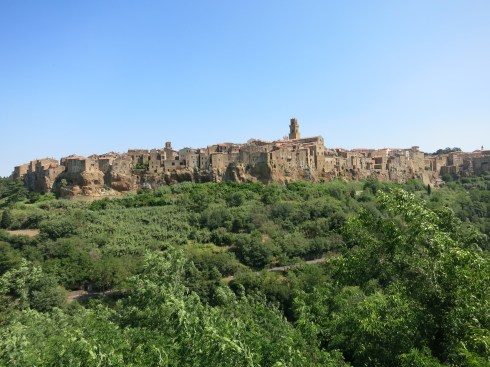
Archive | Italian History RSS feed for this section

Walking Italy

1 Aug

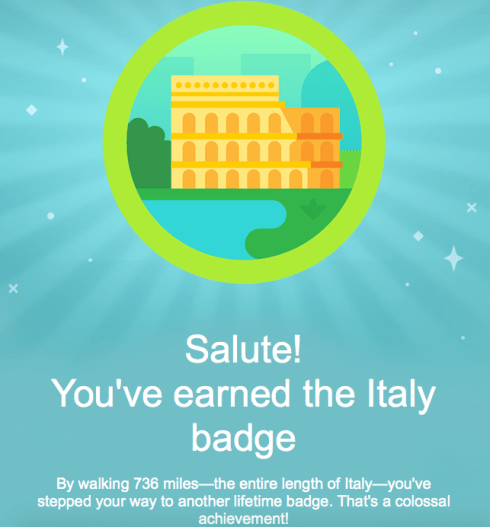
This week, I won a prize called the Italy Badge. What is that, you might wonder…

For Christmas, Benita bought me a Fitbit Zip™, one those step counting devices. I had trouble with it at first, even trading in a few of them until we realized some came with a wrong battery. But a few months into 2015, I started keeping it with me on a pretty regular basis. Just pop it in my pocket, or hook it onto a piece of clothing, and it records my daily steps, also translated into miles.

©Blogginginitaly.com

©Blogginginitaly.com

10,000 steps is a suggested goal, and as you can see, I have logged over 13K today so far. Not really hard to do.

But then I got this motivational email from Fitbit:

Screen Shot 2015-07-29 at 4.31.14 PM

Of all the countries I could have “walked”, they sure picked the right one to motivate me. In addition, I had no idea that mainland Italy is 763 miles in length, as the crow flies.

According to Nations Encyclopedia:

The boot-shaped Italian mainland extends into the Mediterranean Sea with a length of 1,185 km (736 mi) SE-NW and a width of 381 km (237 mi) NE-SW.

Photo by: cirex

Photo by: cirex

And to think that this year’s Italy trip hasn’t even begun! With Fitbit in my pocket, it will be fun to see just how many times we walk Italy, while actually being in Italy, on our upcoming trip.

Until my next badge,

Ciao,

Judy


An Adventure in Self-Discovery

19 Jun

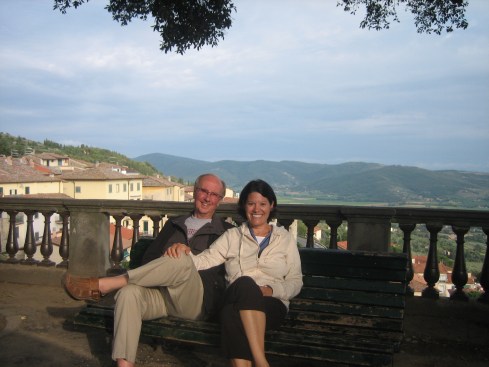
People often ask Len and me why we return to Italy each year. The food, the culture, the art, the people, the history? What is it that continues to draw us to the same place?

Perhaps the writer, D.H. Lawrence, expressed our sentiments best:

“For us to go to Italy and to penetrate into Italy
is like a most fascinating act of self-discovery.”

How very true. Returning to the same place, year after lovely year, is what allows us to experience Italy in a way a casual tourist simply cannot. For us, it’s a dream come true, a goal realized.

©Blogginginitaly.com

©Blogginginitaly.com

And no, that’s not our house, but it is one of our favorite Cortona views.
Till next we meet…
IMG_4746

2011, First Summer in Cortona ©Blogginginitaly.com

Ciao,
Judy

Celebrating My Birthday Locally

23 May

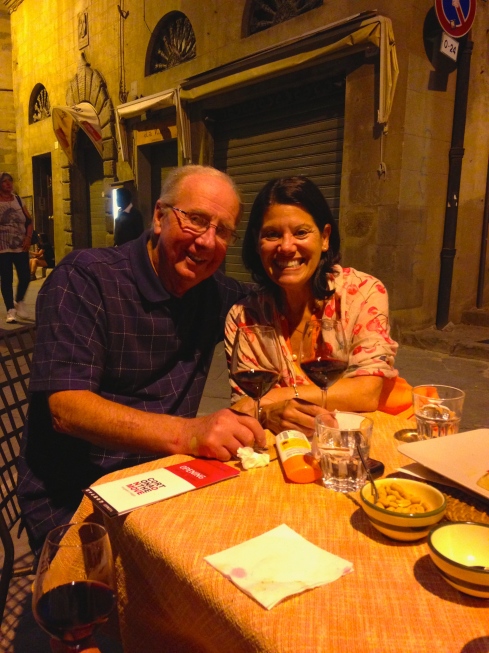
For the past several years, we have celebrated my birthday at a trattoria in Cortona with Italians and views like this:

IMG_3323

©Blogginginitaly.com

©Blogginginitaly.com

©Blogginginitaly.com

©Blogginginitaly.com

This year, we also celebrated my birthday at an Italian trattoria

©Blogginginitaly.com

©Blogginginitaly.com

©Blogginginitaly.com

©Blogginginitaly.com

also with “Italians” and views like this:

©Blogginginitaly.com

©Blogginginitaly.com

Jersey Boys, as you probably know, is the musical story of four Italian dropouts from New Jersey who loved to sing and had a dream. Their road to success wasn’t easy, but in the 60’s, when rock and roll came of age, they ranked 5th as the top recording artists behind The Beatles, The Supremes, Elvis and The Rolling Stones.

For those of you who share my enthusiasm for all things Italian, my posts from Italy will not commence until the fall. With Len moving on from his teaching position (he says he’ll never actually retire!), we now have the opportunity to trade in Italian summer festivals and crowds for the fall harvests and fewer tourists. We are so looking forward to experiencing and sharing our ever unfolding adventure.

In the meantime, we plan to experience much of what Chicago has to offer this summer.

©Blogginginitaly.com

©Blogginginitaly.com

IMG_6685

We’ll sip some SHERRY at MARIANNE’S, but definitely not wear SHORT SHORTS or dress like a RAG DOLL; watch the sun rise at DAWN knowing we CAN’T TAKE OUR EYES OFF [IT]; study the SILHOUETTES at the art museum; remember during sad movies that BIG GIRLS DON’T CRY – they just HANG ON or  WALK LIKE A MAN;  and finally, toast the summer farewell with a rousing BYE, BYE, BABY,  BABY GOODBYE as we are WORKING OUR WAY BACK TO YOU, Cortona!

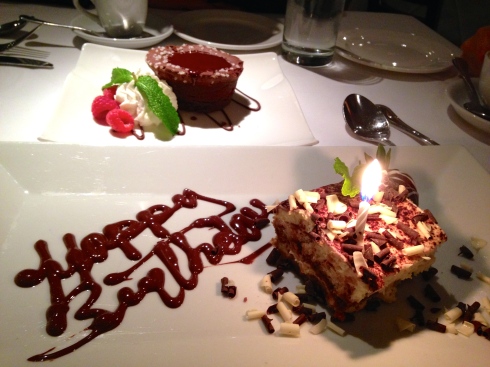
Thanks, Len and Benita for a most memorable evening – OH, WHAT A NIGHT! I think you know WHO LOVES YOU! And many thanks to all who filled my day with birthday wishes.

Ciao,

Judy


Feast of the Italian Liberation

24 Apr

Festa della Liberazione – April 25th – a day dedicated to celebrating Italy’s liberation from Nazi occupation during World War II.

If you happen to be in Italy and hear a great deal of noise overhead, it is probably the Frecce Tricolori or the Three Color Arrows. Or if you hear a lot of music and cheer, you may just find yourself in the middle of a parade! In either case, a great cause for celebration.

Rivolto

Rivolto (Photo credit: Wikipedia)

Italiano: Frecce Tricolori all'Air Show di Fal...

Italiano: Frecce Tricolori all’Air Show di Falconara Marittima, Ancona, Italy. (Wikipedia)

I migliori auguri – my very best wishes – to my Italian friends…we raise a toast to you and your freedom!

Ciao,

Judy

Buon Compleanno, Leonardo!

15 Apr

On April 15, 1452, Leonardo da Vinci was born in a small Tuscan village called Anchiano. He was a true polymath, a person whose expertise spanned a significant number of subject areas. Today, we celebrate this genius’ life as a painter, sculptor, architect, engineer, musician, inventor, mathematician, anatomist, botanist, geologist, cartographer and writer.

Presumed Self Portrait

Presumed Self Portrait

Da Vinci was the illegitimate child of Caterina, a domestic servant, and Sir Piero da Vinci, owner of the house where da Vinci was born. Today, the house is a museum where visitors are welcomed by da Vinci himself, well almost, as his life-sized hologram greets visitors and shares information about his life. In nearby Vinci, one can visit the www.museoleonardiano.it, which, according it its website, “is one of the most extensive and most original collections, providing critical knowledge of Leonardo in his historical context and in that of late Middle Ages and Renaissance.”

Among Da Vinci’s most famous works is the Vitruvian Man.

Luc Viatour / www.Lucnix.be

Luc Viatour / http://www.Lucnix.be

This drawing, combining art and science, depicts a man in two superimposed positions. The picture represents da Vinci’s attempt to relate man to nature as he believed the human body was analogous to the workings of the universe. The drawing also contains notes based on the work of the architect Vitruvius. The original is kept in Venice in the Gallerie dell’ Accademia and made available to the public occasionally.

Another intriguing work of da Vinci is the Mona Lisa. On display at the Louvre in Paris, this painting is considered one of the most famous in the world.

©Blogginginitaly.com

©Blogginginitaly.com

In 1503, Francesco del Giocondo commissioned Leonardo da Vinci to paint a portrait of his wife, Lisa, age 24. It is believed it took him about four years to complete due to other projects. Da Vinci, however, feeling the painting was unfinished, never delivered it to Francesco nor did he get paid for his work; it is undated and unsigned.

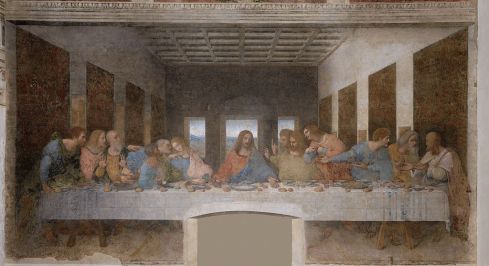
Another iconic painting of da Vinci’s is The Last Supper, in the Convent of Santa Maria delle Grazie, Milan.

The Last Supper

The Last Supper

While many of Da Vinci’s works still exist, many more were lost over the years. Yet his notebooks containing sketches and scientific diagrams, as well as his thoughts on the nature of painting, provide continuing and immeasurable contributions to both art and science.

Happy Birthday #563 , Leonardo!

You graced this earth for 67 short years, but your brilliance will shine forever.

Ciao,

Judy

Celebrating Women

27 Mar

March is Women’s History Month, a month in which we pay tribute to the generations of women whose commitment to a variety of things have proved invaluable to society. As the month draws to a close, I’d like to pause and appreciate the women in my life, not only for their accomplishments but also for their joy of living. Whatever path those who preceded me chose or that those around me are choosing, here’s to your unending spirit, your joy of life, and the love and happiness you share.

I know these videos will bring a smile to your face. And as we age, may we always take the time to share a long walk, and if not a hole in one, (although I actually had one in 2001!), may we all jump rope together!

Ciao,

Judy


For the second video, click on the title Vecchie bastarde!


Buona Festa di San Giuseppe!

19 Mar

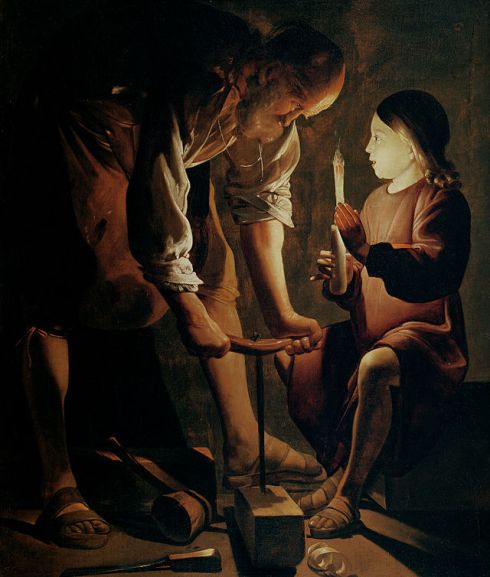
March 19 is the feast of St. Joseph, patron saint of the family, and it is a feast day celebrated by Italians everywhere. Growing up in a neighborhood filled with many Irish and Italian families, I was always happy that the Italians also had their day in March to celebrate.

Joseph the Carpenter, 1642, Louvre, by Georges de La Tour

Joseph the Carpenter, 1642, Louvre, by Georges de La Tour

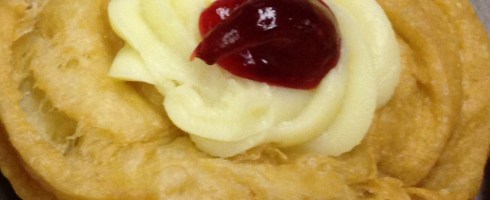
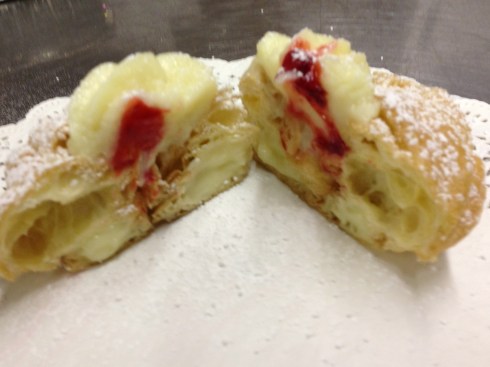
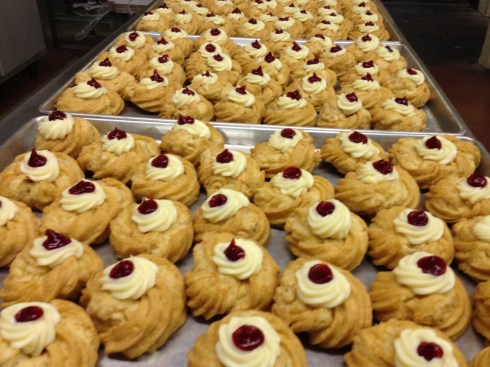
Of course, not quite as loud or rowdy as St. Patrick’s Day, we nonetheless celebrated the feast of St. Joseph with a food fest. And while the Irish had their green beer and accessories, the Italians, often sporting something red, had their zeppole, a cream filled fried pastry that originated in Napoli.

©Blogginginitaly.com

©Blogginginitaly.com

According to my fellow blogger, MariaGiovanna, (Sharing My Italy) the “Zeppole di SanGiuseppe” originated in Naples, Italy, “where the first recipe was put on paper, in 1837, by the famous Neapolitan gastronome Ippolito Cavalcanti, Duke of Buonvicino.”

Fortunately, you don’t have to be in Italy to enjoy a zeppole. In Chicago, they can be found in authentic Italian bakeries such as Ferrara Bakery on Taylor Street. Light, airy and filled with cream, it is fun to see the smiles they generate on those wiping the cream from their lips.

©Blogginginitaly.com

©Blogginginitaly.com

At this time of year, Ferrara’s and Italian bakeries everywhere are busy filling and selling hundreds of dozens of the cream filled gems.

©Blogginginitaly.com

©Blogginginitaly.com

So, to those looking to get beyond the grey days of winter, here’s an idea – participate in a St. Joseph’s Day custom by sharing some food with the needy and with some friends, and, of course, be sure to bring some zeppole!

Ciao,

Judy

From Grape to Glass

3 Mar

While we continue to meet Chicagoans who visit Cortona, it is less often that the Cortonese visit us. But Saturday was an exception. Meet Denis Zeni.

Denis is the “titolare” – or owner – of Leuta, a boutique winery in the Cortona area. He is visiting several cities in the States and conducting wine tastings in his hosts’ homes.

©Blogginginitaly.com

Denis in center with hosts     ©Blogginginitaly.com

Denis’ story, like so many other entrepreneurs we meet in Italy, is a love story based on deep-rooted traditions. His grandfather cultivated grapes on his land in Trentino, in northern Italy, and shared his passion with his young grandson. Constantly at his grandfather’s side, Denis soon grew to love the land and over time, the possibilities.

Denis’ father, however, hoping for a different life for his son, eventually sold the family land, and encouraged Denis to seek a career in Finance. Denis obliged, but after a successful career and several finance degrees, he awoke one day and decided, “I don’t want to die as a banker!” Not that there is anything wrong with banking, he notes, it just didn’t mesh with the passion that had been ignited in his blood as a child.

With his grandfather’s land no longer available, Denis searched and found land in Tuscany to launch his dream. What began as The Tuscany Project, a small initiative with his friend and then partner Enzo, is now the Leuta Estate, approximately 62 acres at 31o meters above sea level near Cortona.

But back to the wine tasting. As we enjoyed delicious Tuscan antipasti prepared by our amazing hosts,
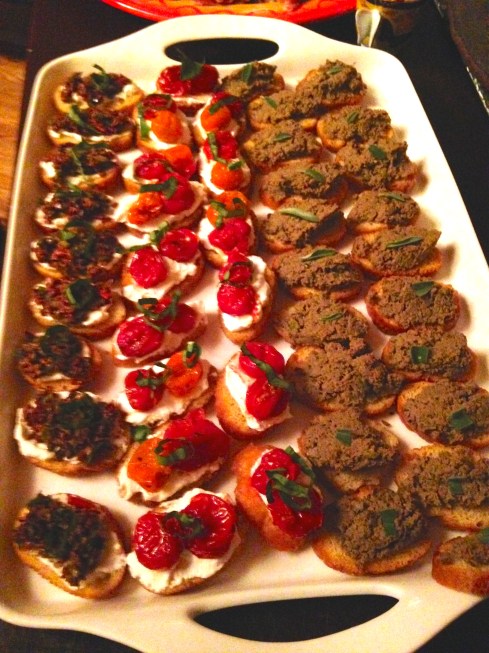
©Blogginginitaly.com

©Blogginginitaly.com

©Blogginginitaly.com

©Blogginginitaly.com

Denis shared some of his personal history as well as that of Leuta. He then began pouring the first of five wines we would taste.

©Blogginginitaly.com

©Blogginginitaly.com

Wine tastings are a fun and interesting way to sample various wines and learn something about each. They usually include a 5 step process: see, swirl, sniff, sip, savor. As I listened attentively to Denis, it occurred to me that this tasting was quite different from most others we have attended.  And I quickly realized why.

Denis not only knew about these wines, he was personally connected to all aspects, from grape to glass. He described the vines, how they were planted, how they behaved as they grew, the choice to avoid/limit chemicals, the grape selection, the harvesting process, the aging, the bottling, the mistakes and the successes. It became clear to me that the bottles held not only his wines but also his dreams and life’s work.

Similar to the eye of the beholder, I believe that wine preference is in the senses of the taster. Expensive or not doesn’t necessarily mean great or not. But a really nice wine seems to taste even better when I know its history and understand its traditions.

Grazie, Denis, for sharing your wonderful story and wines with us! We look forward to spending time with you at Leuta.

©Blogginginitaly.com

©Blogginginitaly.com

In the meantime, as we enjoy our new purchases, we will toast to you and recall the history you shared with us. Your grandfather is surely smiling.

Ciao,

Judy

For more information:
http://www.leuta.it
 

.


Italian Tradition – Home Cooking

26 Feb

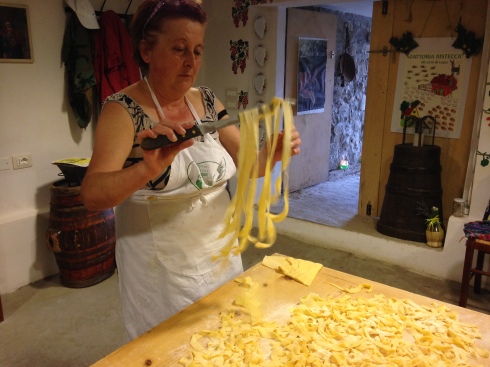
One of the very best things to enjoy in Italy is the food. But what makes it so special? In a word, local. Italians pride themselves on eating and cooking what is locally available, and in many cases, home grown. That means that menus not only change with the seasons, they are also based on long standing regional traditions passed on from one generation to the next, and, of course, dictated by the terroir or environment.

©Blogginginitaly.com

©Blogginginitaly.com

©Blogginginitaly.com

©Blogginginitaly.com

When I first began traveling to Italy, I always wished that I would be invited into the home of a local. I wanted to experience the lady of the house cooking for her family, to learn from her and then eat what was prepared. It’s hard to walk the narrow streets of small towns and villages and not get caught up in the delicious smells and banter bellowing from the windows at lunch and dinner.

Luckily for us, we now have native Italian friends who invite us into their homes and give us this opportunity.

©Blogginginitaly.com

©Blogginginitaly.com

But as we travel to other parts of Italy, is there a way to have similar experiences?

Meet Le Cesarine, a group of  “landlords chosen through a careful selection by Home Food in order to preserve and promote the heritage of wisdom, tradition and culture hidden in the thousands of recipes of our regional cuisine.” According to their website,

Home Food has built a network of “Cesarine” all over the peninsula in order to offer the possibility to find in many places in Italy a cosy table, rich of food prepared and maintained for the members only. For the reason that the “Cesarine” do not manage a restaurant in their houses, but invite you to their tables as a guest of the family who shares the passion for the tradition, the land and its tastes, values, which constitute the mission of Home Food.

Home Foods, founded in 2004, is a collaborative effort among several groups in Italy whose goal is to “spread the culture of traditional food interwoven with the culture of the typical products and the particular area.”

If you think about it, Italy has thousands of informally trained household cooks who, without recipes, create incredible meals from starter through dessert. Home Food has tapped into this resource and created a network of cesarine – grandmothers, mothers, aunts and daughters, who are knowledgeable of their local area, passionate about cooking, and willing to share their traditions as they host events in their homes.

Through Home Food, registered members have the opportunity to learn traditional culinary methods, eat traditional meals, and truly experience regional Italian culture in the home of a cesarine.

I learned of this organization through an article by Irene Levine in the Chicago Tribune, dated February 1, 2015. She and her husband had the opportunity to experience a cooking lesson in the home of a cesarine from Bologna. Although I have not yet participated, Irene’s story presented a way for travelers to experience the flavors and culinary traditions throughout Italy as guests in a local home. If your Italy TO DO list includes a mini cooking class, or eating in the home of a local, this might well be your opportunity.

Their calendar includes event dates, locations, recipes, a bit of history, and pricing. And if you partake, I’d love to hear your feedback.

Buon Appetito!

www.homefood.it/en

Ciao,

Judy


Italian Commercials

2 Feb

Last night, while watching the Super Bowl, this town showed up in one of the commercials:

©Blogginginitaly.com

©Blogginginitaly.com

Perhaps unlike most of the millions watching, I recognized it immediately as Pitigliano, Italy. Truly a sight to behold, and once I  saw it, a sight I’ll never forget.

The commercial that followed was so very typical of Italian commercials, creatively presenting a product in a subtle, or not so, sensual/sexual way. This is usually the case, whether the commercial is for gelato, a cleaning product, or a car.

I did a little research on the commercial, and not surprisingly, found that it had been panned by Adweek and other so called advertising experts. Perhaps these critics need to spend a bit more time in Italy, where the commercials are often as fun to watch as the shows.

In case you missed it, here’s the commercial.

Bigger, more powerful, and ready for action!


And if you are interested, here’s more on Pitigliano:
https://blogginginitaly.com/2013/07/29/pitigliano/

Ciao,

Judy