Archive | Italian Art RSS feed for this section

Through His Words: Day Twenty-Three (2nd letter)

23 May

Reflections From and About My Grandfather
Alexander Capraro, Architect


Hotel Europa E Britannia
Venezia

August 7, 1938

Darling

 I arrived this morning about 11:30 on the fast train from Milan. It is almost unbelievable to see water where streets should be.

I remember feeling the exact sentiment the first time I visited Venice some 33 years after my grandfather. I still marvel at the engineering feat when I visit, despite the crowds and flooding.

blogginginitaly.com blogginginitaly.com

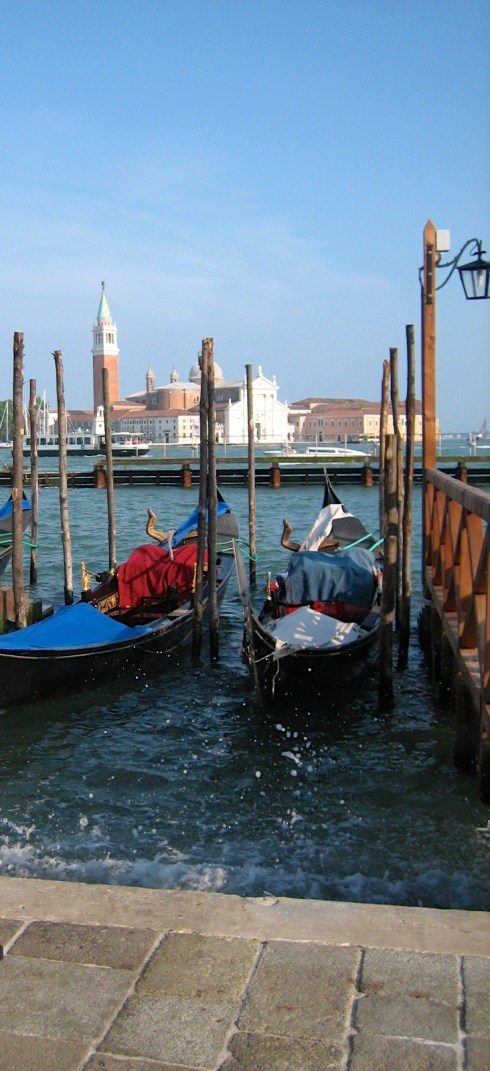
Upon getting off the train, my luggage was immediately placed in a gondola and I had my first ride in a real gondola. We wound our way about 2 miles through narrow canals and finally came to the Grand Canal where my hotel is.

JM photo: blogginginitaly.com JM photo: blogginginitaly.com

The charge was 13 liras or about $.65. It sure was worth it because it is hard work to row one of these things, a gondola being about 35 feet long.

That same ride would cost Alex over $160 today.
blogginginitaly.com blogginginitaly.com

The hotel is a nice place, one of the best I have been in so far. It faces the Grand Canal and is 75 lira for room and meals ($3.75).

Now known as the Europa & Regina, Venice Today known as the Europa & Regina, Venice
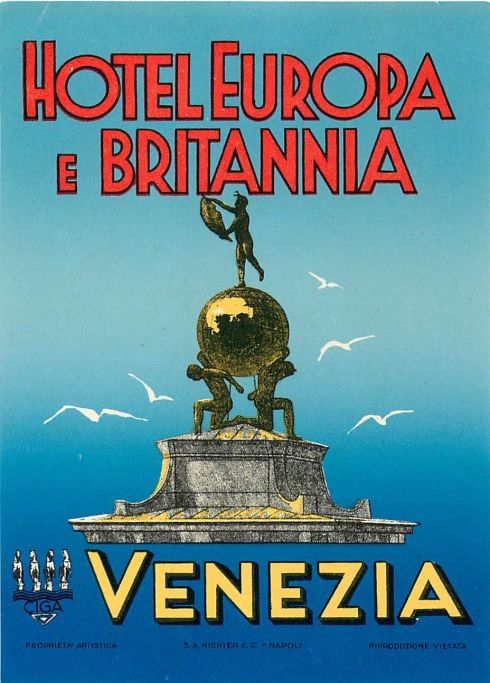
Luggage Tag © 1997-2013 International Poster Gallery Luggage Tag © 1997-2013 International Poster Gallery

From the hotel’s website: During the autumn of 1908 it was here that the celebrated Impressionist painter Claude Monet stayed – a long visit in which he made the most of his talent with the magnificent views that the hotel offered. In a letter, dated October 16th, 1908, Mme. Monet wrote: “We have finally arrived at the Hotel Britannia, with a view, if such a thing were possible, even more beautiful than that of Palazzo Barbaro…

I was pretty dirty upon arriving here, smoke and soot from the train as well as perspiration due to the heat. It is pretty hot and I can look forward to a lot of hot weather from now on as I understand it is very hot in Florence, Rome, and Naples.

After having washed and changed and taken lunch, I went to the American Express with a feint hope that I might find a letter, but nothing doing. I was not surprised, however, because it was too soon for any mail to be forwarded from Milan. 

On the same day Alex was writing this letter, Maude was only just writing her first letter to him (previous post).

Well, I started upon my visit immediately as I will leave here tomorrow night for Bologna and Florence. I went to St. Mark’s Square, a picture you see many times in the States.

blogginginitaly.com Family Photo: 2007: blogginginitaly.com

The cathedral is immense in its mosaic portraits.

blogginginitaly.com blogginginitaly.com

The ceilings are all gold mosaic with lifelike figures of saints, etc. in very colored hues. Everything you see is a work of art done without thought of money or time. This cathedral was built in 832 and is now over 1100 years old. 1000 years doesn’t mean anything over here.

And then Alex has this random thought:

I’m just thinking I have been in several churches every day and prayed in all of them so I ought to be given some kind of special indulgence by the time I get through.

After St. Mark’s, I took a boat to the Lido and found it to be a sort of Atlantic city. As you know, this is on the Adriatic Sea, and I wanted to be able to say I bathed in the Adriatic. So, I rented a bathing suit and went in to get a few mouthfuls of saltwater. The place is miles long lined with cabanas and beautiful sandy beaches. With the weather being hot, I stayed a couple of hours in the water.

My hotel gave me a ticket which was good at a hotel on the Lido for dinner, so I had my dinner on a large veranda overlooking the sea and enjoyed my meal amid rosebushes and flowers of every description. One thing they have here a plenty is flowers.


blogginginitaly.com blogginginitaly.com

I then took a boat back to St. Mark’s and found the Square full of little tables, people sitting and having coffee or gelato, all amid the strains of a half-dozen or more orchestras at various spots.

San Marco: blogginginitaly.com San Marco:
blogginginitaly.com


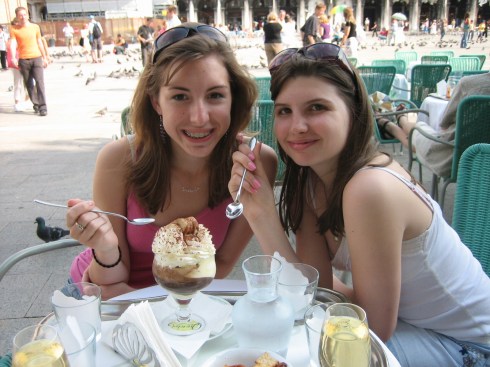
2007: Enjoying gelato:blogginginitaly.com 2007: Enjoying gelato:blogginginitaly.com
2007: Enjoying the orchestras and vino: blogginginitaly.com 2007: Enjoying the orchestras and vino: blogginginitaly.com

I sat at a little table, had a cup of strong coffee, and am now back at my hotel writing some postcards and this letter to you. Tomorrow I shall take in other places of interest here in Venice, like The Doge’s Palace, and then leave about 6:00 PM.

JM Photo: blogginginitaly.com The Doge’s Palace: JM Photo:blogginginitaly.com

I hope some mail will meet me here tomorrow as I’ll try the American Express office.

Unfortunately, Alex would be disappointed once again. 

Until then, good night and God bless you dear.

Loads of kisses and love.  Yours only, Al

Ciao,

Judy
 

Through His Words: Day Twenty-One

7 May

Reflections From and About My Grandfather
Alexander Capraro, Architect


Day Nineteen
HOTEL DU PARC

Milano
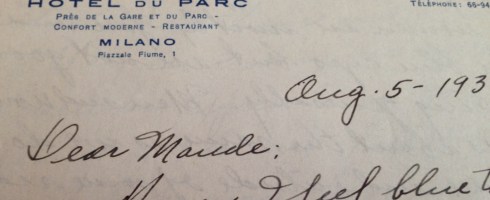
August 5, 1938 (no letter written Aug.4)

Dear Maude,

Honey I feel blue tonight. I don’t know whether you are to blame or not, but I was terribly disappointed yesterday when I called at the American Express Co. here in Milan and found no mail. However, I was appeased by the information that mail from America was expected today and I went there late today feeling sure some mail would be there for me, but I was to be disappointed again. I am leaving for Venice early in the morning, and I left a forwarding address. You know, it’s about three weeks and I have not heard from you and not withstanding the fact that I am kept busy every minute of the day and night, I am getting lonesome for word from you and the children.

Well, let me tell you a little about Milano. It is almost a border town, being only one hour from Chiaso at the Swiss border. There seems to be quite a mixture here of dark and light-haired people. The women are mostly fair and have blue eyes but are not good-looking generally. Men and women dress about the same as we do at home. Outside of some real old buildings, (I saw a church today with relics in it from 2000 BC), there are decidedly very up-to-date and modern designed buildings here.

 Creative Commons Attribution-Share Alike 3.0 Unported

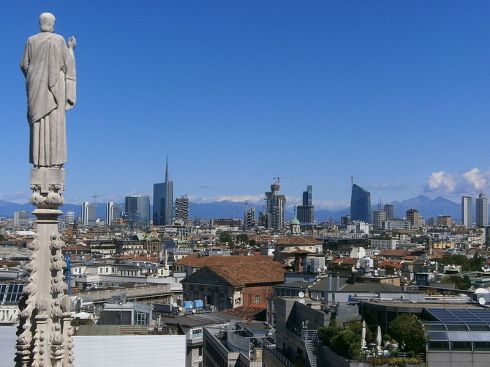
Milan skyline: Creative Commons Attribution-Share Alike 3.0 Unported

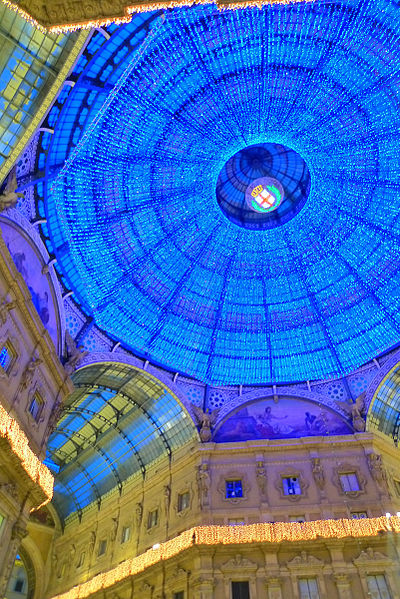
One of the places Alex would have visited is the Galleria Vittorio Emanuele II, named after the first king of the Italy.  It is one of the world’s oldest shopping malls and is located in central Milan.  The Galleria was designed in 1861 and built between 1865 and 1877 by Giuseppe Mengoni. 

Photo circa 1880

Photo circa 1880

Galleria: Wikimedia Commons

Galleria: Wikimedia Commons

Night photo at Christmas: Wikimedia Commons

Night photo at Christmas: Wikimedia Commons

Last night, I attended an open air performance of La Traviata. It was held in the courtyard of an old castle which is big enough to hold 20,000 seats and every one was occupied. It cost 10 lire for admission and the performance was really beautiful.

Today, I went with a regular tour in a sightseeing car and covered the points of interest. Later, I went back to the Duomo di Milano because it is a world-renowned, magnificent structure made all of marble, setback in a large piazza. I spent hours in the place.

Duomo di Milano

Duomo di Milano

I also saw the original painting of the Last Supper by Leonardo da Vinci. 

Da Vinci's Last Supper

Da Vinci’s Last Supper

I miss you a lot and hope I’ll get some news tomorrow. I hope there’s nothing wrong and everyone is feeling well. Goodbye dear, God bless you and the children.

Anxiously waiting for a letter.

I am as ever yours,
Al


Ciao,

Judy
 

Through His Words: Day Fourteen

11 Apr

Reflections From and About My Grandfather
Alexander Capraro, Architect

Day Fourteen
Hotel Regina, Paris

Friday
July 30th, 1938

Dear Toots,

Well, I made the grade today and dragged myself to Notre Dame Cathedral, situated on the banks of the Seine River, with a large front courtyard, and hundreds of old and imposing statues in stone on the entrance and the facade.

commons.wikimedia.org

commons.wikimedia.org (Christopher Kramer)

The exterior is immense, treasures of the church given it by and for the French kings and Napoleon Bonaparte.

One section is set-aside for the keeping of countless treasures in gold, precious gems, etc., which are encrusted on crowns, crucifixes, scepters, vestments, etc. There is one chalice about 2’6″ high, the sun bursts of which are entirely made up of diamonds, each bigger then Doc Vitullo’s pop bottle. On a wall in one of the rooms, there are figures of 228 past popes, each done in cameos with the exact likeness of their faces. These cameos are mounted on a gold frame and pinned on a black velvet background. So much for that. 

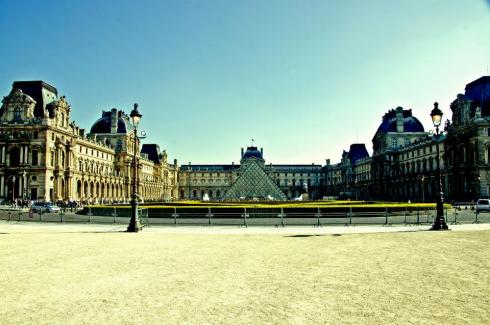
Next was the Louvre and Tuileries, immense buildings with beautiful formal gardens. The Louvre is about two blocks in width and about as long as Jackson to Washington Boulevard (just a little hut!)

Louvre: romeisalwaysagoodidea.wordpress.com

Louvre: romeisalwaysagoodidea.wordpress.com

Then on to the Place de Concorde, a large Piazza with beautiful fountains, marble and bronze statuary, and again formal gardens, and then to the Champs Elysees. This is the finest stretch of boulevard in the world, about 2 miles long, lined with double rows of great big old trees, great wide sidewalks, and the smartest shops, restaurants, and cafés on the first story of each building.

Wikimedia Commons

Wikimedia Commons

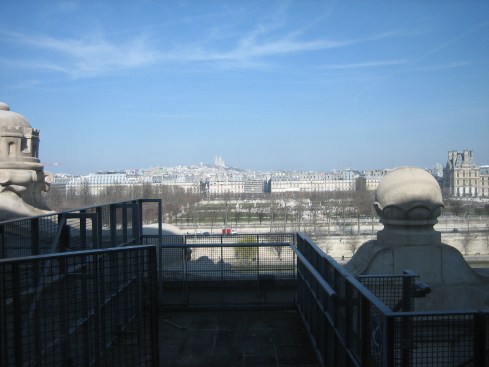
 All of the buildings are six stories in height with balconies and mansard roofs, all stone. Nearly all the main buildings in Paris are about the same height, but naturally vary in design.

A picture I took from the Louvre of Paris shows the symmetrical heights in Paris.

A picture I took of Paris from inside the Louvre shows the symmetrical heights he described.

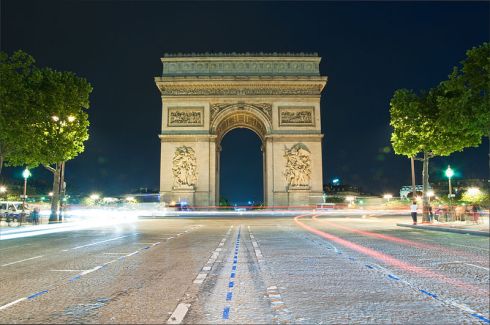
 All the streets are at an angle, the main ones coming to a point at the Arc de Triomphe. This is one place I can’t get to learn, even with the study of the map. Every few blocks there are circles like you saw in Washington, only larger and each one is properly landscaped with fountains and statues. There is no imitation about anything here as far as the buildings are concerned–marble, mahogany, walnut, bronze wrought iron fences and balconies, are all the real thing. The Arc de Triomphe, you may have seen in pictures, is on a high spot and from the top can be seen all of Paris on a bright sunny day. I hope my pictures come out so you can see, at least in pictures, what I am trying so inadequately to describe in words. 

Benjamin Stäudinger

Arc at Night: Benjamin Stäudinger

This is the real international city of the world. Peoples from every known country seem to be here. There is no particular class or racial distinction. It is not uncommon to see a Negro or Sengalese, as they call them here, walking the street with a white French wife and a couple of children. There is no ban against them in theaters, restaurants or cafés. 

I also went to the street market section today. It is clean and well kept and run by all native Frenchmen. Everything is shown outside on neat carts or bulkheads, but they all yell out their wares the same way. Even the butchers have their meat and chops and fish outside, sliced and ready to be sold. Horsemeat is a common thing here, and out of curiosity, I had a steak from the fillet of horse tonight for dinner. If I didn’t know it was horse me, I would never have known the difference. 

Well, tomorrow I shall make an inside tour of the Louvre and then pack up and get ready to go. Next stop is Interlaken and Lucerne, Switzerland, but I will never forget this city of cities. If for no other reason, it was worth making this trip just to see Paris. 

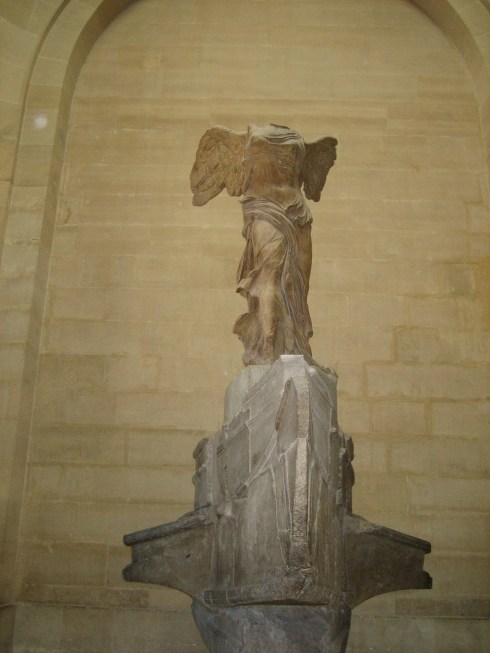
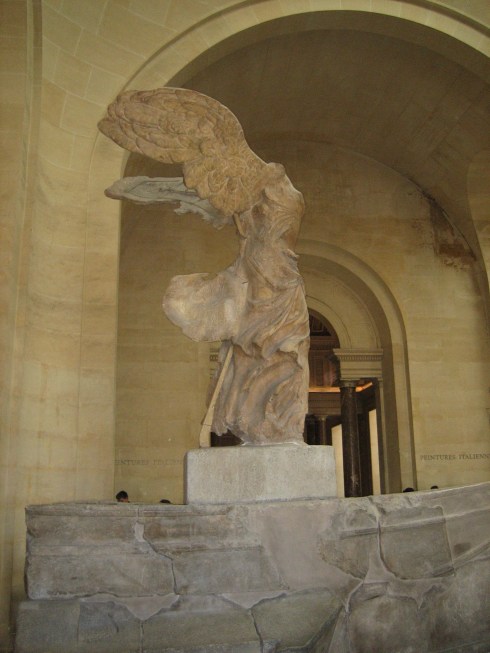
Here are two incredible pieces of art Alex would have seen at the Louvre (from our 2009 family trip to Paris).

IMG_0274

Winged Victory (in entrance To Louvre) blogginginitaly.com

IMG_0275

Winged Victory (in entrance To Louvre) blogginginitaly.com

IMG_0276

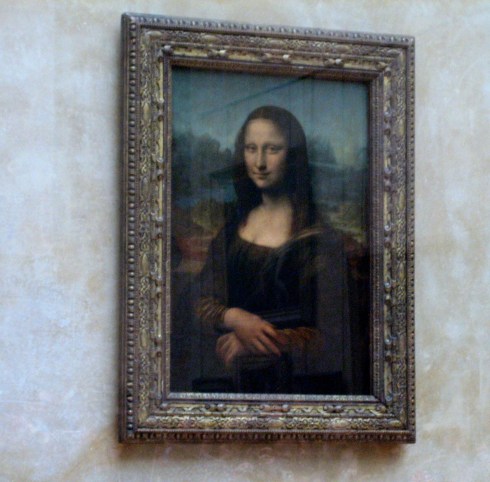
da Vinci’s Mona Lisa

By the way, you ought to be getting my letters starting tomorrow or the next day and I soon hope to get yours. I was dreaming about you last night, and that helped keep me from getting too lonesome. Hope I’ll dream of you every night. Feeling okay, so don’t worry. 

Loads of love, Al

Such a romantic!
Ciao,

Judy


More Rome

18 Feb

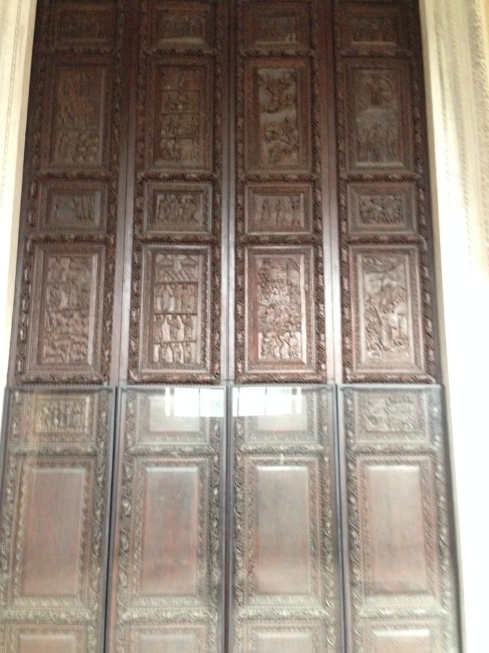
My last two days in Rome brought some incredible experiences. I spent Tuesday with Roman locals, the parents of a friend from Austin. Giovanna picked me up Tuesday morning and we did a whirlwind tour around Rome. We began the day at The Church of Santa Sabina on the Aventine Hill in Rome, the oldest surviving Roman basilica.

IMG_1520

IMG_1519

It is famous for its cypress doors, which may date to the early 5th century when the church was built, and are said to contain the first depiction of the crucifixion of Jesus.

IMG_1522

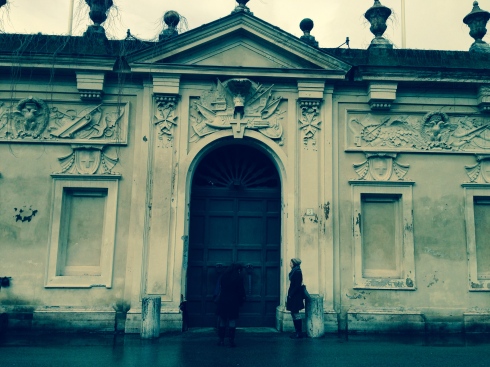
From there we drove to the Villa del Priorato di Malta, home to the Grand Priory in Rome of the Sovereign Military Order of Malta, which remains a sovereign entity. IMG_1528

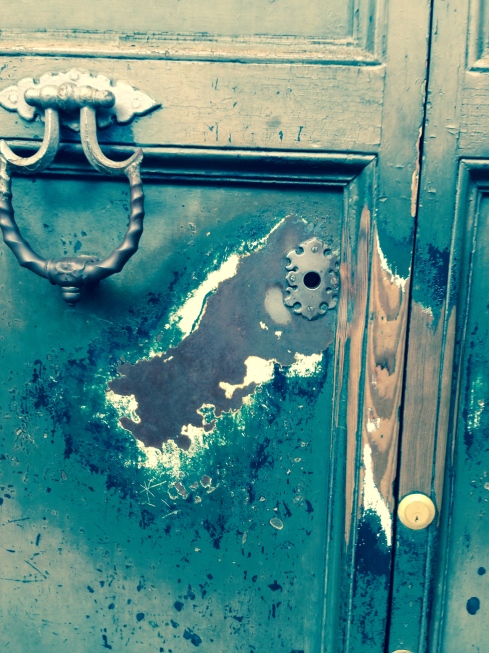
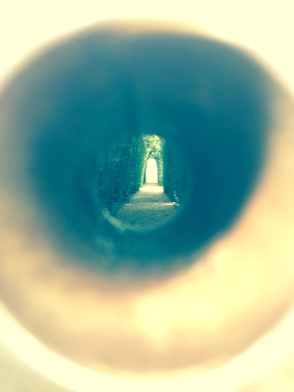
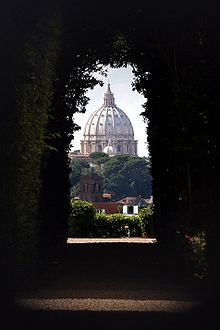
The Villa may be best known for a keyhole in the door

IMG_1527

through which you can clearly see Saint Peter’s Basilica, far across the city. The first photo is from my phone; the second shows exactly what you see through the keyhole.

IMG_1526

220px-StPetersBasilica_Keyhole_2

wiki photo

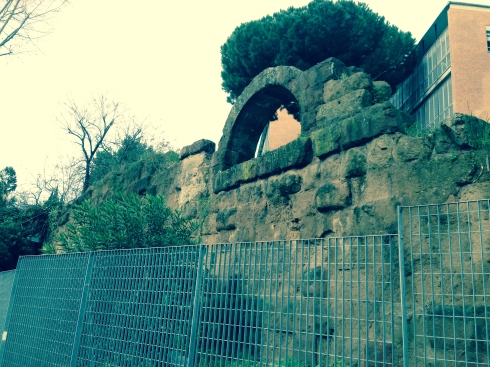
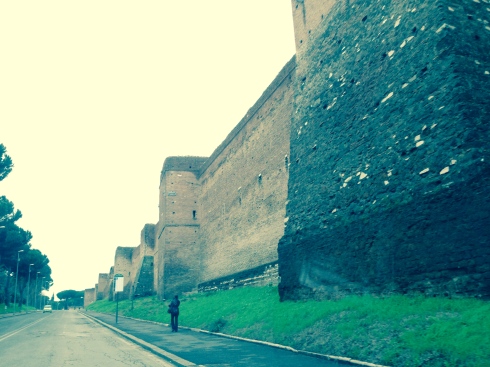
From there, we saw part of the original Roman Wall called the Servian Wall, sections of which are still visible in various locations around Rome. The Servian Wall was a defensive barrier constructed around the city of Rome  in the early 4th century BC.

IMG_1532

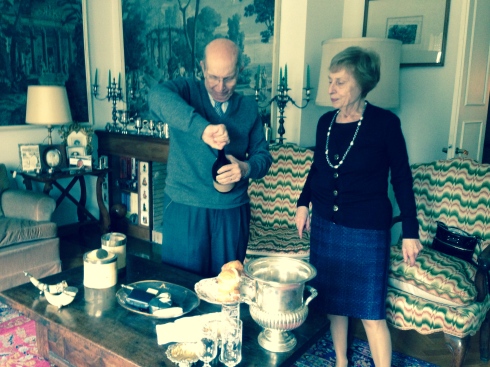
Next on to lunch at my “guide’s” home. What a thrill it is for me to be invited into the home of local Romans and share in their passion for all things Italian. I was introduced to Giovanna’s husband and together we shared wonderful conversation and the most delicious lunch, beginning with Champaign in the drawing-room.

IMG_1534

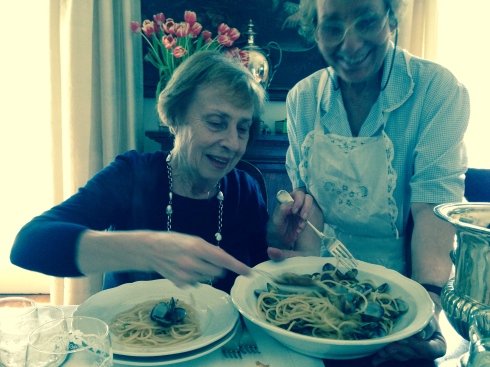
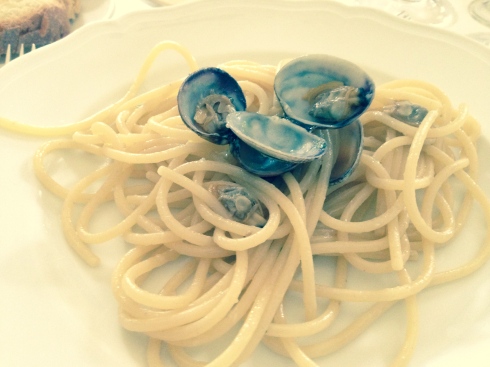
From there, we moved to the dining room and were treated to Spaghetti con vongole

IMG_1540

IMG_1537

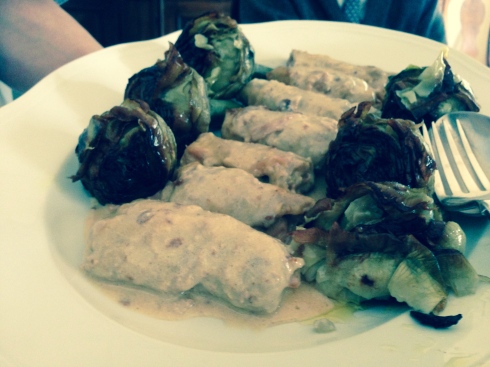
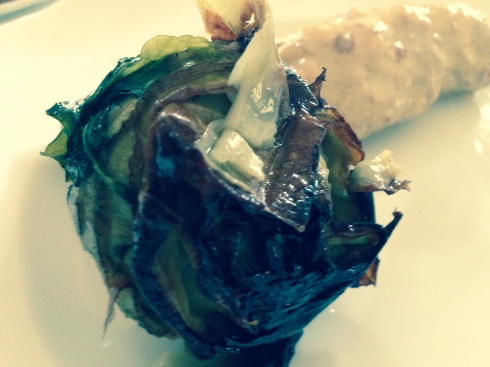
Sicilian artichokes and a rolled meat and cheese dish (sorry I don’t know the name!)

IMG_1541

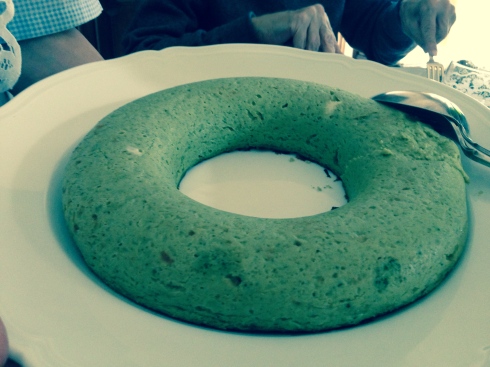
IMG_1542A beautiful vegetable terrine

IMG_1543

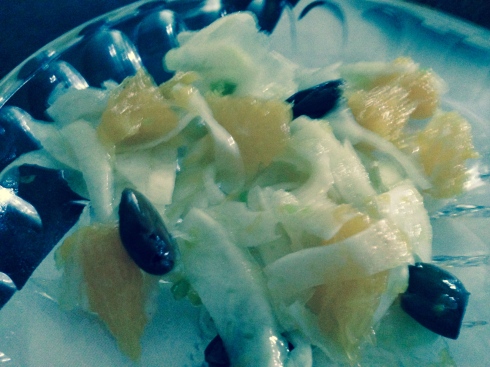
Fennel saladIMG_1544

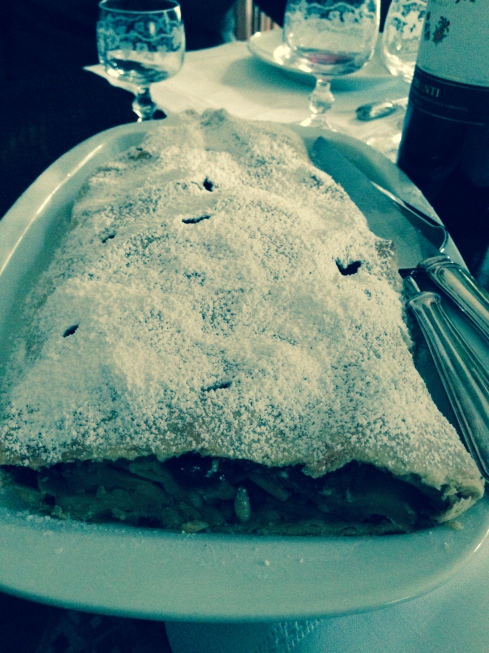
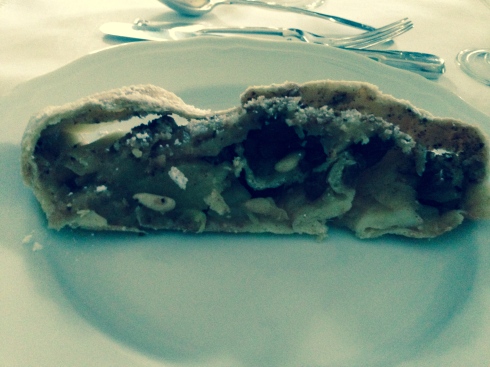
and homemade apple torta!

IMG_1545

IMG_1546

We conversed easily in both Italian and English and spent a great deal of time talking about places and treasures to visit in Italy.

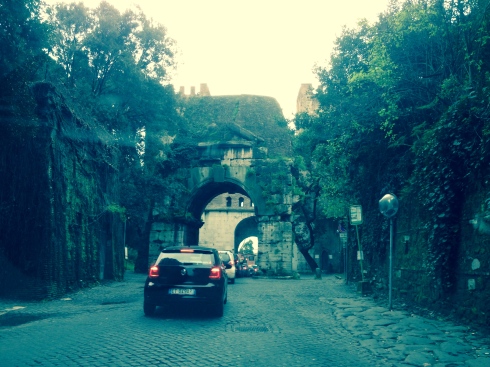
After lunch, more of my tour. First up was a ride along Appia Antica, or as you may know it, the Appian Way. IMG_1550

IMG_1552

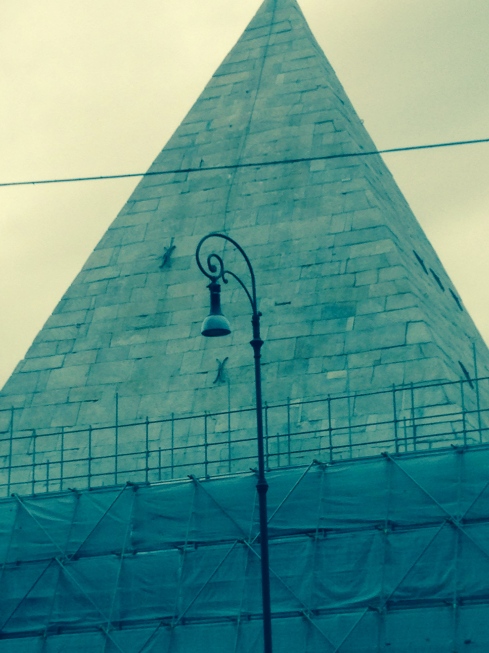
From there we drove to the Pyramid of Cestius, built around 18BC-12BC as a tomb for magistrate Gaius Cestius. At the time it was built, it lay in the open countryside as tombs were not permitted within the city walls.

IMG_1557The pyramid was incorporated into the Aurelian Walls, close to Porta San Paolo.

IMG_1554

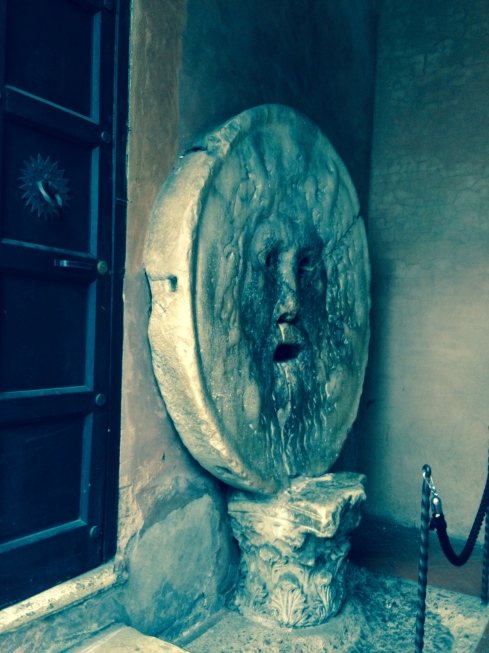
Up next, La Bocca della Verità, aka The Mouth of Truth. This ancient Roman marble disc displays a carving of a man-like face and is thought to have been part of a first century fountain or even a manhole cover. Legend has it that if you tell a lie, and put your hand in the mouth, it will be bitten off. So be warned! During the 17th century, it was placed in the portico of Santa Maria in Cosmedin, the church which is home to relics of St. Valentine.

IMG_1562

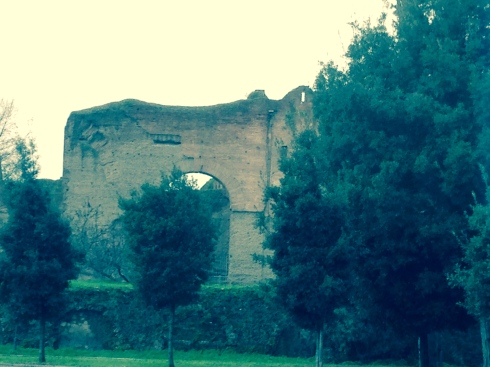
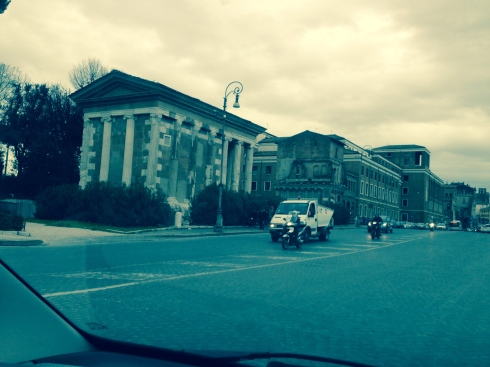
And finally, on to ancient temples before heading home.IMG_1563

IMG_1564

What an amazing day I had, with my ever hospitable and knowledgeable private tour guide and now new friend.

And to think we did all that in this:

IMG_1565

Giovanna, grazie per una giornata meravigliosa e una ricorderò sempre!

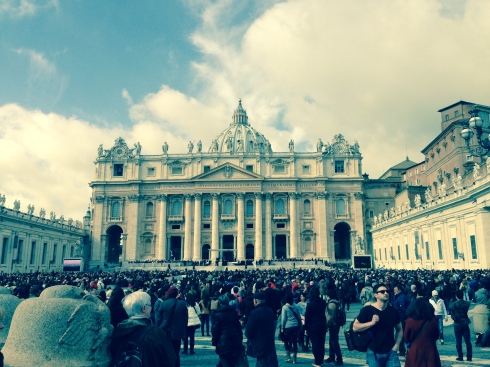
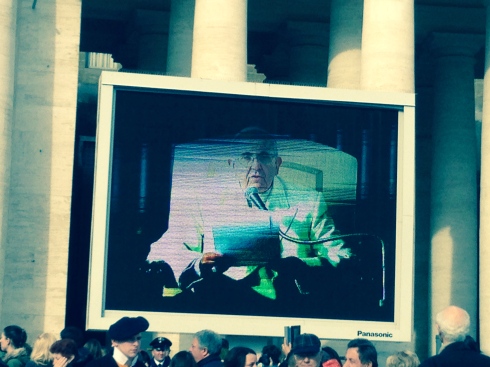
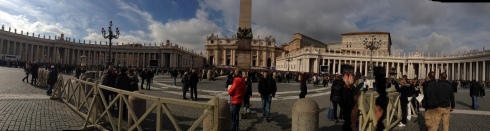
That was Tuesday, and I still had one day left in Rome. What better thing to do than attend a Papal audience.  So that I did, Wednesday morning, along with about 12,000 others, but who’s counting!

IMG_1582

IMG_1578

IMG_1575

IMG_1583

Arrivederci Roma once again. You never fail to amaze. Till next time.

Ciao,

Judy
Rome in Winter

10 Feb

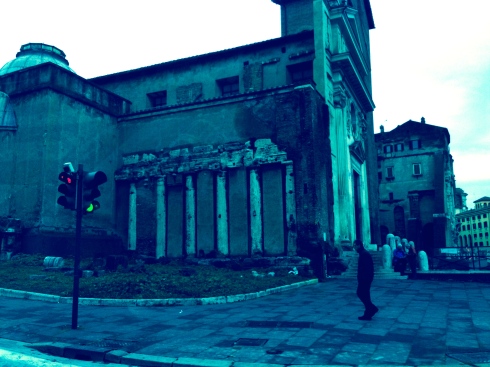
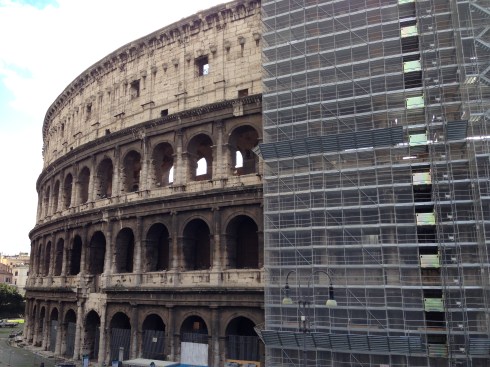
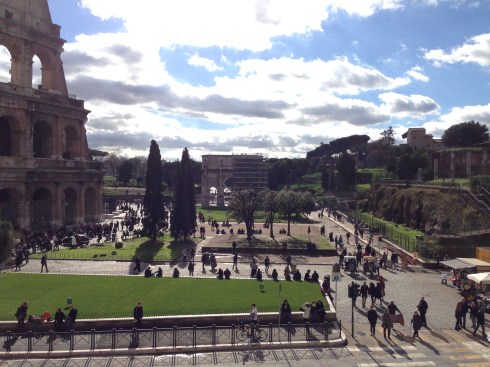
Even if it happened every day, I hope I would still experience the same thrill that accompanies turning a corner and seeing Rome’s Coliseum.  An antiquity of enormous proportion and history, it rests comfortably within Rome’s modern world.

IMG_1417

as does its neighbor, the Roman Forum.

IMG_1421

IMG_1420

Amidst the much-needed restoration, and the winter tourists, and after taking the requisite photos, I took time to sit on a wall and ponder just how these were built and what life was like so long ago. True marvels.

And then there are the churches of Rome. Each one is a museum, housing more art than many towns and cities around the world. One among many is the Basilica of Santa Maria Maggiore.

IMG_1403

IMG_1408

IMG_1411

I came to Rome to visit Benita. What a perfect excuse to visit Italy for a week. While she was in class, my first day was filled with monuments, piazzas, and yes, walking in my grandfather’s footsteps. At the very end of Via Veneto, across from Harry’s Bar, is the Grande Hotel Flora, where he stayed for five nights in August of 1938. (More on his time there when I get to those letters.)  It is now owned by Marriott, and fortunately, they have been very attentive to the history and original detail of the hotel.

IMG_1427

I met Baiba, the Sales Manager, and she willingly showed me around the hotel as she listened to the story of Alex’s journey. She showed me some rooms and we wondered which he might have stayed in.

IMG_1436

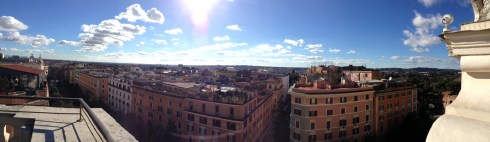
One of the hotel’s best features is the rooftop lounge which provides a 360 panorama of Rome. Whether overlooking Borghese Gardens or steeples around Rome, the view is breathtaking. I promised Baiba that Len and I would come for a sunset drink next time in Rome.

IMG_1432

IMG_1434

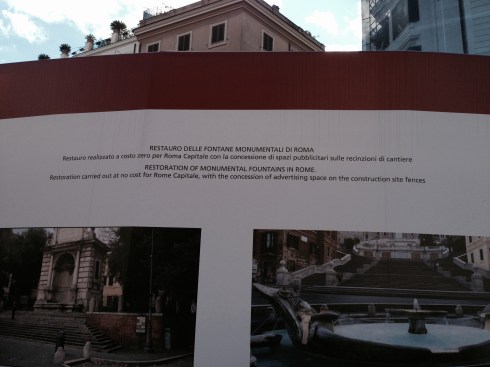
Other notables along my walk included Piazza di Spagna, where the fountain at the base of the steps is under major reconstruction.

IMG_1437

Nonetheless, the Spanish Steps are always one of my favorites and the place where fellow students and I met Dustin Hoffman many years ago. Really.

IMG_1438

Len, this is for you… The Ferrari Shop.

IMG_1442

Early evening, I waited at Piazza Cavour to meet Benita. What an amazing sunset, and so happy to be off my feet.

IMG_1447

We decided to start with apertivi, an Italian tradition.IMG_1456

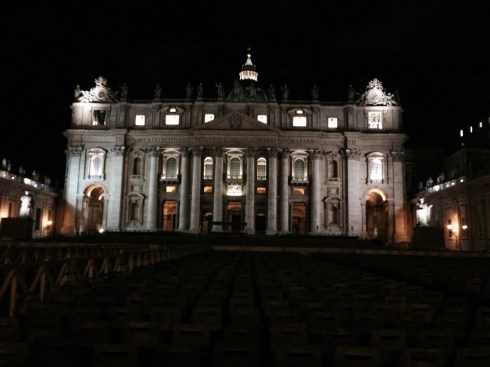
And then took an evening stroll to the Vatican

IMG_1463

IMG_1466

IMG_1467

Castel Sant’ Angelo

IMG_1468

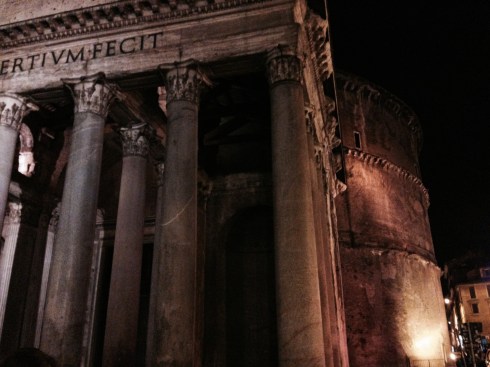
The PantheonIMG_1470

IMG_1471

And finally, an archeological dig.

IMG_1472

We walked to a favorite restaurant for dinner only to find it closed for remodeling, so we found another filled with locals. We ended the evening with gelato. Certo!

IMG_1462

The next day, Friday, while Benita was in class, I walked around Monte Mario, the town I had lived in as a student so long ago. Memories. Later at the hotel, I met the most amazing couple, Italian born and living in Basel, he a geneticist/researcher, both with incredible stories to tell.

photo

We literally spoke for hours, mostly in Italian, exchanged contact information, and might possibly meet in Cortona or Basel sometime. Giovanna, you would have been proud. I can’t tell you how helpful my Italian classes have been; and how very rewarding for me to be able to speak to people I might otherwise never have met.

That night, I took Benita and several of her friends to Navona Notte for dinner…a most enjoyable evening and very reminiscent of my time as a student in Rome.

photo - Version 2

After dinner, we parted company with the girls as Benita and I were staying in town that night. We wandered over to Piazza Navona and headed to a place near and dear to me, Tre Scalini, where my parents celebrated their 50th anniversary. Fortunately, they had brought their children/spouses along to join in the celebration. In honor of them, and my sibs, we ordered il tartufo! Just think chocolate…lots of it!

IMG_1484

IMG_1483

IMG_1480

Finally, we made our way to the Trevi, never to be overlooked if one wants to return to Rome.IMG_1489

With Benita’s long arms, we managed a selfie and I tossed a coin in the fountain. Benita had already tossed hers three weeks ago.

IMG_1488

Exhausted, in a very good way, we headed to our hotel near Termini, as we would leave for Cortona via train early the next morning. As we neared our hotel, Rome was nearly asleep.

IMG_1490

An incredible day!

Ciao,

Judy
Preludio

14 Nov

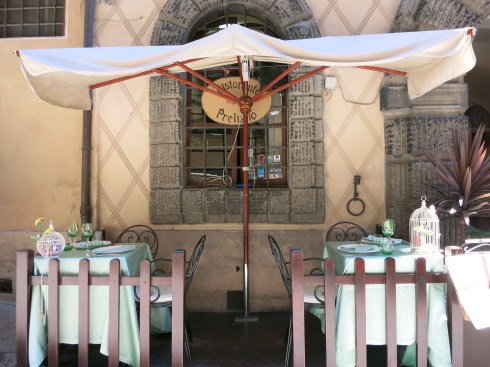
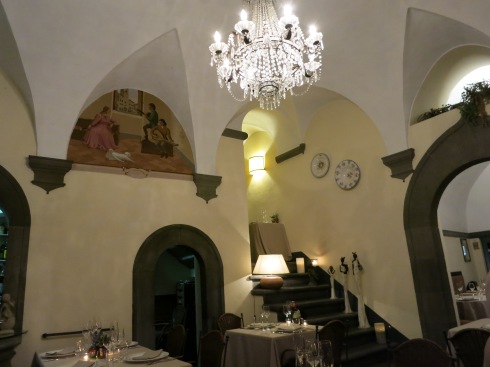
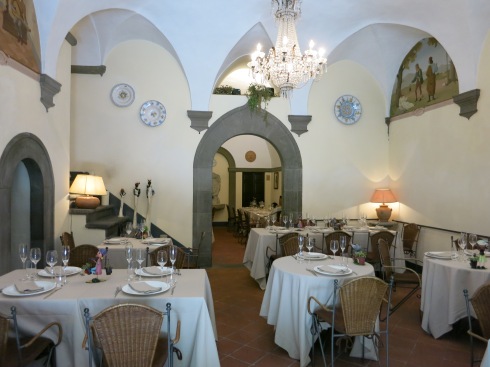
Sometimes, we walk by a place, take note, and know we need to return. That was the case for us with Preludio, an elegant restaurant in Cortona. Unfortunately it took us three summers to eat there, but now it’s on our annual To-Do list.

IMG_0034

From the outside looking in, it seems as though this is a restaurant for celebrating an occasion – a birthday, an anniversary, etc.  Draped linens adorn the tables which are set with long stem wine glass and glowing candles.

IMG_0033

IMG_0033

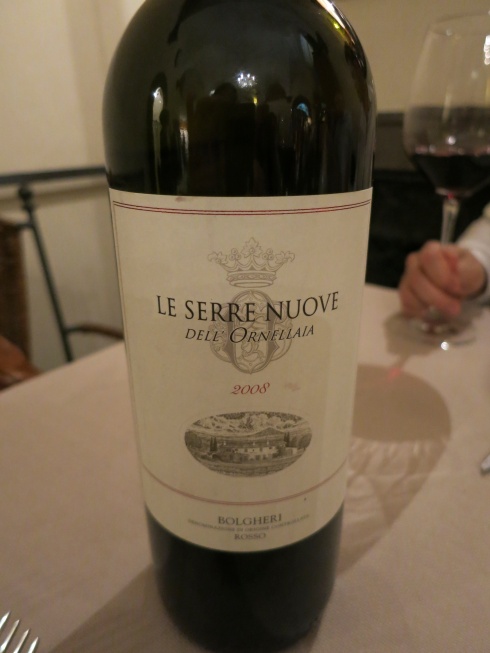
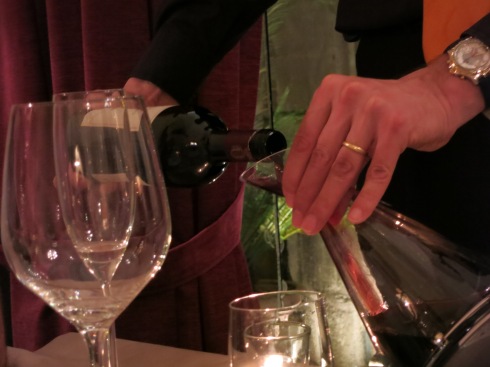
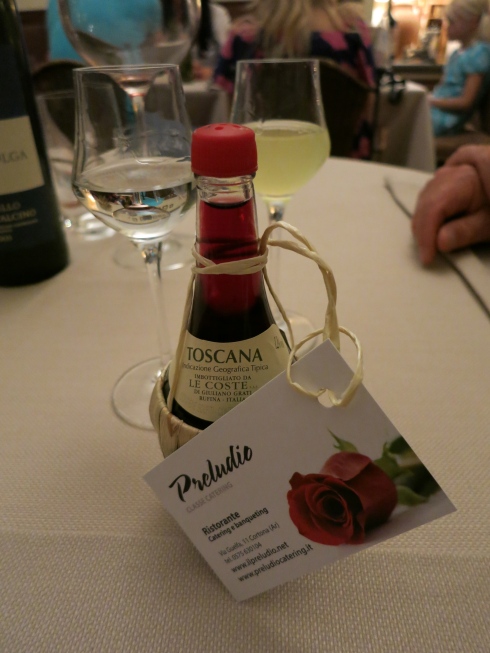
Local friends Luca and Simone first introduced us to the restaurant and assured us that wanting great food is occasion enough.  Fortunately for us, they did all the ordering, but I must admit, we dined as if we were celebrating a big occasion. First things first, some incredible wine from the Bolgheri region of Italy.

IMG_0038

IMG_0035

IMG_0034

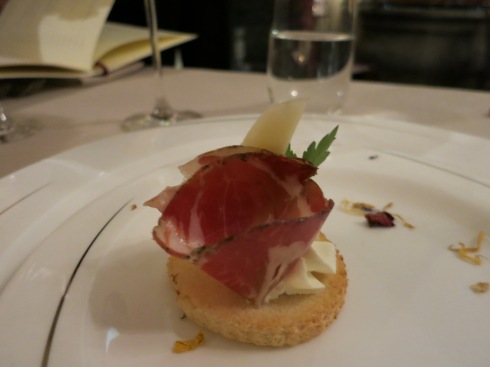
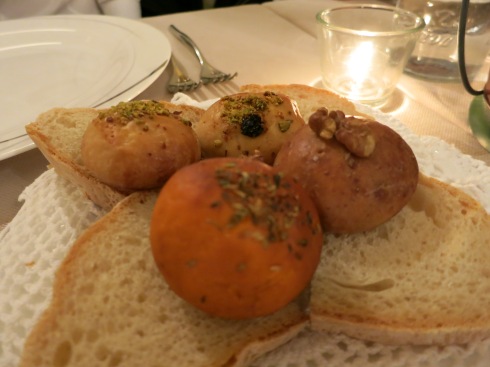
Then on to the primi. The attention to detail at Preludio is as incredible as the food, and the presentation of each dish is truly a work of art. I especially loved how our friends chose their favorite local and regional dishes to share with us. While I can’t remember the names of many of the dishes,  I do remember the taste.

IMG_0039

IMG_0043

IMG_0042

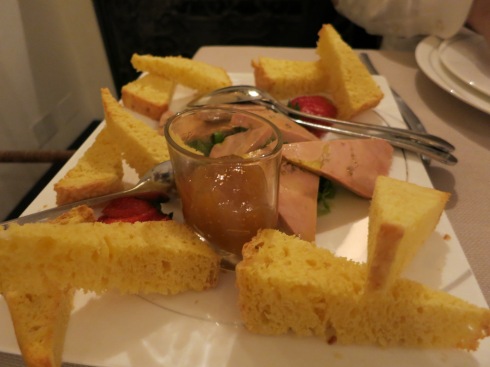
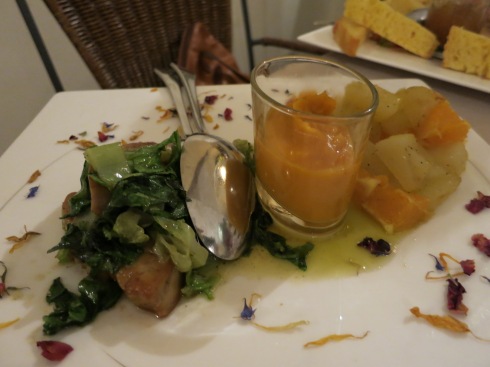
Escalope of foie gras sauce, lettuce, grapefruit and potatoes pumpkin

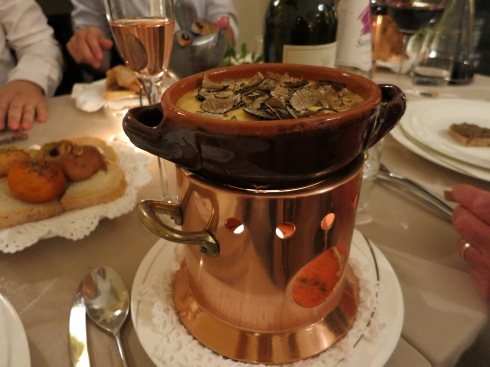
Not being such a foie gras aficionado, I was very content sitting next to this incredible fondue!

IMG_0041

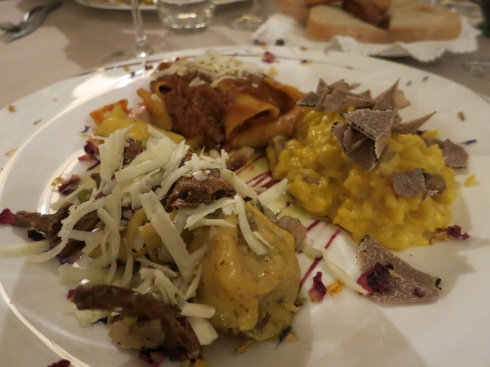
For the secondo, we were treated to a Tuscan trio – two pastas with meat and one saffron porcini risotto with black truffle. I headed right for the risotto!

IMG_0044

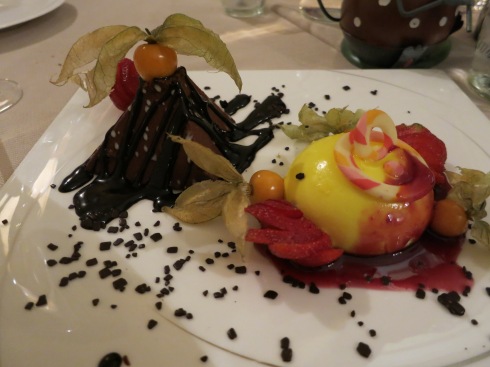
Although two-thirds of my plate was still covered, our friends wanted us to share a Florentine steak. With no more room for dinner, we finally agreed on dessert which they insisted was mandatory. Well, feast your eyes!

IMG_0045

According to their website:

Preludio is always looking for new challenges posed by the evolution of taste, frequently revisited by combining creativity and continuity and adapting it to the current seasons. 

Do not ask us what is our main dish, because our ambition is to ensure that every dish that leaves our kitchen is new and unique…

Sometimes a night doesn’t need a special occasion to celebrate as the night itself becomes the occasion.  Our dinner at Preludio with our local friends was one of those nights. Grazie for a special night we will long remember.

IMG_0010

Just like in English, the name Preludio (prelude) means the beginning or an introduction. I’m so glad we’ve been introduced!

Ciao,

Judy
Postscript:

Len and I enjoyed the restaurant so much, we returned another evening for a “simpler” dinner of risotto, salmon, artichokes and potatoes. We’ll be back for more. 

Through His Words: Reflections From and About My Grandfather

2 Oct

I am about to begin an incredible adventure with my paternal grandfather. We will venture to Europe, via ship, and spend a month together touring Italy. During our stay, we will visit his birthplace, Pietrabbondante, a town he left with his parents when he was four years old to emigrate to the United States.

In the year 1895 on the 9th day of January, Mr. Ruggiero di Salvo, Mayor and official of the Bureau of Vital Statistics for the city of Pietrabbondante, received information that at the hour of 4:00 A.M. on the 7th day of Jan. 1895, was born in Pietrabbondante a male child to whom the name of Allesandro was given, son of Vincenzo Iacapraro and Maria Emerenziana Vitullo.

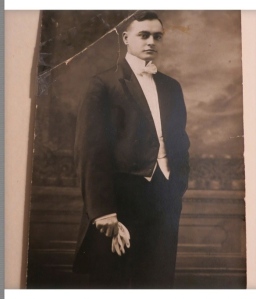
Meet Alexander V. Capraro, my grandfather.  An old, warn picture perhaps but a very handsome man indeed. We think this may have been his wedding day.

Image

Now you may be wondering….born in 1895? 118 years old and taking me on a month-long trip? Exactly.

Although the Internet didn’t exist, and my grandfather only lived to the young age of 61, he was a blogger. Oh, they didn’t call it that at the time, but like so many others, he wrote about his experiences in the nearly lost art of letter writing.   Fortunately, the letters were kept and are now in my possession. Thanks, Aunt Marion!

My grandfather was small in stature but large in accomplishment. He was the first Italian-American architect licensed in the state of Illinois and fortunately, a few of his buildings still stand for us to admire. Unfortunately for his grandchildren, however, he died before we really had a chance to know him. But now I plan to change that as I read through and relive his journey to his homeland in 1938. It was his only visit to Italy, and since my grandmother didn’t want to leave their three children, he wrote her daily. Over the next year, I will include parts of his story in my blog. Next summer, Len and I will visit his hometown and perhaps even find the home where he lived.

I am so excited to begin this journey and to share my experiences along the way. My love and connection to Italy continue to grow as I research the past and partake of the present. And while studying history is one thing, studying my paternal ancestors’ history through my Grandfather’s words is clearly another.

Over the next year, Through His Words: Reflections From and About My Grandfather will unfold as I read his letters, follow his footsteps, and get to know better the man I called Grandpa so many years ago.

Ciao,

Judy
Il Pozzo

14 Sep

One of the things that makes Cortona unusual is the amount of art one can see in this lovely town. Two incredible museums, as well as many churches, are home to magnificent art and/or artifacts. Surely these are not to be missed.

But once you fall in love with the town, how can you take a piece of it home? That’s easy. Visit Il Pozzo.

IMG_0032

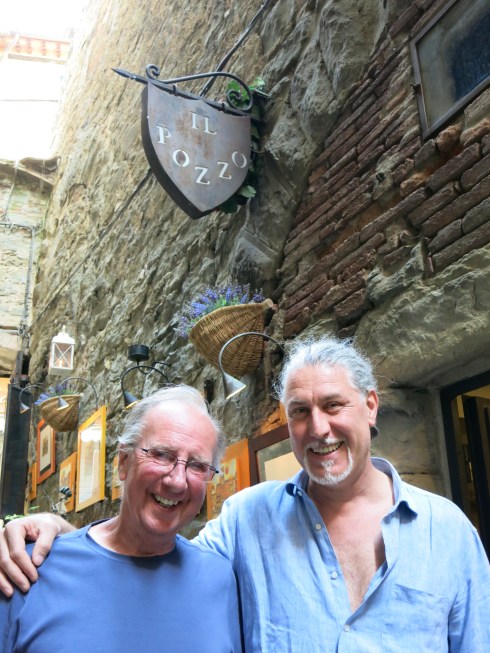
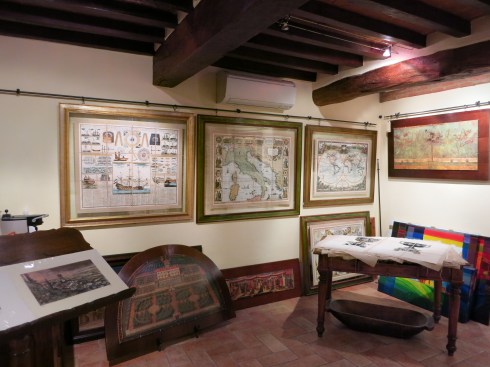
Il Pozzo, meaning the well, is located just off the busy Via Nazionale. It doesn’t take long to get caught up in the music and art that fill the senses before even entering the gallery.

IMG_0034

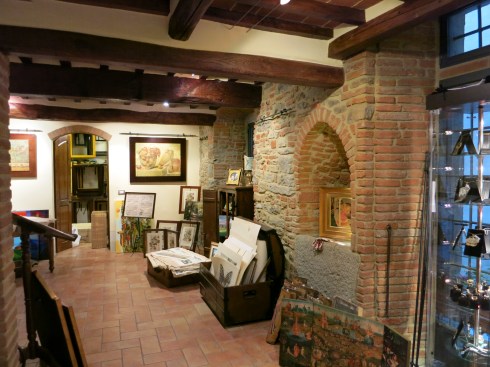
And while wonderful art treasures await, so does an unexpected architectural journey.

Meet Ivan, proprietor with his wife Loriana. Ivan is as happy to show you around the building and share its history as he is finding the right treasure for you to take home. He also speaks English quite well!

IMG_0015

Paraphrasing and borrowing from their website description,

The voices of the busy Via Nazionale seem centuries of history away…

IMG_0033

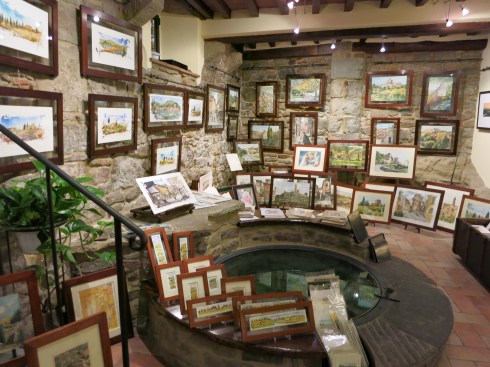
Visitors can contemplate the medieval ambiance uncovered two levels below the modern-day street, tastefully returned to the light with its ancient aspect and functionality.

IMG_0047

One should not miss the unique well “ad ampolla” from which the Gallery “Il Pozzo” takes its name and in which there are traces of the ancient knowledge and architectural skill of the Etruscans ancestors’ civilization.

IMG_0012

Here, nothing is left to happenstance and every wall, every nook and every shelf becomes a frame for an interesting detail, underlining the value of the artistic and artisan objects displayed.

IMG_0049

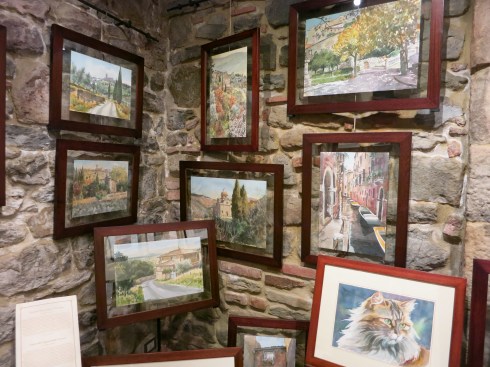
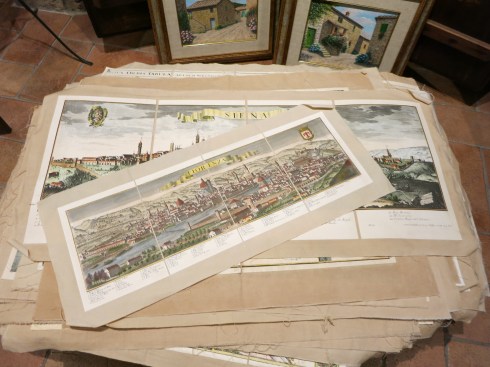
The attention and interest of the visitor is fed with the variety of the paintings, photographs, prints, books, engravings, ceramics,

IMG_0050

and artisan crafts such as leather-covered books, hand crafted papers, jewels and objects in glass

IMG_0038

IMG_0056which are an integral part of the history and customs of Tuscany.

IMG_0041

The Gallery “Il Pozzo” can be summed up as an encounter between Cortona and the visitor.

IMG_0040

That said, it seems to correspond to the high level of historic and artistic tradition of the homeland of Signorelli, of Pietro Berrettini and of Gino Severini.

IMG_0042

Everything here seems to court the taste and artistic sensibilities of the refined tourist of the new century.

IMG_0039

This past summer, we found an original watercolor that seemed to have our name on it. Wonderful art has that quality – it somehow speaks to its eventual owner.  Lucky for us, we brought some of ancient Cortona back to our home through this beautiful work by Allesandro Bulli.  Not a day goes by that we don’t enjoy looking at it and reliving a story.

IMG_0976

For us, this vividly captures many of our daily stops: morning cappuccino at a cafe, a local enoteca, the grocery store, a bit of the two main piazzas, a restaurant overlooking the historic center, etc.

Whether you are just browsing or looking for something special to purchase, there is never any pressure at Il Pozzo. If you do find something for yourself or for a gift, Ivan will carefully and beautifully prepare it for its journey home.

IMG_0046

IMG_0020

And, of course, prepare you an espresso while you wait!

IMG_0045

So be sure to put Il Pozzo on your list of places to visit in Cortona, and tell Ivan and Loriana that Judy sent you. Your visit will be fun and fabulous, and give you the opportunity to take a little piece of Cortona home with you too. We’re so happy we did!

Ciao,

Judy
Pitigliano

29 Jul

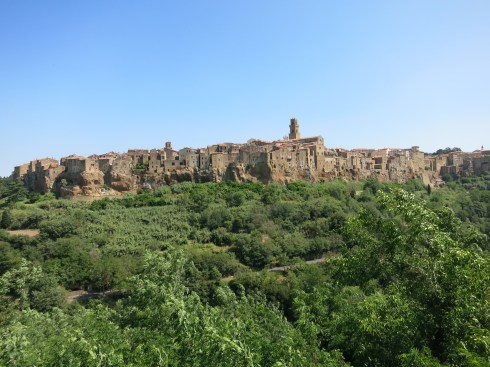
Often the word “marvel” is used to describe huge skyscrapers…modern marvels built with the latest in technological advancements, built to withstand nature’s strongest elements and built to stand the test of time. This being the case, then what word aptly describes the truest technological marvels that have more than survived nature’s strongest elements and survived for centuries? What word can we possibly use to describe places like Pitigliano, a stunning medieval town dramatically perched atop a tufa ridge?

IMG_0019

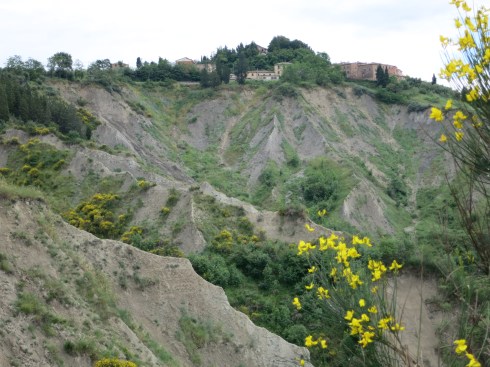
While Len and I love traveling by train and bus in Italy, one of the benefits of occasionally renting a car is the opportunity to explore the more remote areas. Situated between Roma and Firenze, and east of Grosseto, the Hills of Maremma in Tuscany is one of those areas. The Hills are filled with non-traditional Tuscan landscapes and amazing surprises around each bend.

IMG_0051

IMG_0050

IMG_0046

There are several towns in the area, but the most stunning to me is Pitigliano, a medieval town built on tufa or volcanic rock. When you hear medieval, think 500-1500 time frame. Houses and buildings in town are built on sheer cliffs that appear suspended over the valley, and sit above a network of caves and tunnels said to have been inhabited in prehistoric times. Fortunately, there are places to pull over as this is a photo-op must.

IMG_0020

IMG_0021

IMG_0050

In the 16th century, Pitigliano became a haven for Jews escaping enclosed ghettos in neighboring cities. Today, visitors can still see parts of the ancient Jewish Quarter; a 16th century aqueduct; a few beautiful churches; a 14th century fortress which houses a museum and medieval torture chamber; and sometimes even tour the underground tunnels and caves.

Pitigliano, Italy, at night

Pitigliano, Italy, at night (Photo credit: Wikipedia)

While only about 300 people still live in Pitigliano in southeastern Tuscany,

English: The Municipality of Pitigliano within...

The Municipality of Pitigliano within the Province of Grosseto, Tuscany, Italy (Wikipedia)

this ancient structure still stands and functions – deeming it not just a marvel, but truly marvelous!

MARVELOUS…A word befitting!

Ciao,

Judy
 

Italian Hill Towns

7 Jun

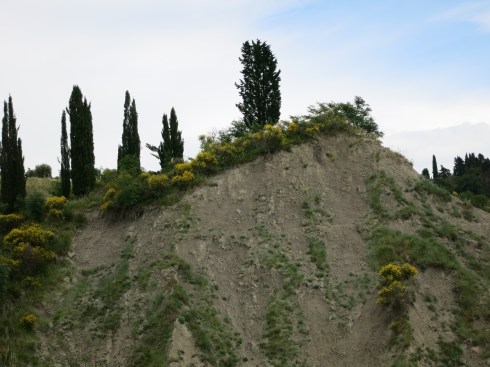
Just returned from a two-day tour of the Italian countryside in Tuscany and Umbria where the drive was as lovely as the three ancient towns we visited.
IMG_0041

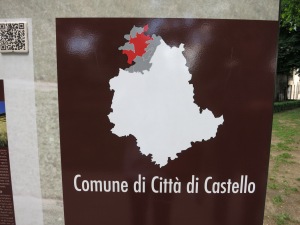
Our first stop was Citta di Castello, meaning town of the castle. Although there actually is no castle, there are stately old buildings and monuments, and of course, in the “larger” cities as least, a duomo or cathedral. The area was an ancient Roman port on the Tiber River and some archaeological remains of the port are visible in the southern part of the historical center.

IMG_0001

IMG_0002

IMG_0009

IMG_0006

IMG_0037

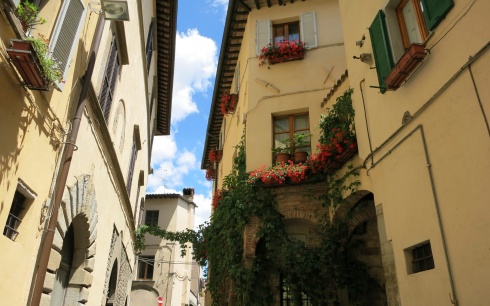
Eliza, at Antico Canonico where we spent the night, was most helpful in telling us about the city as well as other nearby towns which we visited the next day. Our “hotel” was originally built years ago as a home for priests. While the door to each unit is the original “cell” door, the apartment behind is simple, ample and clean. Yes, this is our apartment door!

IMG_0033

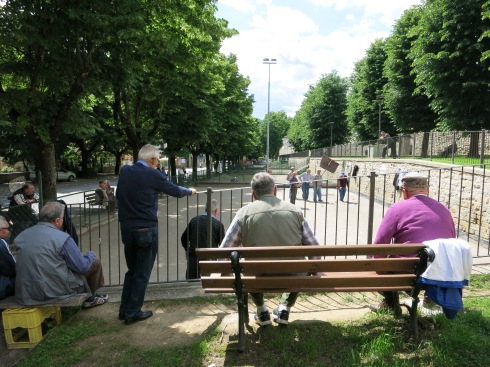
In the afternoon, we enjoyed  watching the men’s bocce tournament. And in the evening, we strolled the town with the locals.

IMG_0027

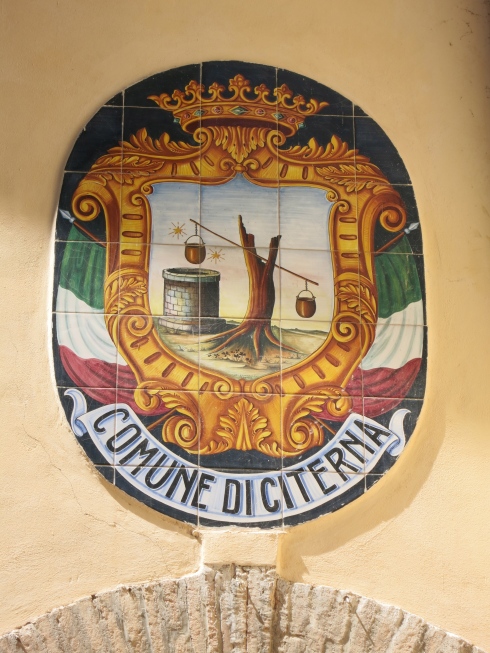
The next morning, our first destination was the lovely town of Citerna in Umbria, a tiny hilltop town which boasts of Etruscan and Roman origins and is ranked among the 100 most beautiful villages in Italy. It is the northernmost town in Umbria and while it was severely damaged during WWII, you’d  never know it today.

IMG_0014_2

IMG_0011_2

IMG_0012_2

IMG_0015_2

The panoramic views as we left town were spectacular!

IMG_0010_2

From there we headed back to Tuscany to a town called  Anghiari. At first, this appeared to be a “modern” town until we came upon the ancient hilltop walled city. Anghiari is famous for a 1440 battle between the towns of Florence and Milan, and even inspired Leonardo da Vinci to create a fresco in Palazzo Vecchio. Although the original fresco has disappeared,  a sketch of it by Peter Paul Rubens is still in existence.

Peter Paul Rubens' copy of the lost Battle of ...

Peter Paul Rubens’ copy of the lost Battle of Anghiari. (Photo credit: Wikipedia)

The ancient town is filled with steep, winding streets, and on one of them, we came across a wonderful shop called Carabattole. Sitting inside was Marinella, from whom we learned about tombolo, an art not practiced in the US.

IMG_0029_2

IMG_0027_2

IMG_0026_2

IMG_0028_2

I bought a lovely pair of earrings similar to the ones shown above. Afterward, we enjoyed a simple but wonderful lunch at a local Cantina.

IMG_0032_2

When we returned to Cortona and talked to some of the locals about our trip, many had not even heard of tiny Citerna. How lucky for us that  Eliza directed us there, as well as to Anghiari. Continuing to follow the road less travelled without agenda always brings us wonderful surprises and new memories as well as the opportunity to share them with you.

Ciao,

Judy