
Wishing family and friends, far and near, a very
Merry Christmas,
Buon Natale,
and Happy Hanukkah!
May you be surrounded by those you love.

©Blogginginitaly.com
Ciao,
Judy
Wishing family and friends, far and near, a very
Merry Christmas,
Buon Natale,
and Happy Hanukkah!
May you be surrounded by those you love.
©Blogginginitaly.com
Ciao,
Judy
It wasn’t supposed to be like this.
Yesterday was Aunt Marion’s 90th birthday and she was throwing a party. How lucky to approach 90, still active and in full command. She had shopped the day after Thanksgiving and found just what she wanted to wear – a red wool jacket and black pants.
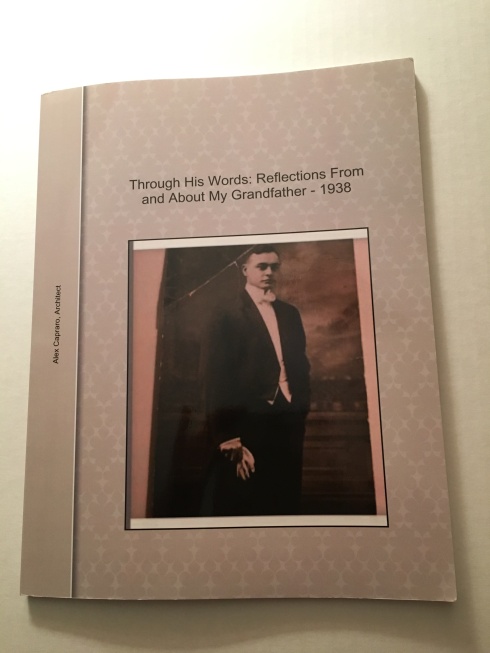
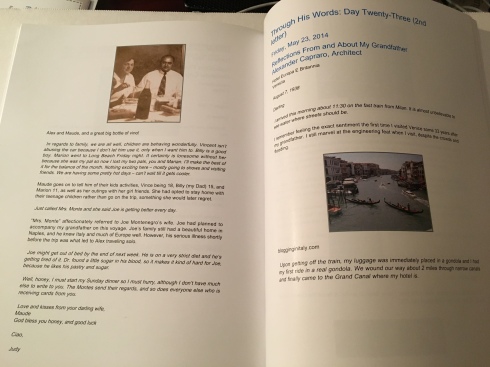
What birthday gift would I give Aunt Marion? The answer came easily. In October, 2013, I began writing a series of posts that traced a European trip my grandfather, Alex, her father, took in 1938. I titled the series Through His Words: Reflections From and About My Grandfather. From Alex’s letters, postcards, etc., that Aunt Marion had saved, I was able to document every step of his incredible journey. 76 years, 10 months and 10 days after Alex returned to his birthplace, so too did Len and I, being the first and only, we think, descendants to step foot in the town of Pietrabbondante, Italy.
With each post, Aunt Marion would call me or I her. How I loved those conversations. Along with several members of my extended family, I learned much about a man I hardly knew, and even Aunt Marion learned a great deal more about her father. Who could have guessed that a blog could bring so much joy?
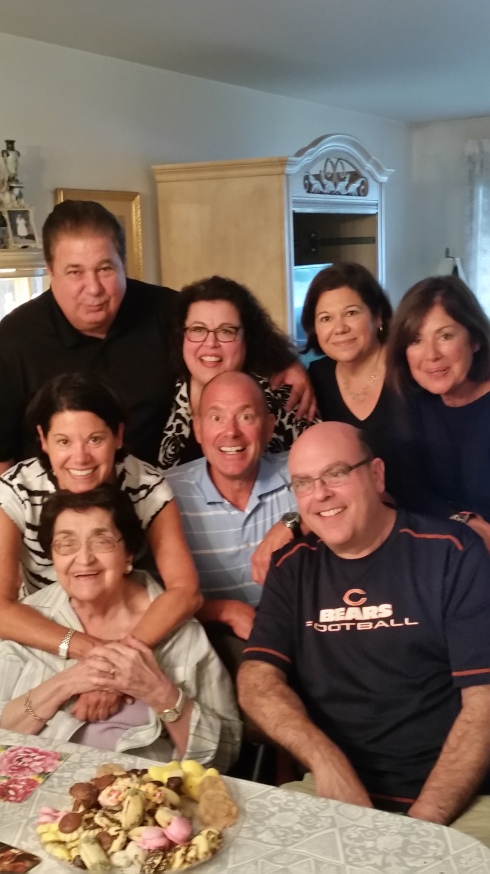
©Blogginginitaly.com Sharing info with Aunt Marion, my sibs & some cousins.
“I just wish I could print these all out,” she had said to me on more than one occasion.
As her 90th birthday approached , I found blog2print.com, a company that could make a book of my blogs. With guidance from a very helpful customer service, I created the front and back covers, wrote the dedication, and selected the contents. It was the perfect gift.
©Blogginginitaly.com
©Blogginginitaly.com
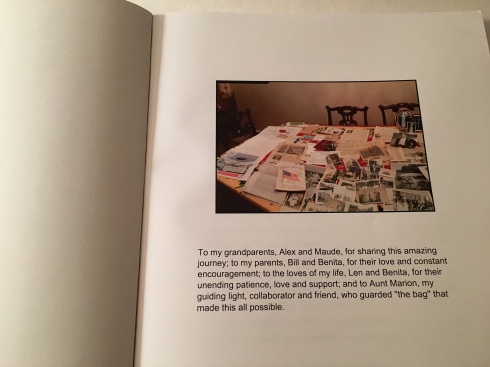
©Blogginginitaly.com Dedication Page
Of particular note is the dedication to Aunt Marion: …my guiding light, collaborator and friend, who guarded “the bag” that made this all possible. The bag, of course, contained my grandfather’s letters and so much more that she had kept all these years.
It wasn’t supposed to be like this.
On Saturday, instead of celebrating her 90th birthday, we celebrated her wonderful life. Sadly and very unexpectedly, she left us just 5 days short of her 90th birthday.
I will miss her and our talks. But like the other strong Italian women in our family who proceeded her – my grandmothers, my mother and my aunts, I will remember her always and the traditions she passed on.
If only I could have given her the book.

©Blogginginitaly.com
Sleep well, Aunt Marion. Love you.
Judy
By now, of course, you have seen all photos and videos – after 108 years, the CHICAGO CUBS won the World Series. Pinch me – it’s not a dream.
We watched games 6 and 7 last Tuesday and Wednesday, from front row (ok, TV) seats. On Friday, we actually joined the 5 million celebration on Michigan Avenue.
But there was one more thing we needed to do.
Besides this incredible come from behind story, there have been so many stories of loved ones who never saw the CUBS win the big one. Social media and the news are filled with feel good stories – how loving the CUBS is a family tradition handed down from one generation to the next. I get it because it’s true for me too. But how best to bring loved ones into this jubilation?
After the win, Wrigley Field provided the answer… people began writing the names of loved ones on the storied walls.
On Sunday, Len, Benita and I walked to Wrigley Field. Even the sky was CUBBIE blue.

©Blogginginitaly.com
So many people were out taking in the sunshine and feeling the afterglow of this victory, including us.
As we neared the ballpark, we were greeted with this wonderful sight. Chills.
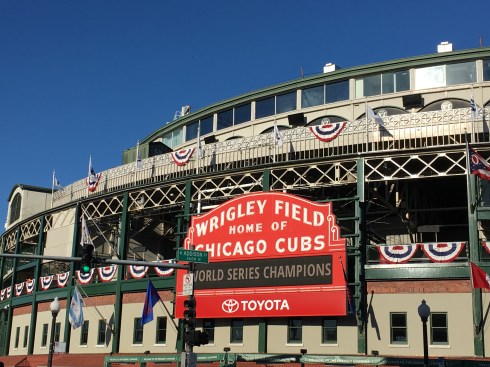
©Blogginginitaly.com

©Blogginginitaly.com
A bit of history: The ballpark first opened in 1914 as Weeghman Park for Charles Weeghman’s Chicago Whales of the Federal League, which folded after the 1915 baseball season. The Cubs played their first home game at the park in on April 20, 1916, defeating the Cincinnati Reds with a score of 7–6 in 11 innings.
Seemed like a good photo op.
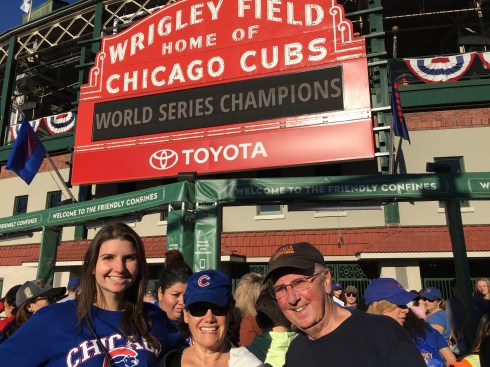
©Blogginginitaly.com
Then we worked our way to the wall – we were on a mission. In my pocket was a favorite photo of my parents…a bit faded, but so like them, out enjoying life and having fun.
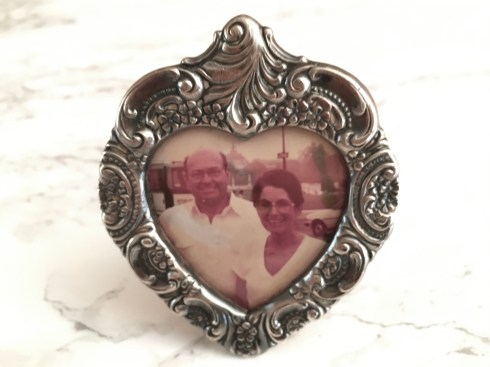
©Blogginginitaly.com
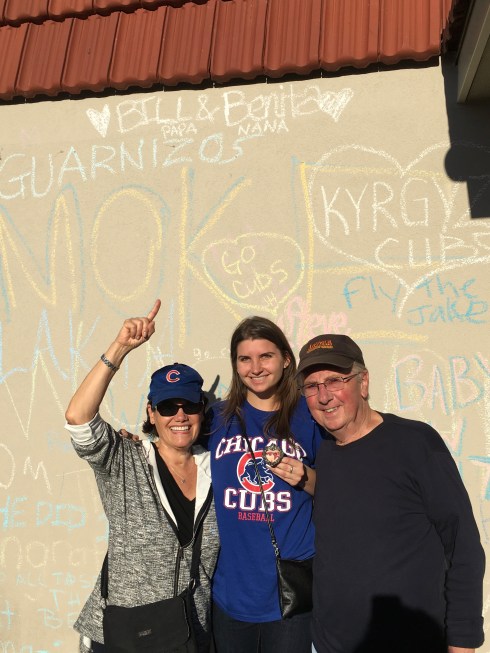
We searched for the right spot, and thanks to Benita’s long arm and a nearby chair, my parents became part of the celebration – Benita and Bill, Nana and Papa, part of Wrigley forever. Perfect!
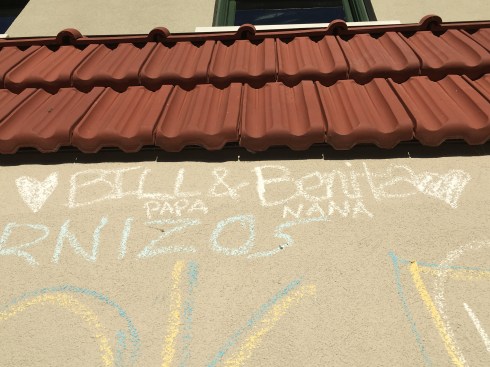
©Blogginginitaly.com
And talk about location! If you look carefully, you can see their names between two hearts right below the bottom red tiles.

©Blogginginitaly.com
We grew up watching the CUBS. Win or lose, they were part of our lives and our conversations. And in my Mom’s later years, when she couldn’t be as active as she’d like, she relished watching each and every game. Tears of happiness came easily for her when they won, and “not to worry – someday” if they didn’t. Of course, we had lots of somedays, until now.
“Go, Cubs, Go!” is a song written by Steve Goodman in 1984 and sung by fans after each win. I’d often call my Mom after a win to sing it with her on the phone. I can see her smiling now.
Congratulations to our CHICAGO CUBS. Mission accomplished – in so many wonderful ways!
©Blogginginitaly.com
Ciao,
Judy
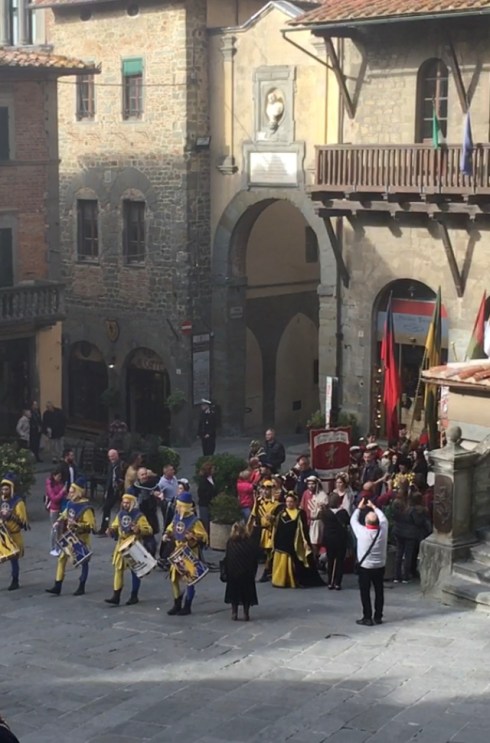
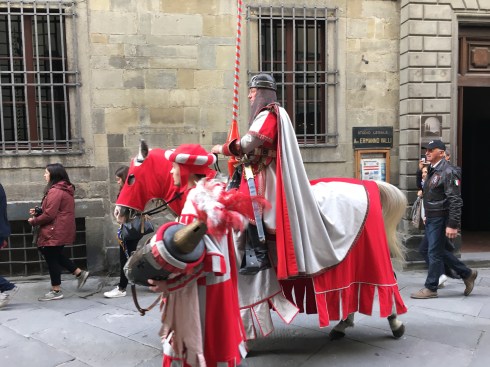
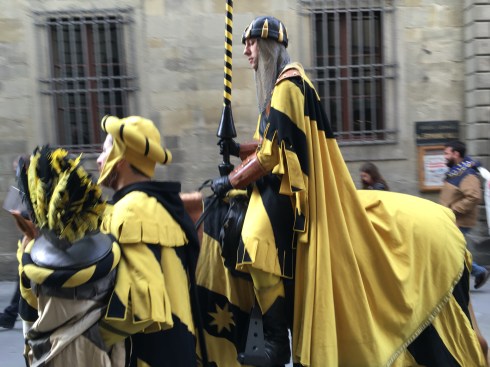
For days, we had heard that the horses were coming, yet no one I spoke with knew why. Today, as with many days in Cortona, we were surprised and delighted with a colorful Medieval spectacle.
As overheard in the piazza, the nearby city of Arezzo has been highly victorious in jousting competitions this year. They came to Cortona today, dressed in their finest and with their victors high on horseback, to give thanks to their patron saint, Margherita. One of the participants told me this was a festival of adoration to their patron saint in appreciation for their success this year.
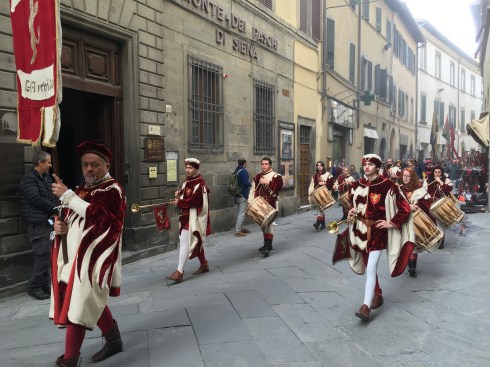
From our house, I heard the drummers and arrived just in time to see them enter the piazza from Via Roma.
©Blogginginitaly.com
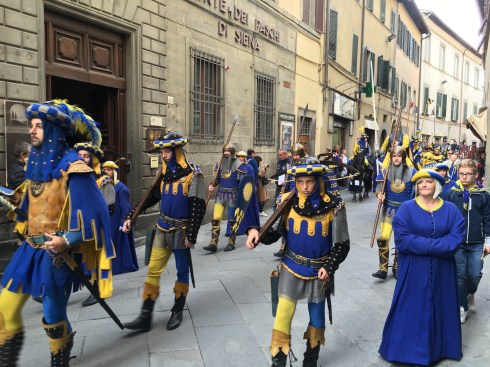
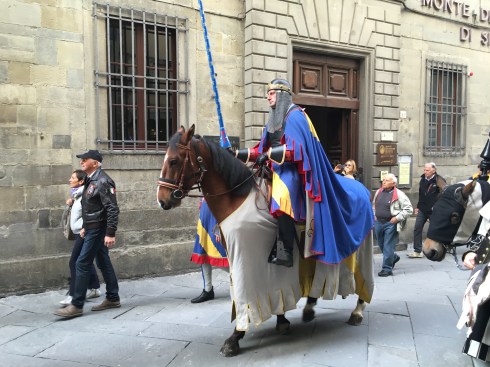
A few minutes later, the horses and jousters appeared in full matching Medieval regalia.

©Blogginginitaly.com
Once the horses took their places,

©Blogginginitaly.com

©Blogginginitaly.com
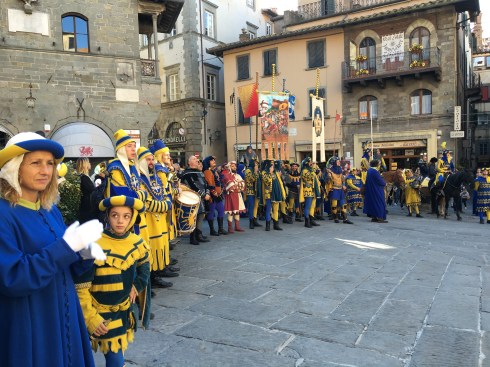
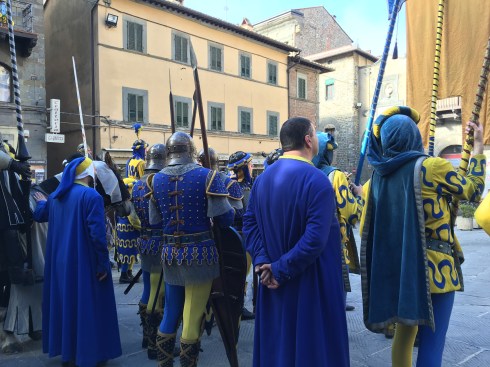
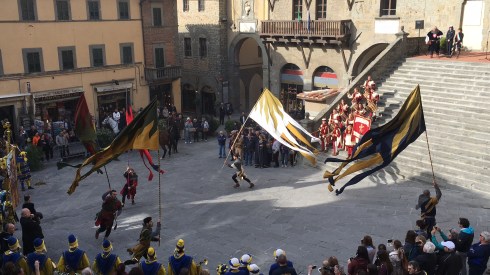
the flag wavers entered and all watched as they performed.
©Blogginginitaly.com
©Blogginginitaly.com

©Blogginginitaly.com
In Italy, flag waving and throwing is a skill learned by the young and perfected over many years. It is an important part of many of the Medieval festivals and ceremonies, and one that requires years of practice.
©Blogginginitaly.com
When the performance was finished, they joined the dignitaries on the grand steps of the Municipio for the speeches of gratitude.

©Blogginginitaly.com
Following the ceremony in the piazza, the parade moved down Via Nazionale, the main and only flat street of Cortona.
©Blogginginitaly.com

©Blogginginitaly.com
©Blogginginitaly.com

©Blogginginitaly.com

©Blogginginitaly.com
©Blogginginitaly.com
©Blogginginitaly.com
Their ultimate destination was the beautiful Santa Margherita Church at the top of Cortona –

©Blogginginitaly.com
where the saint lies in glass at the foot of the altar.

In towns and cities all over Italy, ancient customs live on in the hearts, minds and practices of the people who received them from their ancestors and pass them on to future generations. It’s easy to get caught up in the pageantry and imagine days gone by. No matter how often I see one of these, it’s always quite a spectacle to behold.
©Blogginginitaly.com
Ciao,
Judy
Note: Click on any picture to enlarge.
As the days shorten and the sun’s heat weakens, autumn colors and vistas are wrapping their arms around the ancient city of Cortona.
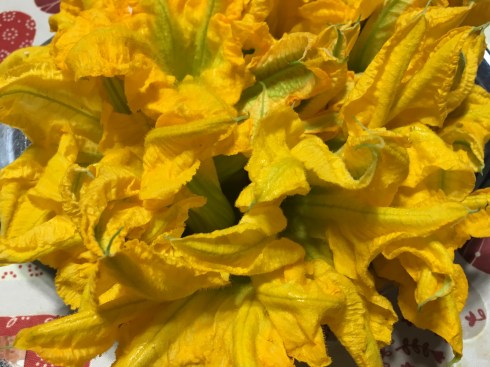
Zucchini flowers are at their end,
©Blogginginitaly.com
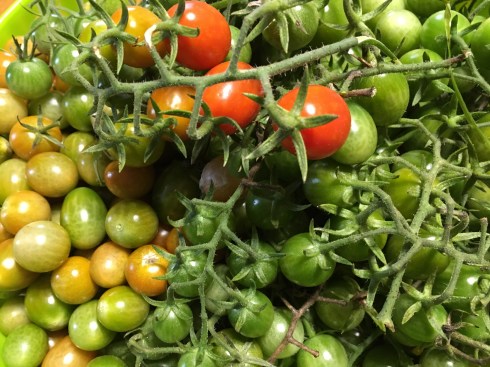
As are the tomatoes that have delighted all spring, summer and early fall.
©Blogginginitaly.com
Local olives are nearly ready to be picked, and after a trip to the local mill, become 100% Italian olive oil. Worth repeating – 100%!
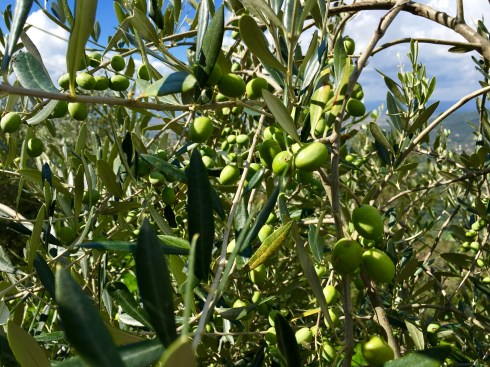
©Blogginginitaly.com
In all directions, there is beauty in nature; vibrant colors are everywhere. Mid October showers us with 11 hours of daylight and a temperature usually in the 60s, just what one hopes for in the fall.
If you’ve been to Cortona, the views will beckon you to return. If not, join me for a stroll through the Parterre.

©Blogginginitaly.com
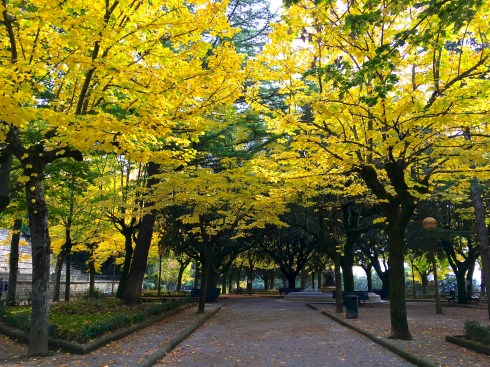
©Blogginginitaly.com

©Blogginginitaly.com
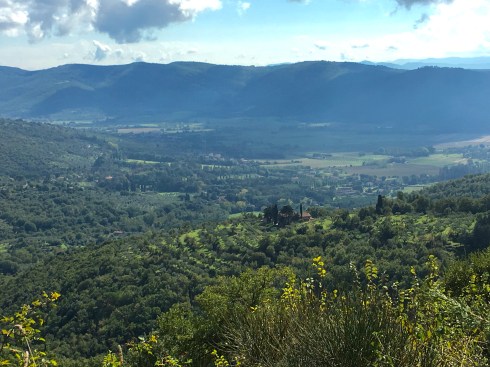
©Blogginginitaly.com
If you can’t join us in Cortona, I hope you make time to take in the beauty of fall – wherever your walks may take you.
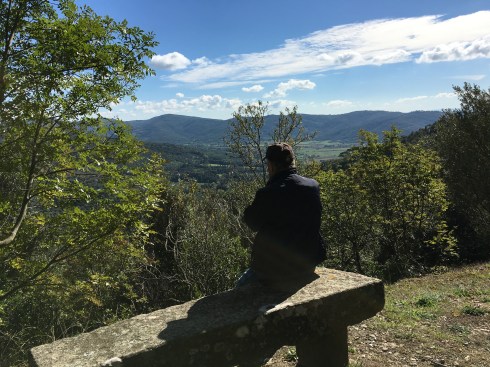
©Blogginginitaly.com

©Blogginginitaly.com
You might just be surprised at what you find.
Ciao,
Judy
Three years ago, I began an amazing adventure to learn more about my paternal grandfather, Alexander Capraro. As mentioned in my first post dated 10/2/13:
Through His Words: Reflections From and About My Grandfather
My grandfather was small in stature but large in accomplishment. He was the first Italian-American architect licensed in the state of Illinois and fortunately, a few of his buildings still stand for us to admire.
This weekend, the Chicago Architecture Foundation hosts its Open House Chicago.
I am so proud that for the 6th time, Casa Bonita, designed in 1928 by my grandfather Alex and his partner Morris, is included in the festival. Quite an accomplishment for a man who, at the age of four, emigrated to America in 1899 with his parents.
Casa Bonita is considered a Spanish-Renaissance Revival apartment building.

Casa Bonita ©Photo by Charlene Ferguson
There are 66 units in the U-shaped white terra-cotta building that surround a beautiful garden. The attention to detail can be seen everywhere.
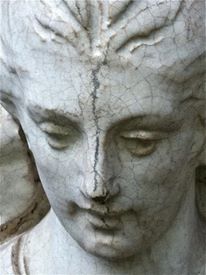
Casa Bonita ©Photo by MMattucci
Besides its incredible structure, Casa Bonita has amenities including a library, a billiards room, and a large indoor pool.
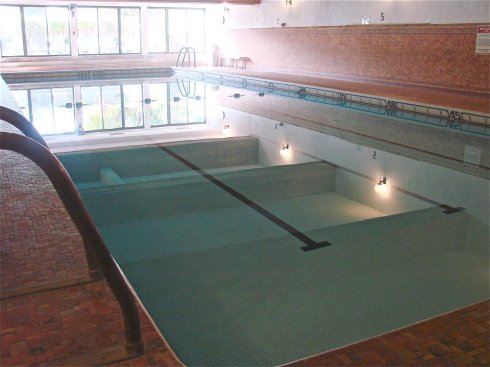
Casa Bonita ©Photo by MMattucci
When it was built, I have been told, there was even a driving range on the roof.
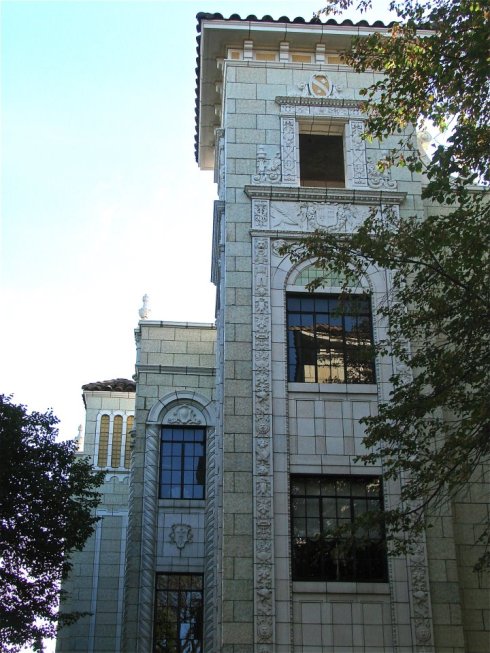
Casa Bonita ©Photo by MMattucci

Casa Bonita ©Photo by MMattucci
If you are in or near Chicago this weekend, this is a unique opportunity to visit incredible historic landmarks, including Casa Bonita – all for free. Residents will be available to answer questions, give tours, and share their passion about this very special Chicago treasure.
http://openhousechicago.org/sites/site/casa-bonita/
My thanks to Mary, Linda and Charlene for rapid assistance with photos.
For more on Alex’s story, see below. And one last thought – When I began writing about my grandfather, I used the phrase: Through his Words... Now I can say, Through his Words and Works…
Ciao,
Judy – a very proud granddaughter
Opening of Original Post 10/2/13
Through His Words: Reflections From and About My Grandfather (10/2/13)
I am about to begin an incredible adventure with my paternal grandfather. We will venture to Europe, via ship, and spend a month together touring Italy. During our stay, we will visit his birthplace, Pietrabbondante, a town he left with his parents when he was four years old to emigrate to the United States.
To continue reading, please click below:
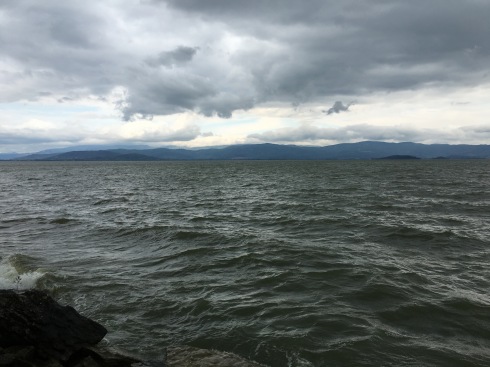
Winter arrived today, so say the Italians, as the winds were strong and the dark clouds made the temperatures drop. Suddenly, fashion consisted of turtlenecks, an abundance of scarves, and “puffy” (down) coats and jackets. Luckily for us, we were prepared.
With a sprinkle in the air in Cortona, we got in our Fiat 500, destination unknown, and soon found ourselves in Castiglione del Lago. Stronger winds and bigger clouds greeted us,
©Blogginginitaly.com
but without rain, and a goal of fresh air and exercise, we were happy to walk as we had the lake and view to ourselves.
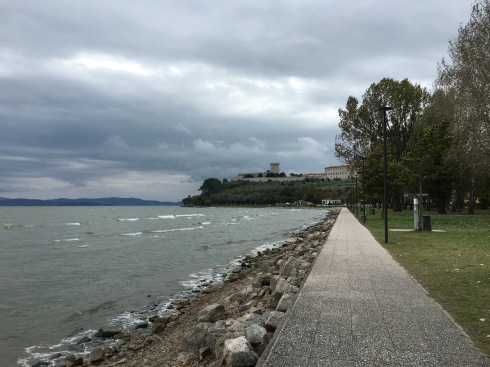
©Blogginginitaly.com
Water is mesmerizing, and as we walked, we watched the waves crash upon the rocks. The seagulls were playing what looked like Marco Polo, that “catch me if you can” game we played as kids and they played with the waves.
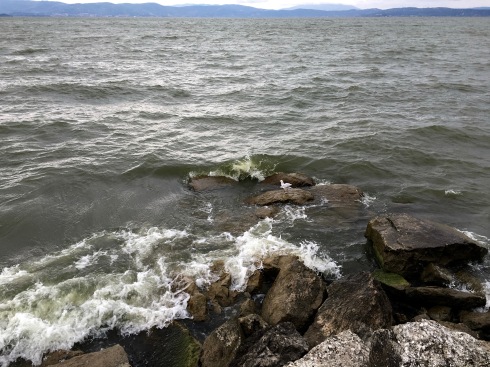
©Blogginginitaly.com
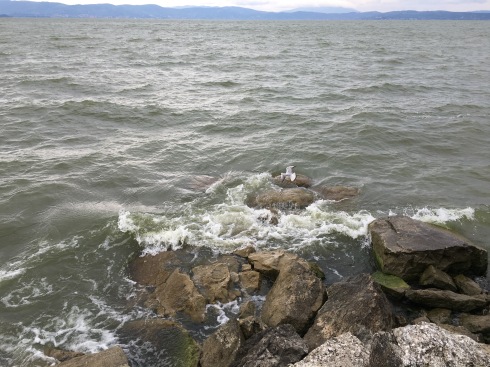
©Blogginginitaly.com
After awhile, the clouds broke across the lake and the sun shone like a spotlight on several of the hill towns.
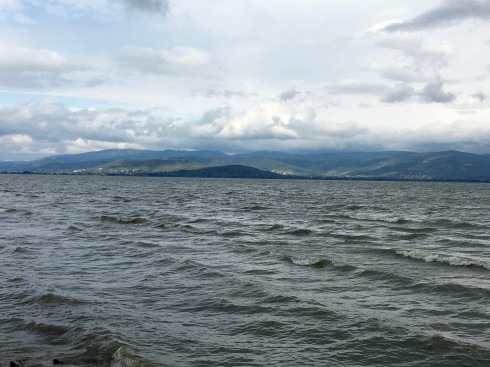
©Blogginginitaly.com
Eventually, we stopped for lunch at La Cannuccia, our lakeside go-to cafe. We ordered our usual split lunch, a grilled panino and mixed salad, which is served with delicious warm rolls.
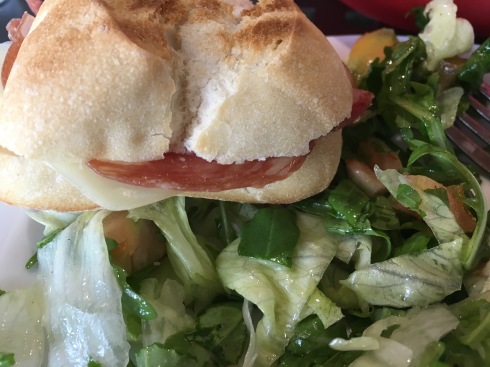
©Blogginginitaly.com
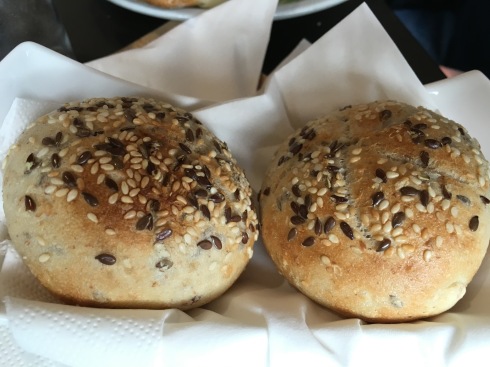
©Blogginginitaly.com
After lunch, Riccardo asked if we were football fans.
“I’m a big baseball fan at the moment,” I replied, “as I’m from Chicago and …”
“Chicago Cubs!” he said and smiled.
“We live about two miles from…”
“Wrigley Field!” he exclaimed.
“You must like baseball,” I said.
“Not so much. It can be boring, especially when there is a pitching battle,” he replied.
“Like the first game the other night…”
“When the Cubs won 1-0 against the San Francisco Giants,” he quickly replied.
“We haven’t won in over a century, and…”
“The goat,” he said, and raised his hands like Italians do. “I don’t believe.”
By now, Len was intrigued. Since our dear friends, Carrol and Larry, had left weeks ago, Len had not found anyone to have a good baseball conversation with. And here was Riccardo, born and raised locally, owner of a bar in Castiglione del Lago in the center of Italy, speaking English, he – a fountain of knowledge about American baseball, a sport that wasn’t even his favorite.
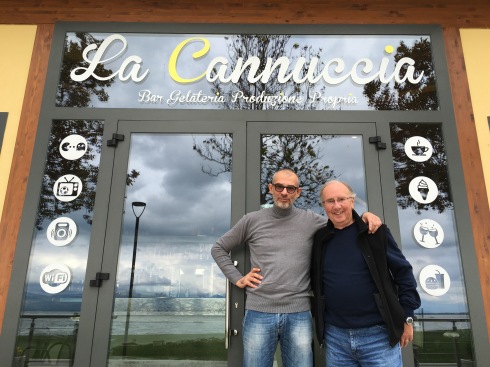
After they talked baseball for a bit, I asked what Il Cannuccia means. “It’s the tall grass that grows in a swamp,” he said, as he pointed to the bottom right of a giant photo on the face of the bar. 100 years ago, much of the lake was a swamp.
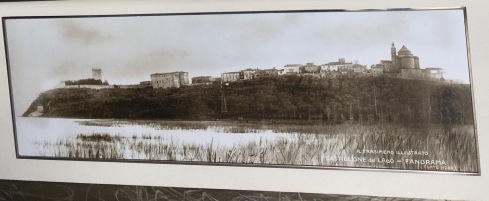
©Blogginginitaly.com
The present bar was built in the 50’s. It has been in Riccardo’s family since the mid 70’s and is now operated by Riccardo and his brother Simone.
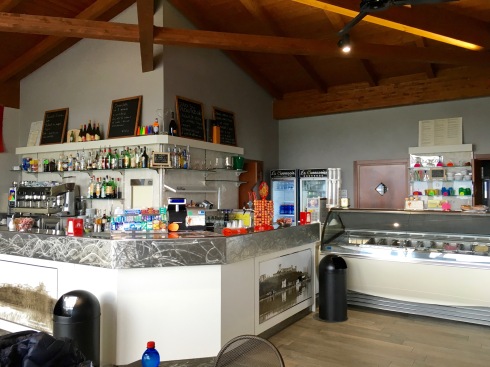
La Cannuccia Bar©Blogginginitaly.com
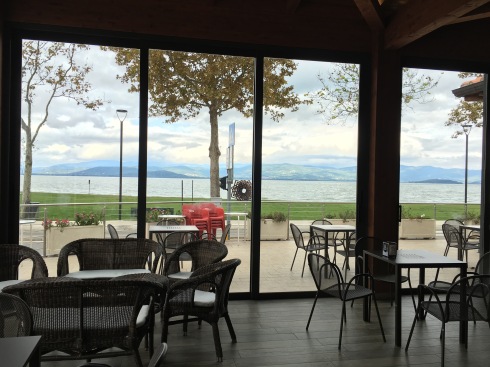
I asked if I could take a few pictures. “Sure, but the best view is looking out.”
La Cannuccia Bar©Blogginginitaly.com
Easy to see why he thinks that and one of the reasons we keep returning.
©Blogginginitaly.com
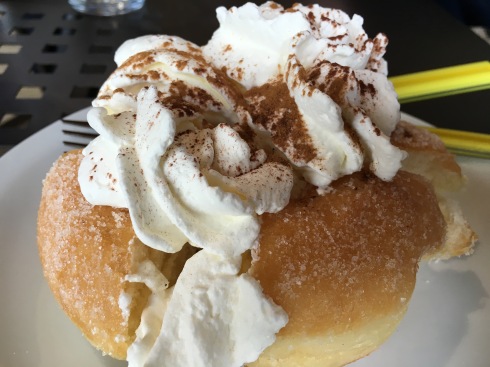
After lunch, I considered having gelato, as theirs is very good. Then, with a twinkle in his eye, Ricardo asked if we like cream. “Sure, why not,” I answered, and he set off to make something special for us.
He arrived with this.
©Blogginginitaly.com
This incredibly light “sugar donut” is called a ciambella. He quartered it, and topped it with panna fresca, (fresh cream,) and cacao candela, (cinnamon). My sister Florence and her husband Vince would have ordered this and skipped the salad and panino. Benita too.
Castiglione del Lago in Umbria is about 30 minutes from Cortona on the SW corner of Lago Trasimeno. Although Cortona is a city where you don’t need a car, if you have one, it is such fun exploring all the neighboring towns, taking in the sights, and making interesting new friends like Riccardo. Who knew???
Ciao,
Judy
Recently, I was invited to write a piece for Chowhound. Their “Features” section has food and beverage articles written by food writers, chefs, cookbook authors, etc. For my first article, I decided to write about cappuccino, then headed to my favorite bar in Cortona, Tuscher Bar, to get some “barista” training.
As I have written many times, Tuscher Bar is our go-to place in Cortona for breakfast, lunch, and aperitivo. If you’ve visited us, you’ve been to Tuscher. It’s the place where you meet old friends, make new ones, and where Massimo, Daniela, Niccolo and Edoardo make you feel at home.
I had such fun learning how to make Cappuccino Tre Colore, both hot and cold, and you will too. If you are in Cortona, visit the experts at Tuscher Bar on Via Nazionale. If not, have some fun making it yourself, and let me know how you do!

Cappuccino Tre Colore©Blogginginitaly.com
For step by step photos and instructions, click below for my article:
Impress Your Friends this Fall with New Barista Skills.
Ciao,
Judy
Saint Francis of Assisi, born Giovanni di Pietro di Bernardone, is one of the most venerated religious figures in history. He lived from 1182 – 1226, and during his lifetime, founded several orders including the men’s Order of Friars Minor and the women’s Order of Saint Clare. He was canonized on July 16, 1228, by Pope Gregory IX. He, along with Saint Catherine of Siena, are the patron saints of Italy.
The feast of St. Francis of Assisi is celebrated today, October 4. Throughout Italy, and in particular the central parts of Italy where St. Francis lived, there are many celebrations in his honor. Unlike so many of the gold and ornate churches and monasteries, those of St. Francis tend to be simple in design and without pretense.
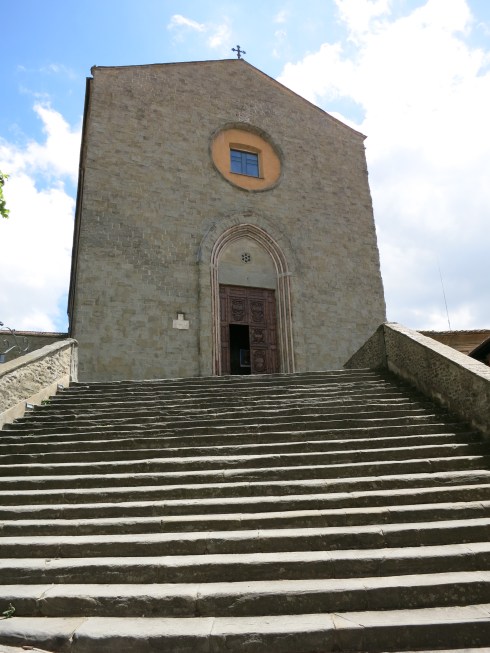
Chiesa di San Francesco, Cortona, ©Blogginginitaly.com
From our front door, it is 115 steps, mostly up, to San Francesco in Cortona, and it is well worth the climb. The sparse interior holds many treasures and is our favorite among Cortona churches.

©Blogginginitaly.com
According to Cortona history, the Church was built over the ruins of a Roman bath. The area, which was a municipal property, had been donated to Friar Elia, Francis’ successor, who had the church built in honor of St. Francis. The facade, the large door, and the entire left wall are part of the original church which was dedicated in 1254. Friar Elia is buried in the choir area behind the altar.
The interior underwent renovations in the 16th and 17th centuries. During that time, several incredible original frescoes from the school of Buffalmacco, dating back to 1382, were rediscovered behind paintings.

©Blogginginitaly.com
On the altar, in a large marble baroque tabernacle dating from 1619, is a relic from the Holy Cross, donated to Friar Elia by the Constantine Emperor.

©Blogginginitaly.com
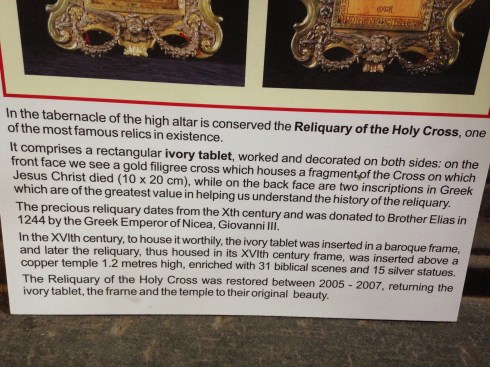
©Blogginginitaly.com
And finally, to the left of the main altar is the statue of St. Francis and some items as described below.
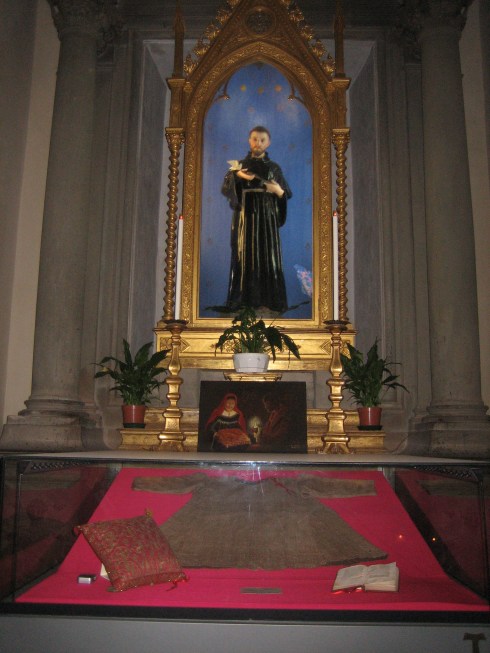
©Blogginginitaly.com
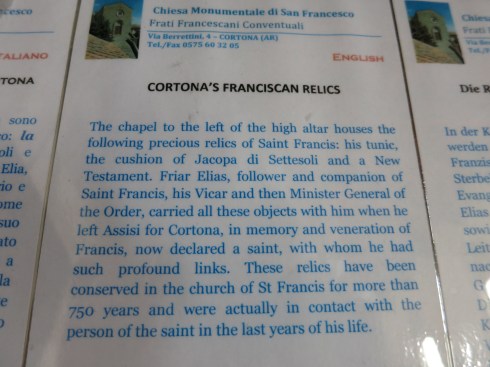
©Blogginginitaly.com
As I write, the bells from the church are ringing. Three of the five are electric, but of the original two, one was cast in 1250 and the second in 1267.
In addition to this beautiful church, Cortona is home to Le Celle, an incredible monastery and sanctuary which developed both during and after St. Francis’ life.
It is here that you can see the room, or cell, where St. Francis slept.

©Blogginginitaly.com
Every time I visit either the San Francesco Church or Le Celle, I find myself caught up in the tranquility each has to offer. And while Cortona can sometimes be a bustling town, each of these remains an oasis of serenity – a wonderful place to reflect, meditate, pray, or simply take in the moment.
For more on Le Celle, click on a previous post: Franciscan Hermitage of Le Celle, Cortona.

©Blogginginitaly.com
Ciao,
Judy
When you spend time in Italy, you quickly learn the value of a Tabacchi. It is a place to buy bus and train tickets, stamps, postcards, gum, candy, lozenges, etc.

©Blogginginitaly.com

©Blogginginitaly.com
You can recharge a phone card, buy a lottery ticket, often send a fax, and at most tabacchis, sort through various dollar store types of souvenirs. And yes, the word Tabacchi means tobacco, so, that too.
But when is a tabacchi much more than a tabacchi? When you find this large “T” sign and awning on Via Nazionale in Cortona. Then it’s a destination.
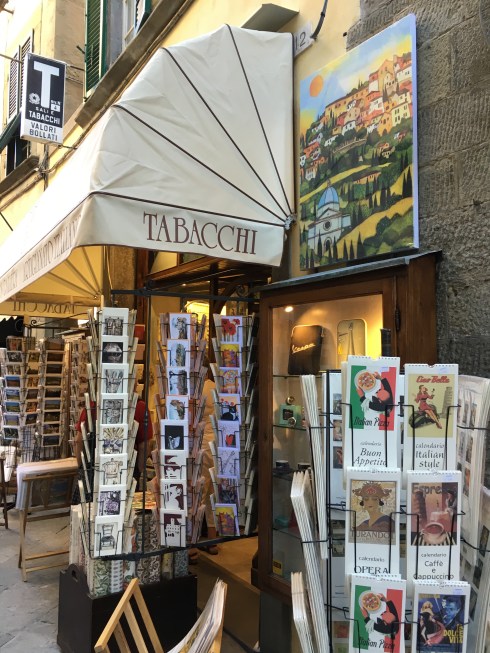
©Blogginginitaly.com

©Blogginginitaly.com
No matter how often I visit, there is always something new and creative to see. And the best news? Most items are actually Made in Italy, many from local and nearby artisans. Here are some examples.
These purses, ornaments and wallets are made from old sheet music, newsprint and/or comic pages, formed into shapes, laminated, and then woven together.
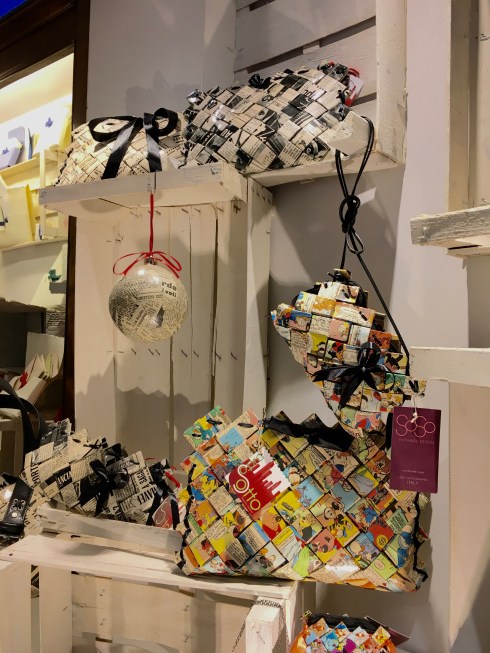
©Blogginginitaly.com
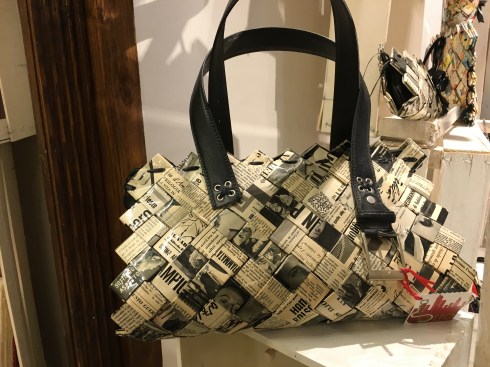
©Blogginginitaly.com
There are numerous prints of familiar Tuscan scenes, towns, buildings and monuments, available in many shapes and sizes,
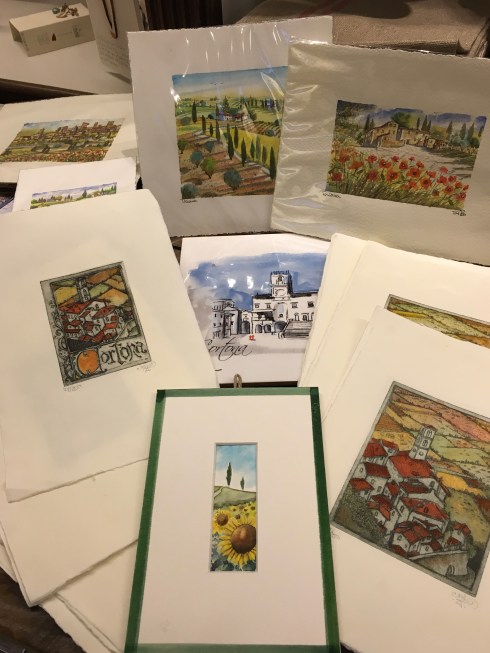
©Blogginginitaly.com
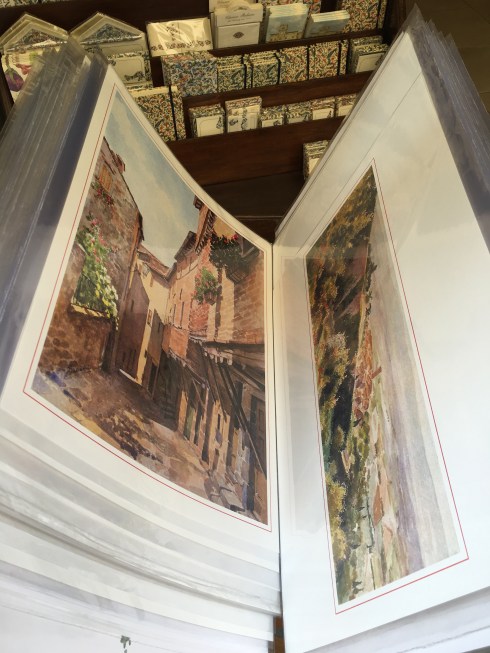
©Blogginginitaly.com
as well as whimsical pieces of art.

©Blogginginitaly.com

Sara Lovari©Blogginginitaly.com
As for me, I can never have enough kitchen towels, especially when they depict places I’ve visited or recipes I want to remember.
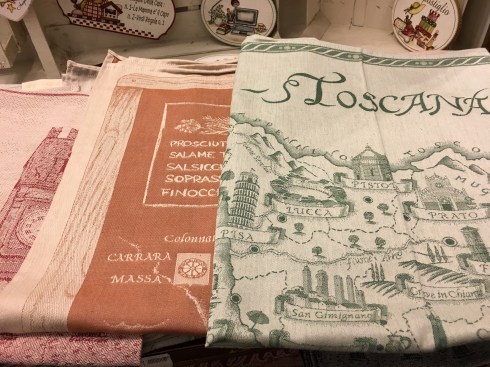
©Blogginginitaly.com
Planning to attend Carnevale in Venice or a Mardi Gras party? They’ve got you covered.
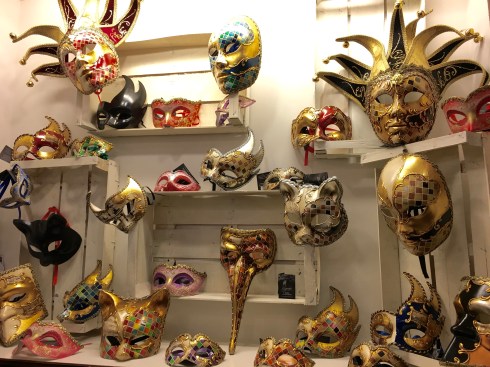
©Blogginginitaly.com
There is beautiful pastel stationery, as well as bound journals, all hand-made with 100% cotton paper, and each journal is individually embossed.
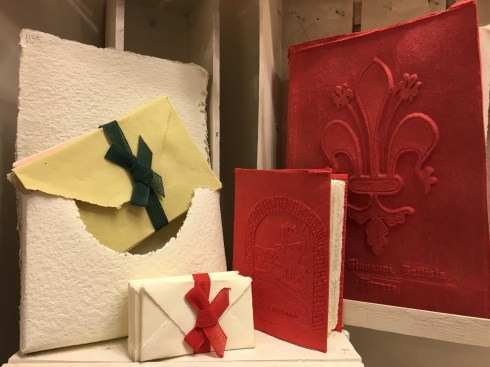
Traditional Florentine notecards and ornamental angels come in a rainbow of colors.

©Blogginginitaly.com
Need a birthday or anniversary card? There’s an abundance to choose from.

©Blogginginitaly.com
Italians love beautifully fragranced soaps, especially Campostrini soaps that have been produced in Firenze since 1894.

Like so many businesses in Cortona, Il Pozzo Artisan’s Gallery and Tabacchi is family owned and operated, and generally open daily. If you’ve been to Cortona, you probably recognize these faces.

(L-R) Marta, Ivan, Loriana, Thomas©Blogginginitaly.com
Ivan speaks English well and is an incredible resource for most questions, whether about an artist, a painting, the Etruscans, or local antiquities. It’s no wonder many of us consider him Cortona’s ambassador.
If you are heading to Cortona, be sure to add this wonderful place to your list. You’ll be so happy you did!
And one last note: At the back of the tabacchi, take the winding staircase down one flight to visit the beautiful Il Pozzo Galleria. In addition to seeing many more interesting and beautiful works of art, you will also see an ancient well, or pozzo, hence the name Il Pozzo. Ivan actually uncovered the well during excavation, but I’ll leave that story to him.
For more info and photos on Il Pozzo Galleria, please click below:
Ciao,
Judy
 Blogging In Italy