Archive | Italian countryside RSS feed for this section

Say it Isn’t “Snow”

24 Jan

With much of the eastern part of the U.S. blanketed in snow, Chicago has been quite lucky as the storms only waved as they passed by our city. That said, it’s still quite cold,  so I have been happily anticipating spending a warm spring in Sicily. As I was making our car reservations, however, I kept noticing warnings in the fine print about renting snow chains through mid April:

Note: Winter Equipment
For most Italian provinces, there is the requirement to fit winter tires or have a set of snow chains on board specifically for the type of vehicle hired in the period between November 15th and April 15th.

Certainly, they must be referring to northern Italy, I surmised. And then this week, I saw an article in The Local, an online Italian newspaper: Sicily shivers at first snowfall of 2016

Per the article,

Snow fell on Sunday night, leaving Mount Etna and surrounding towns covered in the white stuff, along with several other towns and villages of altitudes around 600 metres.

While snow on Mount Etna and its environs isn’t unusual, residents of the Aeolian Islands, including the volcanic island of Stromboli, and towns near the Madonie mountain range, also experienced deep snowfall, with many of them taking to Twitter and using the hashtag ‘#nevesicilia’ (snow Sicily) to share their photos.

Ferry services to the islands have been suspended, with a 35-year-old who went into labour on the island of Lipari on Saturday night having to be flown by helicopter to a hospital in the Sicilian city of Milazzo, Ansa reported.

La Stampa reported that schools were closed in several Sicilian towns, and warned of the dangers of icy roads – particularly in more isolated communities – as temperatures dropped below zero degrees.

photo by Marco Triolo
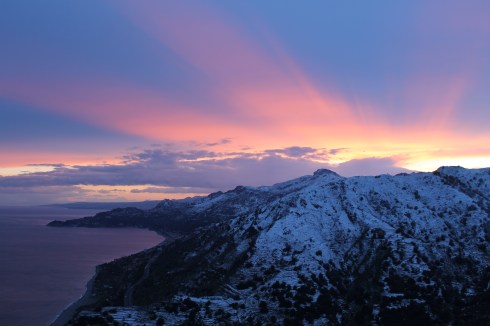
Looks like we’ll be renting snow chains after all. Just hope we won’t need them!

Ciao,
Judy
Cortona Olive Picking: Helping Friends

10 Nov

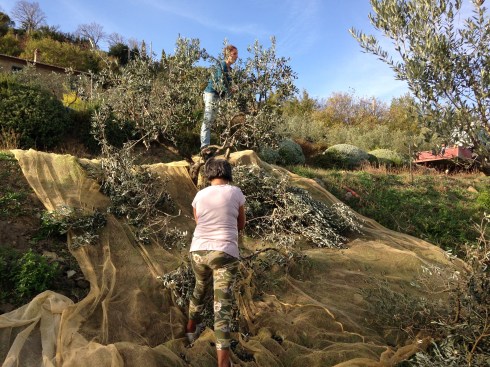
Today, while taking our usual walk through the parterre and then around the bend, we heard voices coming from below the hill. We knew at once it was people picking olives at Casale della Torre, the Agriturismo operated by friends Lapo and Paola. We walked down the winding road and saw Ilaria in a tree… “Possiamo aiutare?”  (Can we help?) we called out. We knew the answer would be yes.

©Blogginginitaly.com

©Blogginginitaly.com

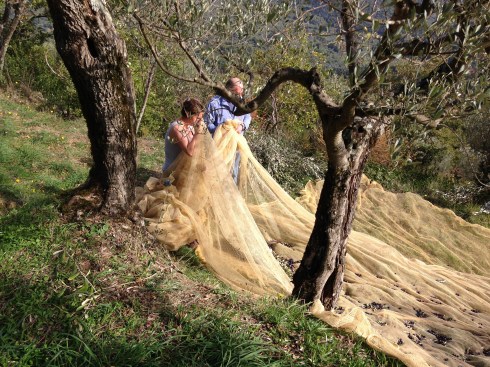
We spent the rest of the day with Ilaria and some of her relatives and family friends, talking, laughing, and enjoying the incredible autumn day as we picked various shades of olives. Except for Ilaria, none of them spoke English, but that didn’t matter as we shared a common language in the effort.

Two of the men were in the trees, expertly cutting and dropping large branches, from which we would remove the olives. Apparently, those involved deemed Len and I expert enough from our previous work as no one gave us additional pointers. (I did notice, however, that Ilaria occasionally checked to be certain we left no olives on the branches!)

©Blogginginitaly.com

©Blogginginitaly.com

One of the things I love about working with Italians is their love of the land. The olives vary among the trees, large riper ones easy to remove and others, still small and green, a bit harder. At each tree where the olives were large and very ripe, they would be delighted and describe them as incredible, beautiful, etc,  still having appreciation for nature after picking olives for more than 40 years.

©Blogginginitaly.com

©Blogginginitaly.com

We worked several trees at once, and after a tree was picked, the olives would be gathered and the nets would be moved to the next tree. “Corragio, avanti” they would say after the tiring day got long…have courage and move on (to the next tree!)

©Blogginginitaly.com

©Blogginginitaly.com

©Blogginginitaly.com

©Blogginginitaly.com

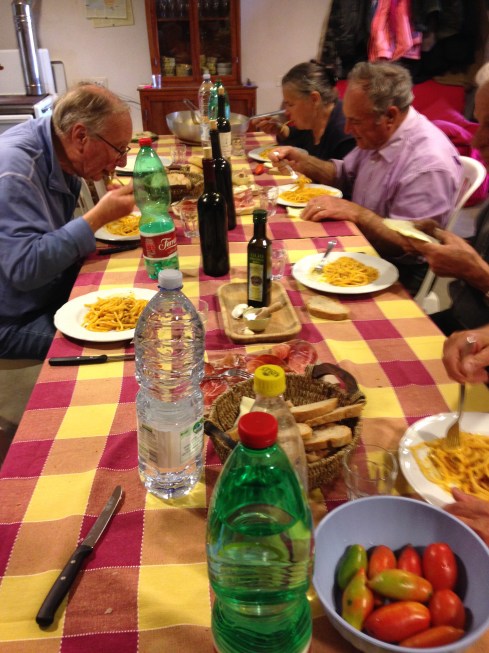
After a bit, it was time for a “simple” pranzo, so we gathered in the cantina to enjoy pici with pork and bread with the new oil they had already harvested. As always, a lovely, fresh, and delicious meal, shared among friends.

©Blogginginitaly.com

©Blogginginitaly.com

©Blogginginitaly.com

©Blogginginitaly.com

©Blogginginitaly.com

©Blogginginitaly.com

Afterward, it was back to work.

©Blogginginitaly.com

©Blogginginitaly.com

Sunshine, new and old friends, working the land. An American friend recently commented that we work hard and pursue our careers in order to have the opportunity to return to our roots and understand the land of our ancestors. Well said, Jean. So true and so rewarding, and exactly why we keep coming back.

Ciao,
Judy

Cantina de’ Corvi, Spoleto

9 Oct

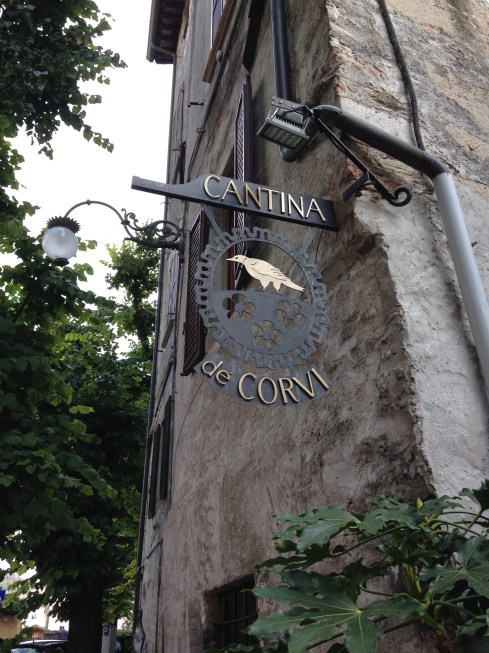
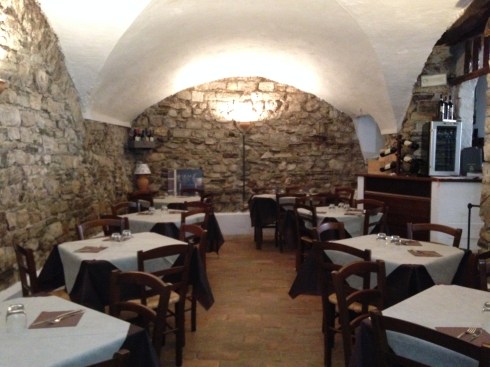
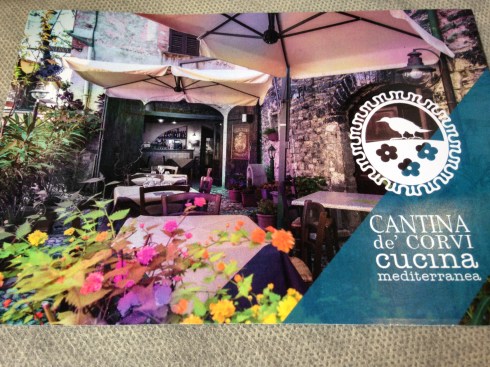
During our visit to Spoleto, our hotel clerk recommended the Cantina de’ Corvi, a wonderful place to eat.

©Blogginginitaly.com

©Blogginginitaly.com

We went for lunch and liked it so much, we returned for dinner. Can’t have too much of a good thing!

©Blogginginitaly.com

©Blogginginitaly.com

©Blogginginitaly.com

©Blogginginitaly.com

Meet Ciro and Marianna – the owners of this new restaurant.

©Blogginginitaly.com

©Blogginginitaly.com

Marianna is the chef, and quite a skilled one at that. Turns out they are from Naples, the native home of most of my ancestors. Marianna’s love of cooking recipes passed down from her grandmother, as well as Ciro’s appreciation of her home cooking, led them to open the restaurant in early 2015.

For lunch, we started with stuffed peppers and eggplant. Delicious.

©Blogginginitaly.com

©Blogginginitaly.com

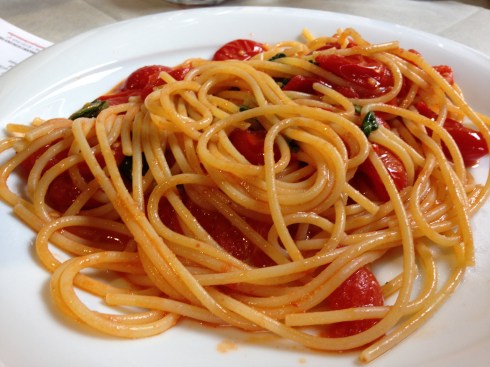
Then we each had pasta pomodoro. Why is it that fresh tomatoes at home never quite taste like these in Italy?

©Blogginginitaly.com

©Blogginginitaly.com

We kidded a lot with Ciro, he asking us to correct his English and we asking the same of him of our Italian. Ciro, ricordi: “Is there something else you would like?”

Their menu boasts of food from the land and sea, so in addition to pasta, they have quite a selection of beef and seafood.

Our conversation turned to baccala, that awful looking salted fish I see at the market.

Baccalà_delle_Isole_Faroe

Wiki

I made a face and Len told Ciro that as kids, they would all feign illness when his grandmother announced baccala was for dinner.

Ciro said he had felt the same, and for years, his wife asked him to try her baccala. When he finally did, they put it on the menu. Ciro convinced Len to try it for dinner – no obligation if he didn’t like it. I was still skeptical.

©Blogginginitaly.com

©Blogginginitaly.com

Well, as you might guess, it was delicious. Even I tasted it and agreed.

©Blogginginitaly.com

©Blogginginitaly.com

My dinner was spaghetti con vongole, one of my favorite dishes in Italy.

©Blogginginitaly.com

©Blogginginitaly.com

Both dishes, as is the case with great recipes from Napoli, include those incredible tomatoes.

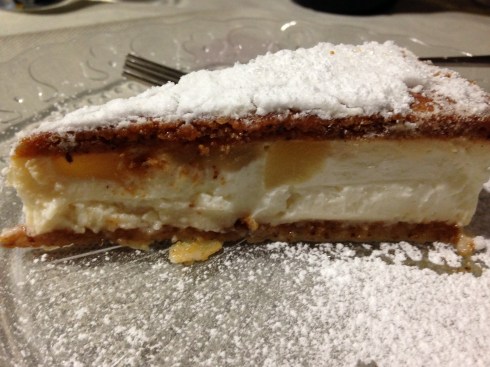
For dessert, we shared a slice of ricotta and pear cake – light and not too sweet.

©Blogginginitaly.com

©Blogginginitaly.com

We’ll definitely return to Spoleto, not only for its history and beauty, but also to spend more time with our new friends, Ciro and Marianna. If you go, please tell them Giuditta sent you. And by the way, I gave Don Matteo their card, so you might just bump into him as well!

IMG_8575

Ciao,

Judy


Spoleto and Don Matteo

7 Oct

On Tuesday, we headed to the walled medieval hill town of Spoleto in southern Umbria. We had decided to visit because of its ancient history and also because an Italian show we watch, Don Matteo, is being filmed there. The episodes, in Italian with English subtitles, help us learn Italian and are even more fun to watch when we are familiar with the shooting locations. The first eight seasons were shot in Gubbio, which we visited last year.

Spoleto’s first Roman settlements date to around 240 BC, and most of the historical sites are in the upper part of the town. Fortunately, the weather cooperated and we were able to walk miles through the town and enjoy some pretty spectacular views.

©Blogginginitaly.com

©Blogginginitaly.com

©Blogginginitaly.com

©Blogginginitaly.com

The upper part of the town is called the Centro Storico, or Old Town. Here you find the Piazza del Duomo, a sprawling piazza at the base of a beautiful stairway.

©Blogginginitaly.com

©Blogginginitaly.com

The original Duomo was built in the 12th century with a Romanesque facade, however, it was remodeled during the Renaissance and now has beautiful pink stone and colorful  mosaics.

©Blogginginitaly.com

©Blogginginitaly.com

The inside is equally impressive.

©Blogginginitaly.com

©Blogginginitaly.com

Sitting majestically above the town is the medieval Rocca Albornoziana fortress, built in the 14th century on the foundation of the Roman acropolis. Once a seat for local governors, in 1800 it was turned into a jail and used as such until the 20th century.  Today it houses a museum and also hosts summer performances.

800px-Rocca_Albornoz_and_Ponte_delle_Torri,_Spoleto

From this vantage point, there is an incredible view of the 750 foot Bridge of Towers, or Ponte delle Torri, a 13th century aqueduct that crosses a deep gorge,

©Blogginginitaly.com

©Blogginginitaly.com

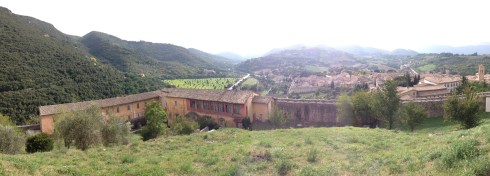
as well as this panoramic view of the valley below.

©Blogginginitaly.com

©Blogginginitaly.com

There are elevators and escalators that reach the various levels of town. Although we enjoyed the walk up, we were also happy to have SIX long escalators return us to the lower part of town.

©Blogginginitaly.com

©Blogginginitaly.com

Before dinner, we walked another area of the town and saw the ancient Teatro Romano.

©Blogginginitaly.com

©Blogginginitaly.com

As we strolled, the setting sun was splashing the sky with its color palette.

©Blogginginitaly.com

©Blogginginitaly.com

The scene so perfect, we felt as if we were on a movie set.

©Blogginginitaly.com

©Blogginginitaly.com

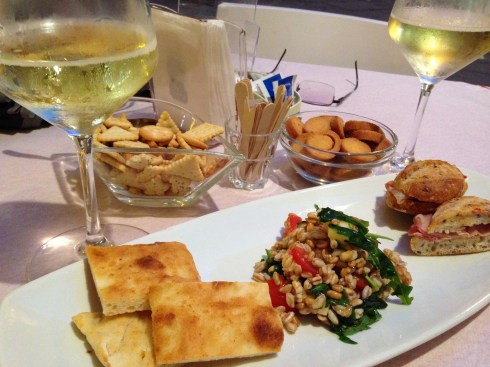
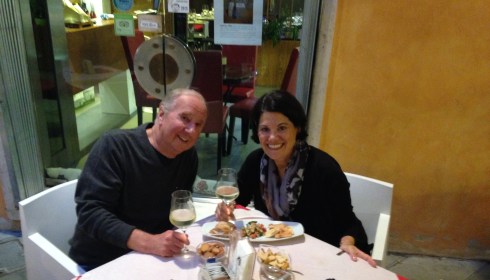
It was definitely time for appertivo…

©Blogginginitaly.com

©Blogginginitaly.com

©Blogginginitaly.com

©Blogginginitaly.com

with the most spectacular view…(photo is untouched)!

©Blogginginitaly.com

©Blogginginitaly.com

Even the doves were happy.

©Blogginginitaly.com

©Blogginginitaly.com

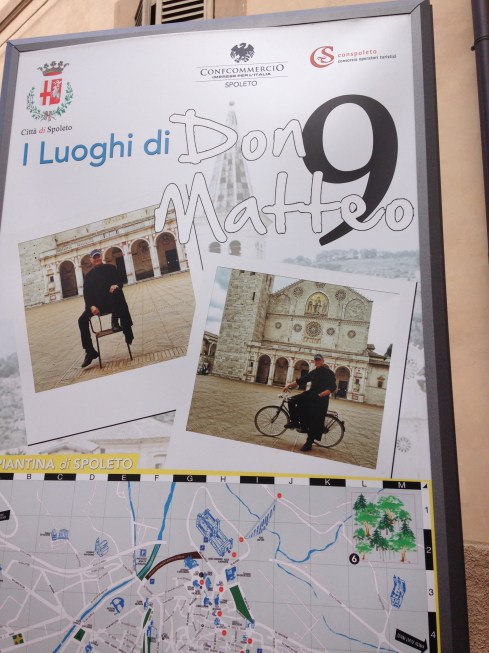
And now for our surprise encounter. I mentioned that Don Matteo is being filmed in Spoleto, and we found this billboard.

©Blogginginitaly.com

©Blogginginitaly.com

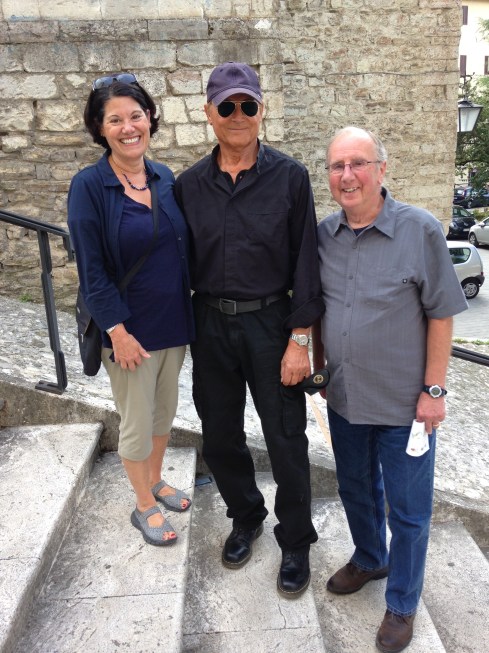
While walking up the stairs to the Duomo, we both sighted a familiar person dressed in his usual black attire and baseball cap. It was, to our amazement,  Terrence Hill, or as we know him, Don Matteo. Really! A pretty incredible coincidence since he was one of the reasons we had come to Spoleto.

©Blogginginitaly.com

©Blogginginitaly.com

Thanks, Don Matteo, for spending a few minutes with us and making our visit to Spoleto one we will always remember! Spoleto – a check off our bucket list with an unexpected and very happy memory!

Ciao,

Judy


Sunflower: Girasole

1 Oct

Driving through Tuscany in the summer, a common site is a field of sunflowers. If I didn’t know better, I’d almost think they were shy, as it seems they are always facing away when I want to take a picture. An understanding of the name, however,  helps one understand – gira sole literally means turns toward the sun, and that is exactly what they do.

©Blogginginitaly.com

©Blogginginitaly.com

©Blogginginitaly.com

©Blogginginitaly.com

But what happens to them in the fall? As you might imagine, they look quite different.

©Blogginginitaly.com

©Blogginginitaly.com

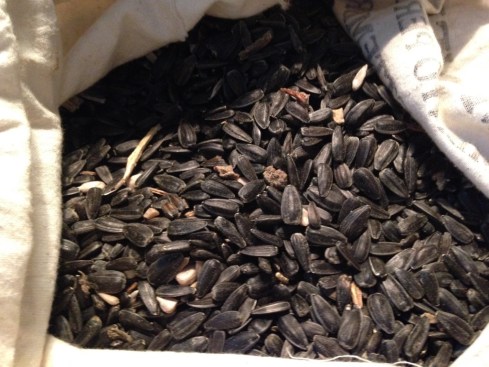
Once they reach this state, sunflowers are cultivated for their edible seeds, which are an important source of oil for cooking. Timing is important as the seeds need to be harvested before they begin to dry and loosen, and before the squirrels and birds decide to do the harvesting for you.

©Blogginginitaly.com

©Blogginginitaly.com

According to Fun Flower Facts, by Connor Lowry, here are some ways the sunflower can be used besides being a wonderful ornamental flower:

  1. As you know, sunflower seeds are edible. They can be eaten raw, cooked, roasted or dried. They are a popular, nutritious snack containing a good source of protein, vitamins A, B, and E, calcium, nitrogen and iron.
  2. Traditionally, North American Indians ground the seeds to make flour for cakes and breads.
  3. The petals are also edible; they can be cooked and eaten like artichokes.
  4. Humans aren’t the only ones that find sunflowers tasty. The seed heads are also a source of food for birds and animals. Sunflower seeds are a major ingredient in commercial birdseed.
  5. Sunflower leaves are used as feed for livestock.
  6. Sunflower oil is a popular vegetable oil known for its light colour, mild flavour, low levels of saturated fats and ability to withstand high cooking temperatures.
  7. The oil can also be added to soap, lubricants and candles.
  8. Sunflower oil can help relieve skin conditions, hemorrhoids and ulcers.
  9. Sunflower roots can remove radiation from soils and water. They were used to clean up the Chernobyl disaster.
  10. The root of the plant is also used in traditional herbal medicine to treat snake bites and spider bites. The leaves can be made into tea to relieve fevers, lung ailments and diarrhea.
  11. The flowers can be used to make an all natural dye.
  12. The stalks are used to make paper and clothes.

So, now you know what happens to those lovely flowers that always seem to make us smile.

Ciao,

Judy
San Galgano

28 Sep

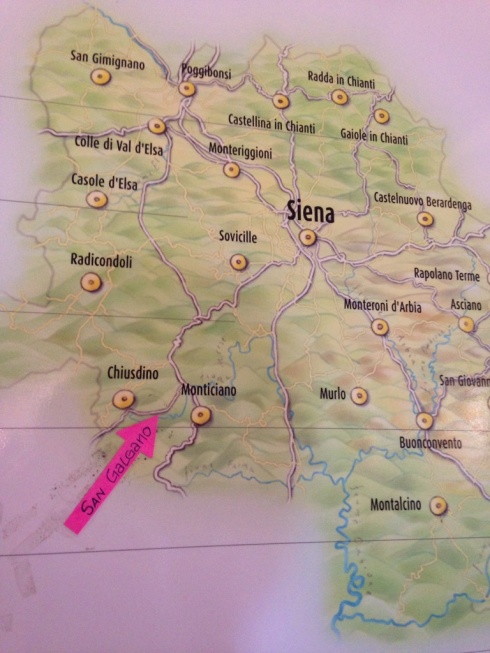
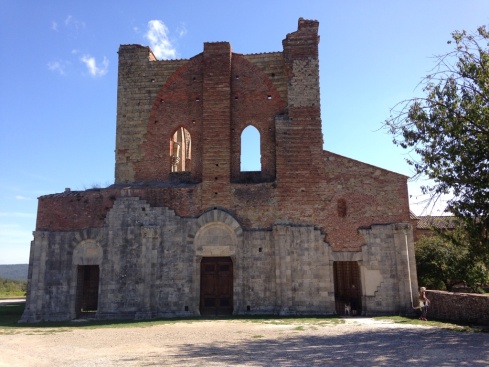
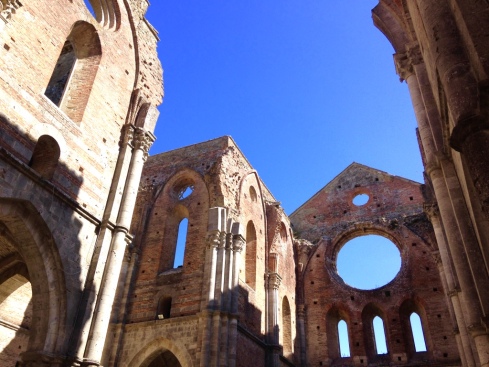
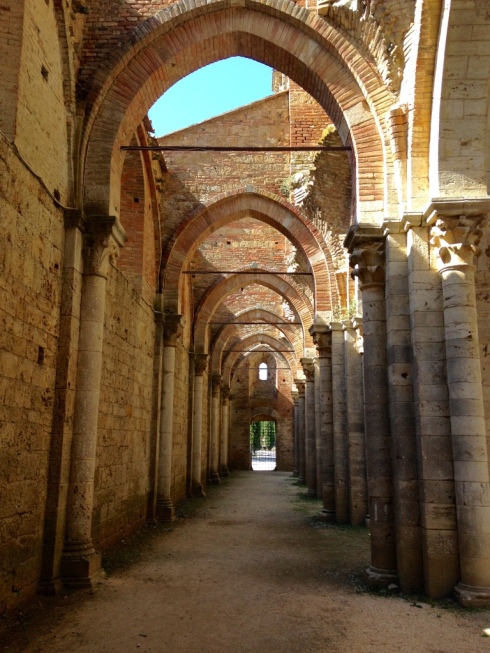
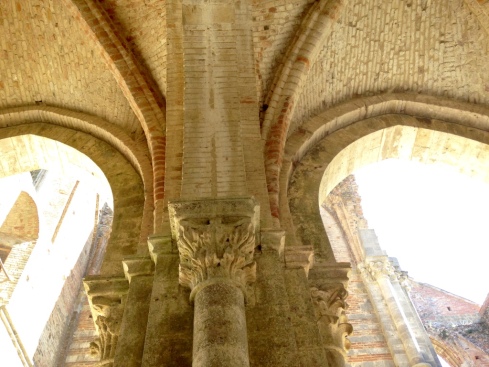
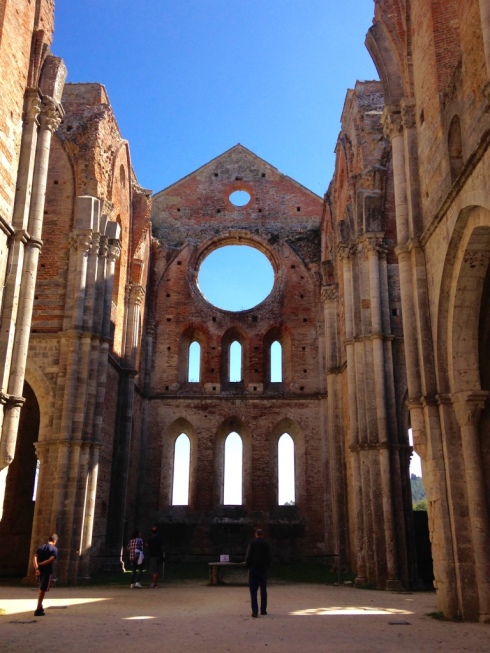
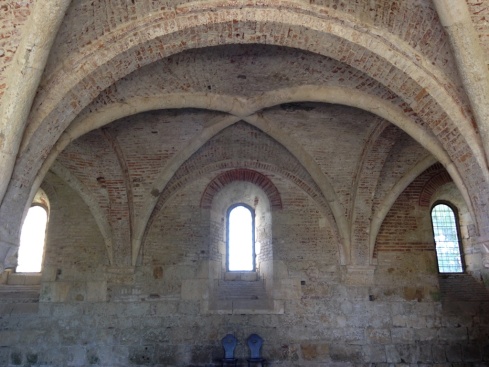
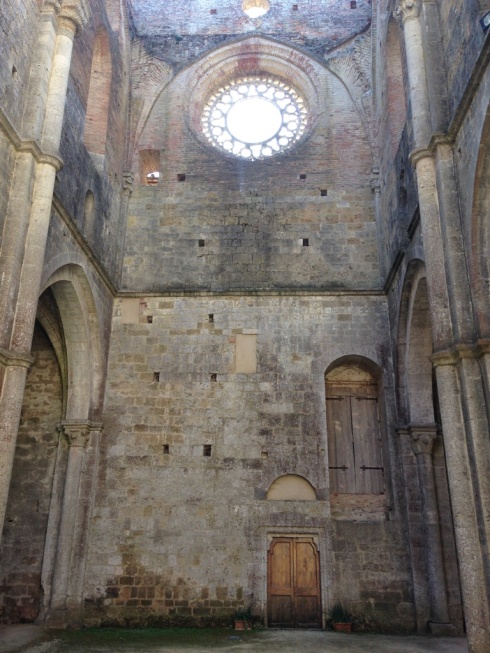
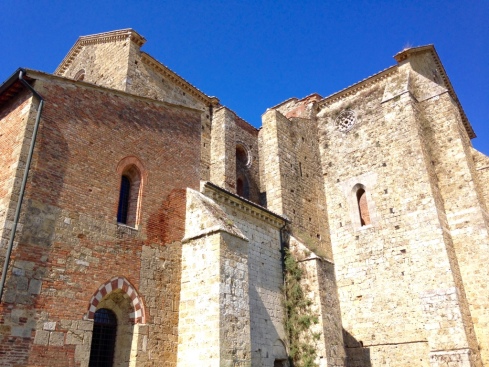
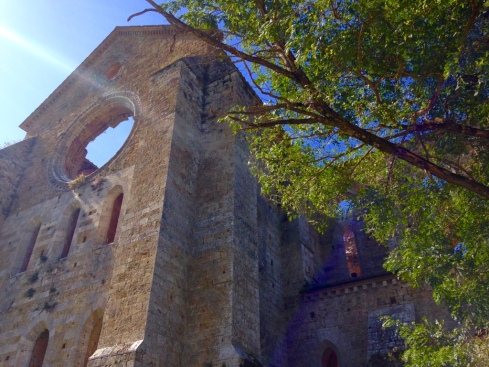
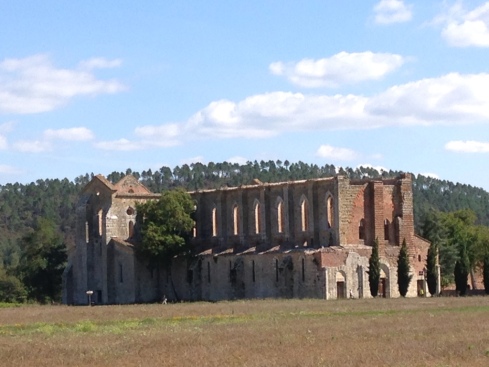
Between 1218 and 1288, the Cistercian  monks built the first gothic church in Tuscany. Its location was selected because Cistercian monks built their monasteries close to rivers, here the Merse, where they could cultivate the plains, marshlands and woods.

©Blogginginitaly.com

©Blogginginitaly.com

©Blogginginitaly.com

©Blogginginitaly.com

©Blogginginitaly.com

©Blogginginitaly.com

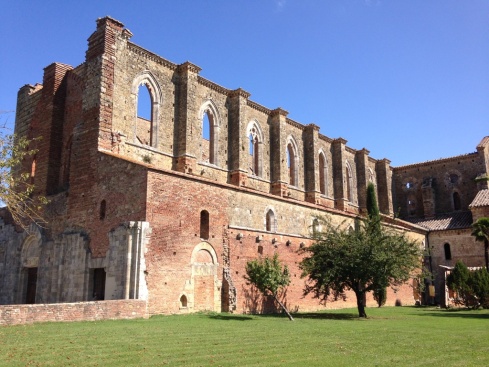
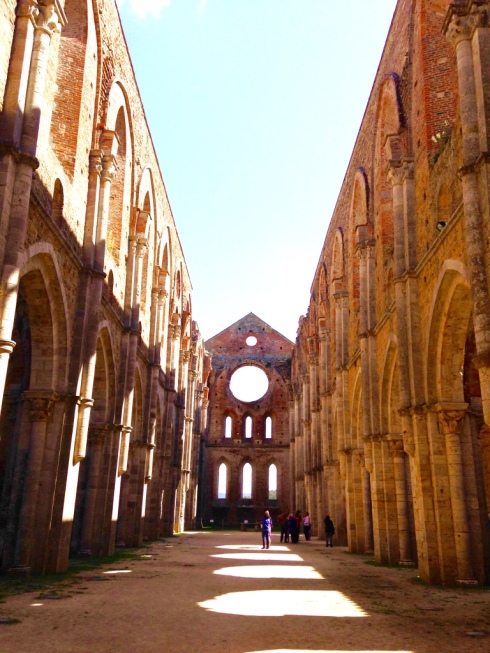
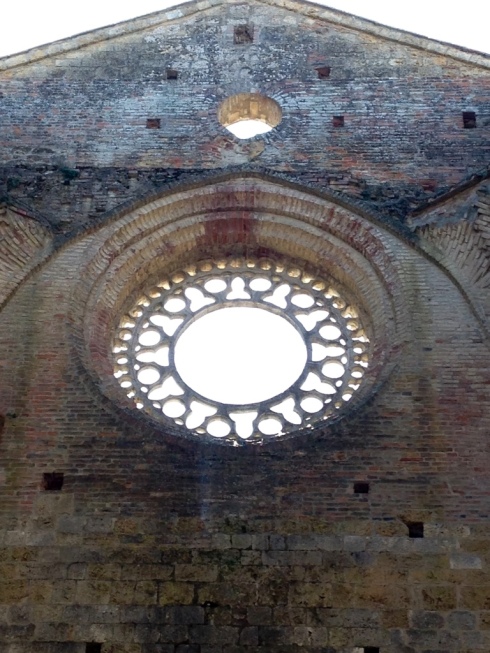
Several tragedies struck the area, including the famine of 1329, the plague of 1348, and finally mercenaries at the end of the 15th century, causing the monks to relocate to Siena. Then in 1786, lightning struck the bell tower, which collapsed onto the roof of the Abbey, causing the roof to collapse.

©Blogginginitaly.com

©Blogginginitaly.com

In 1789, the Abbey was deconsecrated, but the remains are still quite a site.

©Blogginginitaly.com

©Blogginginitaly.com

©Blogginginitaly.com

©Blogginginitaly.com

©Blogginginitaly.com

©Blogginginitaly.com

©Blogginginitaly.com

©Blogginginitaly.com

©Blogginginitaly.com

©Blogginginitaly.com

©Blogginginitaly.com

©Blogginginitaly.com

©Blogginginitaly.com

©Blogginginitaly.com

©Blogginginitaly.com

©Blogginginitaly.com

©Blogginginitaly.com

©Blogginginitaly.com

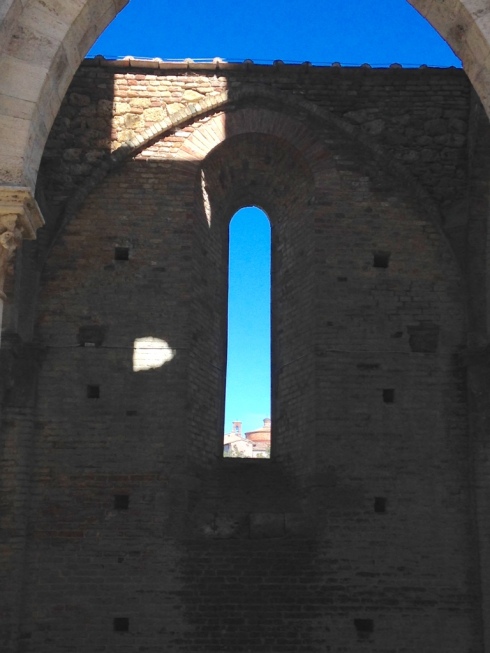
If you look closely through the Abbey window below, you will see a bit of The Hermitage of San Galgano, up the hill from the Abbey, and a place steeped in legend.

©Blogginginitaly.com

©Blogginginitaly.com

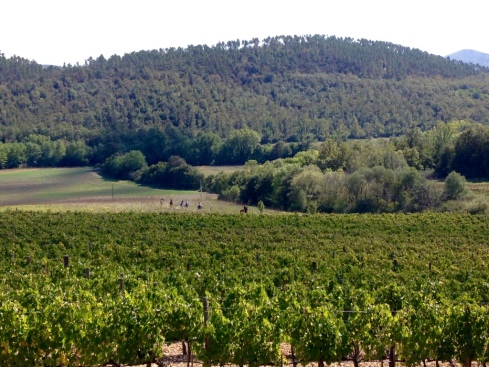
On our hike uphill, we passed a vineyard where grapes continue to be harvested, and saw locals on horseback riding through the fields.

©Blogginginitaly.com

©Blogginginitaly.com

Galgano Guidotti was born in 1148, and the events of his life have been enriched by legends, some of which we see in Camelot. Galgano, like Francis of Assisi, was born into a life of means but was tormented by a lack of direction for own life, even though he had earned the title of Knight.

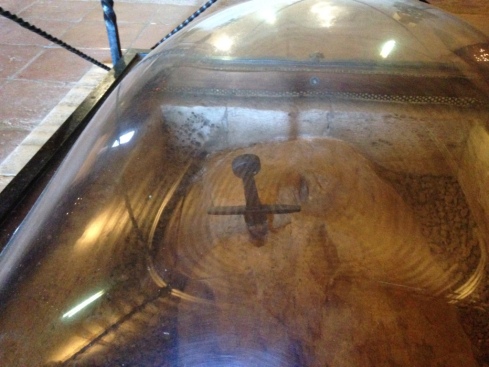
According to legend, at the insistence of St. Michael the Archangel, Galgano became a hermit. To demonstrate his commitment to his faith and to peace, he plunged his sword into a rock that emerged in his hut. This was Galgano’s sign of his renunciation of war and the symbol of the cross was a symbol of his faith.

©Blogginginitaly.com

©Blogginginitaly.com

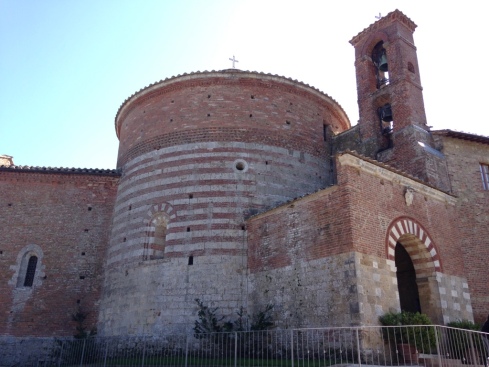
Galgano died in 1181, and in 1182, construction began on the Hermitage Rotunda as a mausoleum to shelter his tomb, as well as the rock and sword. He was canonized in 1185 by Pope Lucius III, only a few years after his death.

Over the years, there were several additions and modifications to the structure, as well as periods of demise. It is thought that the original architect may have drawn his inspiration from other circular structures in Rome such as Castel Sant’Angelo and the Pantheon.

©Blogginginitaly.com

©Blogginginitaly.com

Whether the details are accurate history or legend, it is incredible to see what remains, including the vibrant colors.

©Blogginginitaly.com

©Blogginginitaly.com

Ciao,

Judy


Buon Compleanno, Leonardo!

15 Apr

On April 15, 1452, Leonardo da Vinci was born in a small Tuscan village called Anchiano. He was a true polymath, a person whose expertise spanned a significant number of subject areas. Today, we celebrate this genius’ life as a painter, sculptor, architect, engineer, musician, inventor, mathematician, anatomist, botanist, geologist, cartographer and writer.

Presumed Self Portrait

Presumed Self Portrait

Da Vinci was the illegitimate child of Caterina, a domestic servant, and Sir Piero da Vinci, owner of the house where da Vinci was born. Today, the house is a museum where visitors are welcomed by da Vinci himself, well almost, as his life-sized hologram greets visitors and shares information about his life. In nearby Vinci, one can visit the www.museoleonardiano.it, which, according it its website, “is one of the most extensive and most original collections, providing critical knowledge of Leonardo in his historical context and in that of late Middle Ages and Renaissance.”

Among Da Vinci’s most famous works is the Vitruvian Man.

Luc Viatour / www.Lucnix.be

Luc Viatour / http://www.Lucnix.be

This drawing, combining art and science, depicts a man in two superimposed positions. The picture represents da Vinci’s attempt to relate man to nature as he believed the human body was analogous to the workings of the universe. The drawing also contains notes based on the work of the architect Vitruvius. The original is kept in Venice in the Gallerie dell’ Accademia and made available to the public occasionally.

Another intriguing work of da Vinci is the Mona Lisa. On display at the Louvre in Paris, this painting is considered one of the most famous in the world.

©Blogginginitaly.com

©Blogginginitaly.com

In 1503, Francesco del Giocondo commissioned Leonardo da Vinci to paint a portrait of his wife, Lisa, age 24. It is believed it took him about four years to complete due to other projects. Da Vinci, however, feeling the painting was unfinished, never delivered it to Francesco nor did he get paid for his work; it is undated and unsigned.

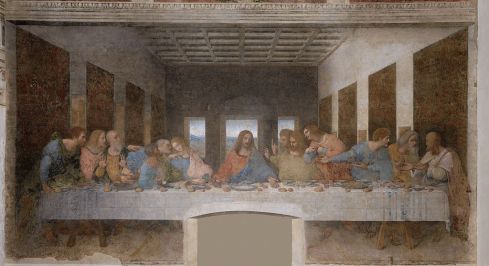
Another iconic painting of da Vinci’s is The Last Supper, in the Convent of Santa Maria delle Grazie, Milan.

The Last Supper

The Last Supper

While many of Da Vinci’s works still exist, many more were lost over the years. Yet his notebooks containing sketches and scientific diagrams, as well as his thoughts on the nature of painting, provide continuing and immeasurable contributions to both art and science.

Happy Birthday #563 , Leonardo!

You graced this earth for 67 short years, but your brilliance will shine forever.

Ciao,

Judy

Italian Commercials

2 Feb

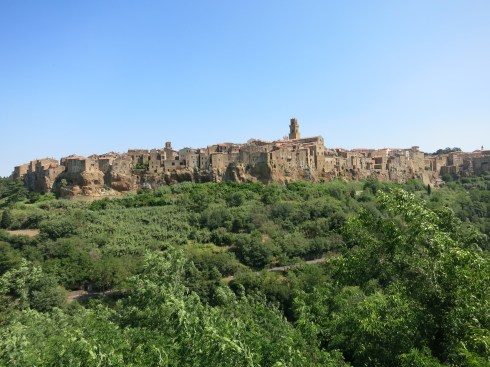
Last night, while watching the Super Bowl, this town showed up in one of the commercials:

©Blogginginitaly.com

©Blogginginitaly.com

Perhaps unlike most of the millions watching, I recognized it immediately as Pitigliano, Italy. Truly a sight to behold, and once I  saw it, a sight I’ll never forget.

The commercial that followed was so very typical of Italian commercials, creatively presenting a product in a subtle, or not so, sensual/sexual way. This is usually the case, whether the commercial is for gelato, a cleaning product, or a car.

I did a little research on the commercial, and not surprisingly, found that it had been panned by Adweek and other so called advertising experts. Perhaps these critics need to spend a bit more time in Italy, where the commercials are often as fun to watch as the shows.

In case you missed it, here’s the commercial.

Bigger, more powerful, and ready for action!


And if you are interested, here’s more on Pitigliano:
https://blogginginitaly.com/2013/07/29/pitigliano/

Ciao,

Judy


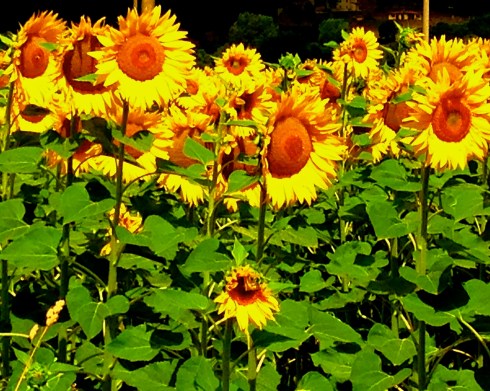
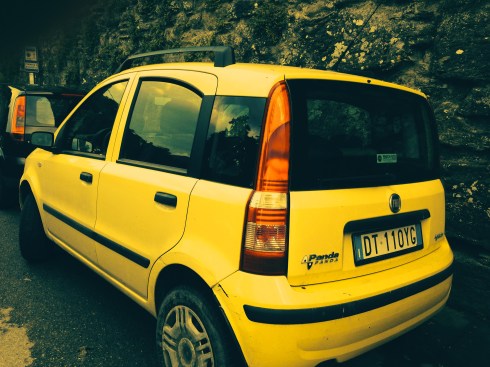
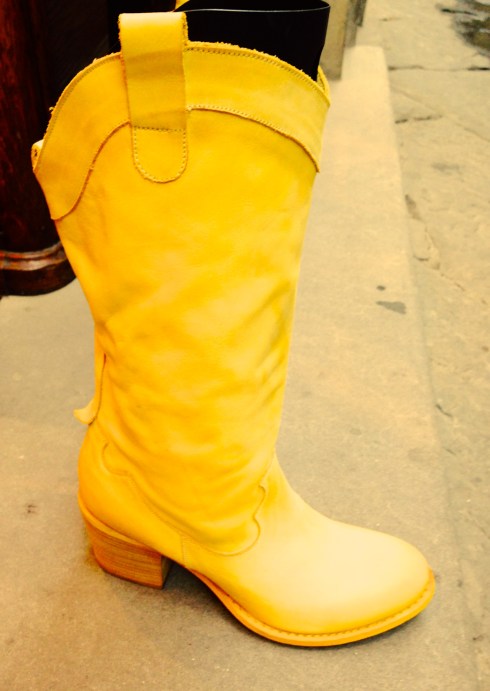
How to Say “Yellow” in Italian…

13 Jul
blogginginitaly.com

blogginginitaly.com

blogginginitaly.com

blogginginitaly.com

blogginginitaly.com

blogginginitaly.com

blogginginitaly.com

blogginginitaly.com

blogginginitaly.com

blogginginitaly.com

Ciao,

Judy

Making Pasta with Paola

27 Jun

Last night, we were at Casale della Torre again for dinner with our friends Larry and Carrol. As usual, it was such a treat and always a learning experience with Lapo and Paola in the kitchen.
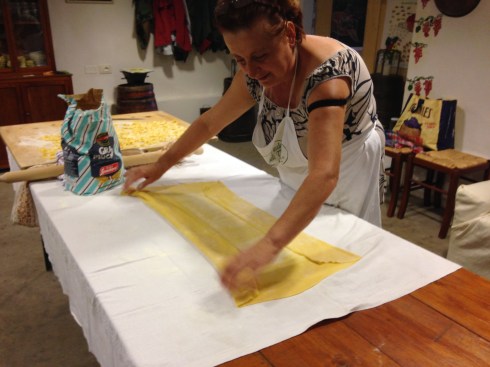
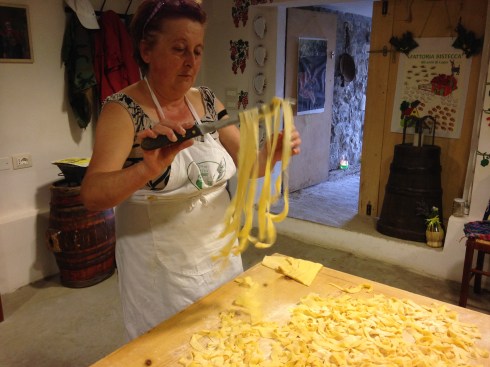
We arrived to find Paola making fresh pasta.

blogginginitaly.com

blogginginitaly.com

blogginginitaly.com

blogginginitaly.com

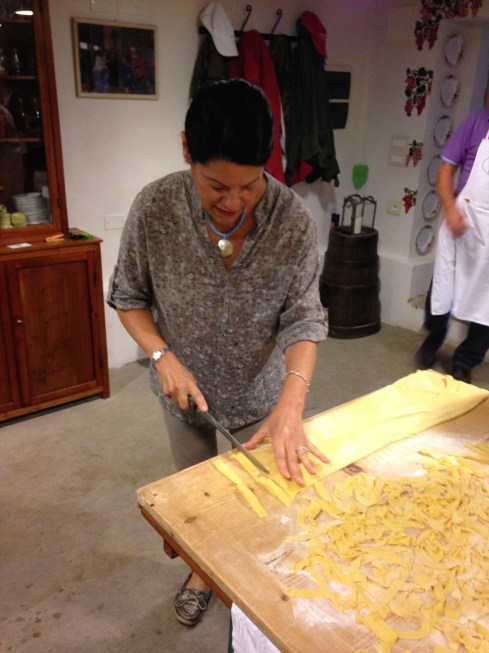
Naturally, I had to try this myself.

blogginginitaly.com

blogginginitaly.com

blogginginitaly.com

blogginginitaly.com

After a few tips, they said I passed. It was just to get me out of their way, I think.

IMG_2482

blogginginitaly.com

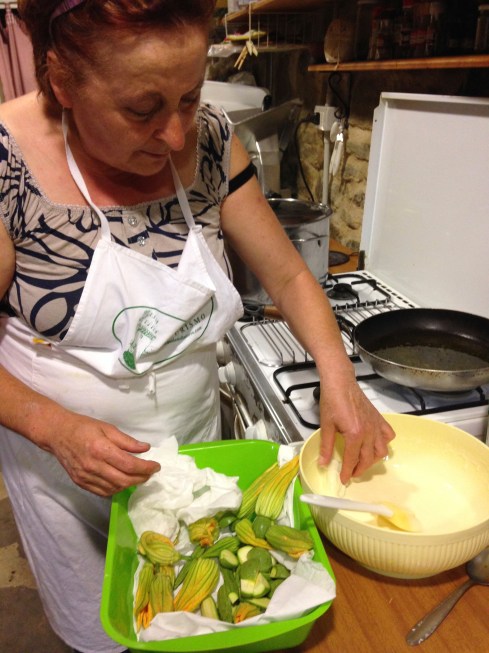
Next up, Paola’s fried veggies including zucchini flowers, zucchini, and onions, freshly picked from their garden.

blogginginitaly.com

IMG_2490

blogginginitaly.com

blogginginitaly.com

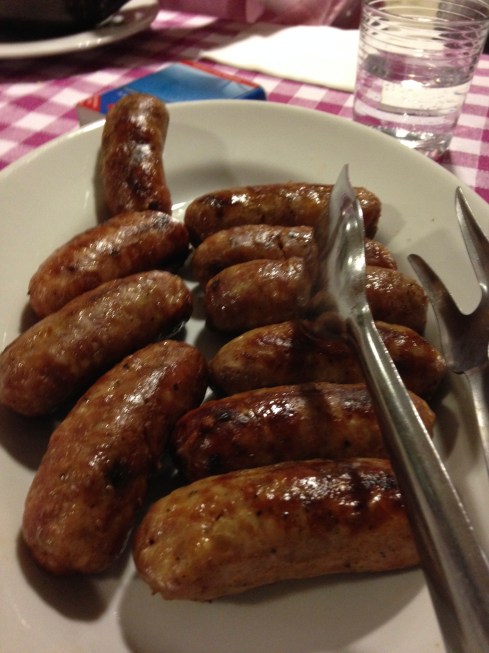
The men moved outside to enjoy the view and the Prosecco, and wait patiently for the appetizers to arrive. They were also in charge of grilling the sausage.

blogginginitaly.com

blogginginitaly.com

blogginginitaly.com

blogginginitaly.com

Meanwhile, Paola opened the treasure chest from the freezer…porcini mushrooms Lapo had found last fall, and had saved for Carrol and Larry’s arrival dinner. Such a treat for all of us.

Lapo's Porcini Find! - blogginginitaly.com

Lapo’s Porcini Find!

blogginginitaly.com

Frozen porcini sections – blogginginitaly.com

After appertivo on the veranda, we moved inside for dinner. Gustavo, a guest of Larry and Carrol’s, and the evening’s assistant chef, had requested Tripe. Yikes! But the men were all happy and said it was delicious. The ladies just looked on with eyebrows raised as the men enjoyed several servings.

blogginginitaly.com

blogginginitaly.com

Gustavo was very grateful!

blogginginitaly.com

blogginginitaly.com

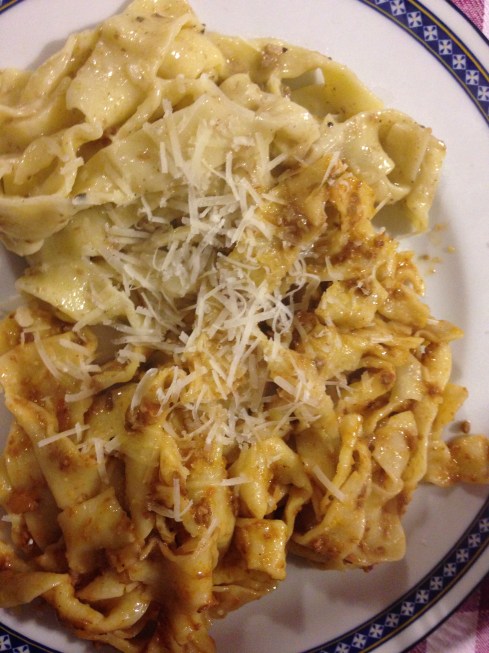
Next was two kinds of pasta – one with ragu of chianna beef, a Tuscan speciality, and the second with mushrooms. These were followed by a salad from the garden and the grilled sausage. Delicious.

IMG_2505

blogginginitaly.com

blogginginitaly.com

blogginginitaly.com

blogginginitaly.com

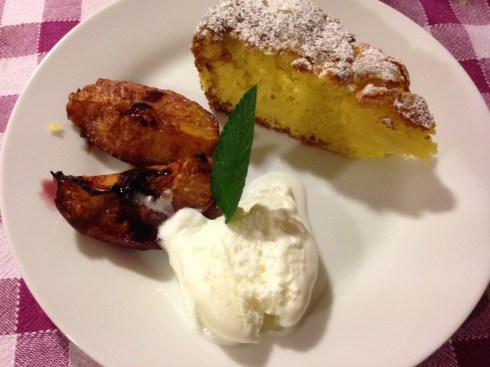
Finally, dessert – peaches marinated in Lapo’s red vino, vanilla gelato with mint sprig, and my hostess gift apple torta.

blogginginitaly.com

blogginginitaly.com

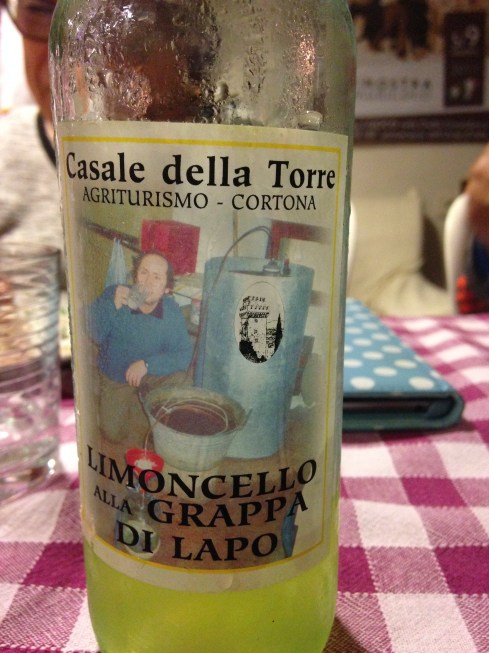
We quickly learned no evening is complete without a taste of Lapo’s homemade liquors.

blogginginitaly.com

blogginginitaly.com

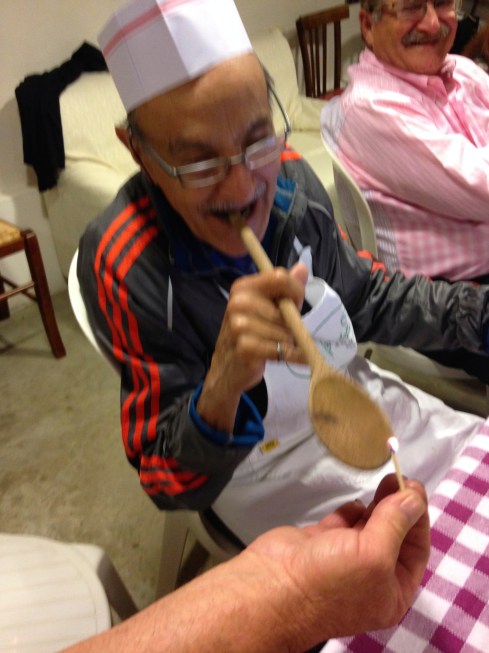
At the end of a very relaxing and fun evening, Lapo decided that Gustavo reminded him of Popeye. And why not – here is a man who, along with his brother, rode his bike from Mexico City to Toronto back in the 50s! Lacking a pipe, Lapo gave Gustavo a wooden spoon and actually lit it.

blogginginitaly.com

Before we left, Paola and Lapo invited us to make cheese with them the next day. Fresh pasta Thursday, cheese on Friday. My cup runneth over!

Ciao,

Judy