Archive | Italian History RSS feed for this section

Alexander Capraro – Recognition Ceremony

4 Nov

125 years ago, in 1899, my great grandparents, Emerenziana Vitullo, a seamstress, and Vincenzo Iacapraro, a cobbler, said goodbye to their Pietrabbondante home to begin their long and challenging journey to Chicago. They would travel with their two small children, my grandfather Alexander, aged four, and his two-year-old sister, Fortunata. We will never know what led to this decision, but we do know the impact this decision had on the life of their eldest son, Alexander. 

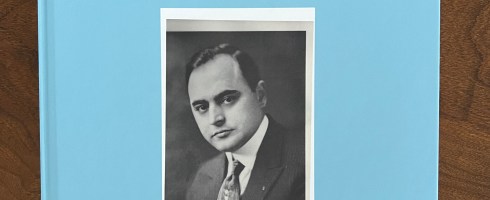
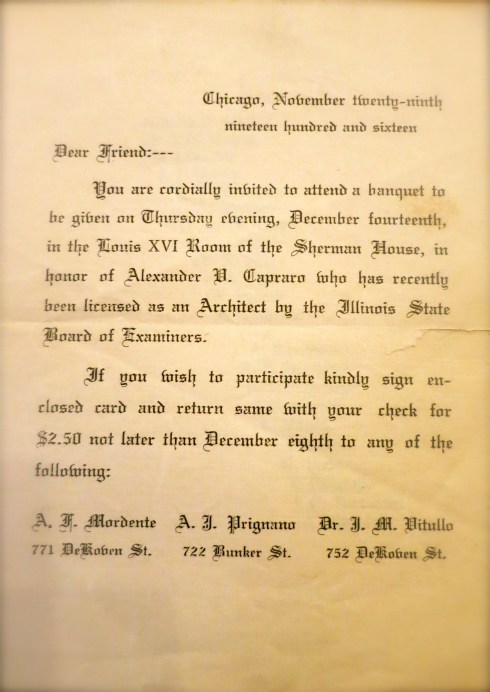
Alex Capraro, as he became known in Chicago, was a determined student who quickly learned to speak, read and write perfect English. At the young age of 21, he passed the architectural exam and became the first licensed Italian-American architect in the state of Illinois. And so began his incredible career.

©blogginginitaly.com
©blogginginitaly.com

On Sunday, September 14, 2024, Len and I were honored to be guests of the Pietrabbondante community as they recognized the achievements of Alexander Capraro, American architect, native son of Pietrabbondante.

After breakfast in my ancestor’s home, Rinella, the lady of the house, guided me to the primary bedroom balcony to see the preparations happening below. 

©blogginginitaly.com

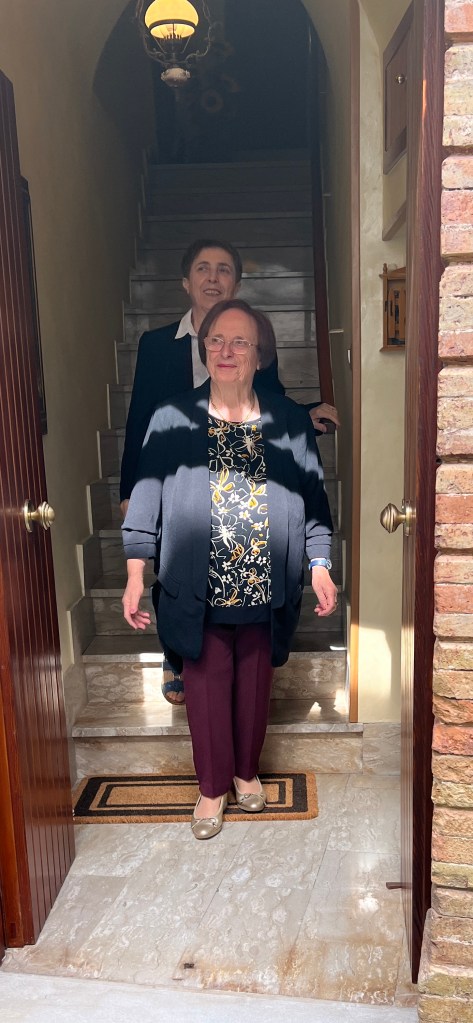
A bit later, Rinella and her sister, Rosaria, emerged from the house –  as proud as can be. 
©blogginginitaly.com

I followed, and was quickly introduced to the mayor of Pietrabbondante, Prof. Claudino Casciano.
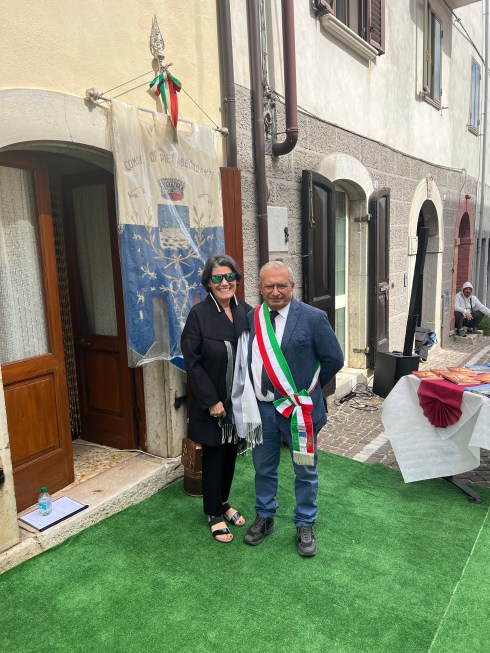
©blogginginitaly.com

The local banner was proudly displayed and posters announced the location, time, and speakers.
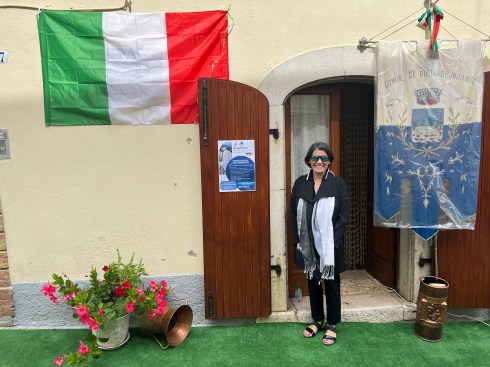
©blogginginitaly.com

The event was to be followed by an aperitivo buffet, to which all were invited.
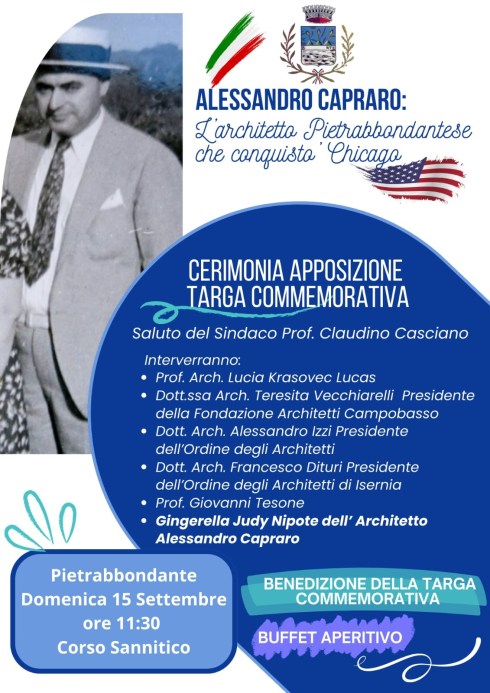
In addition to the mayor, the speakers included heads of various architectural foundations and associations; professors/researchers of architecture; and yours truly. 

©blogginginitaly.com

As mentioned before, there are about 200 full time residents, and it seemed that most of them had joined the celebration.

©blogginginitaly.com

The event was called to order by Mariella, the very efficient person responsible for organizing the gathering.
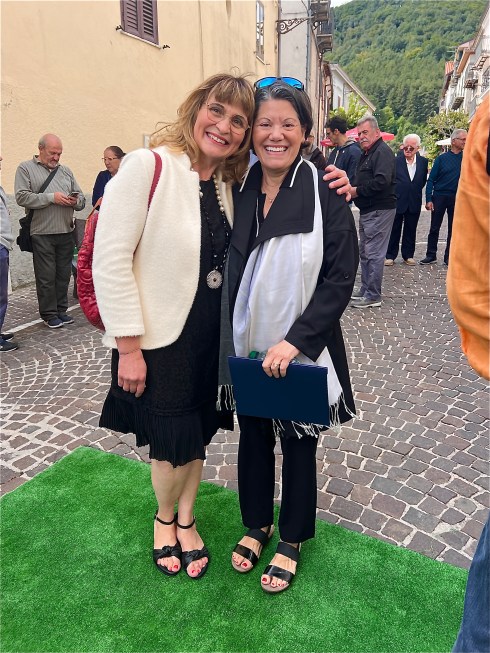
©blogginginitaly.com

She thanked those present and then the Italian national anthem was played and proudly sung by all. Most unexpectedly for me, however, was that it was followed by the Star-Spangled Banner. Truly, I felt as if I had won an Olympic gold medal! My emotions and tears were proof.

©blogginginitaly.com

The impressive group of speakers highlighted some of Alex’s significant commissions:

Main Navy Buildings in Washington DC, 1918:

The Italian Pavilion, 1933, Century of Progress, International Exhibition; 

©blogginginitaly.com

©blogginginitaly.com

Casa Bonita, opened 1920’s, annually featured in Open House Chicago.

©blogginginitaly.com  Aunt Marion, Alex’s daughter by M. Mattucci
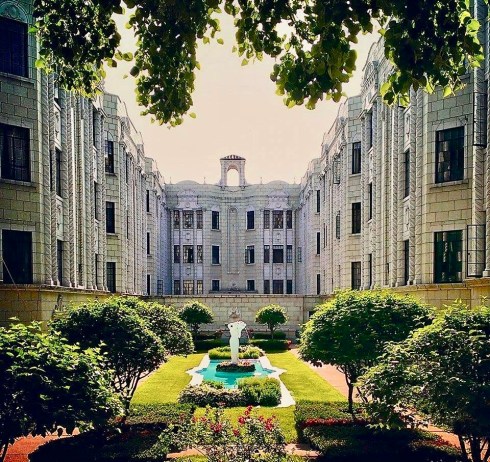
©blogginginitaly.com

©blogginginitaly.com   indoor pool

©blogginginitaly.com detail by M. Mattucci

Then it was my turn to speak (in Italian, of course!) I knew others would highlight Alex’s accomplishments; what I wanted to do was share a bit of his personal life.

When Alex met the love of his life, my grandmother Modesta Rose, (Maude), her mother said he was too skinny to date! But she did date and marry him in 1920, and they shared an incredible life together for 36 years. 

©blogginginitaly.com

They had two sons, one daughter, and eventually 10 grandchildren. ©blogginginitaly.com (Grandpa is left of grands; author is center child)

My grandparents were full of life; they loved each other and their family deeply. And how they loved to dance!
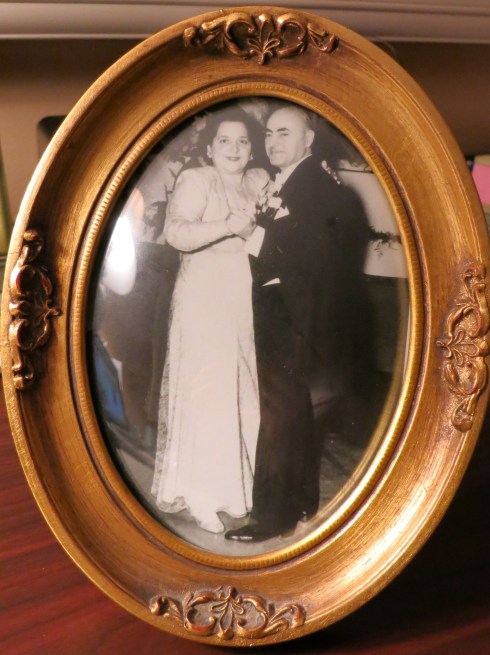
©blogginginitaly.com

Their lives were busy – whether working, traveling by car with their children, entertaining, or being involved in the community. Most of all, however, they loved when family gathered around their large dining room table for delicious dinners prepared by Maude. Although I was only five when Alex left us, I vividly remember sitting at that big table and seeing his warm smile. 

On August 20, 1938, Alexander Capraro reached the very spot where we were gathered in Pietrabbondante. He was 43. It would be his first and only visit since he emigrated at age four. That night, he wrote the following to Maude:

Honey, I got the real kick of the whole trip today when I reached my hometown and saw the house and the actual room of my birth. Today I met several aunts, cousins, and many relatives. They cried with joy and they never stopped feasting their eyes on the boy from America. In a few minutes, word spread that I was there and the whole town seemed to come around to see the native son from America.

There was more to my speech, but I ended with the following:

Alexander Capraro was a wonderful man, full of love, life and talent. But he was also a humble man, never loud, never bragging, always sharing his talents through his work, and sharing his time and advice when asked. If he were here today, he would be so appreciative and humbled by this incredible recognition and outpouring of affection. 

And then it was time for the unveiling:

©blogginginitaly.com

The blessing:

©blogginginitaly.com

And the reading of the plaque (below in English):

IN THIS HOUSE WAS BORN 
ALESSANDRO V. CAPRARO
BORN IACAPRARO
HIS ARCHITECTURE ENCHANTED CHICAGO

PIETRABBONDANTE   7 JANUARY 1895
CHICAGO   1 NOVEMBER 1956
MUNICIPALITY of PIETRABBONDANTE 9/15/2024

©blogginginitaly.com

Afterwards, I received a statue from the mayor symbolizing the town’s ancient history:
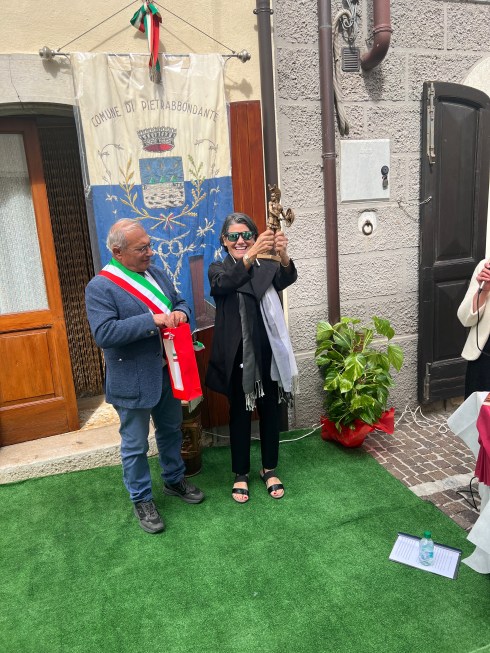
©blogginginitaly.com

RAI news was there to document the event, 

©blogginginitaly.com

which we later watched on the evening news! They included my interview, and more importantly, the interviews of two people whose research brought this story to life, Architect Francesco Lastoria 
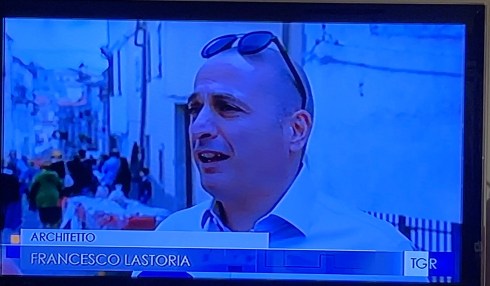
©blogginginitaly.com

and Prof. Arch Lucia Krasovec-Lucas.

With the ceremony over, it was time for celebration, and celebrate we did. The buffet, which no one would touch until Len and I started, was incredible and very generous.

©blogginginitaly.com

And finally it was their turn to join.

©blogginginitaly.com

Of course, the ceremonial Prosecco needed to be popped, and I was asked to do the honors.

©blogginginitaly.com

©blogginginitaly.com

People waited patiently to introduce themselves and shake our hands. To me, it was their personal acknowledgement of the native boy who had left home and pursued his dreams, yet he would always belong to this place. 

I began to understand how my grandfather felt…the whole town seemed to come around to see the native son {now granddaughter} from America.

We too now belong to the Pietrabbondante family. 

This has truly been an overwhelming experience for me –  research that has taken years with an ending I could never have imagined.  

I am forever grateful to so many including: 

-The entire community and administration of Pietrabbondante
-The speakers who shared their time and perspectives
-The family who has cherished/cared for my ancestors’ house and embraced us as family
-Aunt Marion, who kept my grandfather’s papers and entrusted them to me
-Lucia, for her past and ongoing research
-Francesco who discovered my posts about Alex 10 years ago and was determined to have him recognized
-Len, for taking this journey with me
-Alex, my grandfather, for his courage, determination, and love of life, as well as for being an incredible role model of a life well- lived.

To Alex, thank you!

©blogginginitaly.com

Ciao,
Judy
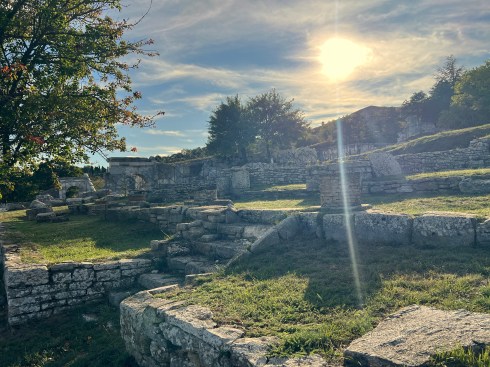


Santuario Italico di Pietrabbondante

23 Sep

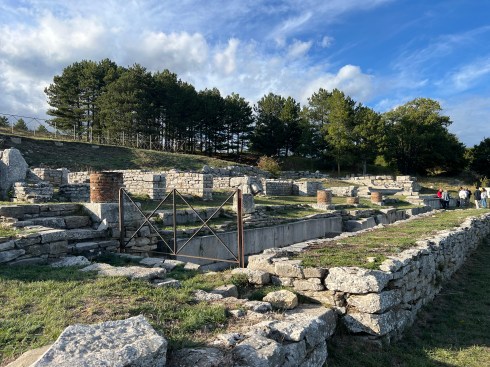
Pietrabbondante’s earliest known inhabitants were the Samnites, who arrived in Pietrabbondante in the 6th century BC. Many historians believe that it was the home of the assemblies of the Samnite federal government and the site is viewed as a Samnite sanctuary.

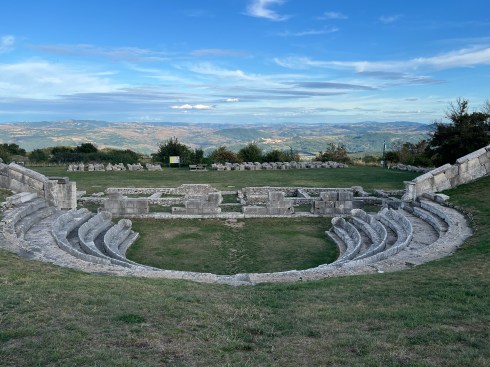
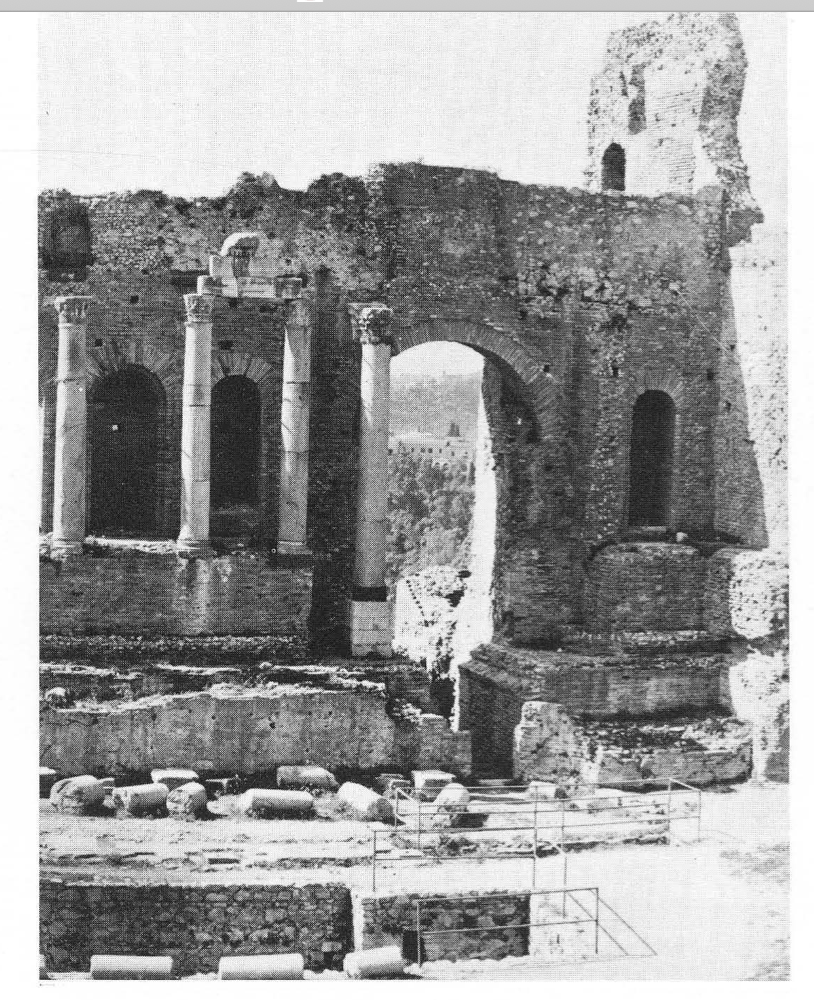
On the slope of Monte Saraceno, the Samnites built a complex of worship consisting of a theater, a temple and two arcaded buildings on both sides. Work began in the late 2nd century BC and was completed in 95 AD. The building, as articulated, was intended both for worship and for institutional activities.

©blogginginitaly.com

©blogginginitaly.com

The theater-temple complex is located on the outskirts of Pietrabbondante and sits on the site of a 3rd century BC temple portico which was destroyed by Hannibal in 217 BC. To build it, the Samnites situated two terraces along the side of the mountain, but at different levels on a single axis. The theater consists of two elements: the auditorium and the building stage, which are linked together by two stone arches. 

©blogginginitaly.com

The auditorium is capable of holding up to 2,500 spectators. Each of the seats was created from a single stone block with the dorsal elegantly thrown backwards (i.e., ergonomically designed!); with signs at both ends of each row reserving them for judges, priests, and so on. On both sides of the orchestra, retaining walls of the embankment ended with supports sculpted in the form of a man,  made from a kind of volcanic ash. 

©blogginginitaly.com

In addition, the auditorium had and still has excellent acoustics. Our guide needed only to stand on a specific center location, then speak in a normal voice to be easily heard by all! 

©blogginginitaly.com

I tried it;  you can actually hear your own voice quietly in your ears and all seated around you can hear as well. 

©blogginginitaly.com

The entire embankment is supported by large semicircular and polygonal blocks processed by cutting without regular contours.

©blogginginitaly.com

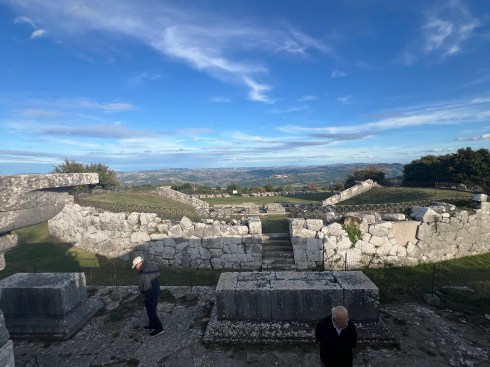
The temple, measuring 72 by 115 feet, lies behind the amphitheater. Today, the only structures remaining are the base and the eight columns that rose in front, and were paved with fine mosaics dedicated to different deities.  The roof was built with trusses, stringers, plates and tiles, each weighing 115 pounds. 

©blogginginitaly.com

©blogginginitaly.com

©blogginginitaly.com


The Samnites had an economy focused upon livestock and agriculture. Samnite agriculture was highly advanced for its time, and they practiced transhumance, the practice of moving livestock from one grazing area to another depending on the season.  Aside from relying on agriculture, the Samnites exported goods such as ceramics, bronze, iron, olives, wool, pottery, and terracottas. Their trade network extended across Campania, Latium, Apulia and Magna Graecia, the Greek inhabited areas in south Italy. It has been written that some were envious of their abilities.

The focus of this post is the archaeological site. Historically, however, what is known is that Samnites and Romans were enemies and engaged in many wars. Roman historians believed that Samnite society was highly militaristic. They feared Samnite cavalry and infantry, and nicknamed them Belliger Samnis, which translates to “Warrior Samnites”.[5][84] It is unclear if this portrayal is accurate and some consider it propaganda. Most Roman historical accounts of the Samnites were written after the Samnite civilization disappeared as of a result of their assimilation by the Romans. What we do know is that similar to the Etruscans, the Samnites were highly sophisticated in areas such as engineering, agriculture, architecture, arts, science, commerce and more.

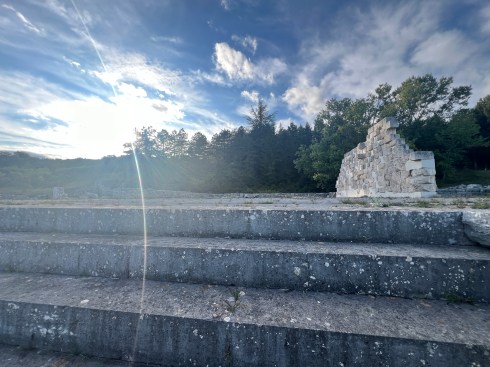
And now we understand why the Samnite warrior stands atop the Pietrabbondante War Memorial.

©blogginginitaly.com

Many thanks to Lino for organizing this excursion, sharing his knowledge, and giving us the opportunity to walk this incredible archaeological site. Not only did we walk these ancient lands, we also gained wonderful  insights into the Samnites’ skills, innovation, determination and resilience. 

Bravo Lino! 

©blogginginitaly.com (Lino lower left)

Pleae note, the text in this post is mostly from Wikipedia, and  underlined words link to additional info, if interested. All photos are blogginginitaly.com.

Ciao, 
Judy


HAPPY 50th CAMPERS!

28 Aug

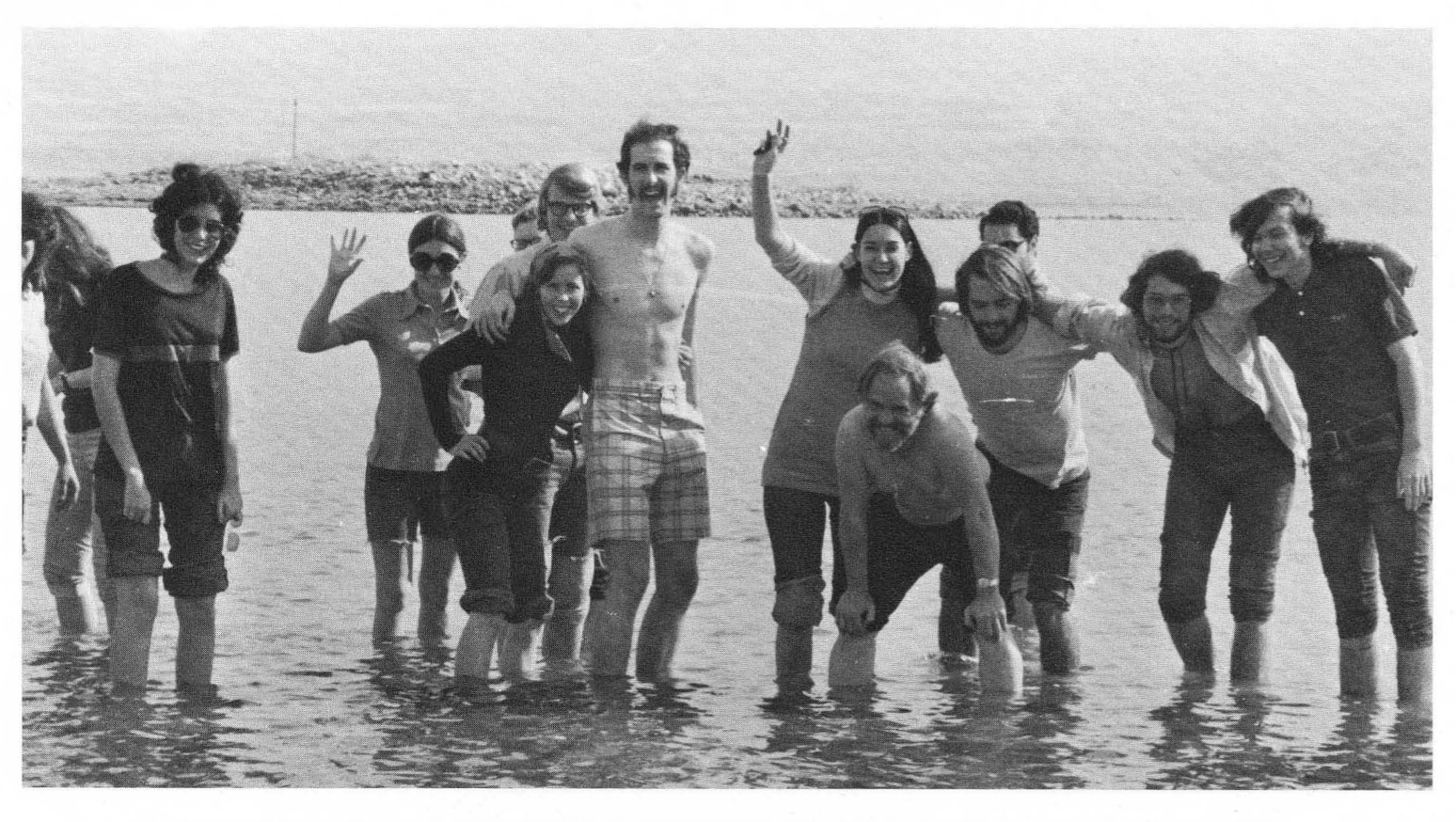
50 years ago yesterday, over 200 very curious and most adventurous students from across the U.S. landed in Rome for the beginning of a year like no other – destination:

Loyola’s Rome Center was started in 1962. At that time, it was the largest American study program offered by a U.S. university in Europe enrolling Loyola students as well as students from 75 other U.S. colleges and universities, of which I was one.

While it is hard to imagine we arrived 50 years ago, it is so easy to remember the most incredible year of our lives. Quickly becoming a family of “campers”,  we learned, laughed, loved and lived together. Oh how we lived!

Most of us arrived at age 20, having never been to a foreign country, nor away from home for more than a semester. There was no internet, no wifi, no cell phones, no pc’s, etc. But we adapted quickly. What we did have was one public payphone in the hall, mail slots, a beautiful campus, an attentive staff, engaged professors, and most of all, each other.

Yes, we actually did attend class with some very excellent professors, but so very much of what we remember from that year comes from outside the classroom, as they said it would.

We quickly learned how to get around in Italy…

and explore some of her greatest treasures.

We learned to navigate by train, and expect nothing to happen as scheduled.

On holidays, we even had extra time to explore far away destinations.


We learned of the unspeakable horrors of war…

and saw monuments dedicated to victory.

We rushed to the Vatican on 5/22/72 in the hope that the Pieta had not suffered grave damage at the hand of a madman. 

When not studying or traveling, we also trained well and competed!

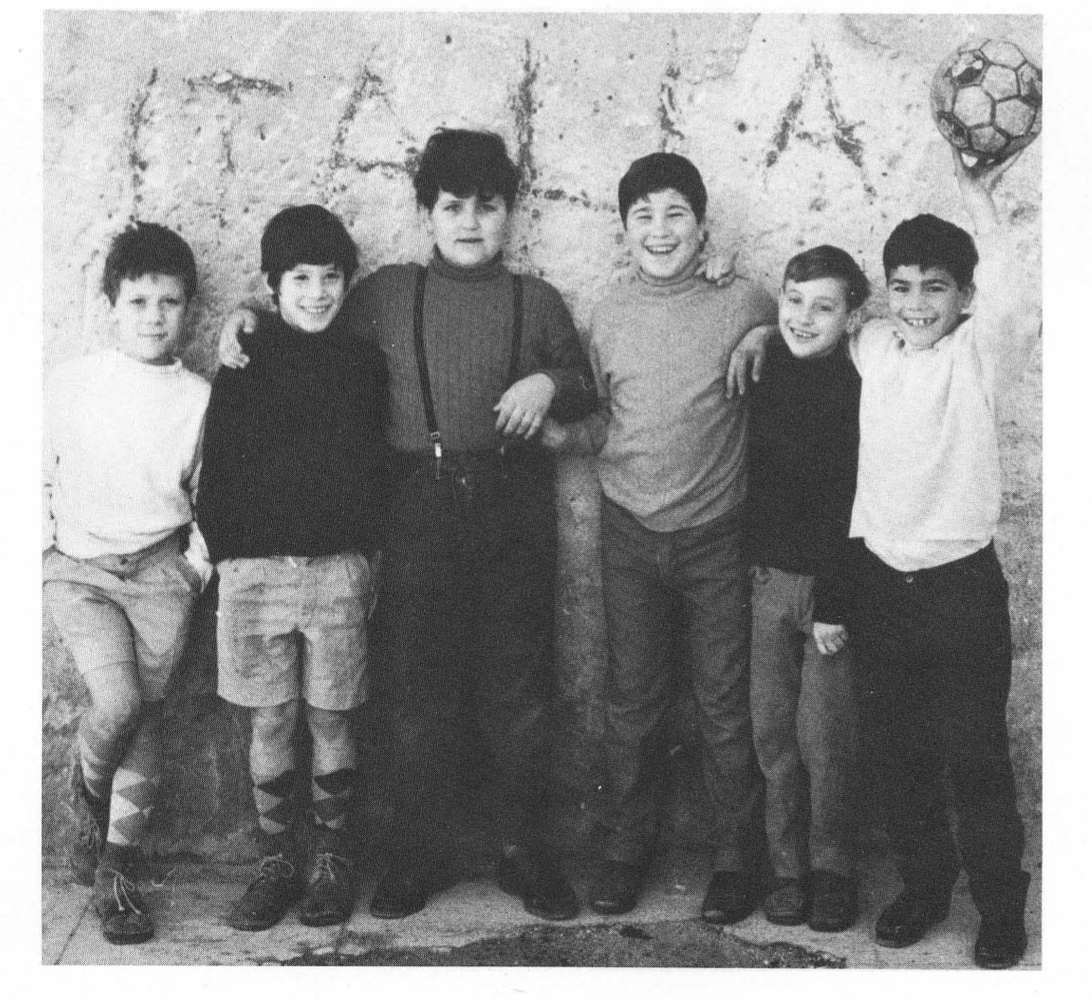
We learned that every kid in Italy plays soccer,


and that some of then best “food” can be bought at the market.

At Christmastime, we sponsored a party for children from a local orphanage, doing much more for us than they could imagine.

At the end of our year together, we published a wonderful yearbook and I was delighted to be one of the photographers. All of the above photos are from that book, so kudos to the following people:


Finally, 10 years ago, Loyola Rome celebrated its 50th anniversary in Chicago and all classes were invited to attend. It was our group’s 40th anniversary, and as you can see, friendships are still going strong.

To the family of “71-72 campers”,  indeed we did learn, laugh, love and live together. Oh how we lived! 

Judy

Salute e Cent’anni!

1 Jan

Last evening, the final of 2020, the moonlit view over the lake was spectacular. But this year,  although there were no fireworks, there was something particularly unique that caught my eye – a large 100 illuminated on the face of The Drake, a storied Chicago hotel. I quickly learned that The Drake was founded in 1920, hence its 100 year celebration. 

©blogginginitaly.com

Quickly I found myself thinking of Italy.

When Italians celebrate many of life’s happy occasions – a birthday, a wedding, an anniversary, etc., they often raise their glasses in a celebratory toast and proclaim: Cent’anni!  (May you live 100 years!)

Sometimes you hear them say Salute e Cent’Anni! (to your health and 100 years!)

Given  2020, I’ll choose the second toast as my wish for you in 2021:

Salute e Cent’Anni!  

To your health and 100 years!

Wishing you a very Happy and HEALTHY New Year!

Ciao,
Judy


Happy Mother’s Day 2020! Buona Festa della Mamma!

10 May

This post is a repeat of my annual sentiments with a few added photos. In this time of Covid-19,  since most new photos consist of Zoom Squares, and hugs are virtual, it’s especially fun seeing these former gatherings! 

Mother’s Day is a special time to remember
how fortunate I am to be part of a long line of strong,
intelligent and loving Italian women, who are missed everyday.

Maude©Blogginginitaly.com

Paternal Grandmother Maude ©blogginginitaly.com

Serafina©Blogginginitaly.com

Maternal Grandmother Serafina ©blogginginitaly.com


Benita©Blogginginitaly.com

My Mother Benita (at my wedding) ©blogginginitaly.com

My parents wedding 1947 ©blogginginitaly.com

©Blogginginitaly.com

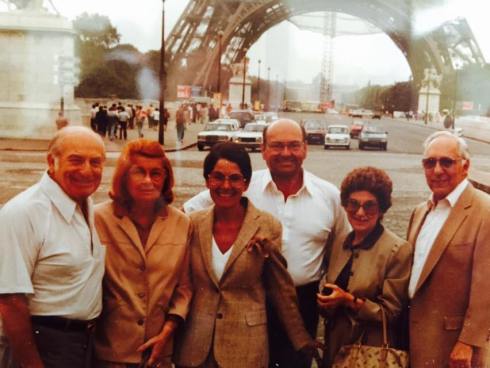
(L-R visiting Paris) Aunt Marilyn, Mom, Aunt Florence ©blogginginitaly.com

Aunt Marion ©blogginginitlay.com

It is also a day to celebrate
my incredible sisters, nieces and cousins, (pictured and not),
who are not only amazing Mothers,

but also determined women who incorporate
the traditions learned from our ancestors as they create new ones.

Sisters ©blogginginitlay.com

Celebrating our parents 50th at Trevi Fountain, 1997 ©blogginginitlay.com

©blogginginitaly.com

©blogginginitaly.com

©blogginginitaly.com

©blogginginitaly.com

©blogginginitaly.com

To all of them, 
and to the dear friends/wonderful Mothers
I have met throughout my life’s journey,
I wish you all a beautiful day filled with love,
virtual family hugs
and relaxation.

And to my daughter, Benita, 

©blogginginitaly.com

and my mother, Benita, 

©blogginginitlay.com

my forever gratitude for making Mother’s Day so special for me. 

Happy Mother’s Day!
Buona Festa della Mamma!

Ciao,
Judy

Easter Processions in Italy

12 Apr

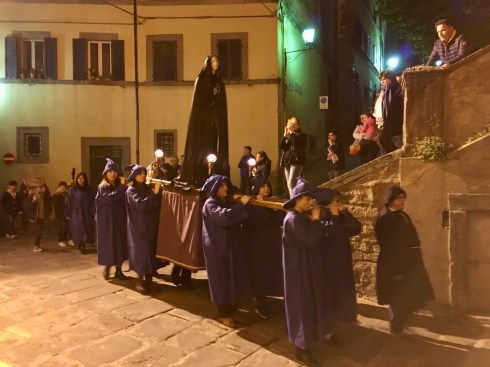
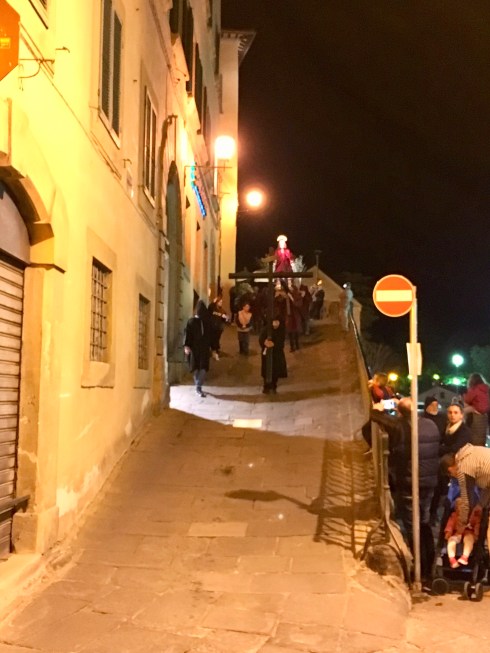
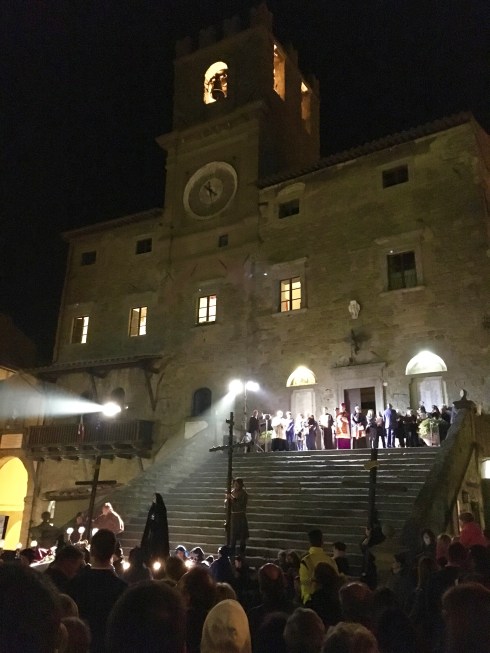
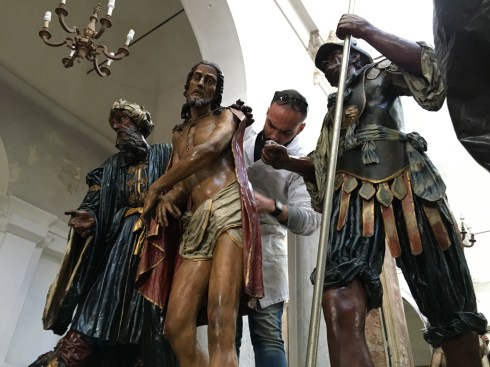
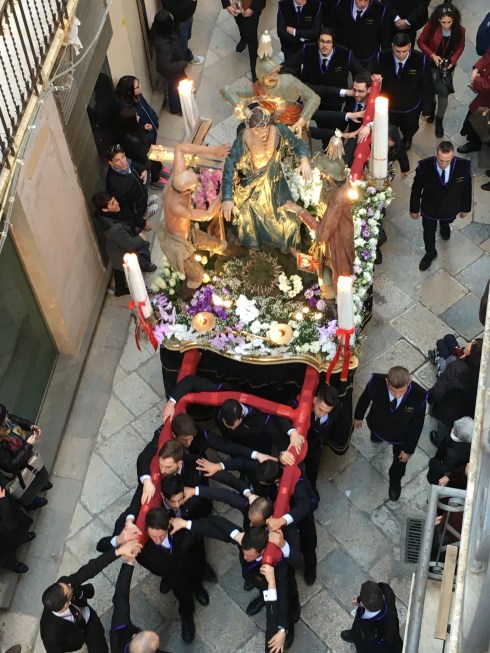
While Covid-19 has disrupted lives around the world, it is particularly difficult for many during this religious time of year, including Italians, who have had to forego centuries of Easter traditions. From small villages to large cities, processions featuring lifelike (and extremely heavy) “ floats” depicting scenes from the Passion are carried out by the locals.

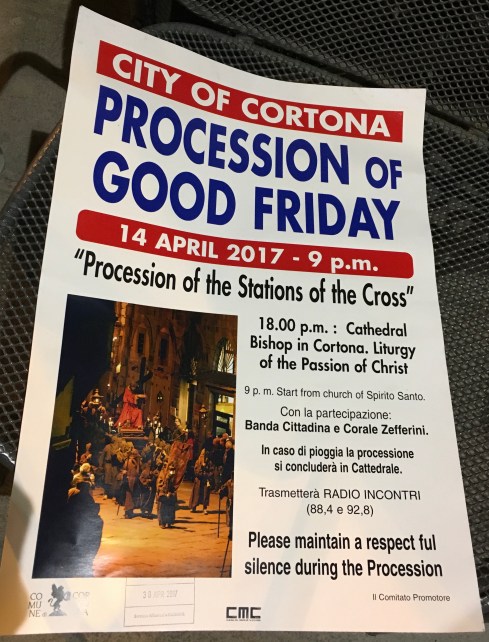
Each year, the city of Cortona sponsors the Procession of Good Friday, beginning at 9 PM from the Church of Santo Spirito. It winds its way up, around and through the steep streets of the town and ends in Piazza Repubblica, with ceremonial prayers. These photos are from the 2017 procession.

©blogginginitaly.com

©blogginginitaly.com

©blogginginitaly.com

©blogginginitaly.com

©blogginginitaly.com

©blogginginitaly.com

©blogginginitaly.com

©blogginginitaly.com

The Misteri di Trapani (Mysteries of Trapani) is a day-long Passion procession featuring twenty floats of lifelike sculptures of individual scenes of the events of the Passion. The Misteri are amongst the oldest continuously running religious events in Europe, having been played every Good Friday since before the Easter of 1612, and running for 16-24+ continuous hours. They are the longest religious festival in Italy.

The small balcony from our room at the Badia Nuova hotel offered a perfect view of the 2016 procession.

©blogginginitlay.com

In the days before the procession, people were busy attending to final touches of the platforms.

©blogginginitlay.com

©blogginginitlay.com

If you study the configuration of the men’s arms, you can begin to imagine the weight of the platforms.

©blogginginitlay.com

©blogginginitlay.com

©blogginginitlay.com

©blogginginitlay.com

Here are two short videos I took that represents the tone and mood of the procession. The swaying is part of the pageantry, and the clapper you hear is what is used to stop and start the movement of the platforms, which happens about every 30 to 50 feet.

Hoping that next year, these traditions resume as expected, along with so many others around the world. In the meantime,

Buona Pasqua, Happy Easter,

Stay Safe, and Be Well!

Ciao,
Judy

Original 2016 post with videos is linked below

https://blogginginitaly.com/2016/03/27/misteri-trapani/


Leonardo: A True Genius

23 Sep

In honor of Leonardo da Vinci’s death, 500 years ago on May 2, his life and works are being celebrated throughout Italy this entire year.

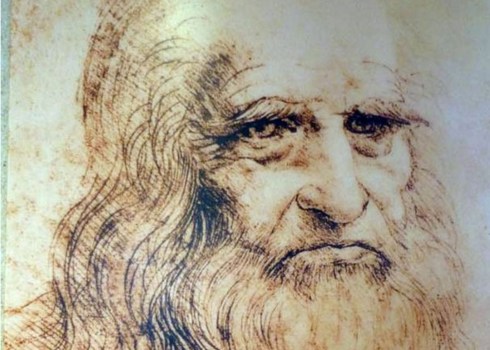
Self Portrait

Self Portrait

Da Vinci was born in a small Tuscan village called Anchiano on April 15, 1452. He was a true polymath, a person whose expertise spanned a significant number of subject areas. Today, we celebrate this genius’ life as a painter, sculptor, architect, engineer, musician, inventor, mathematician, anatomist, botanist, geologist, cartographer and writer.

While most people perhaps recognize da Vinci through some of his most famous paintings, such as the Mona Lisa and Last Supper, his study of so many things, including botany, was extensive.

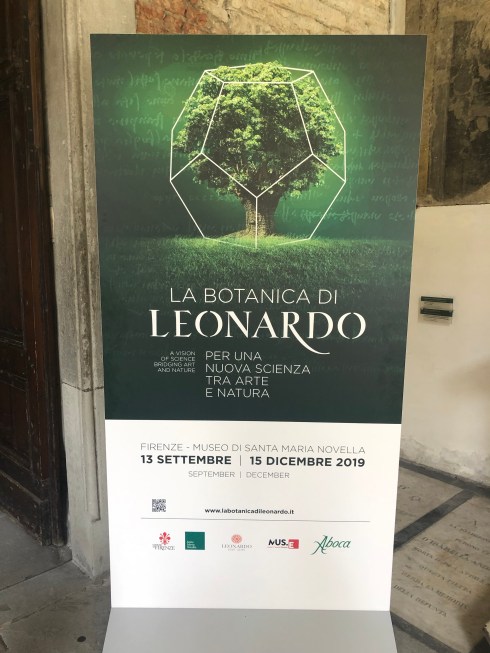
This past week, we were fortunate to attend La Botanica di Leonardo (Leonardo’s Botany) at the incredible Santa Maria Novella complex in Firenze. Len has read the 600 page, Leonardo da Vinci, by Walter Isaacson, (2017), not once but twice, and often out loud to me, so we were particularly interested in seeing any of da Vinci’s research and exploration.

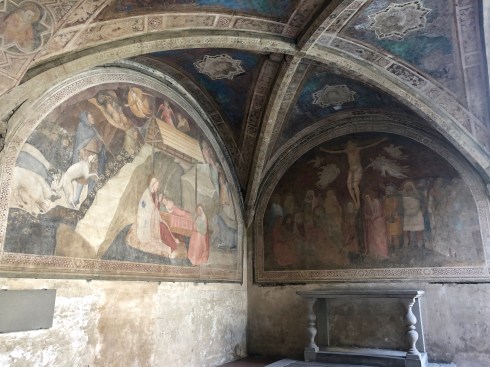
We entered through the cloister, one of the oldest parts of the complex dating back to perhaps the early 1200s.

©blogginginitaly.com

©blogginginitaly.com

©blogginginitaly.com

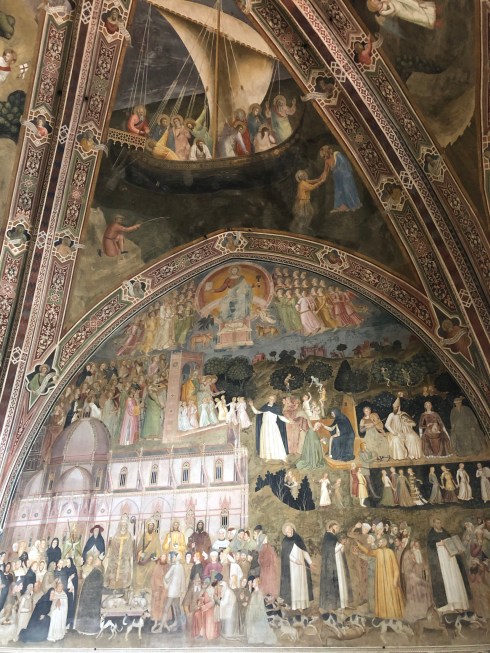
We then entered the magnificent Capilla de los Españoles, or Spanish Chapel.

©blogginginitaly.com

©blogginginitaly.com

From there, we followed the signs for the exhibit.

©blogginginitaly.com

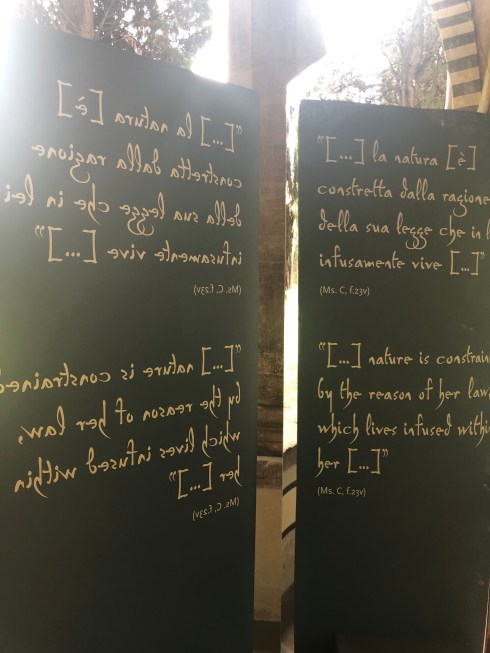
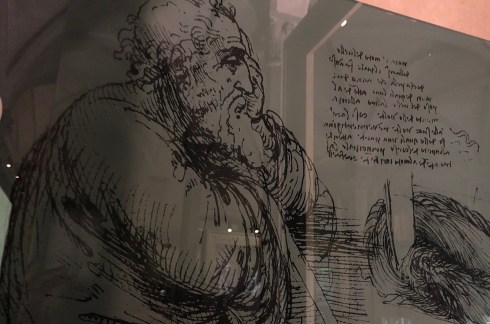
Along the way, there were many interesting things to see, such as a mirror placed next to some of da Vinci’s words to make them legible. Da Vinci was left-handed, often wrote in a shorthand he invented for himself, and often mirrored his writing, starting at the right side of the page and moving to the left.

©blogginginitaly.com  ©blogginginitaly.com

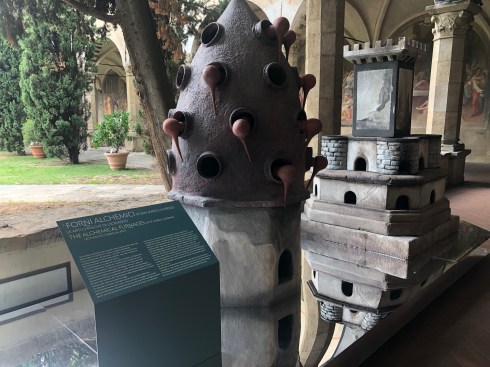
He also designed furnaces and ovens for the production of medicines and perfumes, required for his alchemy research.

Leonardo Botanico Exhibit, 2019 Firenze ©blogginginitaly.com

We finally arrived at the elaborate and interesting mirrored entrance.

©blogginginitaly.com

From the exhibition website:

The Botanical exhibition outlines the philosophical and technological context of the time in which Leonardo da Vinci lived in order to explore his study of the forms and processes of the Plant world in greater depth, through his eyes as a “systemic” thinker, highlighting the connections between art, science and nature and the relationships between the different spheres of knowledge.

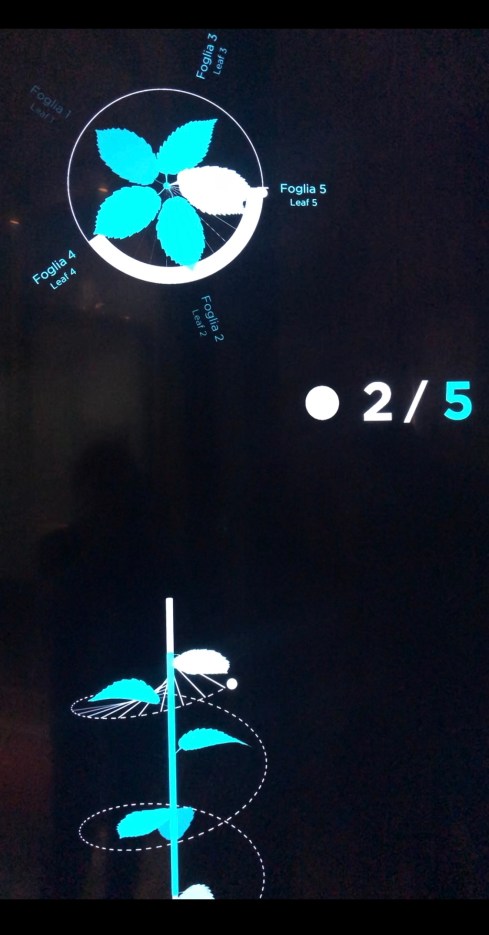
The long hall was filled with exhibits on both sides, depicting various aspects of da Vinci’s research. With this animation, we saw da Vinci’s research on the progression of plant formation, one leaf at a time.

While others had discovered that a tree’s age was could be determined by counting the rings, it was da Vinci who discovered that the growth rings told the story of the environmental conditions of each year. These are photos of an animation of the rings of a tree over time and a tree sample.

©blogginginitaly.com

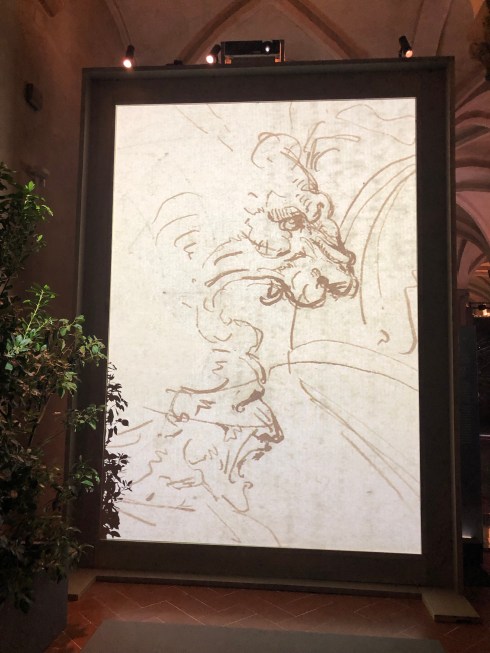
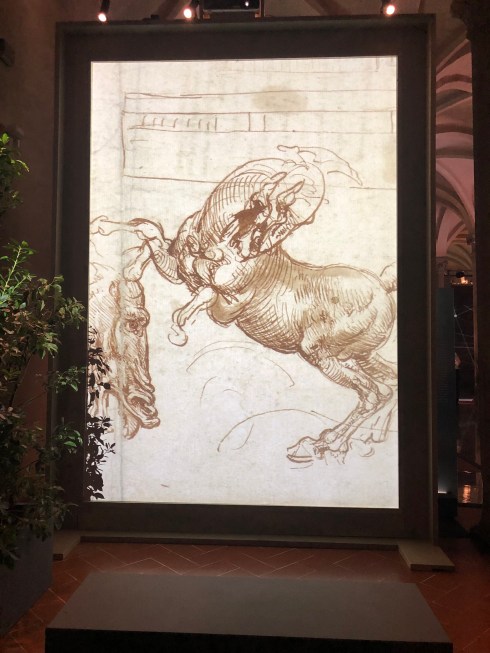
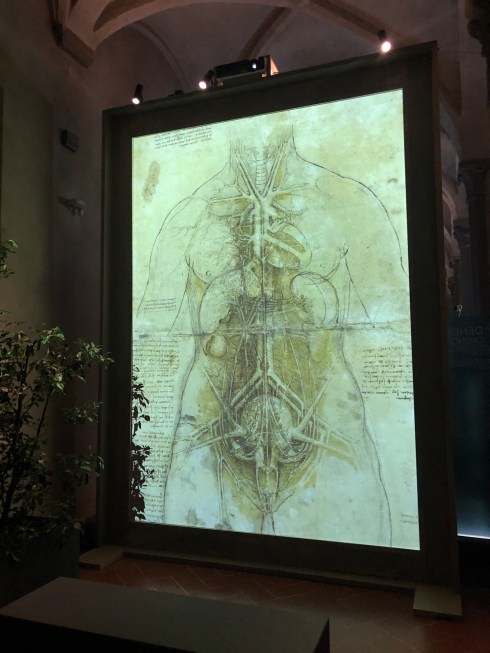
There was also a large, two-sided screen depicting some of da Vinci’s notes, drawing and paintings.  Here’s a sampling:

And then this, some of his notes:

Leonardo da Vinci (1452-1519), Codex Atlanticus, folio 197 verso. Method for making a “positive” print; bottom, a sage leaf printed in negative. Copyright Veneranda Biblioteca Ambrosiana/Mondadori Portfolio.

At the end of the hall, guests are invited to momentarily become like the Vitruvian man, who for da Vinci, was the proportional blend of math and art during the Renaissance, and a cornerstone of Leonardo’s attempts to relate man to nature.

©blogginginitaly.com

The final panels, titled Leonardo’s Legacy, leave us with a message worthy of consideration:

Leonardo Botanico Exhibit, 2019 Firenze

And so we see the reason why Leonardo’s legacy is even more relevant today: if our sciences and technologies are ever more restricted in their focus, if they are unable to understand the complexity of problems by taking an interdisciplinary approach and are dominated by companies that are more interested in financial revenue than the well-being of humanity, then we urgently need to return to a vision of science that honours and respects the unity of life as a whole, that recognizes the fundamental interdependence of all natural phenomena and reconnects us with the system of living things. Our needs today are exactly those outlined in the thinking of Leonardo da Vinci five hundred years ago.

Leonardo Botanico Exhibit, 2019 Firenze

Leonardo da Vinci, a true genius, spent a great deal of time in the Santa Maria Novella area in 1504 and 1505. Walking through the exhibit, you sometimes feel as though he just might walk by. 

Ciao,
Judy


Venice, La Bella Venezia!

16 Sep

My first visit to Venice was as a study abroad student. Although it was many years ago, I can still see it vividly in my mind’s eye. It was winter and a heavy fog had rolled in as I walked along the canal. I could hear the lapping of the water against the gondolas and the hum of the water taxis ferrying passengers to and fro.  There were lights in the distance, but the fog clouded the identity of any of the buildings. It was cold, but it didn’t matter. It was simply magical, and for me, it will always be that way.

As soon as I exit Santa Lucia train station and see this view,

©blogginginitaly.com

my heart starts to flutter. How grand, how impossible, how so many things!

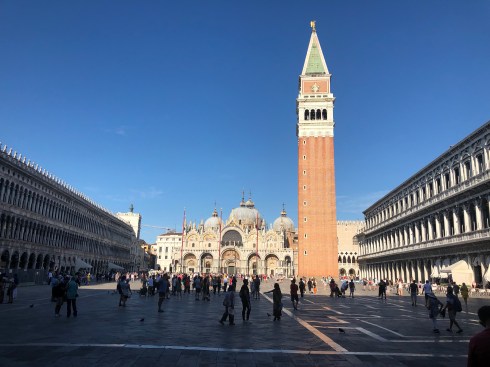
I know today there can be huge crowds, ridiculous cruise ships, and flooding, but we experienced none of them. And perhaps because it is now illegal to feed the pigeons, even Piazza San Marco wasn’t very crowded.

©blogginginitaly.com

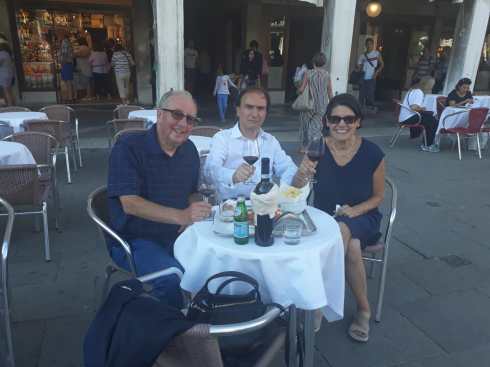
After the conference, we relaxed in the grand piazza for a bit,

©blogginginitaly.com

enjoying aperitivo,

©blogginginitaly.com

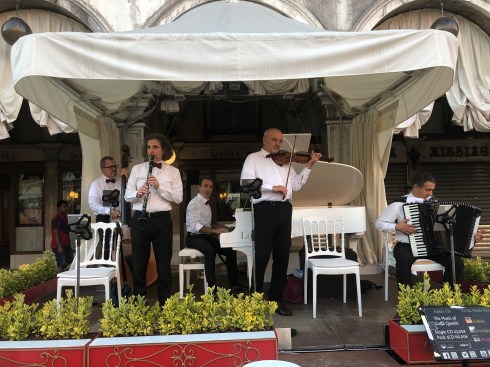
listening to music,

©blogginginitaly.com

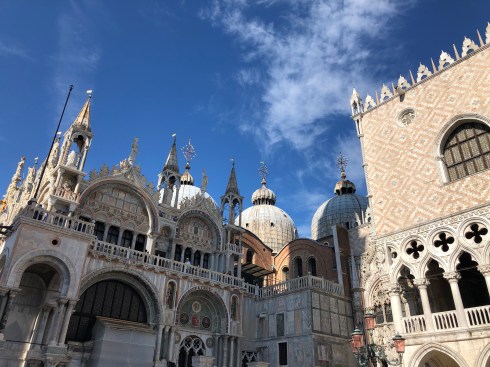
and gazing at the incredible sights,

©blogginginitaly.com

especially those  just caught by chance.

©blogginginitaly.com

Before leaving the piazza, we wandered over to this hotel where we celebrated my parents 50th wedding anniversary. Such incredibly fond memories.

©blogginginitaly.com

Afterward, we caught a vaporetto, or public water taxi, to another part of town, appreciating  the efficiency with which they maneuver the canal traffic, dock at various stops, and manage the passengers disembarking and embarking.

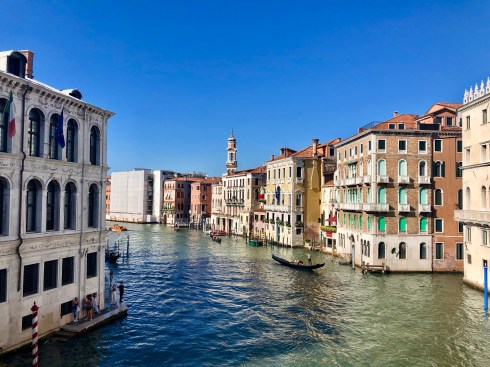
And then there are the views – the incredible Renaissance and Gothic palaces, the gondolas, and the Grand Canal.

©blogginginitaly.com

©blogginginitaly.com

©blogginginitaly.com

Len said if he got lost, I’d find him on this special boat. Smart guy, that Len.

©blogginginitaly.com

Sunset and evening bring on their own special color palettes in Venice,

©blogginginitaly.com

making it difficult to know which way to look.

©blogginginitaly.com

The next morning, I awoke at dawn, so I decided to check out early morning Venice. First on my agenda was to find breakfast, and indeed I did… a delicious cappuccino and a just out of the oven freshly baked cornetto (croissant).

©blogginginitaly.com

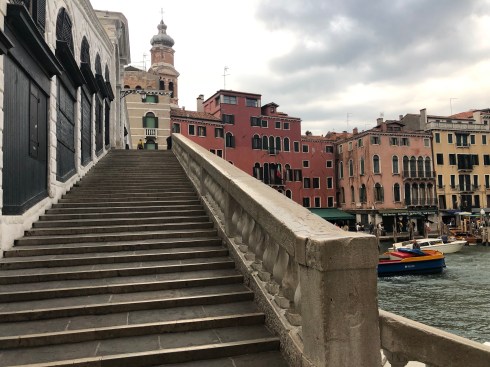
Then I was ready to explore. This is the famously crowded Rialto Bridge, completed in 1591, covered with rows of shops, and one of the top tourist attractions in Venice.

©blogginginitaly.com

But that morning, this was my view, having the Rialto virtually to myself!

©blogginginitaly.com

©blogginginitaly.com

©blogginginitaly.com

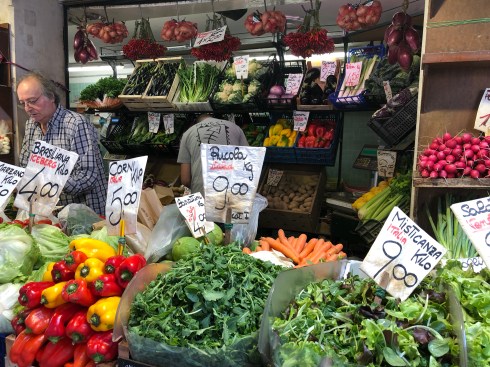
In the early morning hours, however, while most tourists are fast asleep, locals are hard at work preparing for the the day.

©blogginginitaly.com

Fish, fruit and vegetables are being delivered, 

©blogginginitaly.com

©blogginginitaly.com

and taken to the various markets which supply local restaurants and shoppers.

©blogginginitaly.com

©blogginginitaly.com

©blogginginitaly.com

©blogginginitaly.com

After a delightful early morning stroll, I walked back to the hotel through tiny vicoli filled with shops preparing for the day, and lovely old buildings that retain their charm. 

©blogginginitaly.com

And so, Venice, although I leave you once again, not knowing when I’ll return, rest assured that for me, your mystery, beauty and magic will never fade.

©blogginginitaly.com

©blogginginitaly.com

Ciao,
Judy


Un Onore Davvero! (Italian Version)

10 Sep

Due settimane fa, e inaspettatamente, abbiamo ricevuto un invito a partecipare alla 76a Mostra Internazionale del Cinema di Venezia, ospiti del Prof. Dr. Massimo Lucidi, giornalista economico, autore e fondatore di numerosi eventi internazionali come il Premio Eccellenza o il Premio Italiano Eccellenza .

©blogginginitaly.com

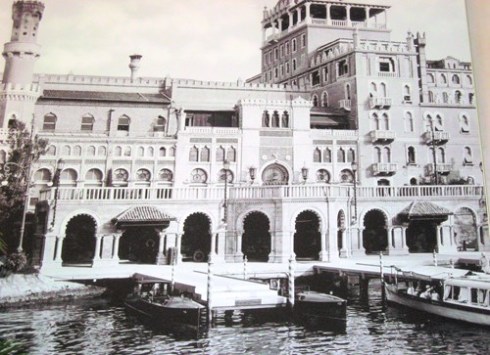
Il festival si tiene al Lido di Venezia e il nostro incontro è stato all’Hotel Excelsior. Per il loro sito web: “Questa straordinaria creazione ha riscosso un grande successo il 21 luglio 1908, con una sontuosa festa in riva al mare per oltre 3.000 ospiti. È diventata rapidamente un paradiso per l’elite, le star del cinema e la regalità”.

Nel 1932, l’Hotel Excelsior Venice Lido Resort ha dato il benvenuto al primo Festival del cinema di Venezia ed è ora la sede ufficiale di questo evento di fama mondiale.

© HOTEL EXCELSIOR VAT: 09825980965

Ci siamo presi un momento per goderci un cappuccino in buona compagnia.

©blogginginitaly.com

L’incontro a cui abbiamo partecipato è stato intitolato “Cinema e Web”. Si è concentrato sul rapporto tra emozione e seduzione del cinema e le opportunità digitali di oggi per preservare e condividere storia e cultura.

Ma perché noi? Un po ‘di storia richiesta qui …

Io e Len, entrambi di origini italiane, abbiamo sempre avuto il sogno e l’obiettivo di trascorrere un periodo significativo in Italia. Dal 2001, con il nostro viaggio in Calabria per trovare i documenti dei nonni di Len, abbiamo continuato la ricerca delle nostre case ancestrali e visitato la maggior parte. Una volta in pensione, e desiderosi di vivere davvero il paese dei nostri antenati, abbiamo scelto l’antica e bellissima città di Cortona in Toscana.

©blogginginitaly.com

Per noi, era la dimensione e l’ambiente perfetti per darci una base centrale da cui partire, per interagire veramente con la gente del posto e per assorbire la cultura dei nostri antenati mentre ci immergevamo nella vita quotidiana italiana. Non avremmo potuto immaginare le grandi amicizie che avremmo fatto.

Crescendo, io e Len siamo stati entrambi fortunati ad essere circondati da grandi famiglie italiane estese. Ognuna delle nostre vite era piena di divertenti tradizioni italiane, grandi riunioni di famiglia e amore.

Nella mia famiglia c’erano 10 nipoti per parte. E mentre sapevamo dei risultati dei nostri nonni, non era come se parlassero di se stessi. Per noi, erano nonni tipici e divertenti che lavoravano duramente e amavano i loro nipoti a caro prezzo.

Di conseguenza, il mio fascino ancestrale iniziò davvero molti anni dopo, quando iniziai a ricercare mio nonno paterno, Alex Capraro.

©blogginginitaly.com   Alex Capraro and wife Maude

Lasciò Pietrabbondante in Abruzzo all’età di quattro anni ed emigrò con i suoi giovani genitori in America dove alla fine divenne il primo architetto italo-americano autorizzato in Illinois. Agli inizi degli anni ’30, fu nominato capo architetto dal governo italiano per il padiglione italiano alla Century of Progress Fair del 1933 a Chicago. Anche se è morto quando avevo cinque anni, mia nonna conservava molte delle sue lettere e dei suoi documenti. Alla fine, questi mi sono stati trasmessi. A tempo debito, sono stato in grado di mettere insieme così tanto di ciò che era e ciò che aveva realizzato nella sua vita, come documentato nella mia serie di blog: Attraverso le sue parole: riflessioni da e su mio nonno.

La storia di Alex ha suscitato interesse, non solo con i miei familiari, ma anche con molti amici italiani.

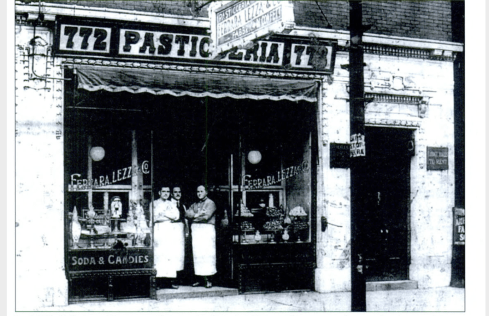
Questo mi ha portato a ricercare e condividere qualcosa in più su mio nonno materno, Salvatore Ferrara, che ha aperto una pasticceria al dettaglio nella sezione Little Italy di Chicago nei primi anni del 1900.

Salvatore Ferrara (r) C.1908

La pasticceria produceva dolci italiani, grandi torte nuziali e mandorle ricoperte di zucchero, o coriandoli, che Salvatore aveva imparato a fare in Italia. Quando le vendite di caramelle hanno superato i pasticcini, ha lasciato la moglie per dirigere il forno e alla fine ha lanciato la Ferrara Pan Candy Company. Nel 2017 il Gruppo Ferrero, produttore di Nutella e il secondo produttore di cioccolato e azienda dolciaria al mondo, ha acquistato la Ferrara Candy Company.

Per non essere superata dagli uomini, mia nonna materna, Serafina Ferrara, divenne una dinamica personalità imprenditoriale e filantropo.

Serafina Ferrara and brother

A differenza di miei nonni, ho avuto la fortuna di conoscerla tra i 20 anni. Oltre a gestire la panetteria, ha aperto due delle prime sale per banchetti di Chicago, il Chateau Royale e il maniero di Ferrara. Ha anche dedicato un tempo significativo a cause caritatevoli e civili. Era conosciuta come “L’angelo di Halsted Street” per la sua infinita generosità verso i meno fortunati. Nel 1956, fu nominata nonna nazionale dell’anno insieme a Ed Sullivan come nonno dell’anno. Lo stesso anno, fu decorata dal Governo italiano per aver contribuito a cementare le relazioni italo-americane: i suoi numerosi successi nella vita sono stati inseriti nel record congressuale della Camera dei Rappresentanti degli Stati Uniti dall’onorevole Frank Annunzio nel 1972.

Nel corso del tempo, ho potuto vedere gli ingranaggi girare nella testa del nostro buon amico Carlo. Era incuriosito, non solo per la storia di questi immigrati italiani che hanno realizzato così tanto in America, ma che le due famiglie erano unite dal matrimonio di mia madre, Benita Ferrara, e di mio padre, Bill Capraro. Carlo è stato anche colpito dalla decisione di Len e dalla mia decisione di immergerci completamente nella storia e nella cultura dei nostri antenati, nonché di ricercare e condividere le nostre storie. Sapevo che aveva iniziato a parlare con gli altri, ma mai fino a che punto.

Avanti veloce alla scorsa settimana e l’invito.

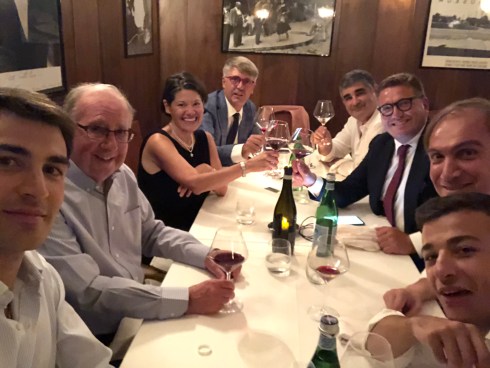
A cena mercoledì sera, abbiamo incontrato Massimo Lucidi (di fronte a me) per la prima volta, sebbene fosse stato ben informato. Prima che la serata fosse finita, mi aveva invitato a partecipare a un panel la mattina successiva.

©blogginginitaly.com

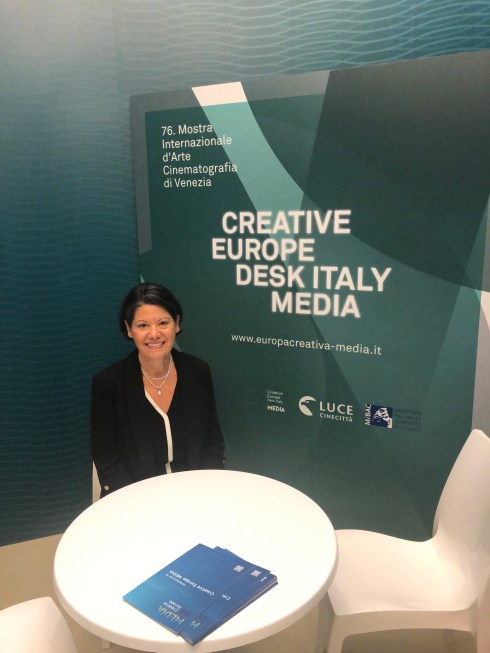
La sala conferenze Tropicana dell’Hotel Excelsior ospitava il padiglione italiano dove si sarebbe tenuto l’incontro.

©blogginginitaly.com

All’improvviso, sono stato sul palco con un membro del parlamento, un colonnello dei carabinieri, il Presidente di Rai Cinema e Massimo Lucidi, tutti che recitano ruoli significativi e vari nella promozione del cinema e delle arti legate alla storia e alla cultura dell’Italia in un palcoscenico internazionale.

©blogginginitaly.com

Il mio ruolo è stato quello di condividere una breve storia (in italiano, ovviamente!) Dei miei nonni, tutti immigrati italiani e dei contributi che hanno fatto in America. E perché così tanto interesse? Come è stato sottolineato durante il panel, ci sono così tante storie meravigliose di immigrati italiani che non vengono mai ascoltate e mai raccontate, ed è la sfida di coloro che sono coinvolti in tutti i tipi di media a cercare tali storie.

Nella sala c’erano produttori, registi, attori, scrittori e giornalisti, e molti furono riconosciuti per il loro lavoro.

©blogginginitaly.com

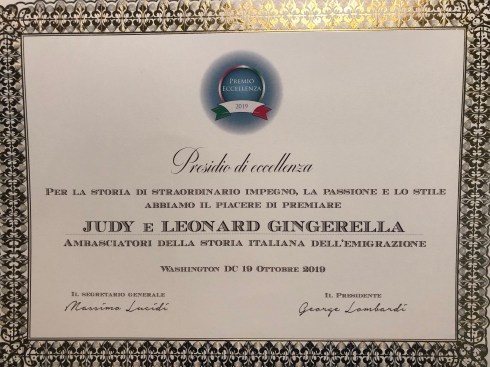
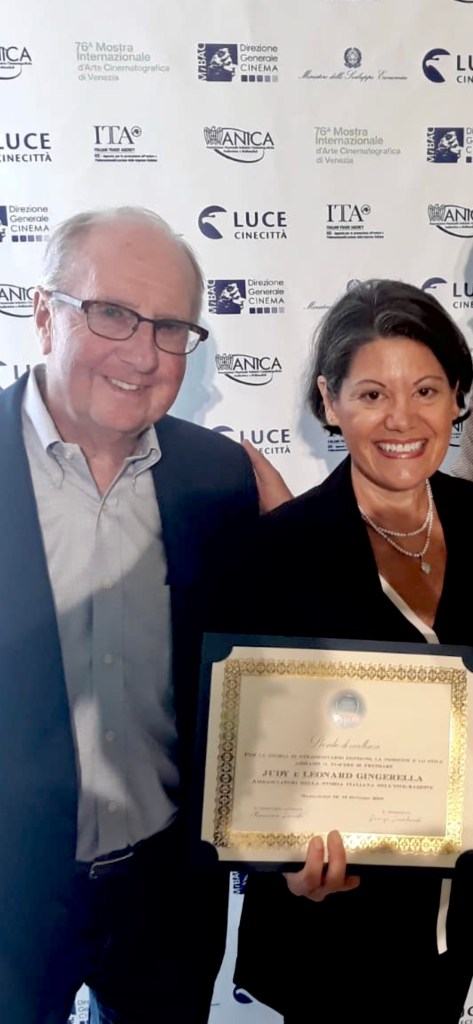
E poi, alla conclusione del panel, è arrivata la nostra incredibile sorpresa e il nostro straordinario onore – Len ed io siamo stati riconosciuti dal Comitato Esecutivo del Premio Eccellenza come segue:

Per la storia di straordinario impegno, passione e stile,
siamo lieti di premiare
Judy e Leonard Gingerella
Ambasciatori della storia italiana dell’emigrazione

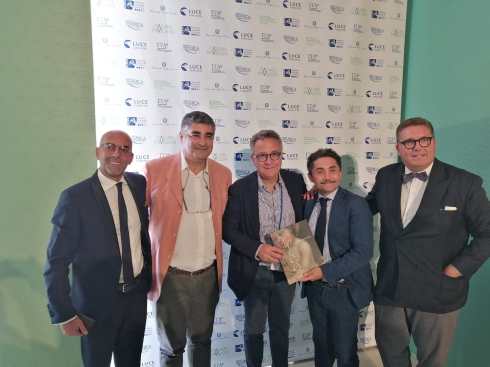
©blogginginitaly.com     Colonel Anania, Len , Judy, Massimo Lucidi

La cerimonia di premiazione effettiva si terrà a Washington DC in ottobre, ma poiché non saremo disponibili, ci è stato assegnato il nostro premio in anticipo. Ed è per questo che siamo stati invitati a Venezia.

Dopo l’evento, Massimo ha condotto un’intervista con me e Carlo, disponibile su YouTubehttps://youtu.be/Ikif5iup2mY

https://youtu.be/Ikif5iup2mY

Abbiamo presentato a Massimo un libro di Luciano Meoni, il sindaco di Cortona.

©blogginginitaly.com

E il colonnello Anania ha presentato un libro all’onorevole Nicola Acunzo di Francesco Attesti, Consigliere culturale di Cortona.

Len ed io saremo per sempre grati a Massimo, Orazio, Carlo ea tutti coloro che vedono valore nel condividere il passato e sono impegnati a mantenere vive le storie. Grazie mille, grazie! Il nostro tempo trascorso insieme al 76 ° Festival Internazionale del Cinema di Venezia sarà qualcosa che apprezzeremo per sempre.

Soprattutto, la mia sincera gratitudine verso i miei nonni e bisnonni per avere il coraggio di lasciarsi alle spalle il noto, cercare opportunità in America e creare eredità straordinarie. Sarò sempre sbalordito e anche ispirato dai loro successi. Come loro nipote, sono così orgoglioso di poter condividere le loro storie.

©blogginginitaly.com

Su una nota profetica … a fine luglio, la nostra famiglia allargata si è riunita a Chicago per una settimana. Una notte attorno a una grande tavola rotonda, ci hanno chiesto ciascuno di completare la seguente frase:

“Sono un 10 a _________.”

Ho riflettuto, non sono sicuro della mia risposta, e poi a mia volta, la parola è semplicemente saltata fuori: RICERCA.

Non avrei mai immaginato che la mia ricerca mi avrebbe portato in questo incredibile viaggio.

Resta sintonizzato: potrebbe esserci ancora qualcosa in arrivo.

Ciao,
Judy


An Honor Indeed!

10 Sep

Two weeks ago, and most unexpectedly, we received an invitation to attend the 76th Venice International Film Festival, guests of Prof. Dr. Massimo Lucidi, economic journalist, author, and founder of numerous international events such as the Premio Eccellenza or Italian Excellence Award.

©blogginginitaly.com

The festival is held on Venice Lido and our meeting was at the Hotel Excelsior. Per their website: “This extraordinary creation opened to great acclaim on 21st July 1908, with a lavish ocean-front party for over 3,000 guests. It rapidly became a haven for the elite, film stars and royalty.”

In 1932, Hotel Excelsior Venice Lido Resort welcomed the first ever Venice Film Festival and is now the official venue of this world-famous event.

© HOTEL EXCELSIOR VAT: 09825980965

We took a moment to enjoy a cappuccino in good company.

©blogginginitaly.com

The meeting we participated in was titled “Cinema and Web.” It focused on the relationship between the emotion and seduction of cinema and today’s digital opportunities to preserve and share history and culture.

But why us? A bit of history required here…

Len and I, both with Italian origins, always had a dream and goal to spend significant time in Italy. Since 2001, with our trip to Calabria to find Len’s grandparents’ records, we’ve continued the research of our ancestral homes and visited most. Once we retired, and wanting to truly experience the country of our ancestors, we chose the ancient and beautiful town of Cortona in Tuscany.

©blogginginitaly.com

For us, it was the perfect size and setting to give us a central base from which to travel, to truly interact with locals, and to absorb the culture of our ancestors as we became immersed in daily Italian living. Little could we have imagined the great friendships we would make.

Growing up, Len and I were both very fortunate to be surrounded by large extended Italian families. Each of our lives was filled with fun Italian traditions, large family gatherings and love.

In my family, there were 10 grandchildren on each side. And while we knew of our grandparents’ accomplishments, it wasn’t as if they talked about themselves. For us, they were typical and fun grandparents who worked hard and loved their grandchildren dearly.

As a result, my ancestral fascination truly began many years later when I started researching my paternal grandfather, Alex Capraro.

©blogginginitaly.com   Alex Capraro and wife Maude

He left Pietrabbondante in Abruzzo at age four and emigrated with his young parents to America where he eventually became the first licensed Italian-American architect in Illinois. In the early 1930’s, he was appointed chief architect by the Italian Government for the Italian Pavilion at the 1933 Century of Progress Fair in Chicago. Although he passed away when I was five, my grandmother kept many of his letters and documents.  Eventually, these were passed on to me. In due time, I was able to piece together so much of who he was and what he had accomplished in his life, as documented in my blog series: Through His Words: Reflections From and About My Grandfather.

Alex’s story generated interest, not only with my family members, but also with many Italian friends.

This led me to research and share more about my maternal grandfather, Salvatore Ferrara, who opened a retail pastry and candy shop in the Little Italy section of Chicago in the early 1900s.

Salvatore Ferrara (r) C.1908

The bakery produced Italian pastries, large wedding cakes, and the sugarcoated almonds, or confetti, that Salvatore had learned to make in Italy. When candy sales surpassed pastries, he left his wife to run the bakery and eventually launched the Ferrara Pan Candy Company. In 2017, the Ferrero Group, maker of Nutella and the second largest chocolate producer and confectionery company in the world, purchased the Ferrara Candy Company.

Not to be outdone by the men, my maternal grandmother, Serafina Ferrara, became a dynamic business personality and philanthropist.

Serafina Ferrara and brother

Unlike my grandfathers, I had the good fortune to know her into my 20s. In addition to running the bakery, she opened two of Chicago’s first banquet halls, the Chateau Royale and Ferrara Manor. She also devoted significant time to charitable and civic causes. She was known as “The Angel of Halsted Street” for her unending generosity to those less fortunate. In 1956, she was named national grandmother of the year along with Ed Sullivan as grandfather of the year. The same year, she was decorated by the Italian government for helping to cement Italo-American relations. Her many life accomplishments were entered into the U.S. House of Representatives Congressional record by the Honorable Frank Annunzio in 1972.

Over time, I could see the gears turning in our good friend Carlo’s head. He was intrigued, not only about the story of these Italian immigrants who accomplished so much in America, but that the two families were united though the marriage of my mother, Benita Ferrara, and my dad, Bill Capraro. Carlo was also struck by Len’s and my decision to fully immerse ourselves in the history and culture of our ancestors, as well as research and share our stories. I knew he had begun talking to others, but never quite to what extent.

Fast forward to last week, and the invitation.

At dinner Wednesday night, we met Massimo Lucidi (across from me) for the first time, although he had been well briefed. Before the evening was over, he had invited me to join a panel the next morning.

©blogginginitaly.com

The Tropicana Conference Room at Hotel Excelsior housed the Italian Pavilion where the meeting would be held.

©blogginginitaly.com

Suddenly, I was on stage with a parliamentary member, a carabinieri colonel, the president of Rai Cinema, and Massimo Lucidi, all who play significant and varied roles in the promotion of film and the arts related to the history and culture of Italy on an international stage.

©blogginginitaly.com

My role was to share a brief history (in Italian, of course!) of my grandparents, all Italian immigrants, and the contributions they made in America. And why so much interest? As was pointed out during the panel, there are so many wonderful stories of Italian immigrants that are never heard, and never told, and it is the challenge of those involved in all types of media to seek out such stories.

In the room were producers, directors, actors, writers and journalists, and several were recognized for their work.

©blogginginitaly.com

And then, at the conclusion of the panel, came our incredible surprise and amazing honor – Len and I were recognized by the Executive Committee of Premio Eccellenza as follows:

For the history of extraordinary commitment, passion and style,
we are pleased to award
Judy and Leonard Gingerella
Ambassadors of the Italian History of Emigration

©blogginginitaly.com     Colonel Anania, Len , Judy, Massimo Lucidi

The actual award ceremony will be held in Washington DC in October, but since we won’t be available, we were given our award in advance. And that is why we were invited to Venice.

After the event, Massimo conducted an interview with Carlo and me which is available on YouTube. https://youtu.be/Ikif5iup2mY

https://youtu.be/Ikif5iup2mY

We presented Massimo with a book from Luciano Meoni, the Mayor of Cortona.

©blogginginitaly.com

And Colonel Anania presented a book to Honorable Nicola Acunzo from Francesco Attesti, the Cortona Cultural Councilor. 

Len and I will be forever grateful to Massimo, Orazio, Carlo and all those who see value in sharing the past and are committed to keeping the stories alive. Grazie mille, thank you! Our time spent together at the 76th Venice International Film Festival will be something we’ll cherish forever.

Most of all, my heartfelt gratitude to my grandparents and great grandparents for having the courage to leave the known behind, seek opportunity in America, and create extraordinary legacies. I will always be in awe and also inspired by their accomplishments. As their granddaughter, I am so proud to be able to share their stories.

©blogginginitaly.com

On a prophetic footnote… in late July, our extended family gathered in Chicago for a week. One night around a large round table, we were each asked to complete the following sentence:

“I am a 10 at _________.”

I pondered, not sure of my response, and then at my turn, the word just popped out – RESEARCHING.

Little could I have ever imagined that my research would take me on this incredible journey.

Stay tuned – there just might be more to come.

Ciao,
Judy