Archive | Tuscany RSS feed for this section

Pasqua and Pasquetta

17 Apr

Yesterday throughout Italy, families and friends gathered after mass for warm hugs, long Easter lunches and lively conversation. Intermittent rain showers didn’t dampen any spirits, although we were happy we ate inside.

We joined some friends at their beautiful home just past Pergo, a short ride from Cortona. We’ve been before, but it is always a pleasure to return as the setting is incredible.

©Blogginginitaly.com

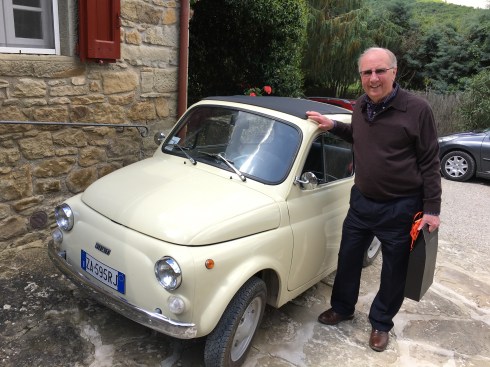
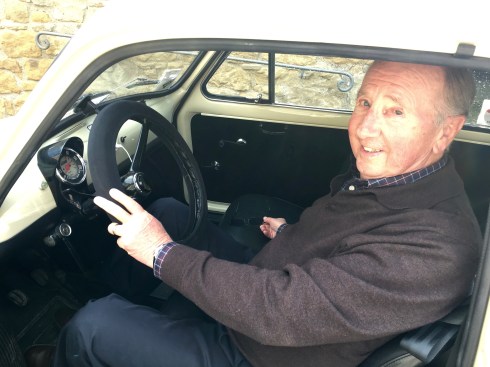
Len, of course, needed to check out the 1975 Fiat 500 parked in the drive.
©Blogginginitaly.com
©Blogginginitaly.com

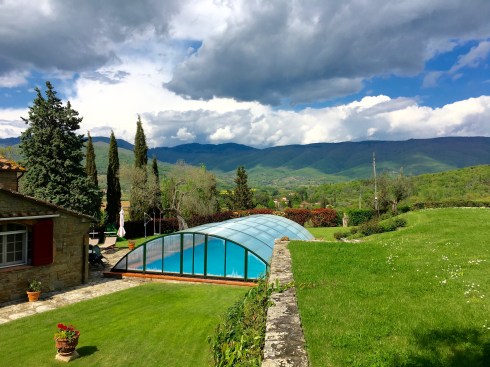
The house, built in the late 1700’s, was originally a farm-house, but is now a beautifully restored/renovated home with guest house, covered pool, garage and incredible 360° views, (and it is on the market as grandchildren live too far away!)*
©Blogginginitaly.com

We began on the terrace with a Prosecco toast.

©Blogginginitaly.com

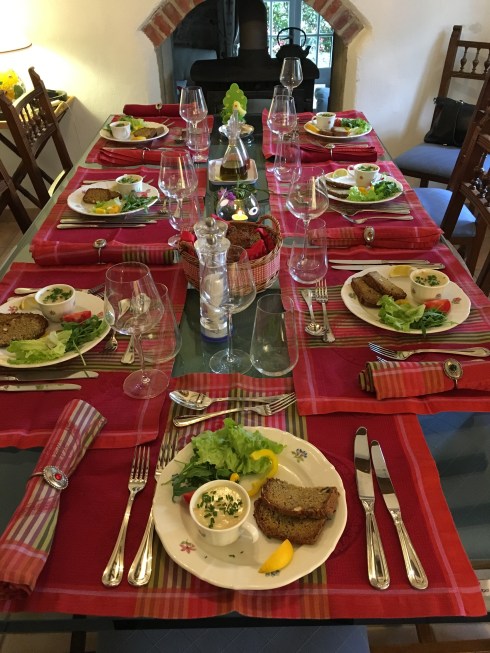
Then lunch was served in the dining room.
©Blogginginitaly.com

Unfortunately, I missed taking photos of the delicious chicken with gorgonzola lunch, but desserts included a traditional Easter colombo – a dove shaped cake…

©Blogginginitaly.com

as well as fresh strawberries and cream on sponge cake.

©Blogginginitaly.com

After a few attempts, we even managed to take a timed selfie.

©Blogginginitaly.com

Afterward, some of us took a leisurely stroll around the property, admiring the views…

©Blogginginitaly.com

©Blogginginitaly.com

©Blogginginitaly.com

while others retired to the terrace.

©Blogginginitaly.com

Many thanks to our gracious hosts, shown in a photo I took of them on our last visit.

©Blogginginitaly.com

Pasqua and Pasquetta, Easter and Easter Monday, two holidays in Italy, the first religious, the second not. Once again today, Cortona was packed with people. In fact, both yesterday and today, there were traffic jams.

But today, Pasquetta, is a day set aside for relaxation. All the solemnity and preparation of Easter are over, and it is a day to relax, except, of course, for restaurants and retail shops who serve the masses of people enjoying a day off.

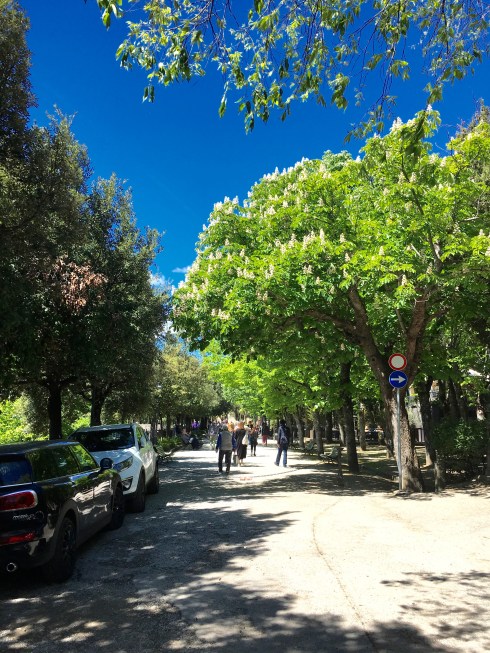
Strolling is the norm, so strolling we did. The park was filled with people,
©Blogginginitaly.com

taking in the views.

©Blogginginitaly.com

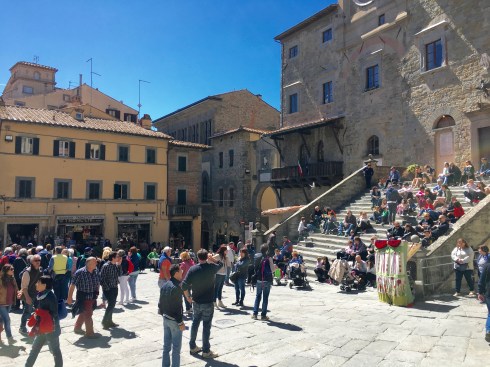
Others were enjoying entertainment in the piazzas, including the Old Florence Dixie Band,

©Blogginginitaly.com

and just appreciating the beautiful day.
©Blogginginitaly.com

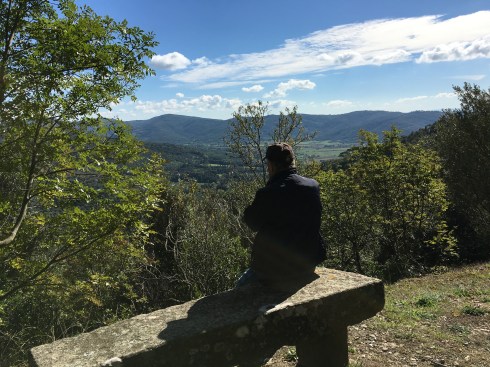
Between the park and the piazza, we found an empty park bench and literally put our feet up as we took in the view.

©Blogginginitaly.com

Late afternoon, we headed home for a brief riposo (rest) before meeting friends for dinner.

©Blogginginitaly.com

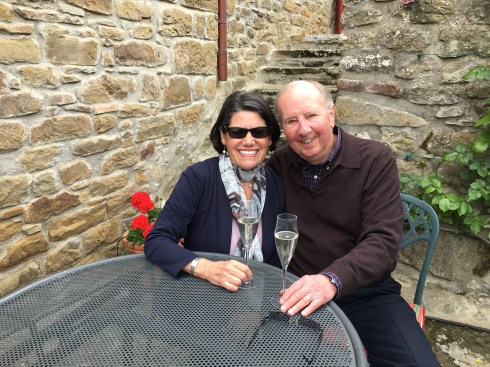
And that’s what one does in Cortona for Pasqua and Pasquetta, a perfectly lovely few days.
©Blogginginitaly.com

Ciao,
Judy

*Note: Many have asked me what the inside of an Italian house looks like. If interested, you can see more photos via the listing link below.

http://www.abodeitaly.com/property/68c/tuscany/casa-giordano-piazzano/arezzo/farmhouses-and-count/4-bedrooms


Easter in Cortona

15 Apr

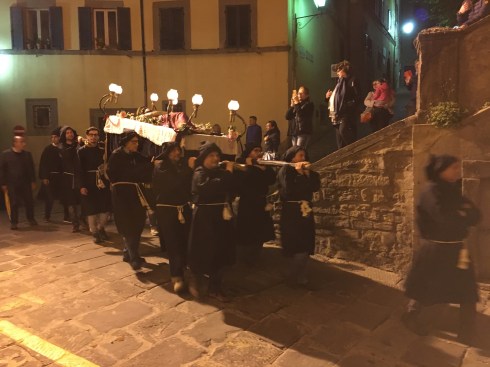
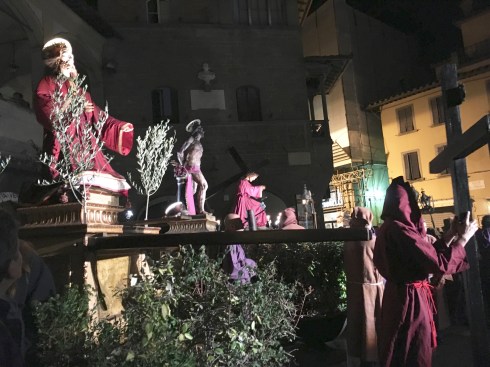
In cities and towns all over Italy, religious processions are held during Easter week. Many churches have large statues and crosses that are carried on the shoulders of locals in Holy Week processions through city streets.

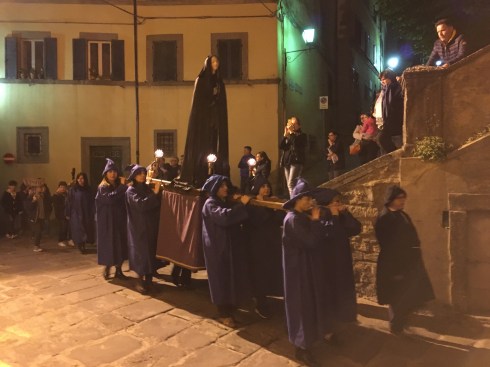
Last night, Good Friday, Cortona held its annual Procession of the Stations of the Cross. Signs in English were all over town to remind visitors that this is a solemn event.

©Blogginginitaly.com

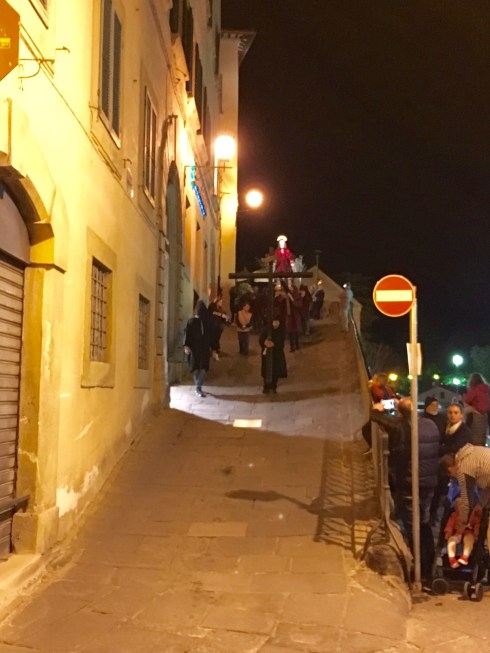
The procession began at 9 PM at the Church of Spirito Santo, a 17th-century church built just outside the medieval walls of Cortona. For those of you familiar with Cortona, picture the church beyond the bottom of steep Via Guelfa and out the wall’s entrance. Noting this is important because the route the procession takes is pretty amazing…either steeply uphill or down, and very rarely flat. (*See below for more of route.)

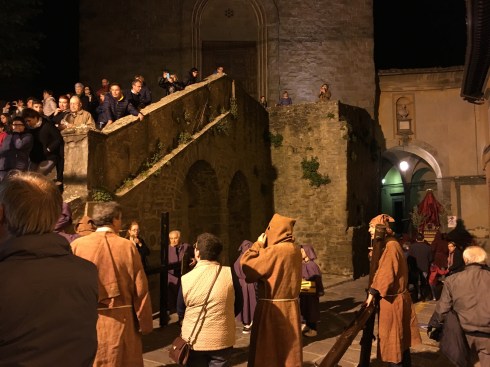
We waited for the procession at the Church of Saint Francis with others who had lined the steps.

©Blogginginitaly.com

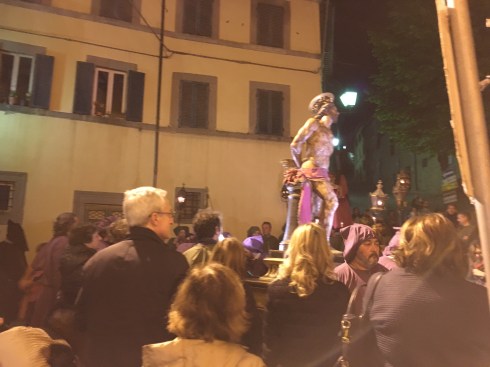
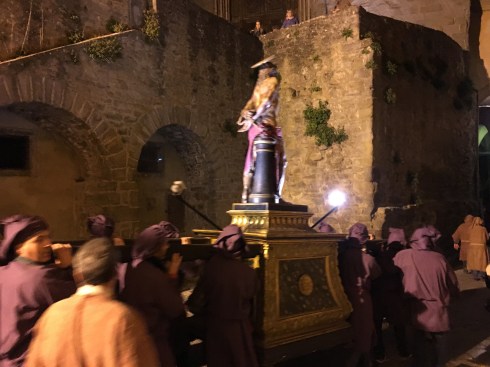
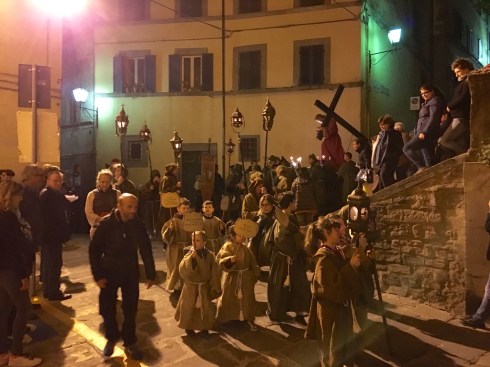
The Stations of the Cross were being read over a loud-speaker as the procession moved through parts of town.

©Blogginginitaly.com

©Blogginginitaly.com

Local children were as involved as their parents.

©Blogginginitaly.com

©Blogginginitaly.com

©Blogginginitaly.com

A group of strong women carried the statue of the Blessed Mother.

©Blogginginitaly.com

After reaching its highest point, the procession came down Via S. Margherita toward Via Nazionale.

©Blogginginitaly.com

The final destination was Piazza Republicca, where the statues were placed on platforms.

©Blogginginitaly.com

©Blogginginitaly.com

At about 10:30 PM, religious dignitaries gathered at the top of the Municipio and a local bishop led all in prayer before the choir sang.

©Blogginginitaly.com

A year ago, Len and I were in Trapani, Sicily, for their incredible Misteri di Trapani, a 24 hour procession. It was large and dramatic, with musicians and choirs accompanying each heavy statue carried on the shoulders of dozens of men. But Trapani is flat, and Cortona is anything but. So, while Cortona’s procession was smaller, with less music and drama, it was nonetheless incredible to see the procession maneuver through the ancient town. Whether elaborate or small, dramatic or simple, it is each town’s commitment to carrying out tradition that matters.

Today, Saturday, Cortona is bustling with people, here to participate in the Easter weekend. I’m told there is a midnight mass tonight at the Duomo, and masses at various times and churches tomorrow.

The smells of special Easter breads and pastries fill the spring air, and tomorrow most Italians will gather around large lunches with their families and friends to celebrate Easter, as will we.

In Italy, the Monday after Easter is also a holiday called Pasquetta. Though not a religious holiday, Pasquetta is another day for family and friends to gather and also spend some relaxing time outdoors. It was introduced by the government after World War II.

Wherever your plans may take you, a gathering big or small,
I wish you a very Happy Easter – Buona Pasqua to all!

Ciao,
Judy

*Note: for those wanting more on the route,  I believe it was up Via Guelfa, connecting to Via Ghini, up the very steep Via Maffei to San Francesco Church, on past the old hospital to Via S. Margherita, down through Piazza Garibaldi to Via Nazionale and finally ending in Piazza Republicca.


Familiar Footing

30 Mar

Why did we fall in love with Cortona? So very many reasons, but suffice it to say we did –  this being our eighth stay. And although so much is familiar, this ancient Etruscan town never ceases to amaze.

The incredible views…

©Blogginginitaly.com

Local food sourcing… (10 huge fresh artichokes for under $4.50!)

©Blogginginitaly.com

©Blogginginitaly.com

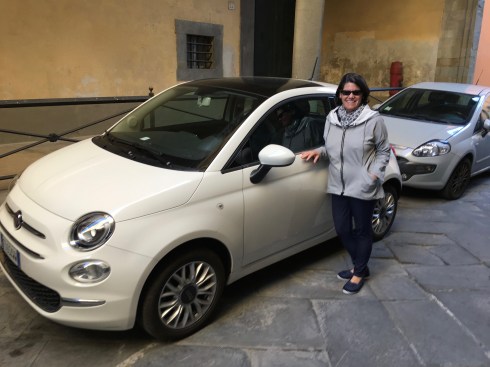
Tiny cars that seem to suck in their sides as they traverse the hills and uneven narrow streets – (my Fiat 500).

©Blogginginitaly.com

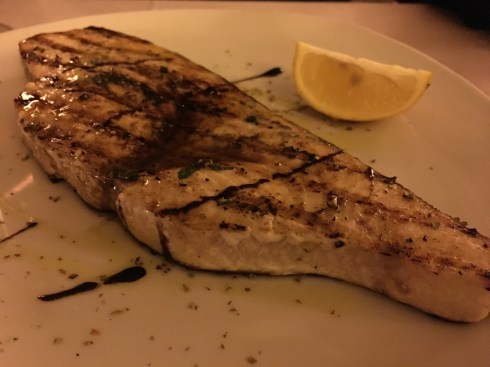
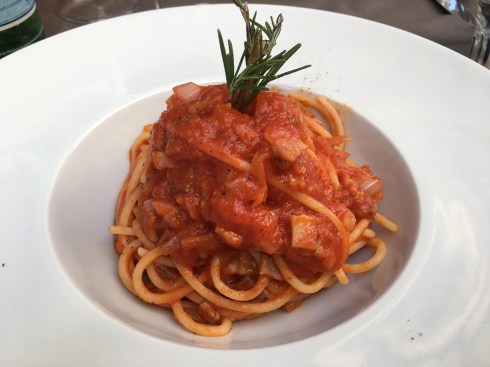
And of course, the delicious food.

AD Braceria ©Blogginginitaly.com

AD Braceria ©Blogginginitaly.com

Tuscher Caffe ©Blogginginitaly.com

First day of 2017 outside seating at Tuscher Caffe ©Blogginginitaly.com

The weather has been perfect – blue sky sunny days, cool nights, and signs of Spring’s magnificent return in the colors popping up everywhere.

And while all of the above is wonderful, nothing quite compares to the sincere smiles and heartfelt “ben tornato” (welcome back) long embraces we’ve received from our local friends.

I guess the answer to my opening question is simple: they are truly the reason we fell in love with Cortona and why we happily return.

For now, time to give in to jet lag, but much more to come.

Ciao,
Judy


Medieval Jousters on Horses in Cortona

22 Oct

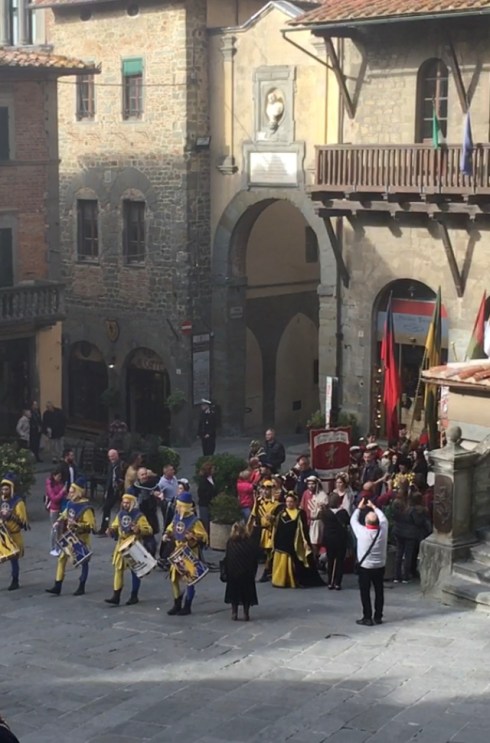
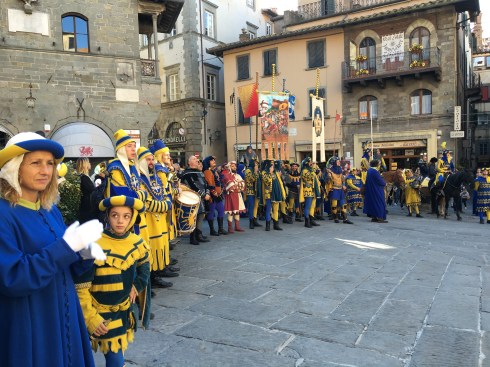
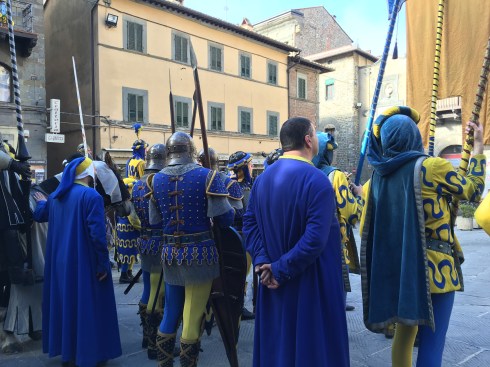
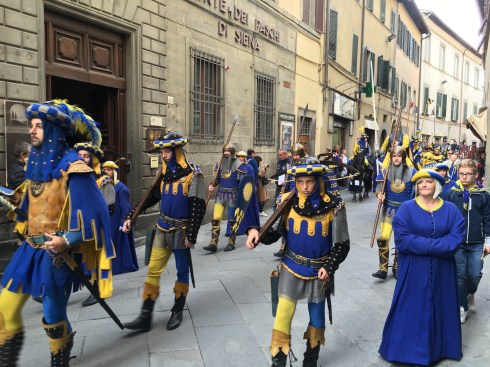
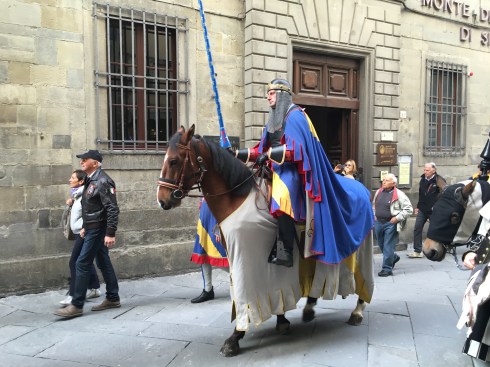
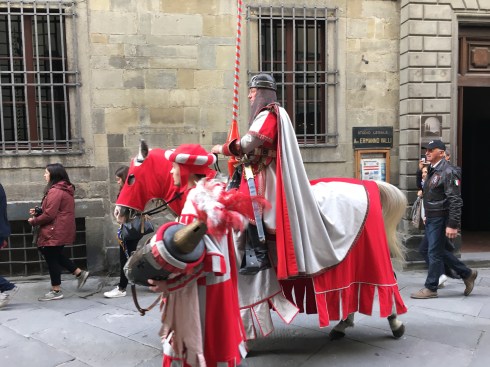
For days, we had heard that the horses were coming, yet no one I spoke with knew why. Today, as with many days in Cortona, we were surprised and delighted with a colorful Medieval spectacle.

As overheard in the piazza, the nearby city of Arezzo has been highly victorious in jousting competitions this year. They came to Cortona today, dressed in their finest and with their victors high on horseback, to give thanks to their patron saint, Margherita. One of the participants told me this was a festival of adoration to their patron saint in appreciation for their success this year.

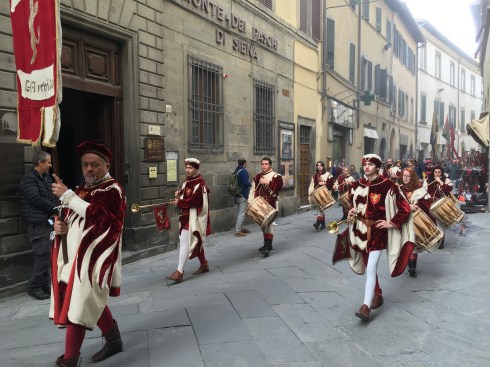
From our house, I heard the drummers and arrived just in time to see them enter the piazza from Via Roma.

©Blogginginitaly.com

©Blogginginitaly.com

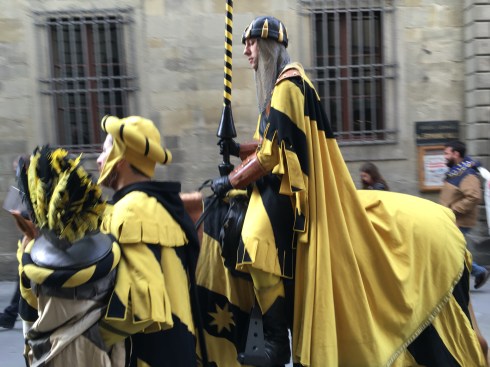
A few minutes later, the horses and jousters appeared in full matching Medieval regalia.

©Blogginginitaly.com

©Blogginginitaly.com

Once the horses took their places,

©Blogginginitaly.com

©Blogginginitaly.com

©Blogginginitaly.com

©Blogginginitaly.com

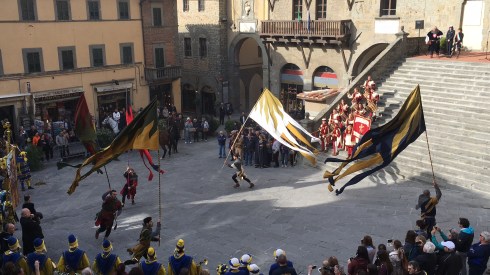
the flag wavers entered and all watched as they performed.

©Blogginginitaly.com

©Blogginginitaly.com

©Blogginginitaly.com

©Blogginginitaly.com

©Blogginginitaly.com

©Blogginginitaly.com

In Italy, flag waving and throwing is a skill learned by the young and perfected over many years. It is an important part of many of the Medieval festivals and ceremonies, and one that requires years of practice.

©Blogginginitaly.com

©Blogginginitaly.com

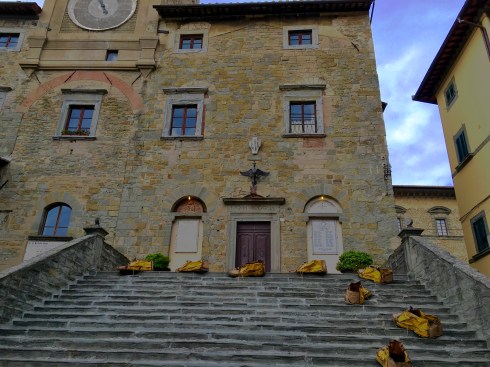
When the performance was finished, they joined the dignitaries on the grand steps of the Municipio for the speeches of gratitude.

©Blogginginitaly.com

©Blogginginitaly.com

Following the ceremony in the piazza, the parade moved down Via Nazionale, the main and only flat street of Cortona.

©Blogginginitaly.com

©Blogginginitaly.com

©Blogginginitaly.com

©Blogginginitaly.com

©Blogginginitaly.com

©Blogginginitaly.com

©Blogginginitaly.com

©Blogginginitaly.com

©Blogginginitaly.com

©Blogginginitaly.com

©Blogginginitaly.com

©Blogginginitaly.com

©Blogginginitaly.com

©Blogginginitaly.com

Their ultimate destination was the beautiful Santa Margherita Church at the top of Cortona –

©Blogginginitaly.com

©Blogginginitaly.com

where the saint lies in glass at the foot of the altar.

img_0727

In towns and cities all over Italy, ancient customs live on in the hearts, minds and practices of the people who received them from their ancestors and pass them on to future generations. It’s easy to get caught up in the pageantry and imagine days gone by. No matter how often I see one of these, it’s always quite a spectacle to behold.

©Blogginginitaly.com

©Blogginginitaly.com

Ciao,
Judy

Note: Click on any picture to enlarge.


Autumn Colors of Cortona

17 Oct

As the days shorten and the sun’s heat weakens, autumn colors and vistas are wrapping their arms around the ancient city of Cortona.

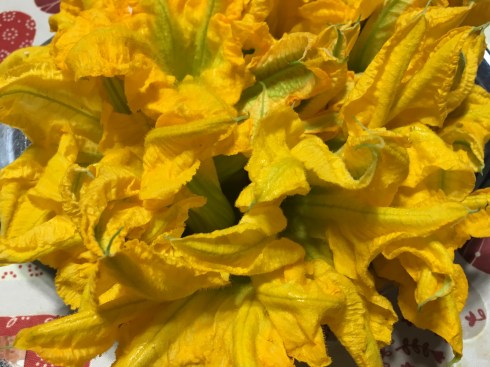
Zucchini flowers are at their end,

©Blogginginitaly.com

©Blogginginitaly.com

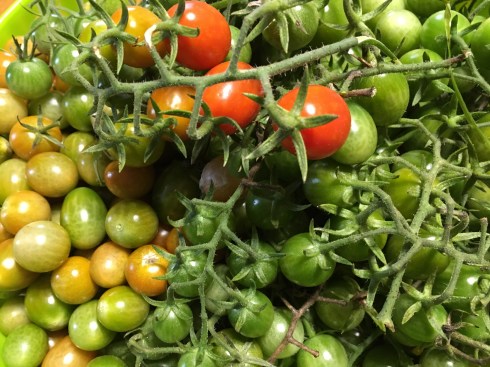
As are the tomatoes that have delighted all spring, summer and early fall.

©Blogginginitaly.com

©Blogginginitaly.com

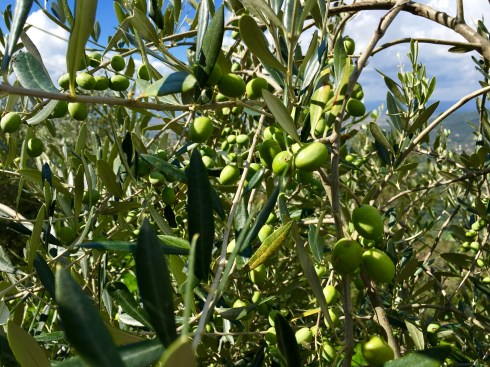
Local olives are nearly ready to be picked, and after a trip to the local mill, become 100% Italian olive oil. Worth repeating – 100%!

©Blogginginitaly.com

©Blogginginitaly.com

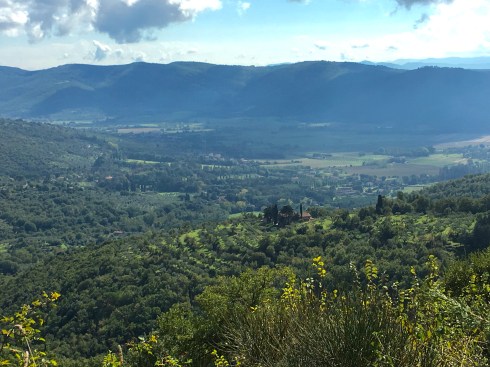
In all directions, there is beauty in nature; vibrant colors are everywhere. Mid October showers us with 11 hours of daylight and a temperature usually in the 60s, just what one hopes for in the fall.

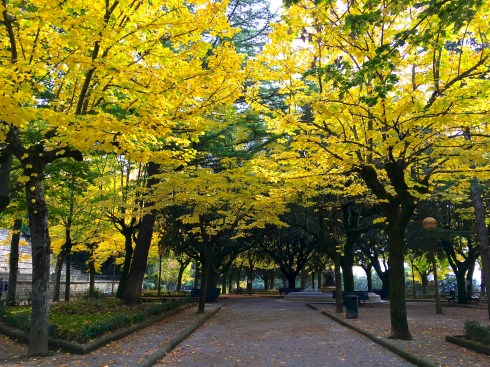
If you’ve been to Cortona, the views will beckon you to return. If not, join me for a stroll through the Parterre.

©Blogginginitaly.com

©Blogginginitaly.com

©Blogginginitaly.com

©Blogginginitaly.com

©Blogginginitaly.com

©Blogginginitaly.com

©Blogginginitaly.com

©Blogginginitaly.com

If you can’t join us in Cortona, I hope you make time to take in the beauty of fall –  wherever your walks may take you.

©Blogginginitaly.com

©Blogginginitaly.com

©Blogginginitaly.com

©Blogginginitaly.com

You might just be surprised at what you find.

Ciao,
Judy

Training at Tuscher Bar Cortona

7 Oct

Recently, I was invited to write a piece for Chowhound. Their “Features” section has food and beverage articles written by food writers, chefs, cookbook authors, etc. For my first article, I decided to write about cappuccino, then headed to my favorite bar in Cortona, Tuscher Bar, to get some “barista” training.

As I have written many times, Tuscher Bar is our go-to place in Cortona for breakfast, lunch, and aperitivo. If you’ve visited us, you’ve been to Tuscher. It’s the place where you meet old friends, make new ones, and where Massimo, Daniela, Niccolo and Edoardo make you feel at home.

I had such fun learning how to make Cappuccino Tre Colore, both hot and cold, and you will too. If you are in Cortona, visit the experts at Tuscher Bar on Via Nazionale. If not, have some fun making it yourself, and let me know how you do!

Cappuccino Tre Colore©Blogginginitaly.com

Cappuccino Tre Colore©Blogginginitaly.com

For step by step photos and instructions, click below for my article:
Impress Your Friends this Fall with New Barista Skills.


Ciao,
Judy


San Francesco d’Assisi

4 Oct

Saint Francis of Assisi, born Giovanni di Pietro di Bernardone, is one of the most venerated religious figures in history. He lived from 1182 – 1226, and during his lifetime, founded several orders including the men’s Order of Friars Minor and the women’s Order of Saint Clare. He was canonized on July 16, 1228, by Pope Gregory IX. He, along with Saint Catherine of Siena, are the patron saints of Italy.

The feast of St. Francis of Assisi is celebrated today, October 4. Throughout Italy, and in particular the central parts of Italy where St. Francis lived, there are many celebrations in his honor. Unlike so many of the gold and ornate churches and monasteries, those of St. Francis tend to be simple in design and without pretense.

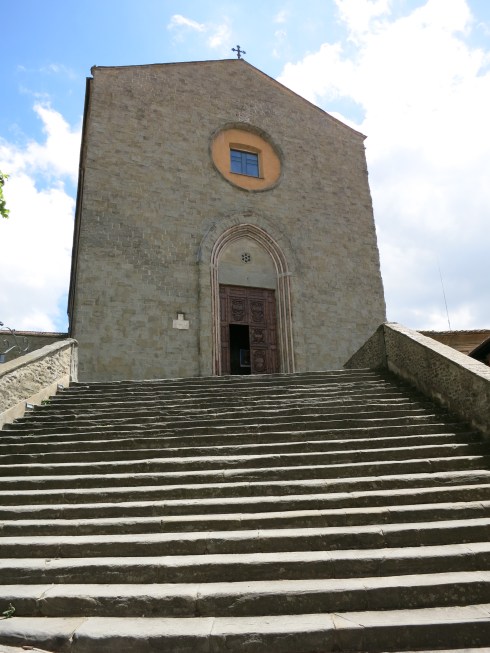
Chiesa di San Francesco, Cortona, ©Blogginginitaly.com

Chiesa di San Francesco, Cortona, ©Blogginginitaly.com

From our front door, it is 115 steps, mostly up, to San Francesco in Cortona, and it is well worth the climb. The sparse interior holds many treasures and is our favorite among Cortona churches.

©Blogginginitaly.com

©Blogginginitaly.com

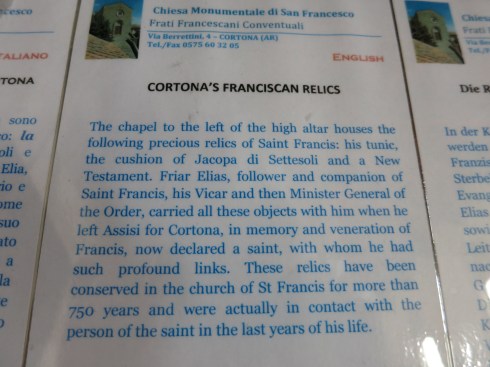
According to Cortona history, the Church was built over the ruins of a Roman bath. The area, which was a municipal property, had been donated to Friar Elia, Francis’ successor, who had the church built in honor of St. Francis. The facade, the large door, and the entire left wall are part of the original church which was dedicated in 1254. Friar Elia is buried in the choir area behind the altar.

The interior underwent renovations in the 16th and 17th centuries. During that time, several incredible original frescoes from the school of Buffalmacco, dating back to 1382, were rediscovered behind paintings.

©Blogginginitaly.com

©Blogginginitaly.com

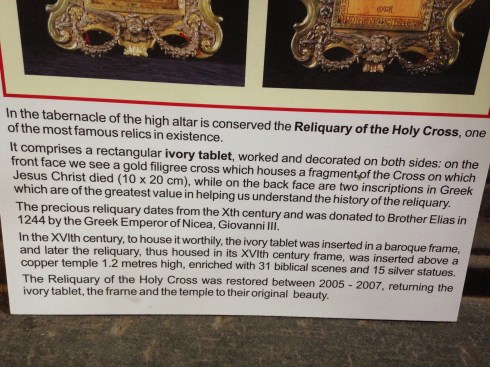
On the altar, in a large marble baroque tabernacle dating from 1619, is a relic from the Holy Cross, donated to Friar Elia by the Constantine Emperor.

©Blogginginitaly.com

©Blogginginitaly.com

©Blogginginitaly.com

©Blogginginitaly.com

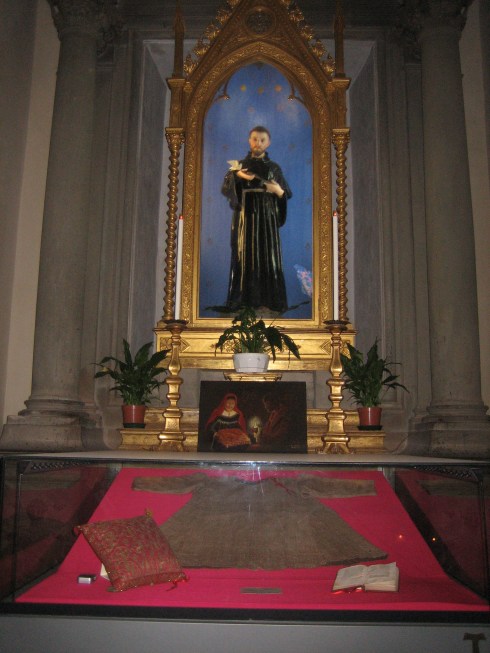
And finally, to the left of the main altar is the statue of St. Francis and some items as described below.

©Blogginginitaly.com

©Blogginginitaly.com

©Blogginginitaly.com

©Blogginginitaly.com

As I write, the bells from the church are ringing. Three of the five are electric, but of the original two, one was cast in 1250 and the second in 1267.

In addition to this beautiful church, Cortona is home to Le Celle, an incredible monastery and sanctuary which developed both during and after St. Francis’ life.

It is here that you can see the room, or cell, where St. Francis slept.

©Blogginginitaly.com

©Blogginginitaly.com

Every time I visit either the San Francesco Church or Le Celle, I find myself caught up in the tranquility each has to offer. And while Cortona can sometimes be a bustling town, each of these remains an oasis of serenity – a wonderful place to reflect, meditate, pray, or simply take in the moment.

For more on Le Celle, click on a previous post: Franciscan Hermitage of Le Celle, Cortona.

©Blogginginitaly.com

©Blogginginitaly.com

Ciao,
Judy


Il Pozzo “Tabacchi” Cortona

29 Sep

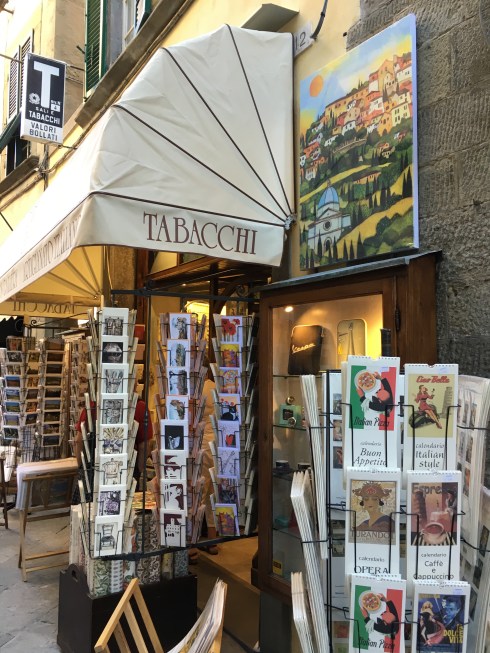
When you spend time in Italy, you quickly learn the value of a Tabacchi. It is a place to buy bus and train tickets, stamps, postcards, gum, candy, lozenges, etc.

©Blogginginitaly.com

©Blogginginitaly.com

©Blogginginitaly.com

©Blogginginitaly.com

You can recharge a phone card, buy a lottery ticket, often send a fax, and at most tabacchis, sort through various dollar store types of souvenirs. And yes, the word Tabacchi means tobacco, so, that too.

But when is a tabacchi much more than a tabacchi? When you find this large  “T” sign and awning on Via Nazionale in Cortona. Then it’s a destination.

©Blogginginitaly.com

©Blogginginitaly.com

©Blogginginitaly.com

©Blogginginitaly.com

No matter how often I visit, there is always something new and creative to see. And the best news? Most items are actually Made in Italy, many from local and nearby artisans. Here are some examples.

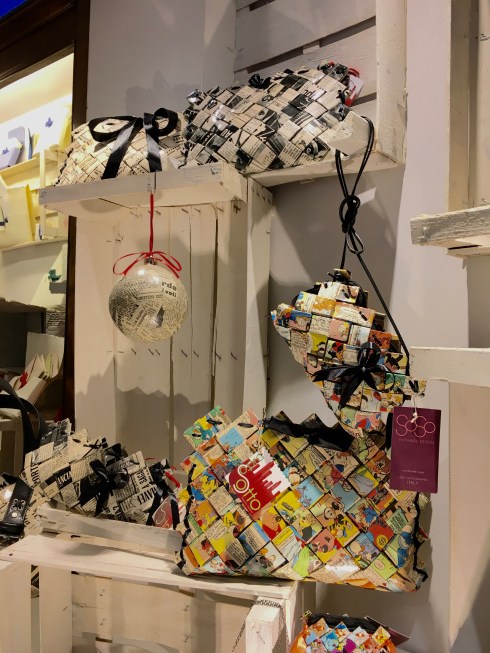
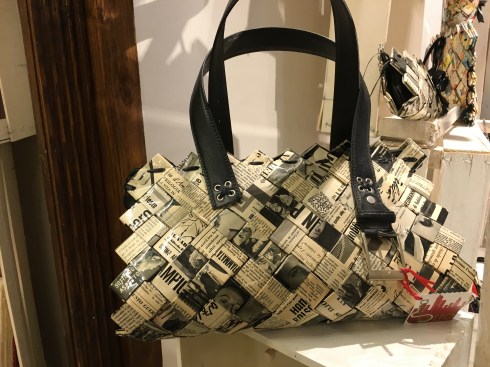
These purses, ornaments and wallets are made from old sheet music, newsprint and/or comic pages, formed into shapes, laminated, and then woven together.

©Blogginginitaly.com

©Blogginginitaly.com

©Blogginginitaly.com

©Blogginginitaly.com

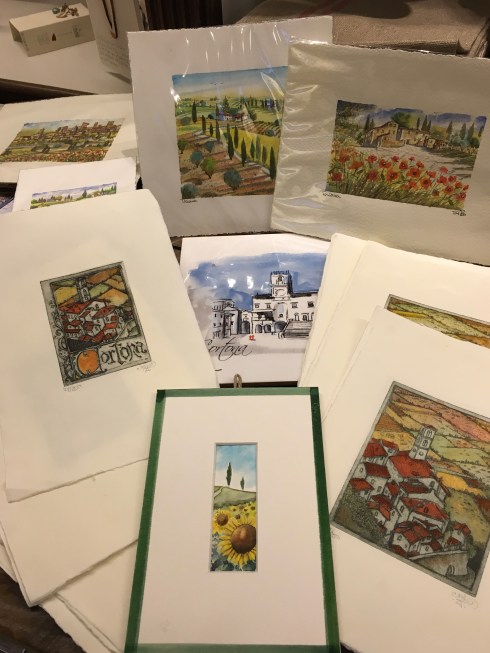
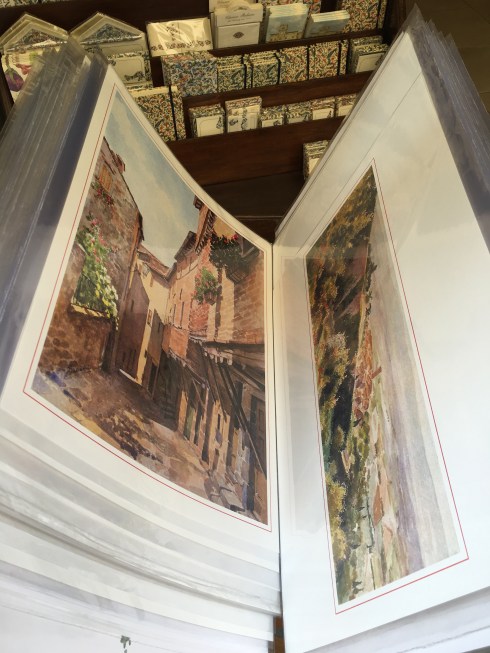
There are numerous prints of familiar Tuscan scenes, towns, buildings and monuments, available in many shapes and sizes, 

©Blogginginitaly.com

©Blogginginitaly.com

©Blogginginitaly.com

©Blogginginitaly.com

as well as whimsical pieces of art.

©Blogginginitaly.com

©Blogginginitaly.com

Sara Lovari©Blogginginitaly.com

Sara Lovari©Blogginginitaly.com

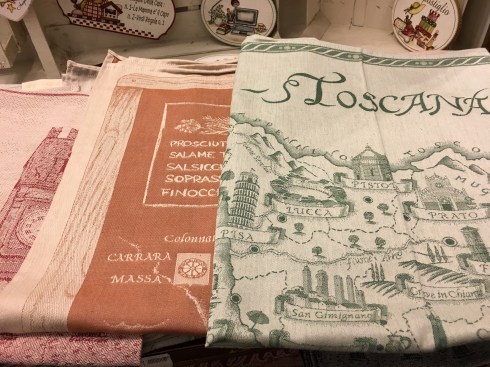
As for me, I can never have enough kitchen towels, especially when they depict places I’ve visited or recipes I want to remember.

©Blogginginitaly.com

©Blogginginitaly.com

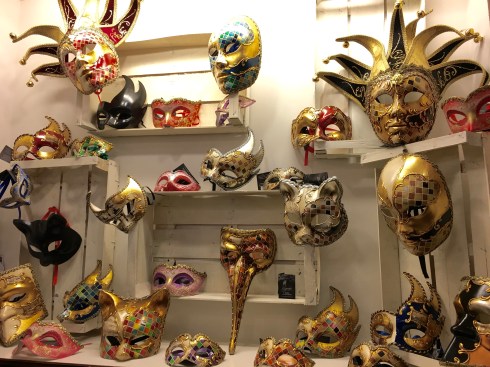
Planning to attend Carnevale in Venice or a Mardi Gras party? They’ve got you covered.

©Blogginginitaly.com

©Blogginginitaly.com

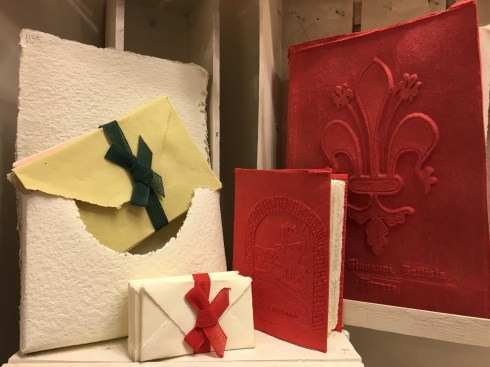
There is beautiful pastel stationery, as well as bound journals, all hand-made with 100% cotton paper, and each journal is individually embossed.

img_5134

Traditional Florentine notecards and ornamental angels come in a rainbow of colors.

©Blogginginitaly.com

©Blogginginitaly.com

Need a birthday or anniversary card? There’s an abundance to choose from.

©Blogginginitaly.com

©Blogginginitaly.com

Italians love beautifully fragranced soaps, especially Campostrini soaps that have been produced  in Firenze since 1894.

img_4513

Like so many businesses in Cortona, Il Pozzo Artisan’s Gallery and Tabacchi is family owned and operated, and generally open daily. If you’ve been to Cortona, you probably recognize these faces. 

Marta, Ivan, Loriana, Thomas©Blogginginitaly.com

(L-R) Marta, Ivan, Loriana, Thomas©Blogginginitaly.com

Ivan speaks English well and is an incredible resource for most questions, whether about an artist, a painting, the Etruscans, or local antiquities. It’s no wonder many of us consider him Cortona’s ambassador. 

If you are heading to Cortona, be sure to add this wonderful place to your list. You’ll be so happy you did!

And one last note: At the back of the tabacchi, take the winding staircase down one flight to visit the beautiful Il Pozzo Galleria. In addition to seeing many more interesting and beautiful works of art, you will also see an ancient well, or pozzo, hence the name Il Pozzo. Ivan actually uncovered the well during excavation, but I’ll leave that story to him.

For more info and photos on Il Pozzo Galleria, please click below:

Il Pozzo

Ciao,
Judy


September Days in Cortona

18 Sep

Autunno, or autumn, is my favorite time of year in Cortona. The days are shorter, the winds are cooler, and the tide of tourism transforms.  It is a calmer time of year that lends itself well to contemplating all that meets the senses.

Parterre Changing Colors©Blogginginitaly.com

Parterre©Blogginginitaly.com

Saturday Market©Blogginginitaly.com

Saturday Market©Blogginginitaly.com

Fall Harvest©Blogginginitaly.com

©Blogginginitaly.com

Fresh Porcinis©Blogginginitaly.com

Porcini©Blogginginitaly.com

Lavender Festival©Blogginginitaly.com

Lavender Festival©Blogginginitaly.com

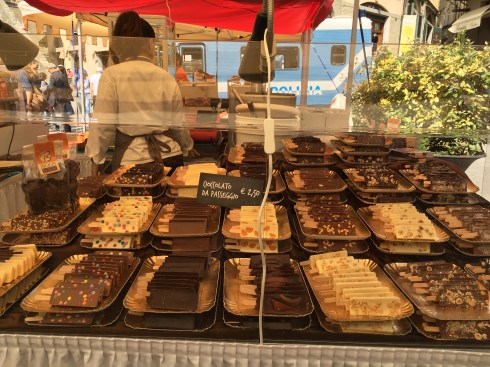
Choco Festival©Blogginginitaly.com

Choco Festival©Blogginginitaly.com

Choco Festival©Blogginginitaly.com

Choco Festival©Blogginginitaly.com

Art Exhibits©Blogginginitaly.com

Art Exhibits©Blogginginitaly.com

And endless antiquities:

Via Santucci, Cortona ©Blogginginitaly.com

©Blogginginitaly.com

Via Santucci, (Our street), ©Blogginginitaly.com

©Blogginginitaly.com

Signorelli Arch©Blogginginitaly.com

©Blogginginitaly.com

©Blogginginitaly.com

©Blogginginitaly.com

©Blogginginitaly.com

©Blogginginitaly.com

©Blogginginitaly.com

©Blogginginitaly.com

Autumn – The third season of the year, when crops and fruits are gathered and leaves begin to fall.

A good time to take time to ponder.

©Blogginginitaly.com

©Blogginginitaly.com

Ciao,
Judy


Sunflowers, Take Your Bow

8 Sep

If you close your eyes and imagine a Tuscan landscape, it’s hard not to picture a field of sunflowers or girasole. 

©Blogginginitaly.com

©Blogginginitaly.com

They are as much a part of the vistas as olive groves and vineyards. These magnificent yellow flowers are planted each spring and perform their role admirably throughout the summer, standing tall and delighting all who seek them out. They generously pose for hours on end for cameras, never complaining or shying away from the sun. And they are a beautiful addition to any table setting.

©Blogginginitaly.com

©Blogginginitaly.com

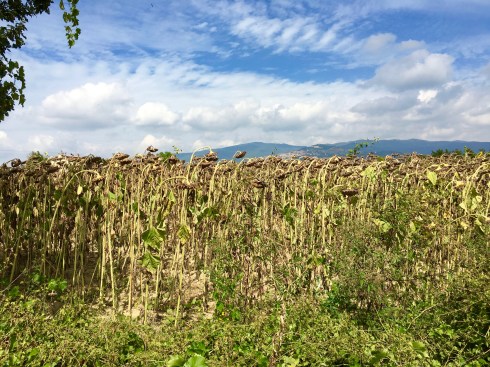
Then in the fall, after months of performing, they stand together and begin their final bow.

©Blogginginitaly.com

©Blogginginitaly.com

Even after they have lost their bright yellow color, sunflowers still have much to offer in harvest. As mentioned before in a previous post, …
  1. Sunflower seeds are edible, whether eaten raw, cooked, roasted or dried. They are a nutritious snack containing protein, vitamins A, B, and E, calcium, nitrogen and iron.
  2. Some people ground the seeds to make flour for cakes and breads.
  3. The seed heads are a source of food for birds and animals. Sunflower seeds are a major ingredient in commercial birdseed.
  4. Sunflower oil is a popular vegetable oil known for its light colour, mild flavour, low levels of saturated fats and ability to withstand high cooking temperatures.
  5. The oil can also be added to soap, lubricants and candles.
  6. Sunflower oil can help relieve skin conditions, hemorrhoids and ulcers.
  7. Sunflower roots can remove radiation from soils and water. They were used to clean up the Chernobyl disaster.
  8. The root of the plant is also used in traditional herbal medicine to treat snake bites and spider bites.
  9. The flowers can be used to make an all natural dye.
  10. The stalks are used to make paper and clothes.

So, as the sunflowers take a well deserved bow, it’s nice to know we benefit from them in so many other ways.

Ovation, please!

©Blogginginitaly.com

©Blogginginitaly.com

Ciao,
Judy