Archive | Medieval RSS feed for this section

Piazza Life

15 Sep

Recently, I read an article in a Chicago paper about a local community that created a new and different type of outdoor space. It’s a place where restaurants, shops, pedestrians and vehicles commingle. While this may be new to an Illinois community, it is a way of life in much of Europe, something that I have long referred to as Piazza Life.

What is it about Italian Piazza Life that is so appealing? Just about everything.

Each piazza has its own borders, if you will, created by beautiful ancient buildings that have been repurposed. An old prison is now a museum, a villa now a bank, and a stable now an enoteca.

The center of the piazza may have a fountain or statue, or be empty and provide a stage for any number of diverse events. Nowhere is this better seen than in Cortona, where Piazza Life is a way of life.

While there are several piazzas in Cortona, the two main ones are Piazza Republicca and Piazza Signorelli. They are physically adjacent to one another, yet each has its own identity and events.

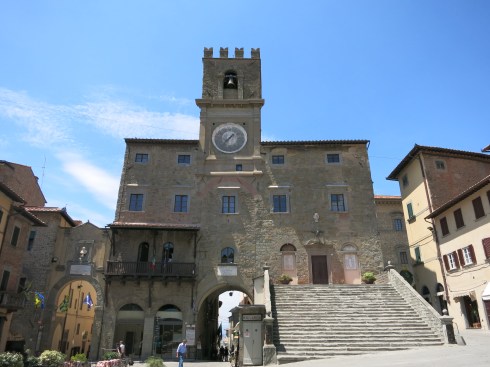
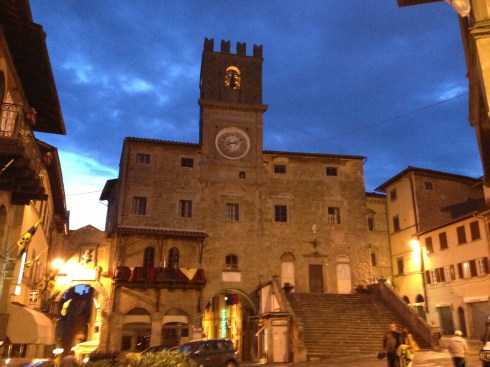
You know you are in Piazza Republicca when you are facing the grand staircase of the Municipio or Municipal building.

©Blogginginitaly.com

©Blogginginitaly.com

While it is used for several city functions, it also provides a beautiful setting for many weddings where everyone in the piazza seems to join in the celebration.

©Blogginginitaly.com

©Blogginginitaly.com

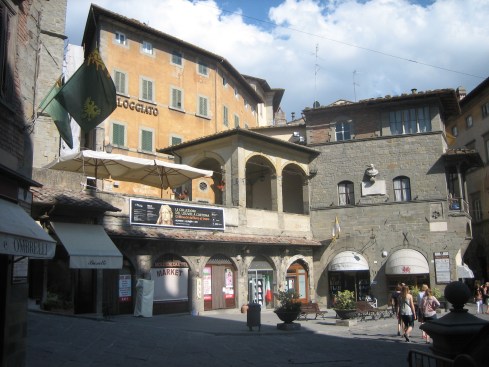
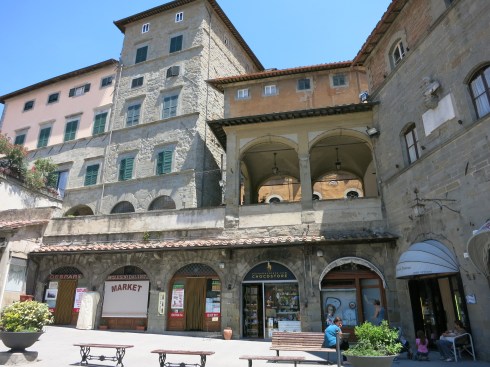
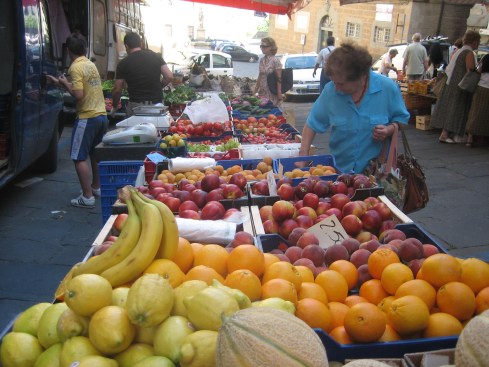
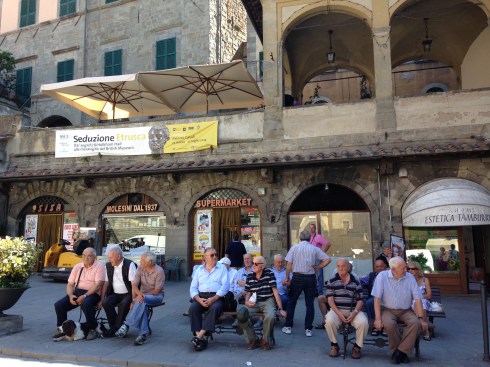
In this piazza, you can sit in or outside of a number of cafes; shop at a grocery store, fruit market, wine store, or florist; and buy  shoes, handbags, linens, and even a borselino, all actually made in Italy.

©Blogginginitaly.com

©Blogginginitaly.com

©Blogginginitaly.com

©Blogginginitaly.com

People gather, some doing their morning shopping, others stopping for a chat with friends.

©Blogginginitaly.com

©Blogginginitaly.com

©Blogginginitaly.com

©Blogginginitaly.com

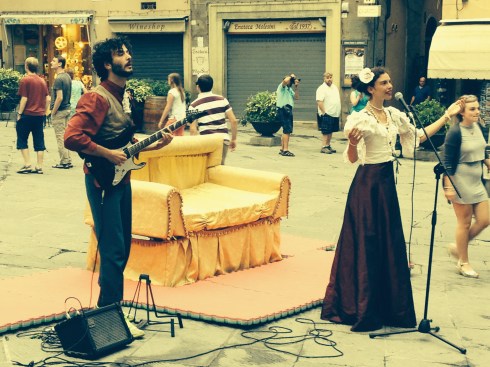
Cars and cyclists navigate through pedestrians of all ages, and pop up performers are a common site.

©Blogginginitaly.com

©Blogginginitaly.com

Celebrations commemorating historical events are held here.

©Blogginginitaly.com

©Blogginginitaly.com

And while the piazzas are significantly quieter in the winter, they still draw people together for such delights as the incredible Christmastime lamp lighting celebration.

©Blogginginitaly.com

©Blogginginitaly.com

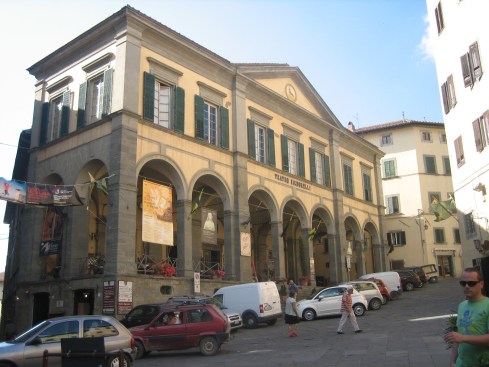
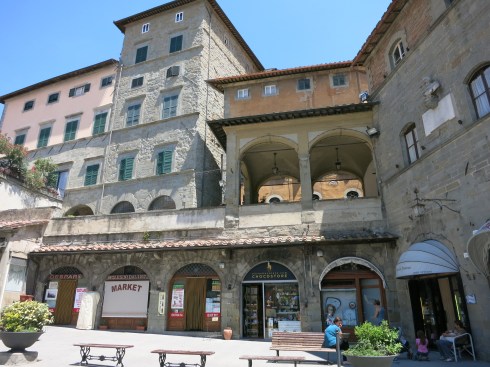
Piazza Signorelli, the adjacent Piazza, is also breathtaking in its beauty, whether bathed in sunshine

©Blogginginitaly.com

©Blogginginitaly.com

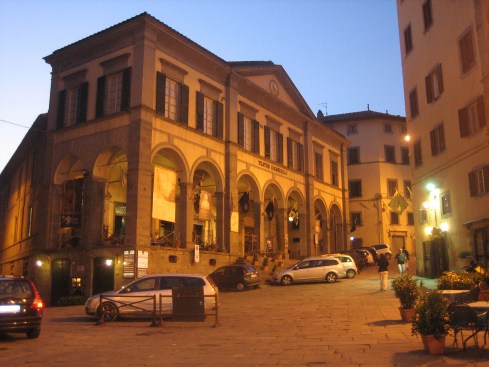
or glowing in the moonlight.

©Blogginginitaly.com

©Blogginginitaly.com

Piazza Life provides a daily local gathering venue, be it day or night, for spontaneous and scheduled events, including

kids playing soccer;

©Blogginginitaly.com

©Blogginginitaly.com

local musicians;

©Blogginginitaly.com

©Blogginginitaly.com

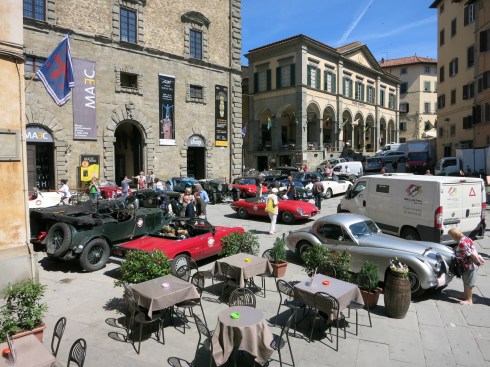
vintage car enthusiasts;

©Blogginginitaly.com

©Blogginginitaly.com

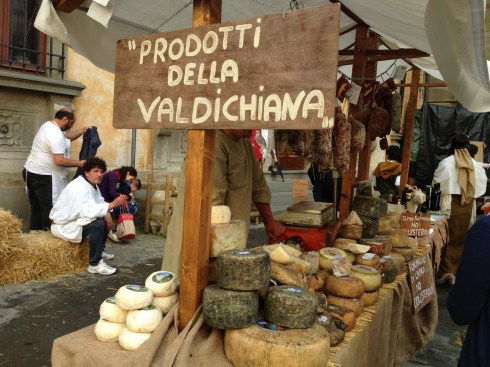
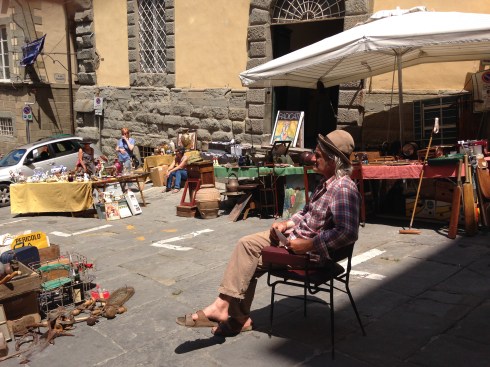
food and antique vendors;

©Blogginginitaly.com

©Blogginginitaly.com

©Blogginginitaly.com

©Blogginginitaly.com

©Blogginginitaly.com

©Blogginginitaly.com

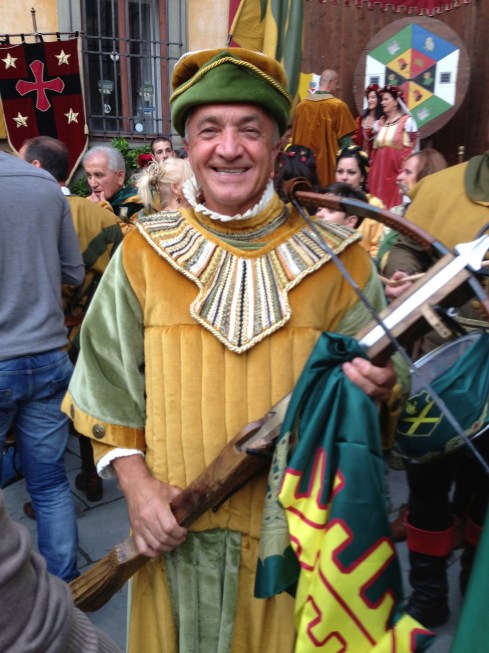
annual traditions;

IMG_0677

©Blogginginitaly.com

©Blogginginitaly.com

©Blogginginitaly.com

©Blogginginitaly.com

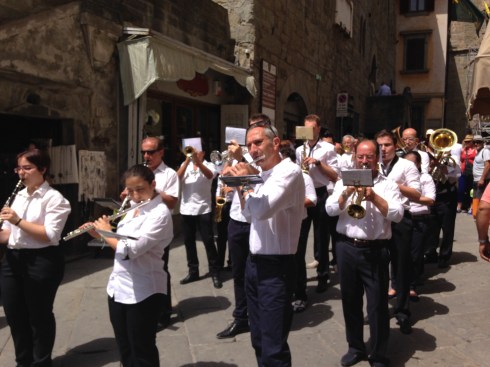
marching bands;

©Blogginginitaly.com

©Blogginginitaly.com

and avid sports fans.

IMG_6293

Whether you find yourself almost alone in an ancient Piazza, (and yes it is possible!)…

IMG_0029

IMG_0515

or surrounded by friends you have not yet made,

©Blogginginitaly.com

©Blogginginitaly.com

just be prepared to be amazed by the sights and sounds.

Piazza Life – wonderful! …and no reservation required.

Ciao,

Judy


Marinelli Bell Foundry – Agnone

11 Jul

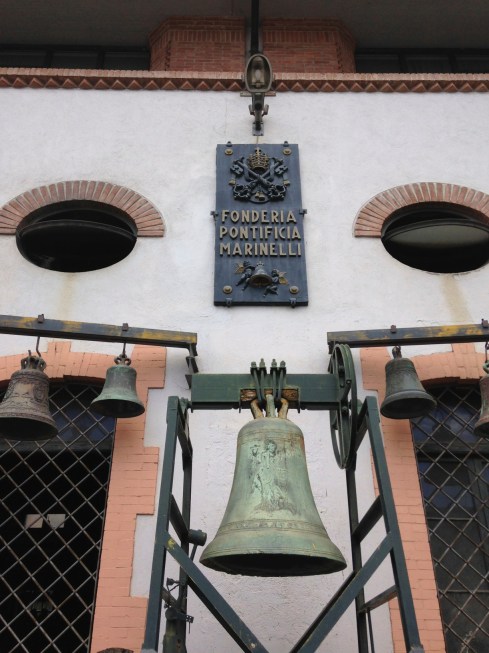
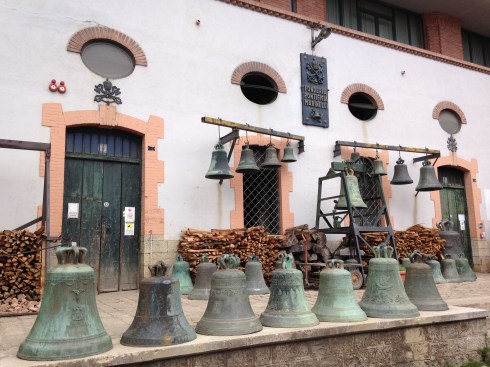
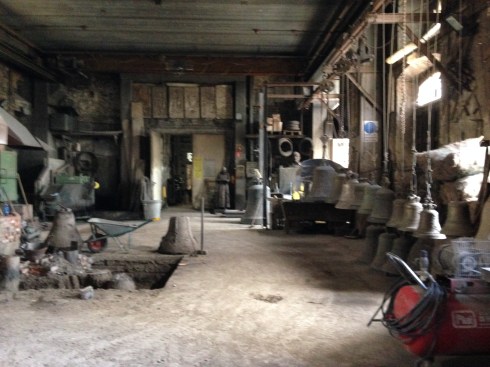
Before returning to Cortona from the Pietrabbondante area, we made one last stop. Agnone is the capital of the highest part of Molise, and also home to the world-famous Pontificia Marinelli Bells Foundry. The foundry continues to produce hand-made bells the same way they were made in the Middle Ages and their bells can be found in churches and bell towers throughout the world.

We almost didn’t get to see the foundry as we couldn’t find it. Several people told us it was next to the market, but we thought we misunderstood as a foundry wouldn’t be in the middle of a town. After our 4th attempt, we had about given up when we came across two men on bicycles. After I asked about the foundry, one told us to follow him, he on his bike, we in our car. He pedaled hard and fast uphill, about one half mile, then stopped in front of the market. To our right was a tiny driveway, lined with trees. We hadn’t considered that the town had built up around the foundry! Finally, we arrived thanks to the kindness of that man on bicycle. And what a find it was!

blogginginitaly.com

blogginginitaly.com

blogginginitaly.com

blogginginitaly.com

From their website:

Campane Marinelli foundry has a very long history; the first bell was made around the year one thousand and since then their work has been a long sequence of successes and honors. One of the most significant honors that the foundry can boast is the possibility to use the Papal Arm Coat in their production; it was Pope Pio XI in 1924 to grant that privilege to the foundry.

blogginginitaly.com

blogginginitaly.com

The tour guide was great, explaining how bells are made in both Italian and English, and patiently answering our questions.

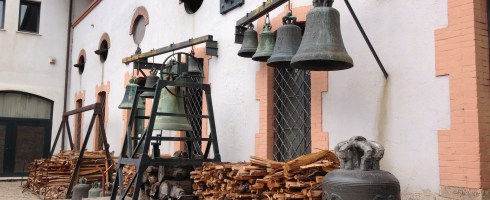
The tour began with a movie showing the entire bell making process. Then we were treated to a demonstration by a “master” playing scales and songs on a number of bells (hanging on the right below). We learned that each bell has only one note, a perfect pitch.

blogginginitaly.com

blogginginitaly.com

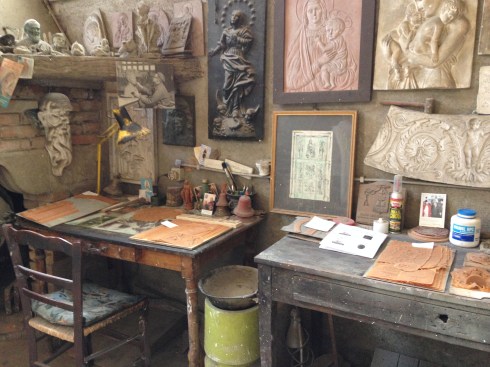
In the next room, we saw where the artists create each bell’s decorations.

blogginginitaly.com

blogginginitaly.com

Finally, we were taken to the museum where we learned more about the four major steps of bell making.

blogginginitaly.com

blogginginitaly.com

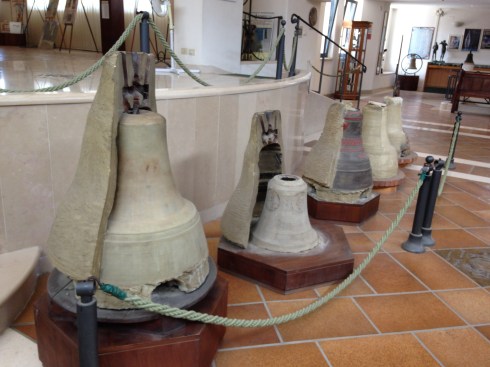
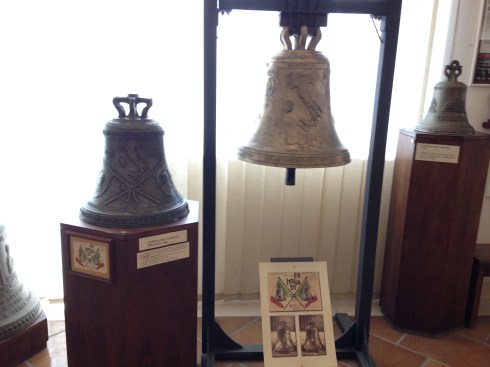
The museum contains “twins” of many famous bells. They are called twins, as opposed to duplicates, because no two bells are exactly the same as the molds are broken during the manufacturing process. Some very interesting twins include the bells commemorating the unification of Italy,

blogginginitaly.com

blogginginitaly.com

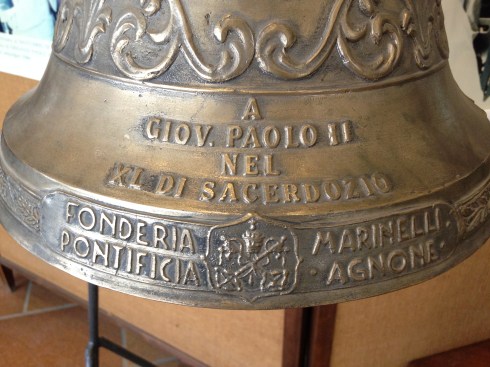
and the bells honoring the new pope saints, Pope Saint John Paul II and Pope Saint John XXIII.

blogginginitaly.com

blogginginitaly.com

Each new Pope receives a bell in his honor, the latest being Papa Francesco.

blogginginitaly.com

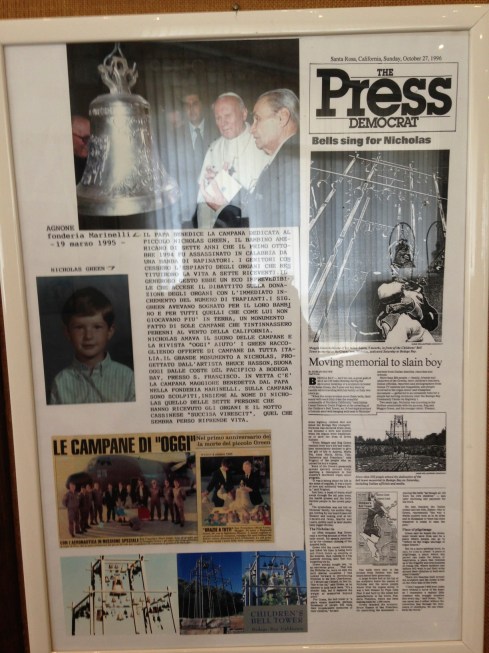
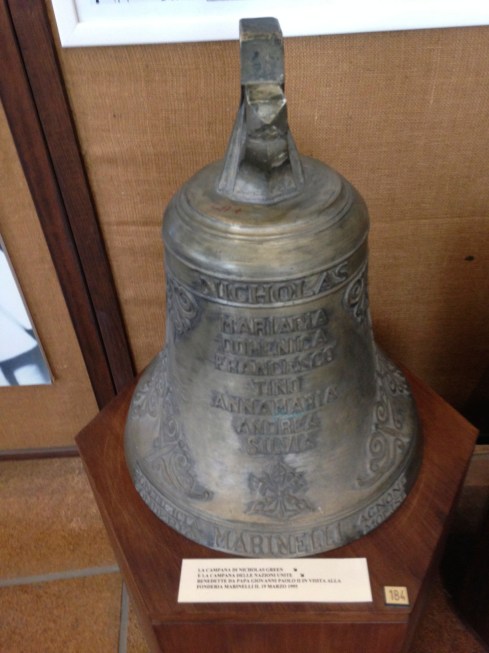
Another bell (campane) in the museum commemorates the incredible kindness of an American family after a terribly tragic event. Their young son Nicholas was killed while they vacationed in Calabria. The family chose to donate the boy’s organs to seven local Italian children. Some years later, the seven families had a bell made with Nicholas’ name and the name of the seven children who survived as a result of this family’s incredible courage and generous gift of life. The bell was shipped to Nicholas’ family in Bodega Bay California where a memorial dedication was held.

blogginginitaly.com

blogginginitaly.com

blogginginitaly.com

blogginginitaly.com

Touring the Marinelli Foundry and learning about the bells was an extremely interesting experience for us. I have always loved the sound of bells ringing, but had never thought about how the bells are made or where they come from. And now I know.

Here’s a brief clip from Marinelli Foundaria. Enjoy!

http://youtu.be/n2lFmCReiP8

Ciao,

Judy

Through His Words: Day Thirty-One

13 Jun

Reflections From and About My Grandfather
Alexander Capraro, Architect


Grand Hotel Flora – Roma

Rome
Monday. August 15, 1938

“Eureka” !!

At last I received word from home and Maude dearest, was I ever so happy I felt like a child with the new toy. I got one from you, one from Billy, and one from Joe Montenegro, and it is just exactly one month since I left home.

You say you sent two letters to Naples. Well Naples is my last port of call and of course, I won’t get them until I get there Wednesday. I had hoped you sent some to Milan via American Express Company, which I should have received by now, however, I was so glad to hear from you, I will forgive you for any errors you may have made in connection with the mail.

Sometimes we just need to vent our frustrations!

I am glad to hear everyone home is in good health and Billy tells me he sees to it that you get out and enjoy yourself. Thank Billy for his letter, it was real cute. Also tell him I have taken a lot of pictures to show him when I get home. I am also very happy to know Monte is getting better. It certainly was a tragedy, and what a difference it would have made if he was in good condition and had made the trip with me.

I had expected to go to the American Express Company hoping to get mail, but this is a holiday over here. In fact, from Saturday to Tuesday, all shops are closed. The holiday is called Ferragosto and it is equal to our Labor Day.

Still celebrated today, Ferragosto is the August 15 holiday when Italians celebrate the harvest following a long period of agricultural labor.

Well, I took it rather easy yesterday, it being Sunday. I went to St. Peter’s to church,
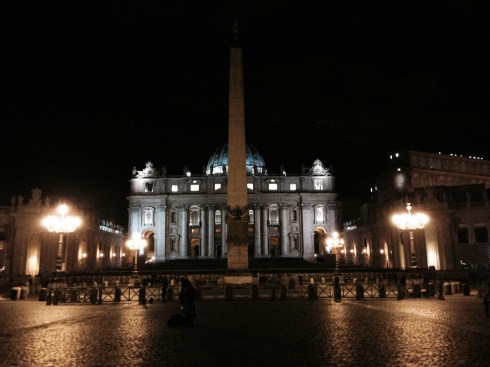
St. Peter's at night - blogginginitaly.com

St. Peter’s at night – blogginginitaly.com

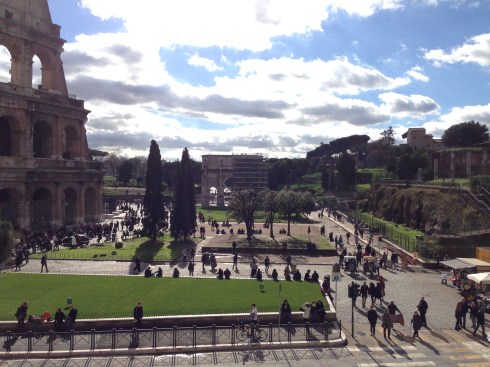
after which I walked around the Foro Romano (ruins) and the Coliseum.

romeisalwaysagoodidea

romeisalwaysagoodidea.wordpress.com

Then I went to Fermes for dinner. They have been very nice to me and I wish you will drop them a line when I get home for the hospitality shown me. He has been with me every day since I got here, and I have met some very big shots here through him. By the way, his brother is a big mogul here but I am out of luck so far as meeting Prince Potenziani and others as they are all out of town in the country and naturally cannot be seen. However, I saw the Pope and I’m satisfied.

Alex was the first licensed Italian-American architect in the state of Illinois. In 1933, the Century of Progress Exhibition would open in Chicago. Prince Potenziani, the Royal Italian Commissioner to the Exposition, had chosen Alex to supervise the construction of the Italian Pavilion. The Prince was in Chicago for its opening, and bestowed a decoration on Alex for his work.

February 20, 1933 Ground Breaking for the Italian Pavilion. Prince Potenziani center

February 20, 1933 Ground Breaking for the Italian Pavilion. Prince Potenziani center. (Herald and Examiner Photo)

Italian Pavilion Alexander V Capraro  - Associate and Supervising Architect, Chicago

Italian Pavilion 1933,   M. Derenzi, A. Libera, A. Valente –  Architects Rome
Alexander V. Capraro – Associate and Supervising Architect, Chicago

Mr. and Mrs. Ferme and I went to the Camposanto of Rome early in the evening and it certainly was a sight to behold, altogether different from ours. Then we went to what is known as the “Baths of Caracalla” – an old ruin immense in size. They use it for open air grand opera. You should only have the chance to see it. It is a spectacle no other place in the world has. The opera was Aida. The stage, set between two huge pillars several thousand years old, 400 musicians in the orchestra, 1000 actors on the stage, the best opera stars, 20,000 people in the audience, and the seats filled only about one-third of the inside of the magnificent ruin.

BathsOfCaracalla en.wikipedia.org

Baths of Caracalla –  en.wikipedia.org

Still today during the summer, the Caracalla Baths turn into a platform for breathtaking Teatro dell Opera performances. I need to add this to our Bucket list!

tatistidbits.com/2012/09/24

tatistidbits.com/2012/09/24

 Powerful lights turn night into day. Finally the lights go out, the orchestra starts playing, and then absolute silence in the throng of 20,000 spectators, real music lovers, real critics of ability. And I was almost breathless in the enjoyment of such a marvelous spectacle, a performance which can be held only in Rome, the Eternal City. And what a wonderful city this is. Paris was great, Venice was unusual and wonderful, but Rome is ever interesting, ever bewitching, the city of antiquity and modernism all-in-one; the city of the Caesars of yesterday and of great men of today. Clean as a whistle, law and order 100%, and no end to art, sculpture, painting, music and culture.
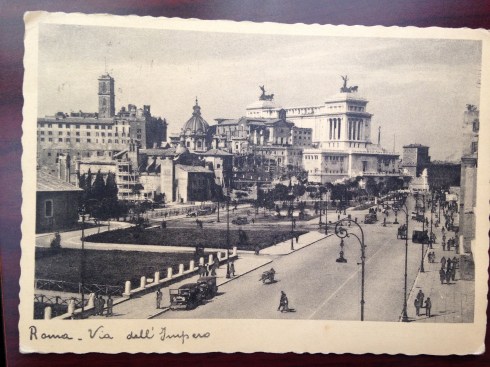
1938 Roma postcard

1938 Roma postcard

The men and women both dress as good if not better than we do in the States and they parade on the streets in smart style and the height of fashion. The evenings are spent mostly at little tables on the sidewalks, eating gelati or caffe. Every street is almost the same as far is this feature is concerned and all of them are lighted better than Madison Street at Crawford Avenue. Well, I better stop raving because I could go on like this for hours about Rome.

Today I visited three of the most important churches next to St. Peter’s, besides some smaller ones, and best of all, I made the holy stairs of St. John the Lateran. This is the most sacred spot in Rome. As the enclosed card shows, there are 28 wooden steps leading to an altar of our crucified Lord.

St. John Lateran

St. John Lateran

In order to gain an indulgence, you must kneel on the first step and say certain prayers, or the rosary will do. You must continue this on each and every step without rising on your feet or without touching the step below with your feet – only your knees. In other words, you must drag yourself up to the top on your hands and knees, stopping at each step to say prayers. I did it today and believe me, I thought I would never get to the 28th step. My kneecaps felt as if they were torn to pieces by the time I finished, but I made it, and Maude, what a feeling of relief as well as gratitude towards our Lord you have when you get to the top. Well, I hope the good Lord will reward the effort in answer to the prayers I offered for you, et all.

The other churches follow in rank next to St. Peter’s are St. Paul, St. John Lateran, and Santa Maria Maggiore.

St. Paul

St. Paul

Santa Maria Maggiore

Santa Maria Maggiore

Santa Maria Maggiore interior - blogginginitaly.com

Santa Maria Maggiore interior – blogginginitaly.com

They are so gorgeous it is difficult to describe the grandeur of these churches. All told, there are 400 churches, every one of them would make Resurrection looks sick. In the main churches I mentioned, you could actually put a half dozen churches like Resurrection and still have room for Santa Maria on Alexander Street.

Then I saw the Pantheon, a very old edifice where the bodies of King Victor Emmanuel II and others are buried.

Pantheon at night - bloggingintialy.com

Pantheon at night – bloggingintialy.com

Tomorrow I shall spend at the Vatican, Sistine Chapel, Vatican Museum, and National Museum, and then I think I shall have seen enough of Rome to remember it vividly.

Two of the most beautiful art treasures Alex would long remember are Michelangelo’s Pieta, (1498–1499)

blogginginitaly.com

blogginginitaly.com

and his Sistine Chapel Ceiling (1508-1512).
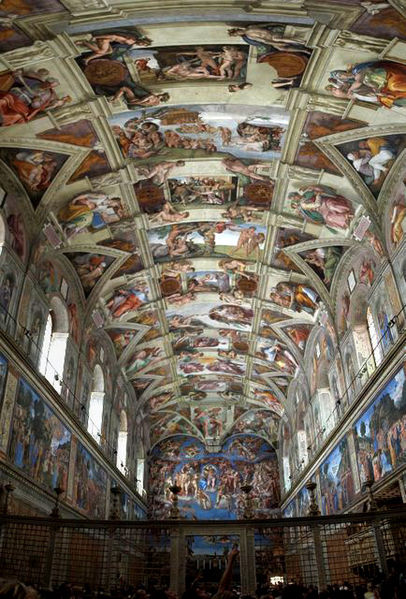
You should have a month here alone to do a good job of it. It is 8 PM and I am waiting for Ferme to go out to dinner somewhere. 

P.S. Confidential
Ferme and I have seen certain officials here about the decoration for PA and it will come but not before April 21, 1939. There is an absolute law that cannot be broken by anyone that this particular class of decoration be given and presented on April 21 only, that being Natale di Roma and Festa di Lavoro. The decoration is called Stella Merita di Lavoro and is given an recognition for long and meritorious labor. Ferme has already written the council in Chicago about it.

Based on my research, this “medal of honor” dates back to a Royal Decree 1898 to recognize industrialists and their employees. In 1927,  it was extended to Italians living abroad who have given evidence of patriotism, honesty and hard work as an example to their countrymen. Alex was researching the viability of this honor for his father-in-law, Maude’s father.

In the meantime, good luck, and God bless you. Loads of love and my very best to all at home.

Finally Alex was content. He had heard from his family and knew all was well. He effortlessly penned an eight page letter to Maude, the love of his life, describing in detail the treasures of Rome he would never forget, and that she would only ever “see” through his eyes. Lucky for Maude, Alex’s eyes absorbed deep beyond the surface, as only an architect could.

As ever yours, AL 

Ciao

Judy


Through His Words: Day Twenty-Nine

10 Jun

Reflections From and About My Grandfather
Alexander Capraro, Architect


Grand Hotel Flora – Roma
Rome
Sat. August 13, 1938

Hello Darling

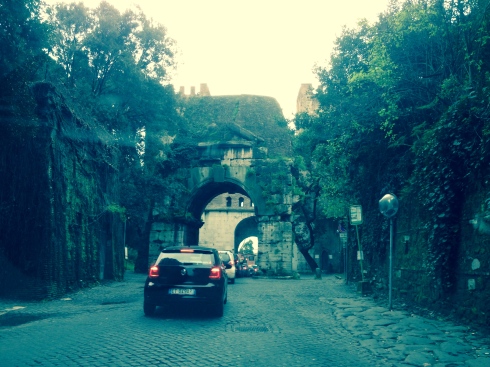
Well dear, Ferme and I put in a full day today. I had to go to the Vatican to get a permit to visit the Pope. First I had to bring the letter of introduction from the Catholic bishop of Chicago to Msgr. Hildebrand, who in turn gave me a note to the Vatican where I got the permit. In the meantime, I had to get the rosaries and things I wanted blessed by the Pope and then was on the way to Castello Gondolfo. This ride is on the Via Appia Antica, the oldest road in the civilized world dating back 2000 years B.C. 

Appia Antica blogginginitaly.com

Appia Antica  –  blogginginitaly.com

The ruins of the old walls and aqueducts could be seen all along the road, a distance of about 18 miles from Rome.

Appia Antica blogginginitaly.com

Via Appia Antica – blogginginitaly.com

We arrived there a little before noon and were ushered into the throne room. There were at least 250 to 300 people there. We had to wait until about 1 PM before his Holiness came. He was announced and was brought in on a rich chair born by four guards all in glittering uniforms. He spoke for about 10 minutes and the ceremony was over. The whole thing was very touching and thrilling. Here was a little old man, 82 years old, and showed signs of his long sickness.

Pope Pius XI reigned from 6 February 1922 to his death in 1939. He was the first sovereign of Vatican City from its creation as an independent state on 11 February 1929. 

The Castello is a large palatial palace with an inner courtyard where the people who have appointments must wait until called.

Recently published archives indicate that Hitler expected to be received by the Pope at the Vatican during a May 1938 visit, but Pope Pius XI thwarted Hitler’s plan and took off for Castel Gandolfo, also shutting the Vatican Museum during his leave.

The Swiss Guards have colorful suits and other attendants have suits of red cardinal robes with silk knickers, etc. It was all most interesting. 

blogginginitaly.com

blogginginitaly.com

 After we left, we lunched in a little place nearby overlooking a lake way below us, where you could see a half-dozen towns on the other side in the hills.

After coming back to Rome, we visited in order:  Castel St. Angelo, monument to Vittorio Emanuel II, the Coliseum, Roman Forum, and the Mussolini Forum. So you can see why I really am all in and ready to hit the hay.

blogginginitaly.com

Castel St. Angelo blogginginitaly.com

Coliseum - blogginginitaly.com

Coliseum – blogginginitaly.com

Tomorrow I’m going to St. Peter’s for mass and at the same time visit it. Later to dinner with Ferme at their home. It has been hot here but not as bad as I expected. I can go along all day, but the old feet are the ones that tire first. However, a good bath at night fixes them up for the next morning.

Well, young lady, I am still in the dark as to how, when, why, all of you are at home because I have received nothing in the way of mail here. It looks as if I shall be home before I receive any word. I can take it, but it is a little bitter and certainly not pleasant.

Just a little more patience, Grandpa…Really!

Well, good night. Love to all, will write again tomorrow.

Yours, AL 

Ciao,

Judy


Through His Words: Day Twenty-Seven

7 Jun

Reflections From and About My Grandfather
Alexander Capraro, Architect


Grand Hotel Flora – Roma
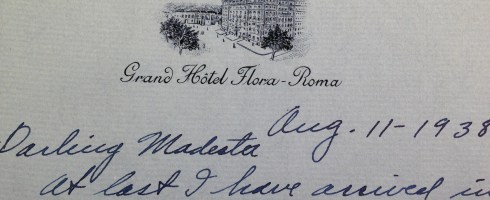
August 11, 1938

Darling Modesta

At last I have arrived in the eternal city. I left Siena this morning bright and early, 7:03 AM, and got here this noon. It was awful hot coming down on the train and you could feel it getting hotter as we neared Rome. Siena is much cooler because it is up in the mountains, while Rome is closer to the sea and low.

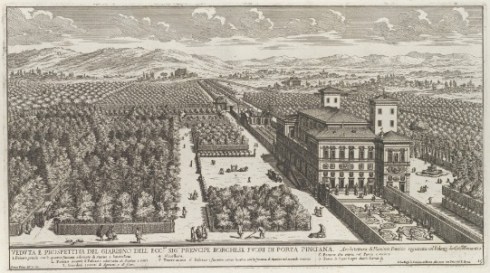
I had a little lunch and at the same time started to map out what I was going to see. One of the interesting spots is near my hotel, so I walked over to it, the Villa Borghese and the gardens of the Borghese.

In January, I visited The Hotel Flora at the end of Via Veneto overlooking the Borghese gardens, had a wonderful tour, and tried to imagine Alex’s pure delight at seeing the treasures of the eternal city.

Villa Borghese is a large palace now used as an art gallery which contains originals of Michelangelo, Raffaelo, da Vinci, Botticelli, Bernini, and other famous sculptors and painters. You know, it is almost fantastic to see the palaces the people in power of those days lived in. We have nothing like it anywhere in America.

commons.wikimedia.org/wiki/File:Villa_borghese.JPG

commons.wikimedia.org/wiki/File:Villa_borghese.JPG

Try to imagine a plot of land equal to Columbus Park, only more beautifully landscaped with formal gardens, big old trees, marble and bronze statuary, and wonderful fountains here and there, and the palace about the size of the Art Institute, and you have a pretty fair picture of this villa and gardens.

The Borghese Gardens

The Borghese Gardens

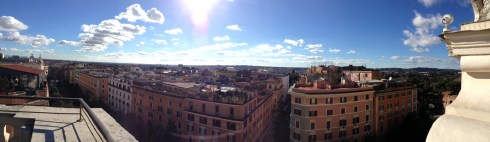
The Borghese family had two popes in it, and these were built when the church was the governing body of the state or country. From a hill nearby, I got a fair panorama of one side of Rome  and I gazed on St. Peter’s and numerous other church domes which could be seen at a distance.

Like Alex, I took several panorama photos of Rome, these from the Grand Hotel Flora’s incredible rooftop deck.

blogginginitaly.com

blogginginitaly.com

blogginginitaly.com

blogginginitaly.com

I called up the Fermes when I got back and had quite a long telephone conversation with Mrs. Ferme, because Ferme was out and would not be back until late. She was very glad to talk with someone from Chicago, and judging from her talk, she doesn’t like it here as well as Chicago, especially because her two big boys are back in America. She invited me over for dinner with them tomorrow night, and Ferme is coming over to see me in the morning to give me some information on how to see as much of Rome in five days as possible. She asked about you and sends her best regards.

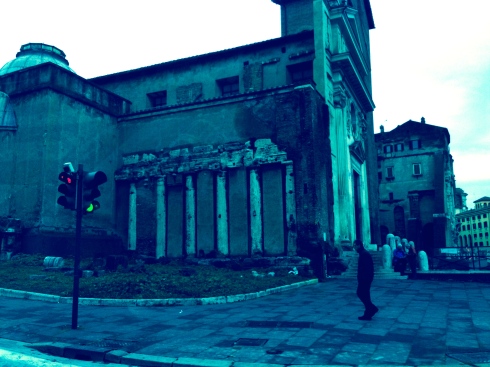
Tonight after supper, I walked quite a bit and saw the Coliseum, The Forum, the ruins of this and that, and many structures dating back several centuries before Christ.

blogginginitaly.com

blogginginitaly.com

blogginginitaly.com

blogginginitaly.com

The impression is awe inspiring, the city is wonderfully clean, and the streets are lined with beautiful trees of tropical nature, palms, magnolias, etc. Tomorrow I shall start about visiting these places and probably make the Vatican in St. Peter’s first. It is going to take a lot of time here because there is so much to see. Will let you know more tomorrow night.

Greetings to the family and a big and tight embrace for you.” Wait until I get home!”

Yes, he wrote that!

Love, Al

Ciao,

Judy


Pitigliano

29 Jul

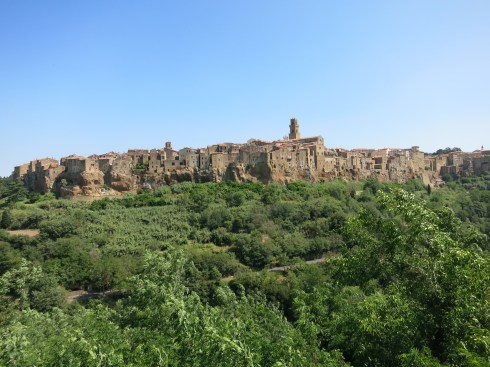
Often the word “marvel” is used to describe huge skyscrapers…modern marvels built with the latest in technological advancements, built to withstand nature’s strongest elements and built to stand the test of time. This being the case, then what word aptly describes the truest technological marvels that have more than survived nature’s strongest elements and survived for centuries? What word can we possibly use to describe places like Pitigliano, a stunning medieval town dramatically perched atop a tufa ridge?

IMG_0019

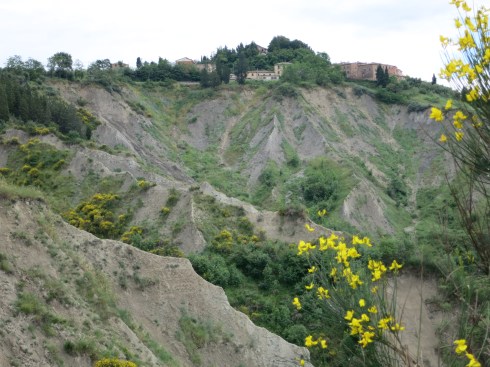
While Len and I love traveling by train and bus in Italy, one of the benefits of occasionally renting a car is the opportunity to explore the more remote areas. Situated between Roma and Firenze, and east of Grosseto, the Hills of Maremma in Tuscany is one of those areas. The Hills are filled with non-traditional Tuscan landscapes and amazing surprises around each bend.

IMG_0051

IMG_0050

IMG_0046

There are several towns in the area, but the most stunning to me is Pitigliano, a medieval town built on tufa or volcanic rock. When you hear medieval, think 500-1500 time frame. Houses and buildings in town are built on sheer cliffs that appear suspended over the valley, and sit above a network of caves and tunnels said to have been inhabited in prehistoric times. Fortunately, there are places to pull over as this is a photo-op must.

IMG_0020

IMG_0021

IMG_0050

In the 16th century, Pitigliano became a haven for Jews escaping enclosed ghettos in neighboring cities. Today, visitors can still see parts of the ancient Jewish Quarter; a 16th century aqueduct; a few beautiful churches; a 14th century fortress which houses a museum and medieval torture chamber; and sometimes even tour the underground tunnels and caves.

Pitigliano, Italy, at night

Pitigliano, Italy, at night (Photo credit: Wikipedia)

While only about 300 people still live in Pitigliano in southeastern Tuscany,

English: The Municipality of Pitigliano within...

The Municipality of Pitigliano within the Province of Grosseto, Tuscany, Italy (Wikipedia)

this ancient structure still stands and functions – deeming it not just a marvel, but truly marvelous!

MARVELOUS…A word befitting!

Ciao,

Judy


Giostra dell’Archidado 2013

10 Jun

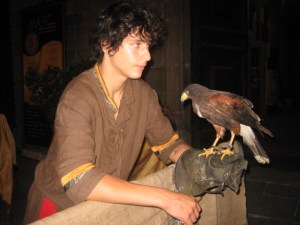
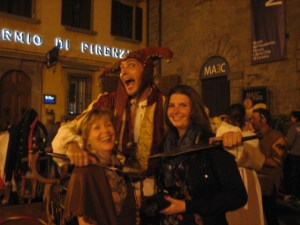
Once again, and as repeated every year, the people of Cortona celebrate and reenact the 1397 wedding of Francesco Casali and Antonia Salimbeni. Over many days, and with great pomp and circumstance, they fill the piazzas with medieval markets, craft fairs, traditional food, medieval games, falconry, and various forms of entertainment including musicians, flag throwers, fire eaters and jesters. The more serious events include the celebration of Santa Margherita, Cortona’s patron saint; the wedding reenactment; and the crossbow competition. For the latter, five areas of Cortona, called quintiere, each have a team that competes. Last year, our neighbor Vincenzo and his team won. And this year, they repeated, so we were delighted.

Here are some of the sights and sounds of the weekend.

Flag throwers exhibition, one of many…

Participants…think Renaissance Fair, but serious!

IMG_0668

Spectators: not so serious!

IMG_0670

Best Hairdo!

IMG_0674

The Victors:

IMG_0673

IMG_0677

The Victors’ Parade. (Note: as my neighbor Vincenzo approaches to give me a hug, video is affected!)

Another weekend in Cortona filled with history, passion and great fun!

Ciao, and Complimenti ai vincitori!

Judy

Cortona Town Guide: Cortonaweb

10 Jun

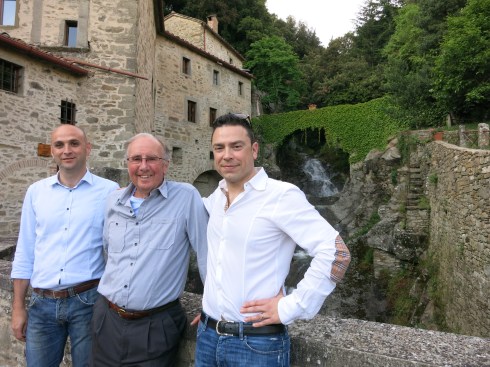
Each year in Cortona, we are fortunate to befriend more and more locals, one of the reasons we return to Cortona. This year, two of those people are Luca Tiezzi and Simone Rossi, founders and publishers of Cortonaweb.net. Pictured below with Len, they introduced us to Le Celle, one of the most beautiful places in Cortona. (Le Celle to be covered in another post!) While we knew of the monastery’s existence, we thought the grounds were private, so we never entered the monastery of St. Francis of Assisi. But for now, back to Luca and Simone and Cortonaweb.

IMG_0016_2

Len, being a business professor of Entrepreneurship, loves meeting with young entrepreneurs and discussing the challenges and opportunities they face. Here in Italy, there are many challenges for the young as unemployment  is well above 20%. With Luca and Simone, our conversations dance between English and Italian, and include everything from local and national politics, their business goals and challenges, food, wine, historical sites, travel, and whatever is happening in town. Being natives of Cortona, their depth of knowledge and appreciation of the historical area is evident, not only in their conversation but also in the relevance and thoroughness of their work.

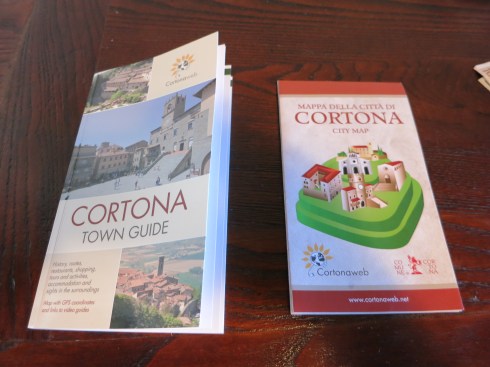
While Len and I have many books and maps on various parts of Italy, Cortonaweb is a Cortona tourist’s friend, offering a detailed website that includes local events, weather, local attractions and historical sites, and some recommendations for shopping,  dining and accommodations. While not all-inclusive, it certainly is a great place to start.  In addition, from the website, you can order a small but concise Town Guide and an interactive map with GPS coordinates and links to video guides and podcasts. The photo-filled small guide, available on Amazon through their website, is light and easy to carry, unlike so many others. If coming to Cortona, a must have!

IMG_0031

Grazie to Luca and Simone for introducing us to one of Cortona’s best treasures, Le Celle, and sharing their knowledge and expertise with us.

IMG_0031

New friends, new finds…we are always open for the unexpected as we experience all that Cortona has to offer!

Ciao,

Judy

The Wedding and Crossbow Competition: Cortona Giostra

11 Jun

The Wedding

On the last Saturday night of the Giostra, the Cortonese recreate the 1397 wedding of Francesco Casali of Cortona and Antonia Salimbeni of Siena. For 10euro/person, you can buy a seat in the stands, which we thankfully did as the event lasted for several hours. The costumes of the different regions were beautifully displayed as the royalty from each area was presented.

Bride and groom

The ceremony

Some of the entertainment


The Crossbow Competition

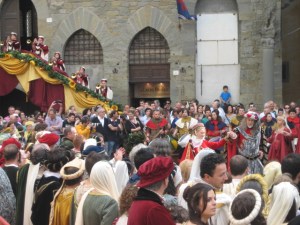
On Sunday, the final day of Giostra, the festival celebrates the previous night’s marriage with a crossbow competition. Practice begins at 11 AM, but the actual competition, in full costume, begins at 4PM. Once again, the pageantry is extensive, with a parade of important people from each area of Cortona, as well as the drummers, buglers, flag throwers, etc.


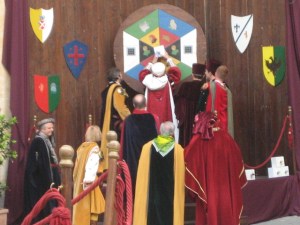
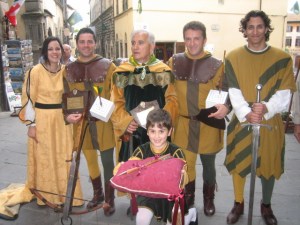
There are five quintiere, or areas of Cortona, and each is represented by specific symbols and colors in the competition. Our house is in the S. Andrea quintiere, so our colors are green and yellow. Each team consists of a Maestro di Campo, or Field Master, and two Balestrieri, or dart shooters. The competition lasts four rounds. Amazingly, the Maestro from our area was none other than our neighbor, Vincenzo, the one who skillfully parks the too big car in the too small garage. He chooses an arrow from a trunk, and he and the shooter ascend the platform. After the Balestrieri carefully sets the crossbow, the arrow is put in place by the Maestro, and amid a hushed crowd, the arrow is shot at a target about 20 meters, or almost 66 feet  away.

Our Neighbor Maestro Vincenzo and the Balestrieri

Judges and other officials after each round

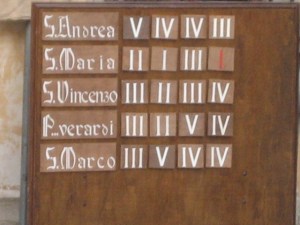
After each round, the judges move in to calculate the results. Points are awarded for each round, and with significant drum roll, they are announced and posted.

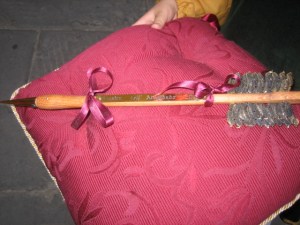
This year, two teams tied, so they alone competed in a fifth round. And guess what? S. Andrea won! Must be all that close call parking that makes Vincenzo such a great Maestro! The winner receives a golden arrow, or verretta, then all involved parade through the city.

Golden Arrow

The Winning Quintiere

The Giostra dell’Archidado…and experience we will long remember. Thanks, Cortona!

Ciao,

Judy

Giostra dell’ Archidado 2012

10 Jun

This year, we are so fortunate to be in Cortona during the Joust of the Archidado, an annual celebration with events spread over 10 days. I have included a description below from a Cortona website:

“This costume festival re-enacts the wedding of Francesco Casali, lord of Cortona, to Antonia Salimbeni from Sienna, in 1397. To commemorate the couple, the crossbowmen of Cortona’s five ‘quintieri’ or districts compete in a crossbow (ballestero) competition, aiming at a target called ‘quintiere’. The winner is given the first prize, the Verretta d’Oro (golden crossbow dart). The event includes stalls selling mediaeval food, mediaeval dinners and entertainment typical of the mediaeval times. This costume festival re-enacts the wedding of Francesco Casali, lord of Cortona, to Antonia Salimbeni from Sienna, in 1397. To commemorate the couple, the crossbowmen of Cortona’s five ‘quintieri’ or districts compete in a crossbow (ballestero) competition, aiming at a target called ‘quintiere’. The winner is given the first prize, the Verretta d’Oro (golden crossbow dart). The event includes stalls selling mediaeval food, mediaeval dinners and entertainment typical of the mediaeval times.” Cortona © ammonet InfoTech 1998 – 2012.

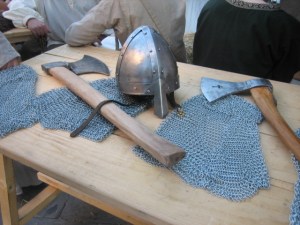
That’s metal, not silk!!!

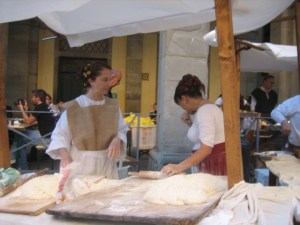
Bread making

Every part of the festival is a cultural tribute to the past and reenacted with great pomp and circumstance by present-day Cortonese. Two upcoming events, the wedding and the crossbow competition, each deserve their own post.

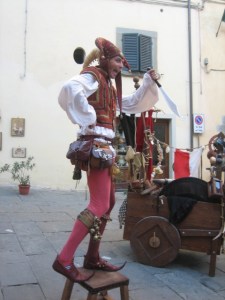
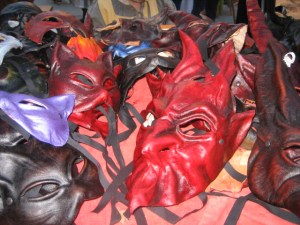
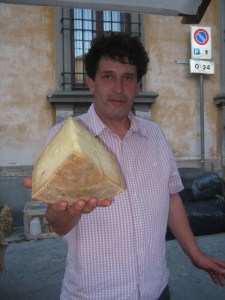
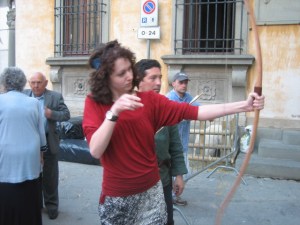
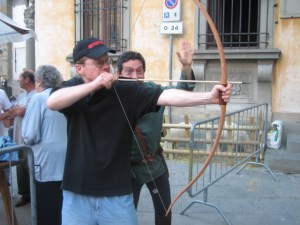
So far, we have attended the medieval market, seen flag throwers and fire eaters, and enjoyed the local musicians and locals  dressed in medieval costumes. We bought the most amazing cheeses at the market, tried to master the bow and arrow, and watched in awe as the jesters, drummers, flag throwers and fires eaters skillfully performed.

Parmigiano!

A few amateurs got into the act as well!


The Pros!

Unlike any circus or Renaissance fair atmosphere, we feel privileged to be among the locals as they celebrate the history and legacies of their ancestors.

All in a day in Cortona!

Ciao,

Judy

nut cracker

Falcons