Archive | Italy RSS feed for this section

I Hope We Dance

18 Jul

Lee Ann Womack’s signature song, written by Tia Sillers and Mark Sanders, is called “I Hope You Dance”. It won the Grammy Award for Best Country Song and also the Country Music Award for Song Of The Year in 2001, and for good reason – it has such a great “hook” line:

And when you get the choice to sit it out or dance.
I hope you dance….I hope you dance.

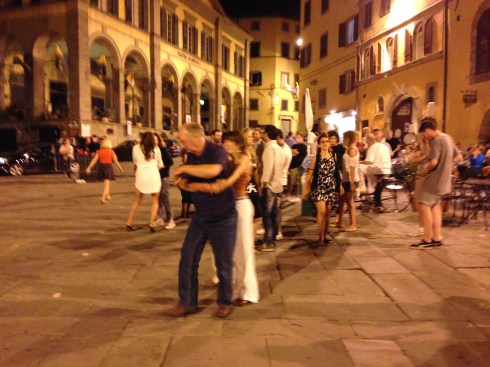
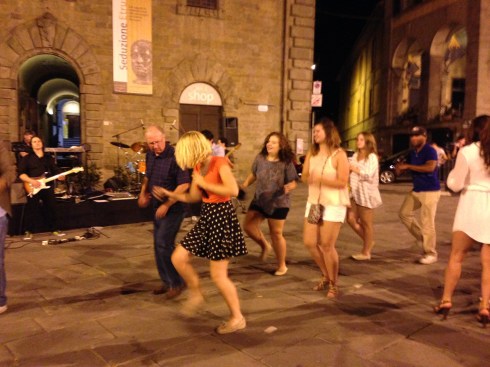
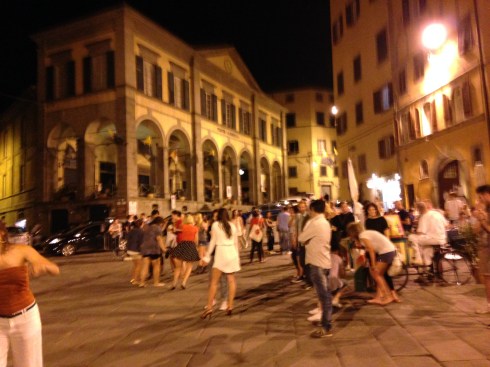
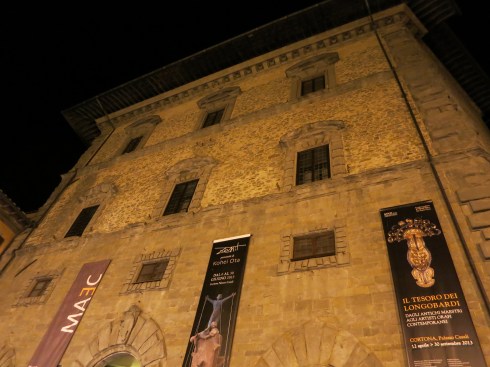
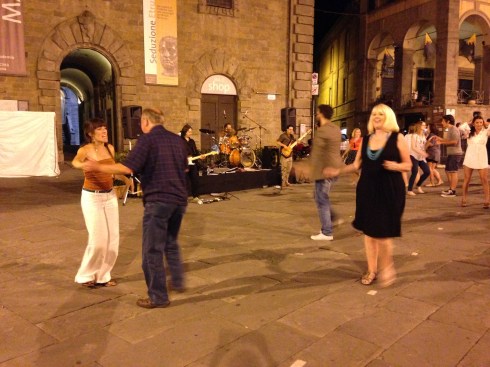
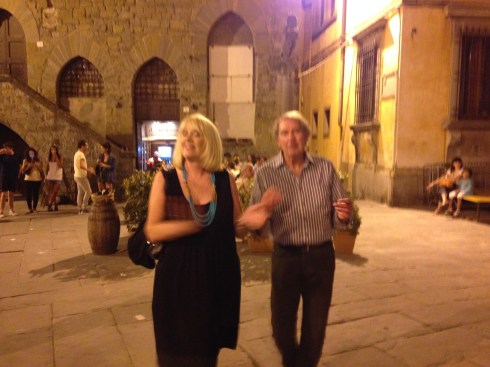
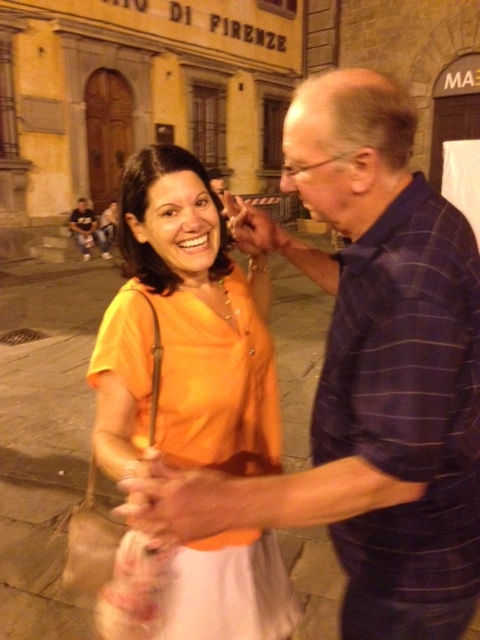
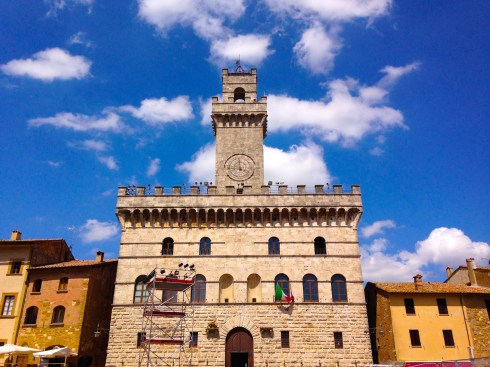
Last night, at about 11:30 PM, the lyrics of the song came to me as we joined others in Piazza Republicca after dinner. A band was playing, people were gathering, and a few of us started dancing with the lead singer.  Surrounded by ancient buildings, the words seem to fit perfectly for old and young alike…

I hope you never lose your sense of wonder, (Go Len!)

©Blogginginitaly.com

©Blogginginitaly.com

©Blogginginitaly.com

©Blogginginitaly.com

©Blogginginitaly.com

©Blogginginitaly.com

©Blogginginitaly.com

©Blogginginitaly.com

I hope you still feel small when you stand beside the ocean, (or amazing antiquities!)

©Blogginginitaly.com

©Blogginginitaly.com

©Blogginginitaly.com

©Blogginginitaly.com

(or comfortable dancing with the lead singer!)

©Blogginginitaly.com

©Blogginginitaly.com

May you never take one single breath for granted,
©Blogginginitaly.com

©Blogginginitaly.com

©Blogginginitaly.com

©Blogginginitaly.com

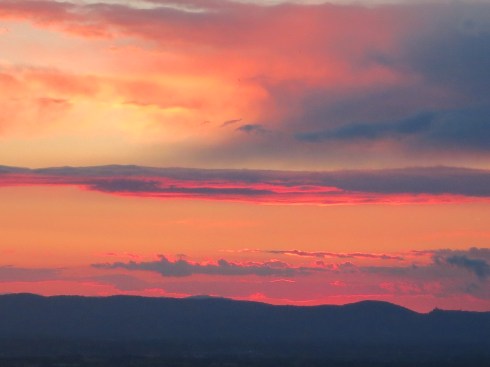
Give the heavens above more than just a passing glance,
©Blogginginitaly.com

©Blogginginitaly.com

And when you get the choice to sit it out or dance,
I hope you dance….I hope you dance.
©Blogginginitaly.com

©Blogginginitaly.com

According to Sillers, this song is about taking chances and not being afraid to try something new. In our travels, and in life in general, may we always choose to dance!
Ciao,
Judy
For more of Lee Ann Womack’s signature song, click below.


Seeing the Blues

16 Jul

in Montepulciano,

© Blogginginitaly.com

© Blogginginitaly.com

©Blogginginitaly.com

©Blogginginitaly.com

©Blogginginitaly.com

©Blogginginitaly.com

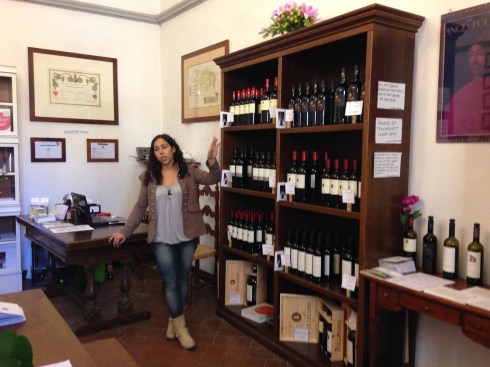
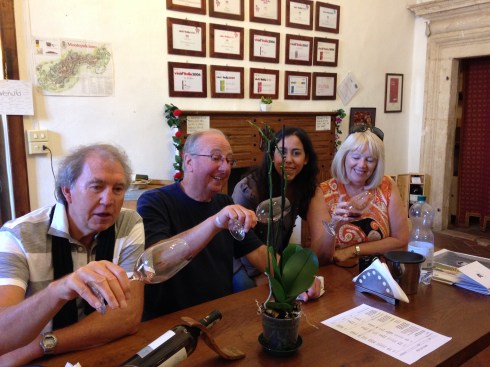
And sipping the Reds!

©Blogginginitaly.com

©Blogginginitaly.com

©Blogginginitaly.com

©Blogginginitaly.com

©Blogginginitaly.com

©Blogginginitaly.com

All in a good day’s work.

Ciao,

Judy

Gubbio

15 Jul

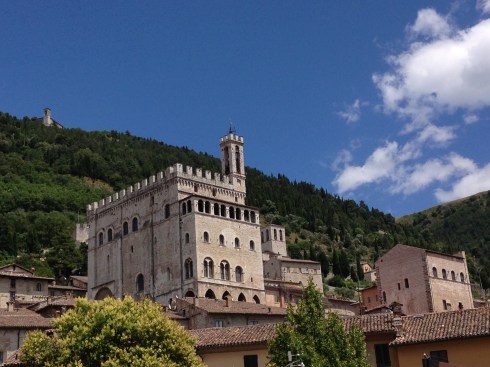
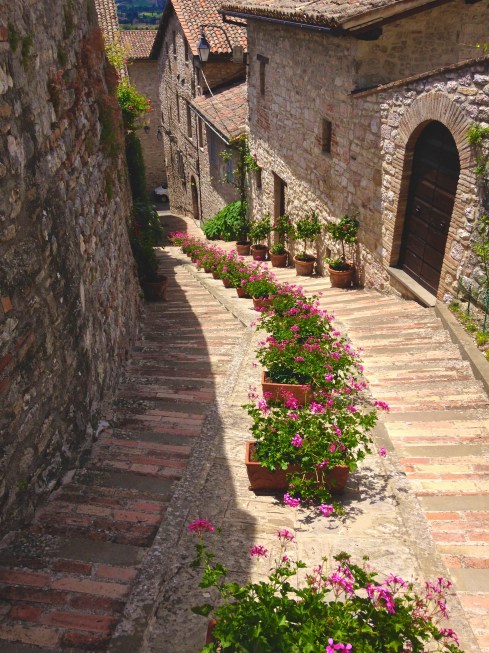
A fun and interesting way to help improve foreign language learning is through TV. Len and I watch a number of Italian detective series including Commissario Montalbano, filmed in Sicily, and Don Matteo, filmed in Gubbio. Besides hearing the language, (and having English subtitles!) the shows often provide lovely views of their filming locations.

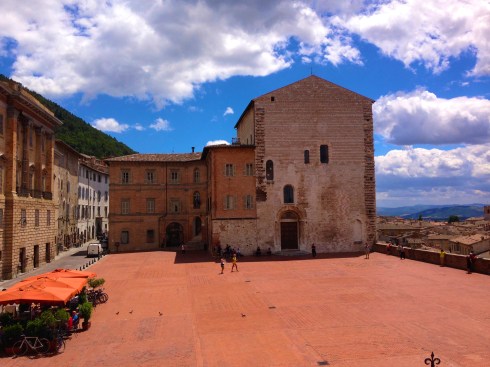
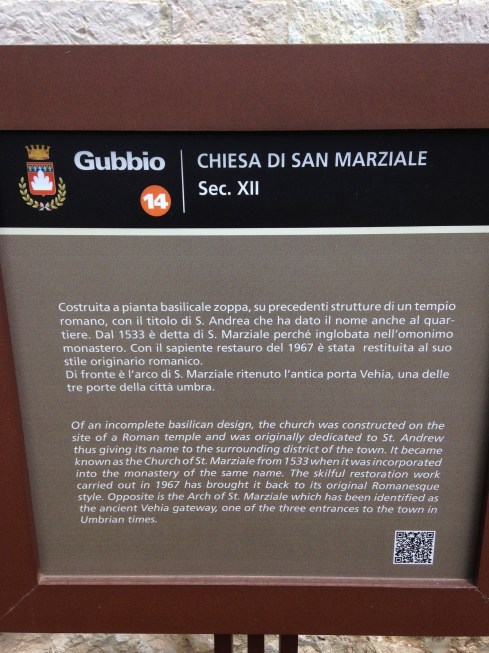
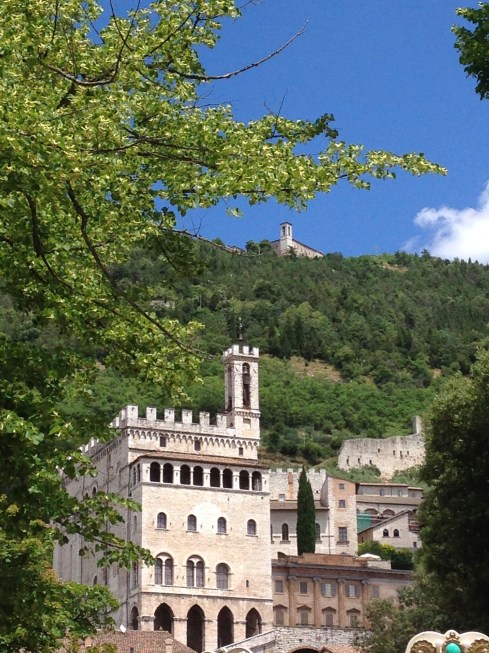
A few days ago, we took a drive to Gubbio to find the sights associated with the Don Matteo series, even though it seemed a bit touristy. Don Matteo, played by Terrence Hill, is the priest in Gubbio who casually helps the police captain and marshall solve the weekly murder mystery. In fact, I doubt there is even an annual murder let alone a weekly one. Nonetheless, we wanted to see the beautiful sights so often shown in the show.

blogginginitaly.com

blogginginitaly.com

blogginginitaly.com

blogginginitaly.com

blogginginitaly.com

blogginginitaly.com

blogginginitaly.com

blogginginitaly.com

blogginginitaly.com

blogginginitaly.com

blogginginitaly.com

blogginginitaly.com

blogginginitaly.com

blogginginitaly.com

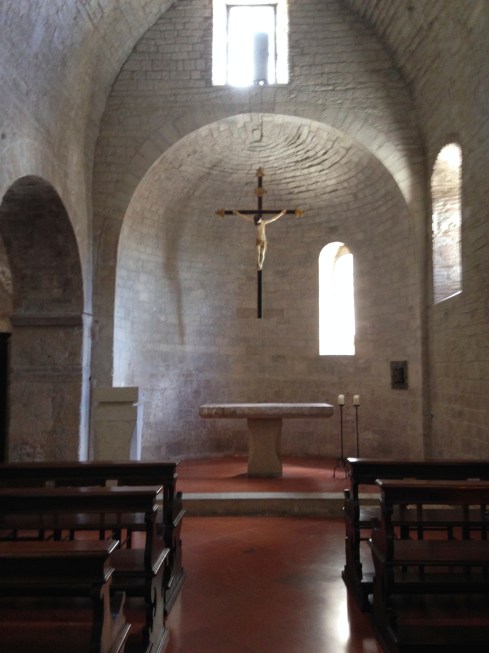
And lastly, “Don Matteo’s Church”…IMG_3092

blogginginitaly.com

blogginginitaly.com

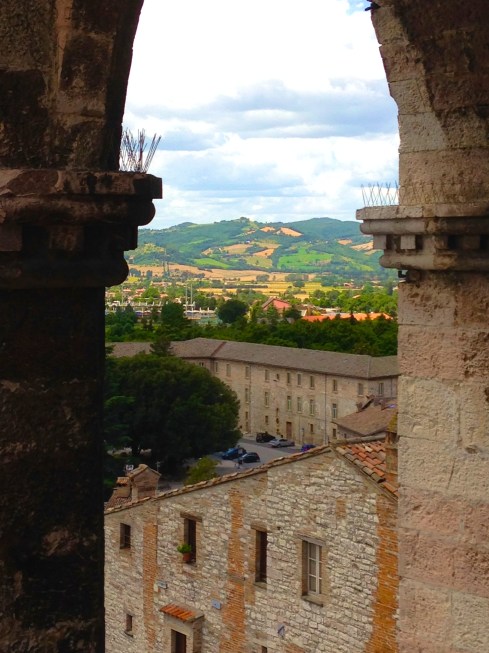
Gubbio, such a lovely town!

blogginginitaly.com

blogginginitaly.com

Ciao,

Judy

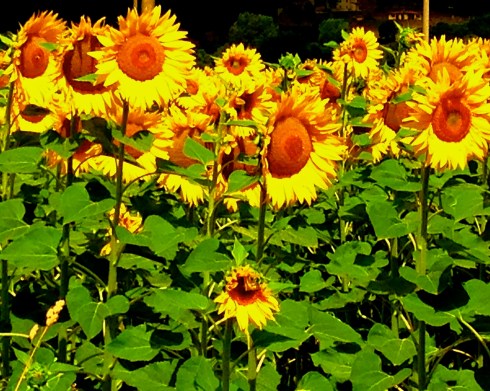
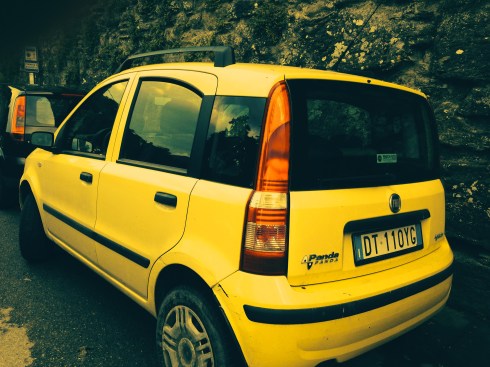
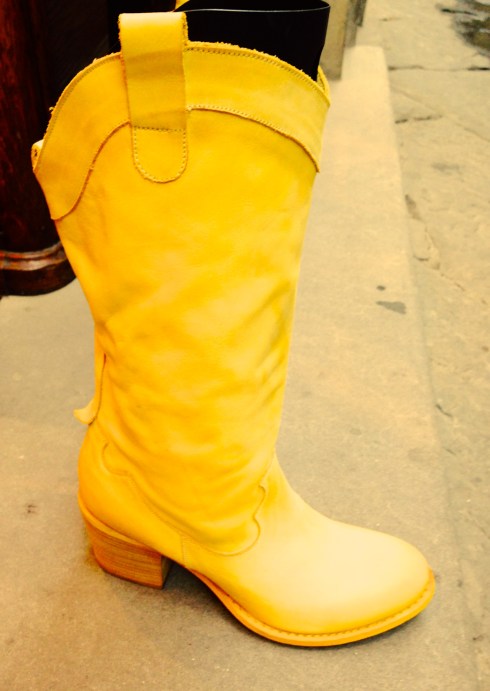
How to Say “Yellow” in Italian…

13 Jul
blogginginitaly.com

blogginginitaly.com

blogginginitaly.com

blogginginitaly.com

blogginginitaly.com

blogginginitaly.com

blogginginitaly.com

blogginginitaly.com

blogginginitaly.com

blogginginitaly.com

Ciao,

Judy

Marinelli Bell Foundry – Agnone

11 Jul

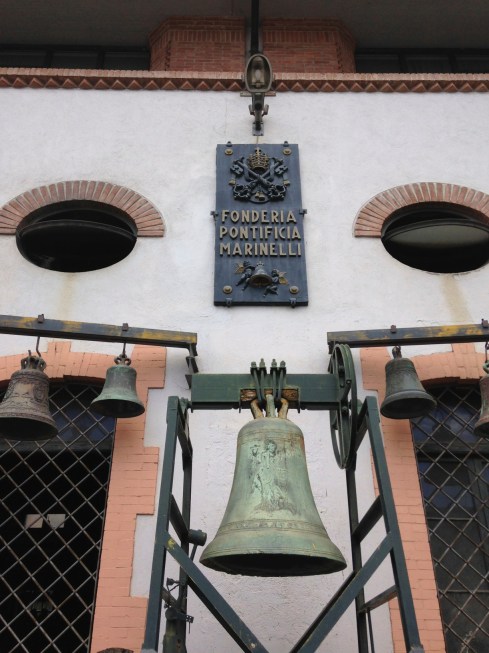
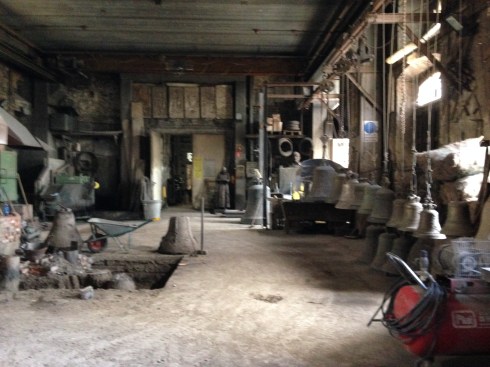
Before returning to Cortona from the Pietrabbondante area, we made one last stop. Agnone is the capital of the highest part of Molise, and also home to the world-famous Pontificia Marinelli Bells Foundry. The foundry continues to produce hand-made bells the same way they were made in the Middle Ages and their bells can be found in churches and bell towers throughout the world.

We almost didn’t get to see the foundry as we couldn’t find it. Several people told us it was next to the market, but we thought we misunderstood as a foundry wouldn’t be in the middle of a town. After our 4th attempt, we had about given up when we came across two men on bicycles. After I asked about the foundry, one told us to follow him, he on his bike, we in our car. He pedaled hard and fast uphill, about one half mile, then stopped in front of the market. To our right was a tiny driveway, lined with trees. We hadn’t considered that the town had built up around the foundry! Finally, we arrived thanks to the kindness of that man on bicycle. And what a find it was!

blogginginitaly.com

blogginginitaly.com

blogginginitaly.com

blogginginitaly.com

From their website:

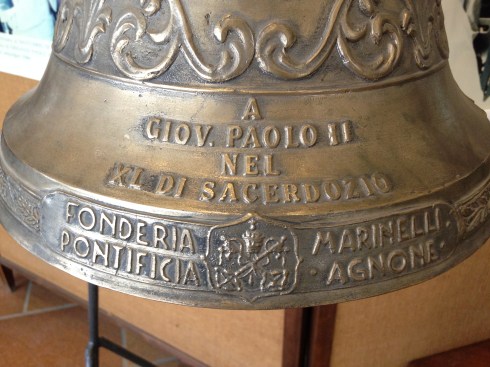
Campane Marinelli foundry has a very long history; the first bell was made around the year one thousand and since then their work has been a long sequence of successes and honors. One of the most significant honors that the foundry can boast is the possibility to use the Papal Arm Coat in their production; it was Pope Pio XI in 1924 to grant that privilege to the foundry.

blogginginitaly.com

blogginginitaly.com

The tour guide was great, explaining how bells are made in both Italian and English, and patiently answering our questions.

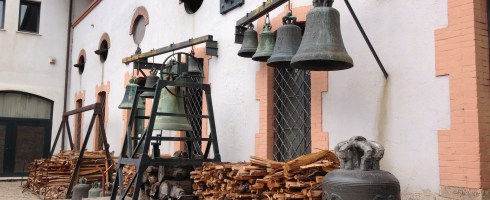
The tour began with a movie showing the entire bell making process. Then we were treated to a demonstration by a “master” playing scales and songs on a number of bells (hanging on the right below). We learned that each bell has only one note, a perfect pitch.

blogginginitaly.com

blogginginitaly.com

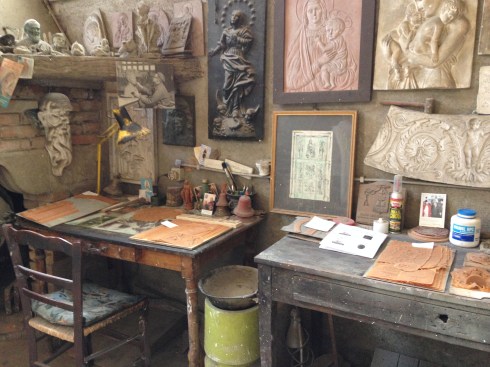
In the next room, we saw where the artists create each bell’s decorations.

blogginginitaly.com

blogginginitaly.com

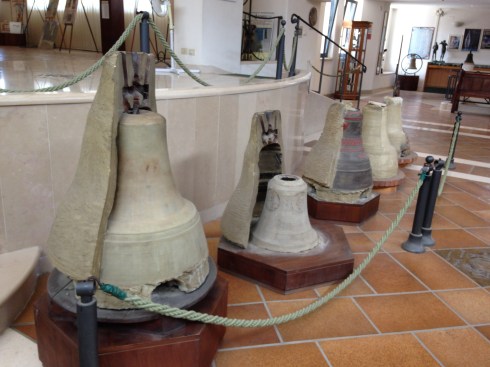
Finally, we were taken to the museum where we learned more about the four major steps of bell making.

blogginginitaly.com

blogginginitaly.com

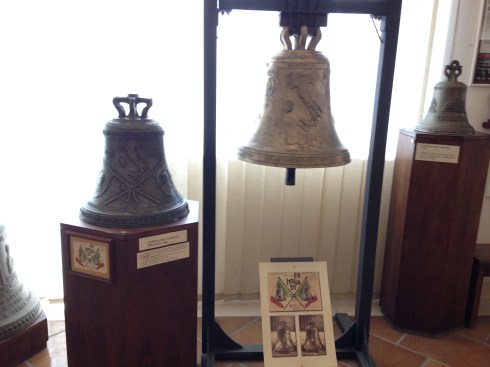
The museum contains “twins” of many famous bells. They are called twins, as opposed to duplicates, because no two bells are exactly the same as the molds are broken during the manufacturing process. Some very interesting twins include the bells commemorating the unification of Italy,

blogginginitaly.com

blogginginitaly.com

and the bells honoring the new pope saints, Pope Saint John Paul II and Pope Saint John XXIII.

blogginginitaly.com

blogginginitaly.com

Each new Pope receives a bell in his honor, the latest being Papa Francesco.

blogginginitaly.com

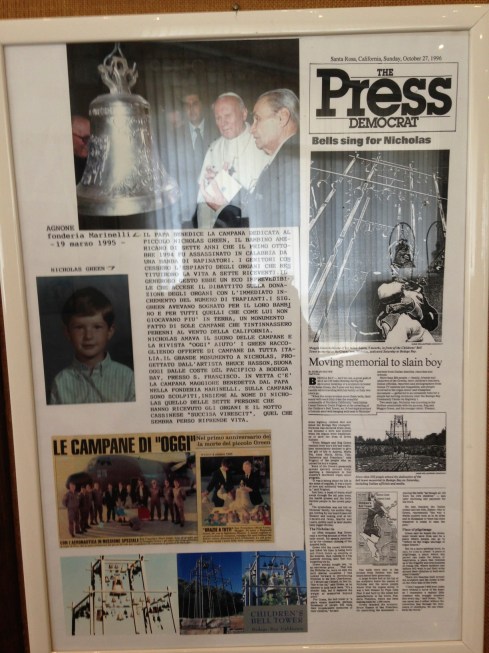
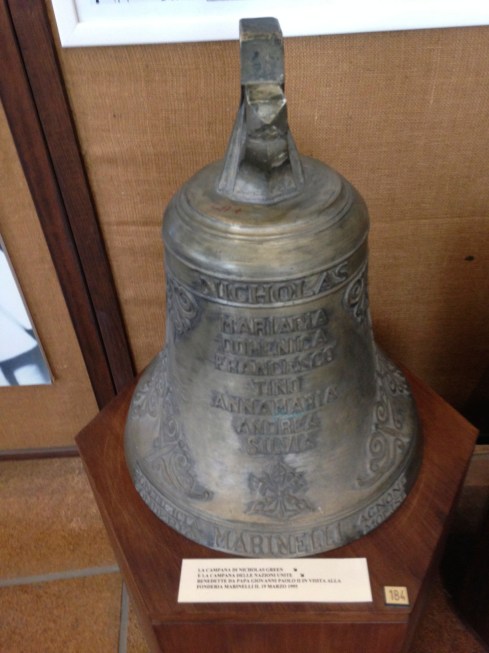
Another bell (campane) in the museum commemorates the incredible kindness of an American family after a terribly tragic event. Their young son Nicholas was killed while they vacationed in Calabria. The family chose to donate the boy’s organs to seven local Italian children. Some years later, the seven families had a bell made with Nicholas’ name and the name of the seven children who survived as a result of this family’s incredible courage and generous gift of life. The bell was shipped to Nicholas’ family in Bodega Bay California where a memorial dedication was held.

blogginginitaly.com

blogginginitaly.com

blogginginitaly.com

blogginginitaly.com

Touring the Marinelli Foundry and learning about the bells was an extremely interesting experience for us. I have always loved the sound of bells ringing, but had never thought about how the bells are made or where they come from. And now I know.

Here’s a brief clip from Marinelli Foundaria. Enjoy!

Ciao,

Judy

Bagnoli dei Trigno

8 Jul

Last winter, when I started making plans to visit Pietrabbondante, I noted that the town did not have any hotels, but listed some nearby. I booked the closest one, as it had a few good online reviews, and never really thought about it again.

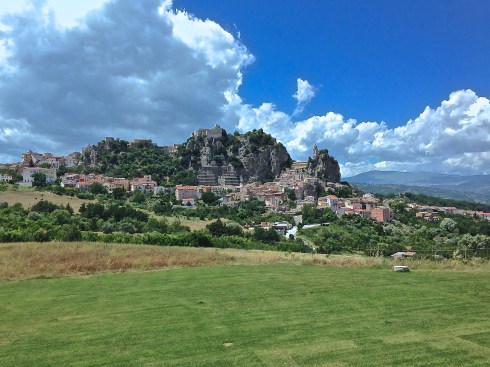
After our wonderful visit to Pietrabbondante, we headed to Bagnoli dei Trigno where the hotel was located, a town close as the crow flies, but about 30 minutes by car as we had to head down one “hill” and up another. Len said it was the curviest road he had ever been on, one switchback after another.

Finally we came to an intersection: Bagnoli dei Trigno was one direction, and the Domus Hotel another. Since this was our hotel, we headed left, followed the road around a large curve looking for a tiny hotel, and came upon this…

blogginginitaly.com

blogginginitaly.com

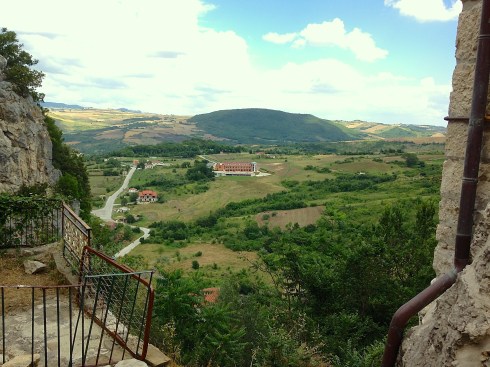
and even better, this incredible view!

blogginginitaly.com

blogginginitaly.com

It turns out our hotel is a medical/sports/health spa, large, lovely, very clean and only three years old. Interestingly, there was only one other hotel guest that night, but it was a Monday.

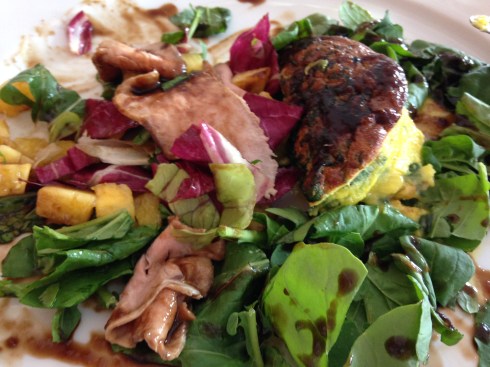
We were hungry after a long morning in Pietrabbondante and they were more than happy to prepare lunch for us. This is a vegetable flan on one side and suckling pig on the other…I forgot to take a photo before Len and I split it, but you get the idea…fresh and delicious, and prepared only when ordered.

blogginginitaly.com

blogginginitaly.com

After lunch, we strolled around the property, sat in the sun, and marveled at the view.

blogginginitaly.com

blogginginitaly.com

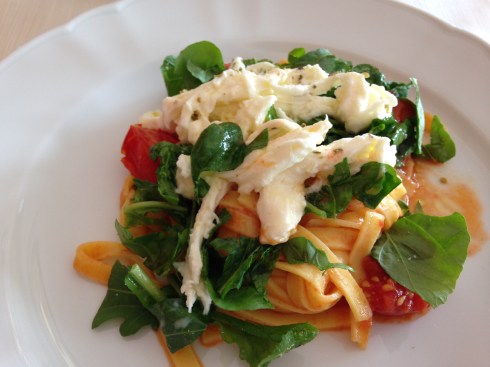
I also had a massage, and why not since this was a health spa. For dinner, we enjoyed their homemade pasta with local tomatoes and fresh mozzarella from the region.

blogginginitaly.com

blogginginitaly.com

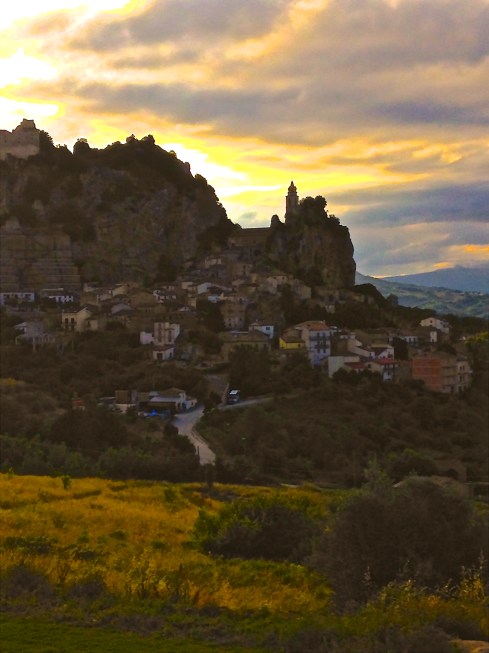
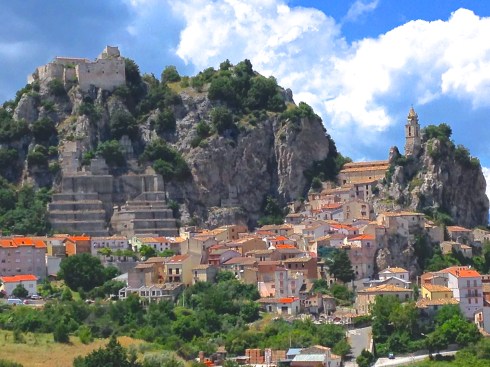
I don’t really know much about the town of Bagnoli dei Trigno except that as of the end of 2004, it had a population of about 850 living in fourteen square miles. What I do know is that from the hotel, it is a sight to behold, especially from our vantage point at sunset.

blogginginitaly.com

blogginginitaly.com

blogginginitaly.com

blogginginitaly.com

blogginginitaly.com

blogginginitaly.com

blogginginitaly.com

blogginginitaly.com

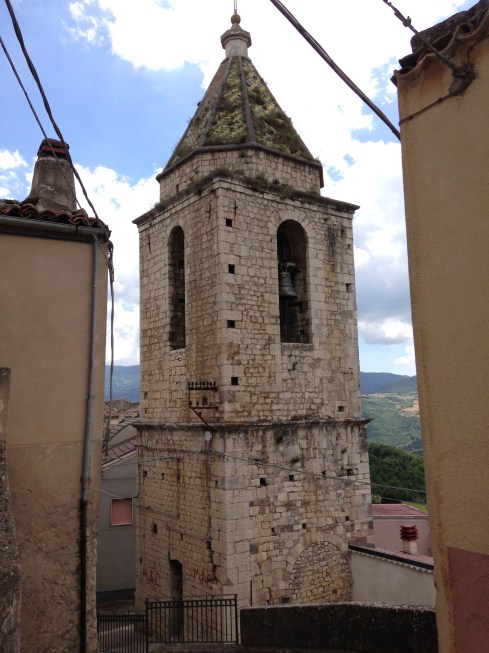
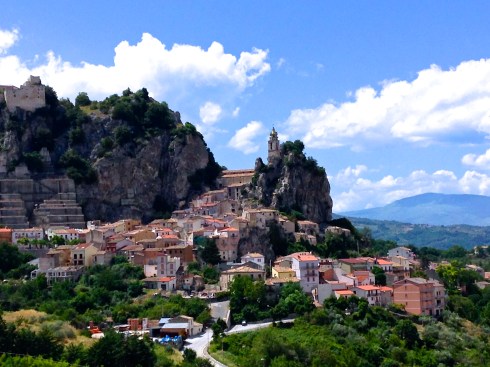
The next day, we visited the town of Bagnoli. The few people we spoke to were very friendly and a nice man even opened his market/bar/cafe to make us fresh paninis. The newer part of the city is at the base, with the ancient part still somewhat inhabited. We were told that the Lombards built the castle at the top, although it was closed for reconstruction so we weren’t able to get near. What we did find was a very quiet ancient city, actually much lovelier from a distance.

blogginginitaly.com

blogginginitaly.com

blogginginitaly.com

blogginginitaly.com

blogginginitaly.com

blogginginitaly.com

blogginginitaly.com

blogginginitaly.com

This is a view looking at our hotel (center) from the top of the ancient town.

blogginginitaly.com

blogginginitaly.com

At night, our hotel put on its own light show.

blogginginitaly.com

blogginginitaly.com

blogginginitaly.com

blogginginitaly.com

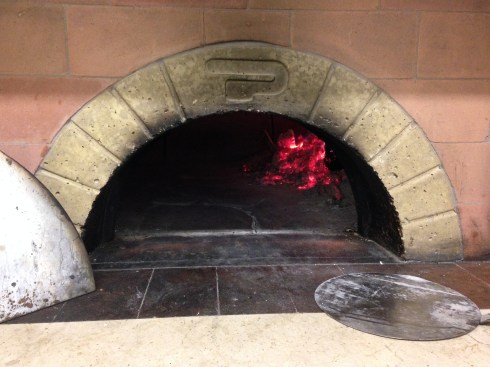
Per their brochure, Domus offers dancing under the stars as well as concerts on weekends. A perfect setting for sure! They even have a wood burning pizza oven which is large enough for seven pizzas at once.

blogginginitaly.com

blogginginitaly.com

Such a pleasant surprise and an incredibly relaxing stay in a tiny hill top town. As we left Bagnoli, we couldn’t help but look once more at the vista we will long remember.

blogginginitaly.com

blogginginitaly.com

Ciao,

Judy


Cortona Liberazione

6 Jul

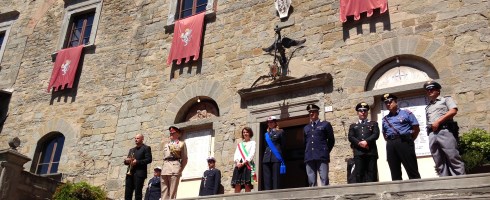
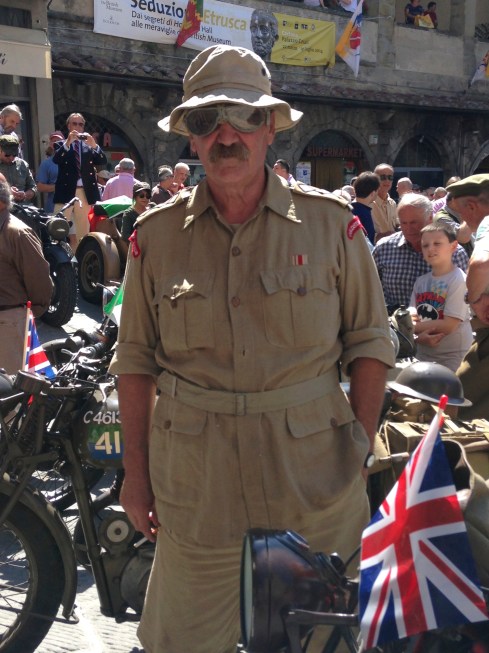
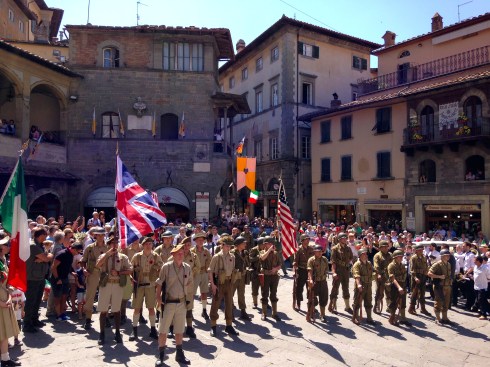
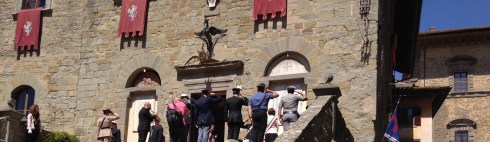
Today in Cortona, the locals celebrated 70 years since the liberation of their city in 1944.

With proud veterans

blogginginitaly.com

blogginginitaly.com

blogginginitaly.com

blogginginitaly.com

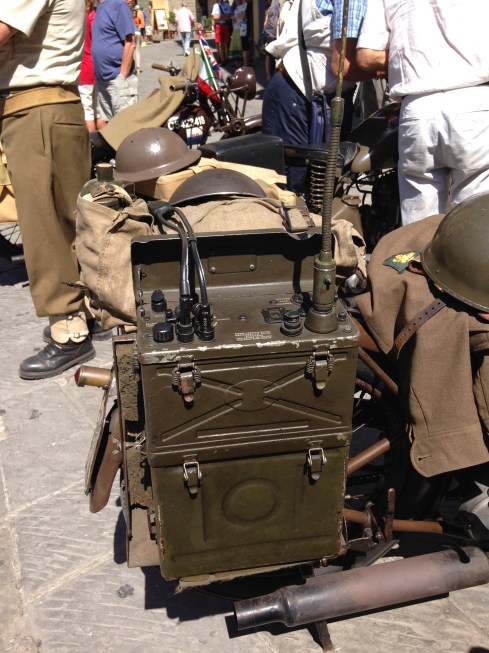
and original military vehicles and equipment,

blogginginitaly.com

blogginginitaly.com

blogginginitaly.com

blogginginitaly.com

blogginginitaly.com

blogginginitaly.com

blogginginitaly.com

blogginginitaly.com

Italians and members of the Great Generation Airborne Group (dressed as British and American soldiers), stood at attention

blogginginitaly.com

blogginginitaly.com

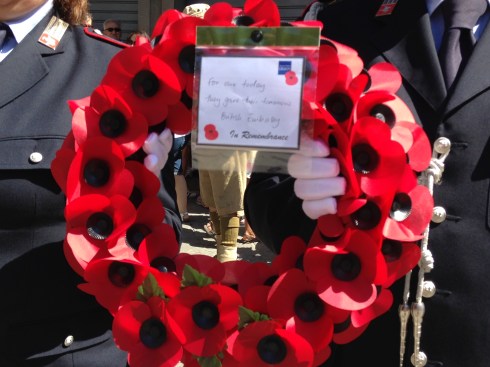
as a wreath was laid.

blogginginitaly.com

blogginginitaly.com

Songs were sung and people joined in the parade

blogginginitaly

blogginginitaly.com

blogginginitaly.com

blogginginitaly.com

vowing never to forget those who served and liberated their ancient and lovely town.

blogginginitaly.com

blogginginitaly.com

Ciao,

Judy

Through His Words and Now Mine: Pietrabbondante!

3 Jul

Reflections From and About My Grandfather
Alexander Capraro, Architect

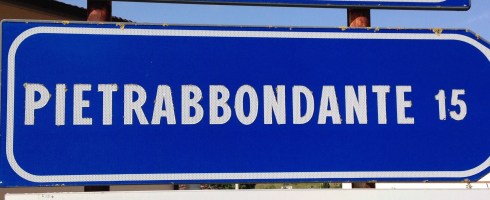
At long last, our journey is realized – we find Pietrabbondante.

76 years, 10 months and 10 days after Alex returned to his birthplace, so too did Len and I, being the first and only ancestors after Alex, we think, to step foot in this town of his birth.

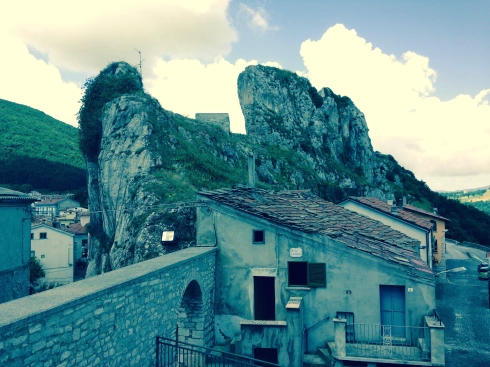
The town’s name comes from pietra, meaning stone, and abbondante, meaning abundance, hence Pietrabbondante. And there certainly is an abundance of stone in the area.
IMG_2677

Pietrabbondante – blogginginitaly.com

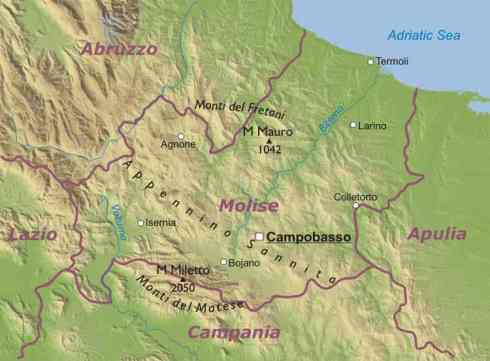
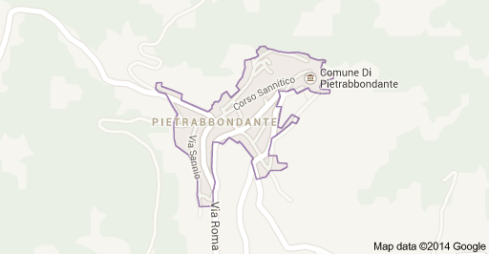
When Alex was born, Pietrabbondante was in Abruzzo, but with redistricting (a la US politics), it is now part of Molise. On the map below, Pietra is between Agnone and Isernia, in the Apennine Mountain range.
molise

In 1895, when Alex was born, there were about 4000 residents in Pietrabbondante. Today, there are less than 800.

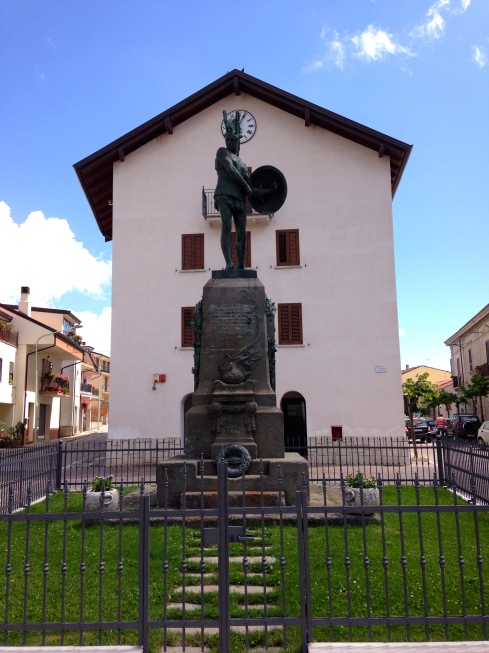
As soon as we arrived in the main square, the few people around greeted us kindly, but knew instantly we were visitors. This definitely isn’t a town with a tourist issue. The main square has a beautiful war memorial like so many we see throughout Italy, dedicated to the soldiers who died defending their country and towns.
blogginginitaly.com

blogginginitaly.com

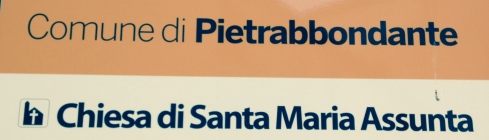
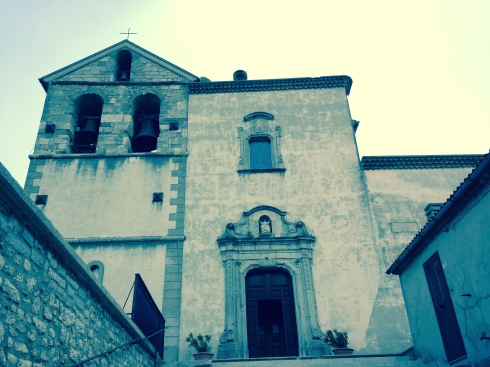
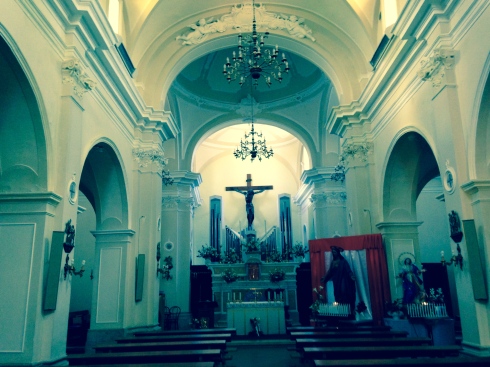
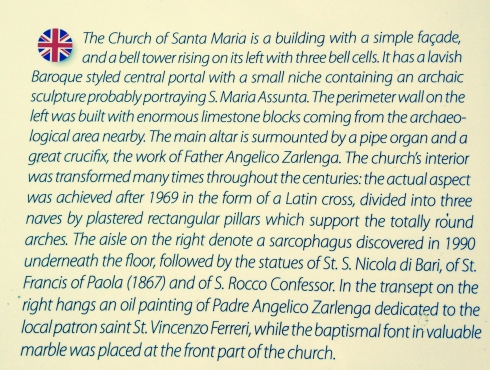
We made our way to the church my grandfather described in his last letter and easily found it at the end of the main street.
blogginginitaly.com
blogginginitaly.com

blogginginitaly.com

blogginginitaly.com

This is where my great-grandparents, Emerenziana Vitullo and Vincenzo Iacapraro were married and where their first-born son Alex was baptized.
blogginginitaly.com
blogginginitaly.com

blogginginitaly.com

Next stop was the Municipal building. Armed with Alex’s parents’ birth records, we were eventually united with the vice mayor (vice sindaco), Michele Zullo. When I told him I was hoping to find Alex’s parents’ house, he shook his head saying that without an address, it would be difficult to find. The mayor did not know any Iacapraros, but said there were many Vitullos still in town, so we decided to search for those records.

Forget computers – this is an efficient manual process. We experienced this once before, years ago, when we went to Calabria to find Len’s ancestors.

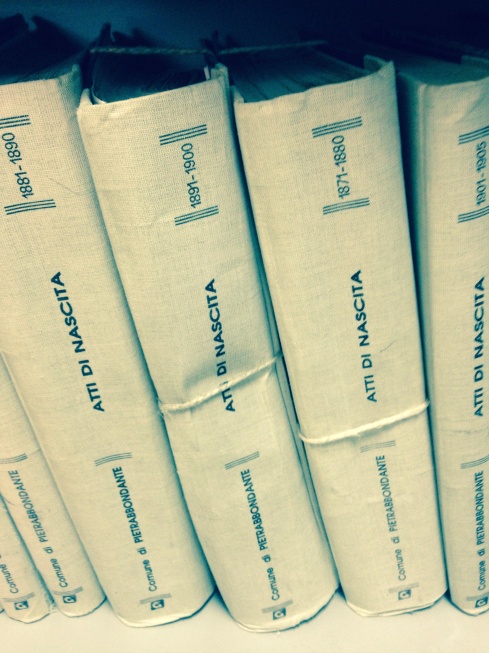
First, find the book with the right year span. Check.
blogginginitaly.com

blogginginitaly.com

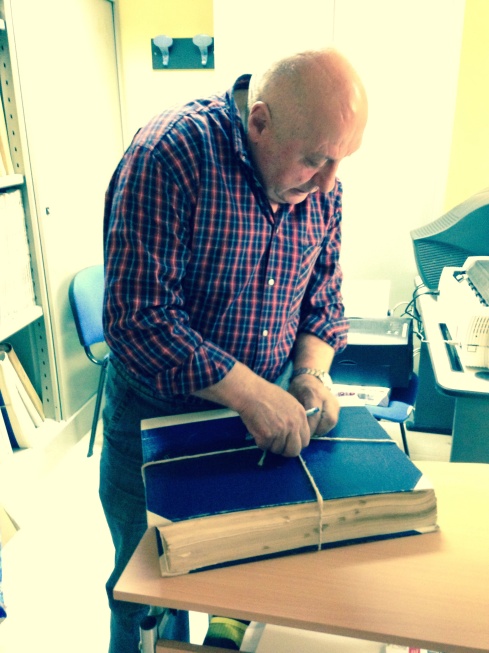
Next, cut the twine as the book hasn’t been opened in years! Check.
blogginginitaly.com

blogginginitaly.com

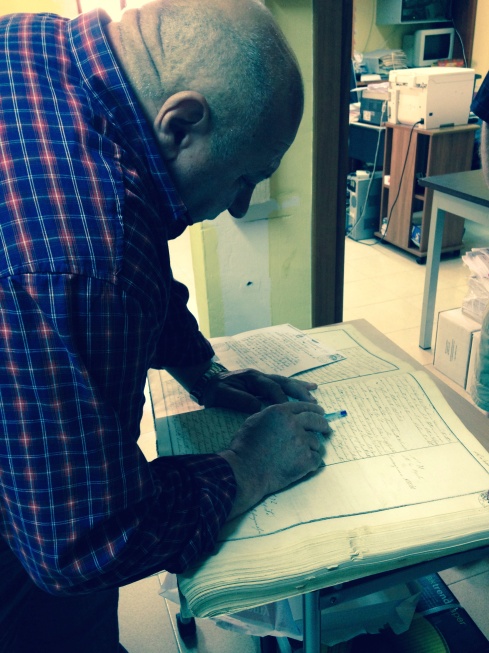
Then, search for the date of birth in 1873. Check.
blogginginitaly.com

blogginginitaly.com

And just like that – Alex’s mother’s name and records.
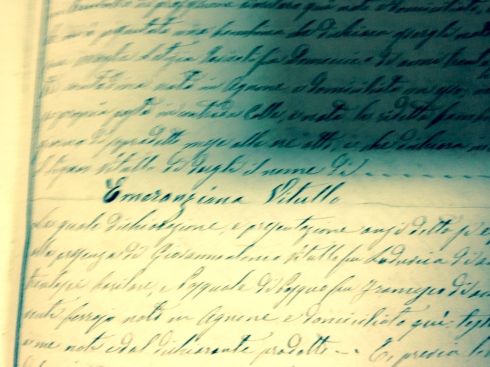
Emerenziana Vitullo blogginginitaly.com

Emerenziana Vitullo – blogginginitaly.com

The mayor patiently reads the page and suddenly says he knows the house. He tries to explain where it is, but then decides to walk us there himself. I can hardly believe this is about to happen!

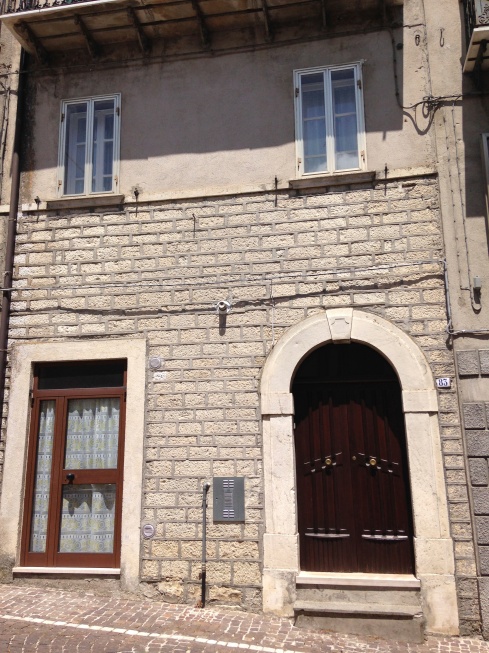
We walk for about five minutes, when he stops abruptly… “Guarda, questa è la vostra casa!” (Look, this is your house!) he proudly proclaims in Italian.
blogginginitaly.com

blogginginitaly.com

And there it is – right on the main street, 83 Corso Sannitico.
data=VLHX1wd2Cgu8wR6jwyh-km8JBWAkEzU4,7oGgtJuaglUFIfuiddSlrSqhBd-EIWrxzPt07pVZeGZZyeC0GIJHYYEEfzKtNngKbVU5ZmcPOy0tTSrkN_WZXhpVLNs81TLexDwlchdDMm0YJO7AON4sBMC8oqhMsWmXOVgJOxpVWMLjAcA9i7DOyeIVfx2PLwQLX4YiE2IQrPSUu_qkl3GVhG-D-IEShmdVw6A8xiML

Time for photos.

blogginginitaly.com
blogginginitaly.com

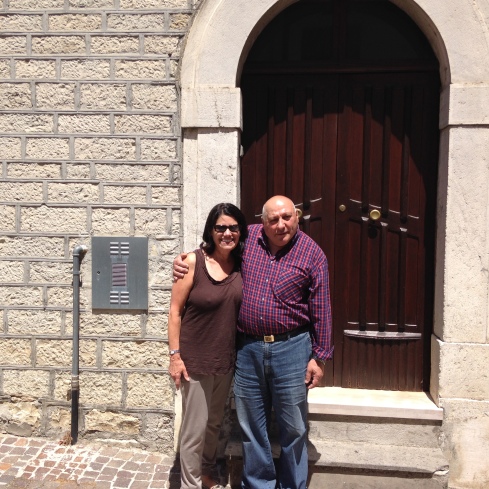
Vie Sindaco e Judy blogginginitaly.com

Vice Sindaco Michele Zullo and Judy – blogginginitaly.com

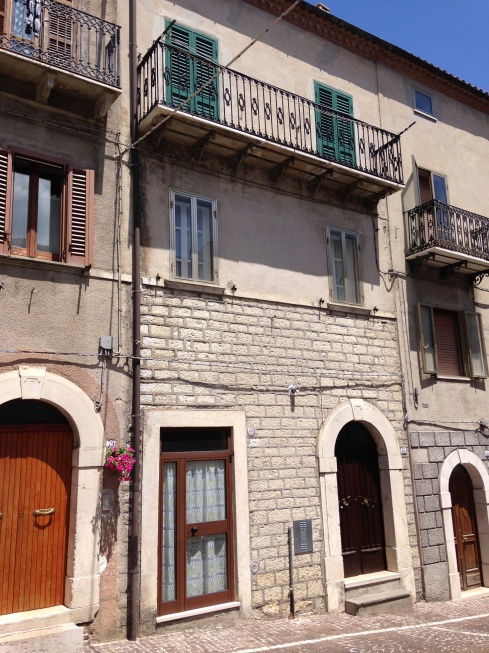
Michele explains that there had been a little shop or bar on the fist floor, hence the door on the left with curtains.
blogginginitaly.com

blogginginitaly.com

Amazing! Mission accomplished.

We talked, hugged and kissed arrivederci, then thanked Michele for his genuine hospitality.

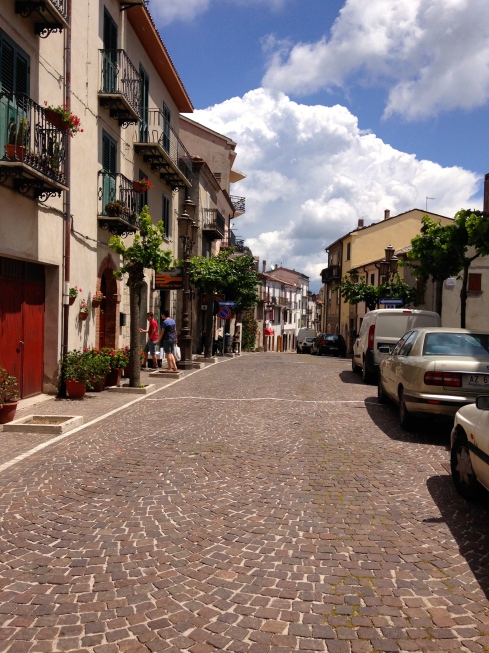
Then Len and I stopped to imagine Alex running up and down this lovely street until age four…
blogginginitaly.com

blogginginitaly.com

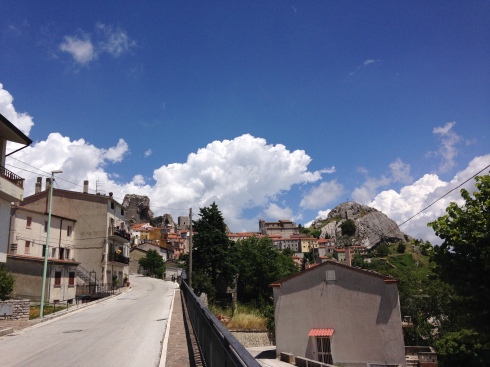
and couldn’t help but wonder why his parents decided to leave Pietrabbondante and their ties behind. What caused them to seek a new life in America, so very different and so very far away?
blogginginitaly.com
blogginginitaly.com

blogginginitaly.com

blogginginitaly.com

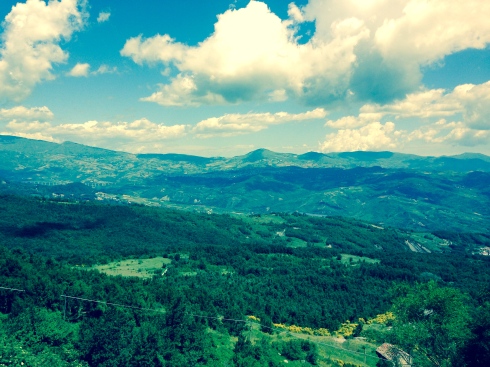
How did this young family manage, in 1899, to get from this town, high in the mountains, to the harbors in Napoli, where they would have boarded a ship destined to a land unknown?

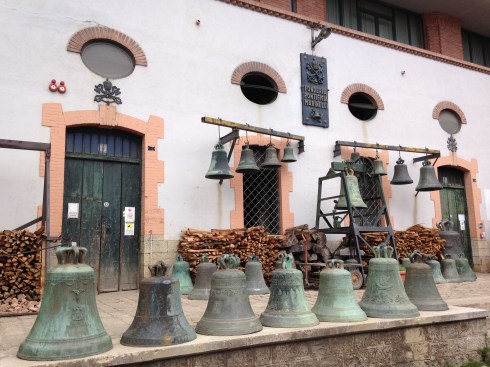
Talk about courage. Whatever they envisioned, never could they have imagined that one day, their four-year old Alex would become the first licensed Italian American architect in the state of Illinois.
There is much more to Alex’s story, but for the next month or so, I will relish in this encounter with my ancestral origins and just smile.

To Alex, my grandfather, thank you for your incredible letters and for the history and insights that led us to your roots, as well as ours. And to Aunt Marion, and all of Alex’s descendants, a bit of history we can now cherish forever, and as Alex did so well, continue to pass on for generations to come.

Salute!

Ciao,

Judy

Making Cheese with Lapo

28 Jun

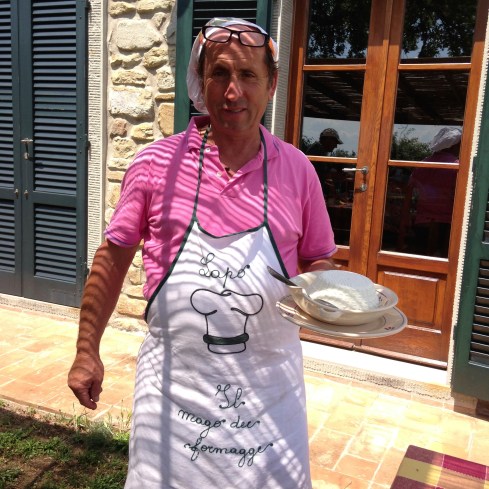
One day pasta, the next day cheese. What could be better than learning from two experts? My latest lesson: pecorino and ricotta.

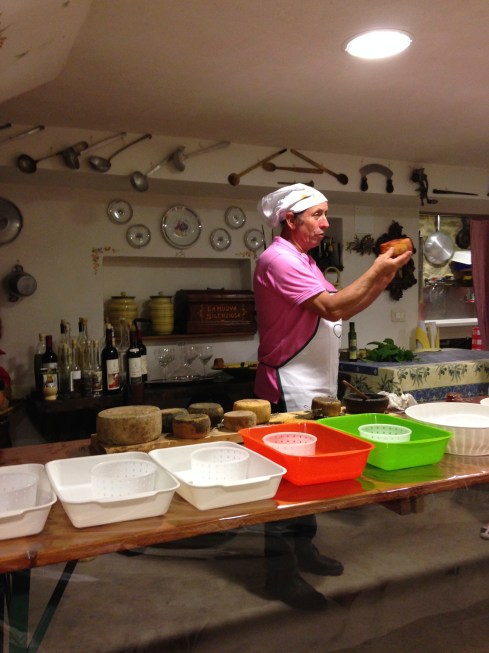
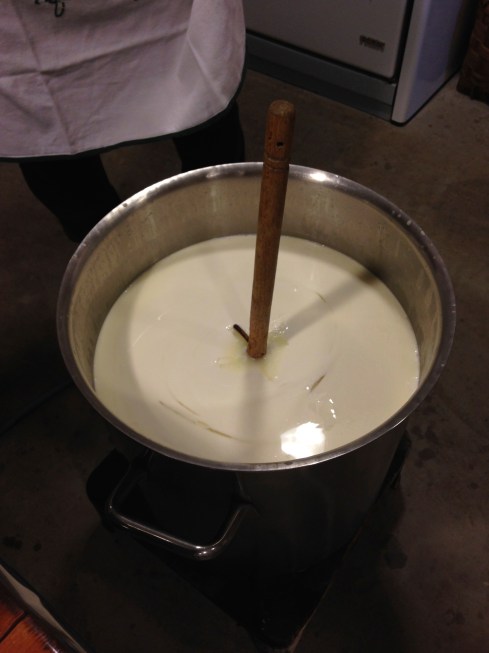
Lapo began by explaining the process. The milk is fresh from their sheep and needs to be heated carefully.

blogginginitaly.com

blogginginitaly.com

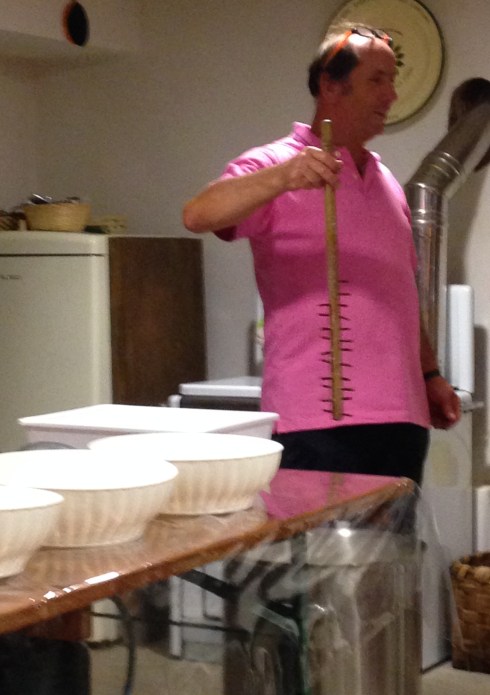
There is a special utensil used to stir the milk and cause the cheese bulk to form.

blogginginitaly.com

blogginginitaly.com

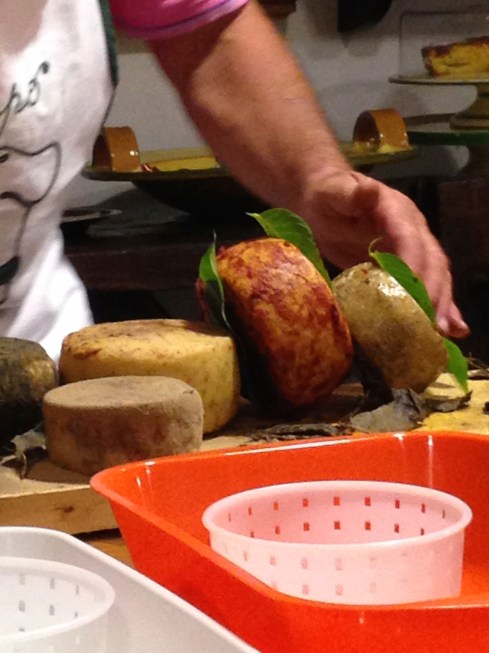
An expert like Lapo doesn’t need a thermometer to know when it’s ready – instead, it’s all done by touch. In the meantime, while the milk is heating, he explains how they coat cheese before storing it. He demonstrates two methods – one using ash from the previous night’s grilling with added olive oil and the second from a tomato like paste made from his garden.

blogginginitaly.com

blogginginitaly.com

IMG_2529

The rounds are then stacked on their sides to allow air to circulate between them and are separated with walnut leaves, which impart a slight flavor.

blogginginitaly.com

blogginginitaly.com

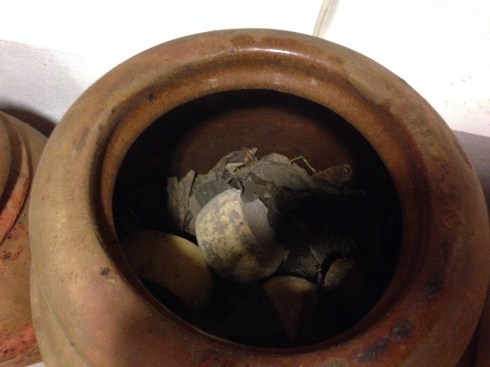
He shows us some storage barrels, one with hay and one with the dried walnut leaves. The first is from 1798. If you look closely at the second, you can see the rounds of cheese in them.

blogginginitaly.com

blogginginitaly.com

blogginginitaly.com

blogginginitaly.com

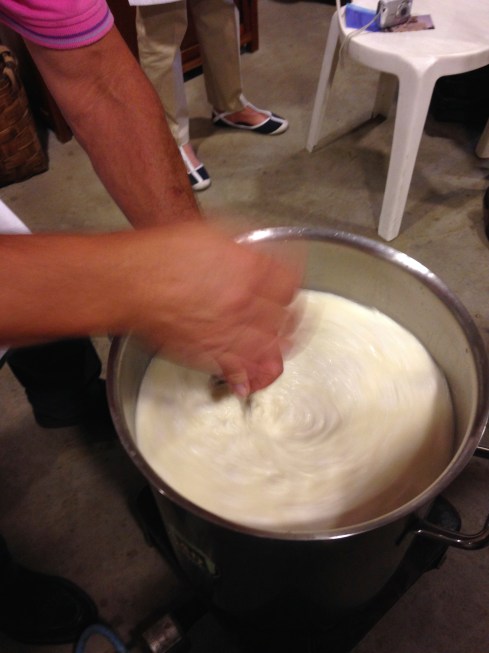
Lapo knows the milk has reached the proper temperature when the tool stands upright unsupported.

blogginginitaly.com

blogginginitaly.com

Then the twirling action begins… fast and precise…

blogginginitaly.com

blogginginitaly.com

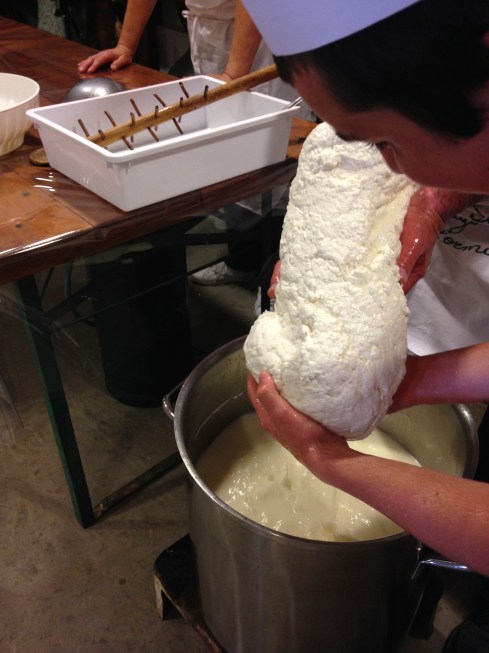
until the liquid separates from the cheese.

blogginginitaly.com

blogginginitaly.com

We sample the cheese at this point and it is somewhat rubbery, a bit sweet, and without much taste.

blogginginitaly.com

blogginginitaly.com

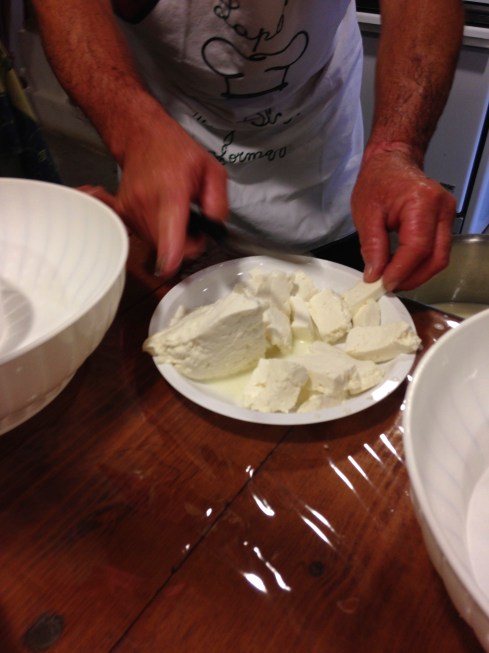
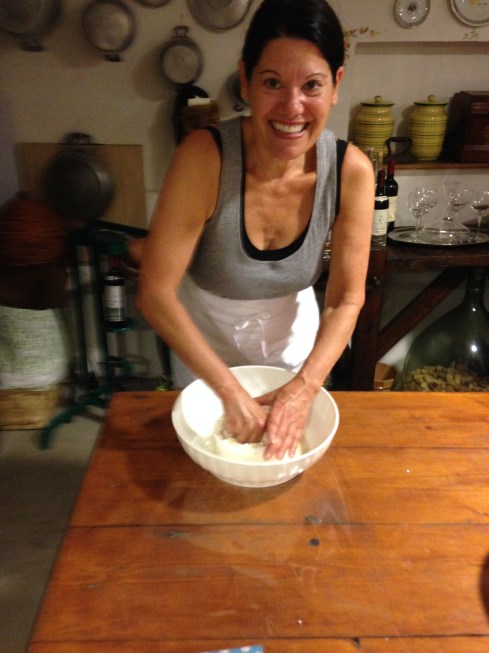
Thus far, Lapo is doing all the work, but now it is our turn to get involved. We are each given a portion of cheese and per instructions, are to hold and pinch the cheese carefully, slowly eliminating water from the cheese. Thanks, Carrol, for the great photos that follow.

blogginginitaly.com

blogginginitaly.com

blogginginitaly.com

blogginginitaly.com

This is actually harder than it sounds, as it requires much patience and pressure from only fingers. When my fingers start to hurt, I use my palms, but alas, the master catches me in the act, so back to finger pinching for me.

blogginginitaly.com

blogginginitaly.com

When Lapo is satisfied we have pushed out sufficient water, we empty our bowls for the next step.

blogginginitaly.com

blogginginitaly.com

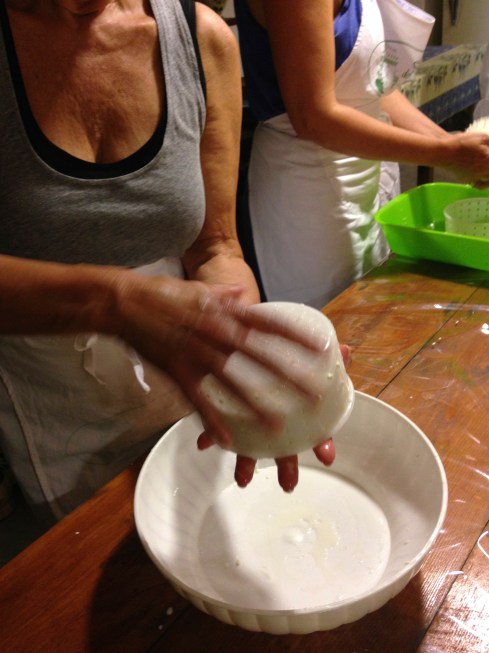
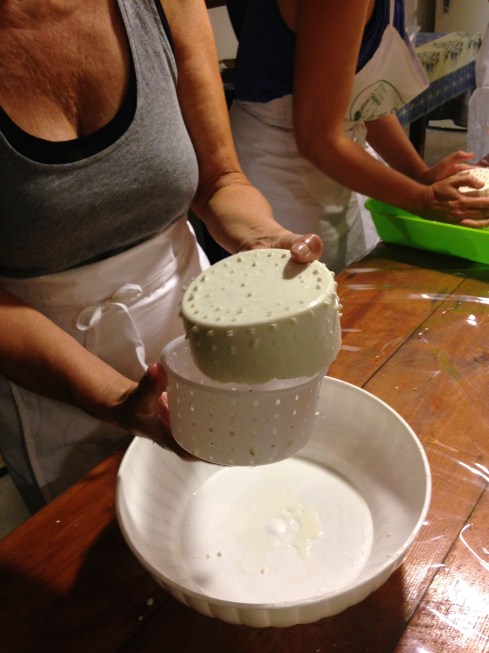
Time to turn the cheese over…

blogginginitaly.com

blogginginitaly.com

blogginginitaly.com

blogginginitaly.com

blogginginitaly.com

blogginginitaly.com

blogginginitaly.com

blogginginitaly.com

Now we push, not pinch, with outstretched fingers.

blogginginitaly.com

blogginginitaly.com

Lapo is not only watching us, but touching our hands to ensure they are warm from our body heat. Cold hands are not good for making cheese, and he announces that our hands passed…we are all about the same proper temperature.

After several rounds of pressing, my cheese begins to have a nice fragrance, so I give my friend Larry a whiff.

blogginginitaly.com

blogginginitaly.com

This is the fruit of our efforts!

blogginginitaly.com

blogginginitaly.com

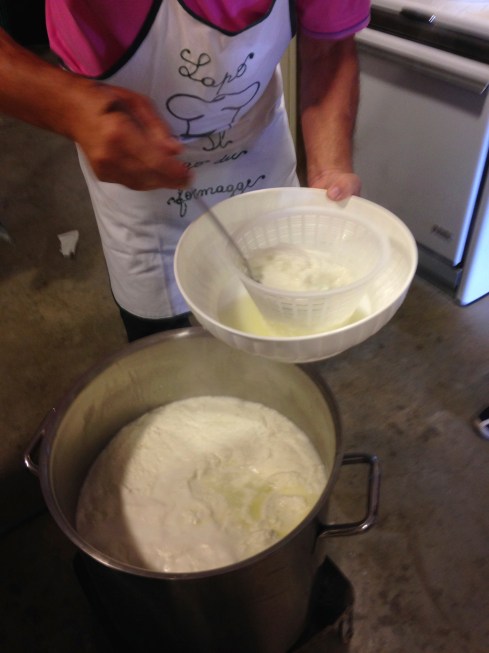
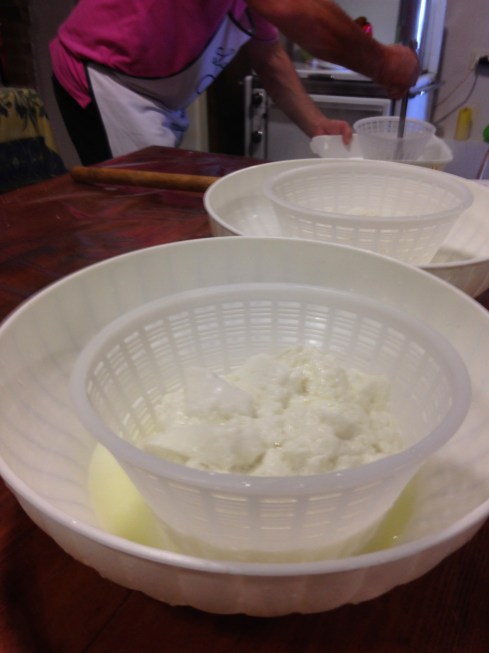
In keeping with the tradition of using everything, Lapo takes the milky water we have pushed from our cheese and begins making ricotta. The liquid is carefully poured through a strainer to remove any clumps which would burn in the reheating.

blogginginitaly.com

blogginginitaly.com

And then it is recooked, hence ricotta, until it reaches the proper consistency.

blogginginitaly.com

blogginginitaly.com

blogginginitaly.com

blogginginitaly.com

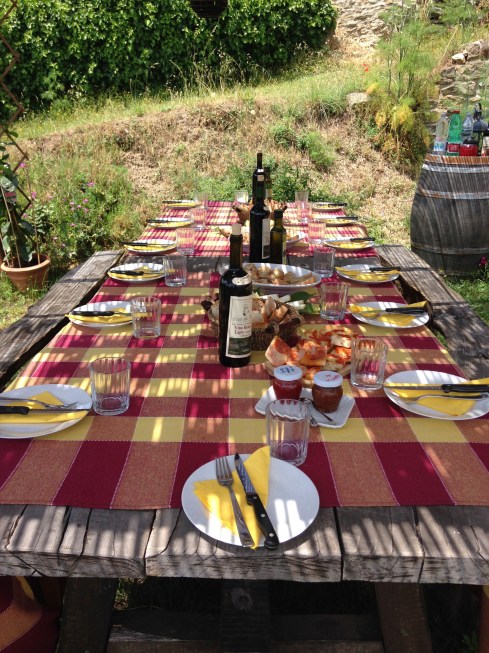
As a reward for our hard work, Paola has prepared a lovely lunch on the veranda.

blogginginitaly.com

blogginginitaly.com

First, samples of young and aged pecorino with toasted bread, small sausage bites with olives, and the class is very happy!

blogginginitaly.com

blogginginitaly.com

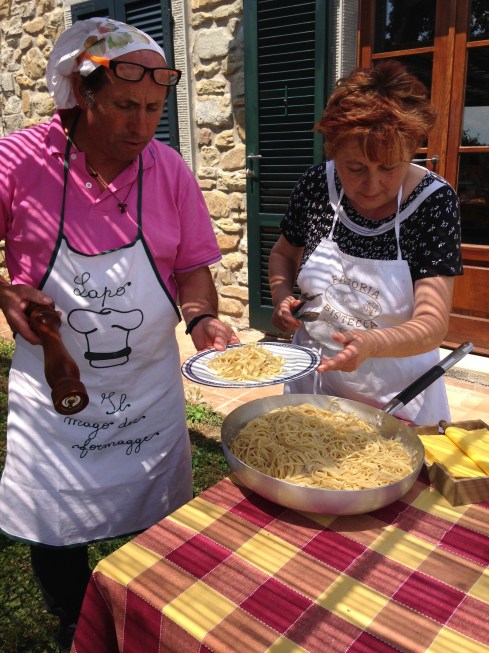
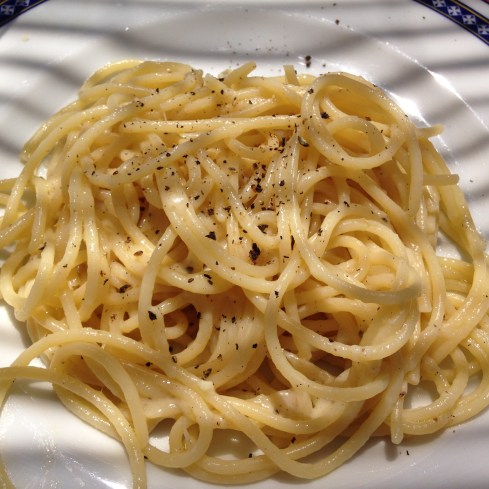
Then Paola treats us to Cace e Pepe, a simple pasta made with pecorino, parmegiano, and pepper.

blogginginitaly.com

blogginginitaly.com

blogginginitaly.com

blogginginitaly.com

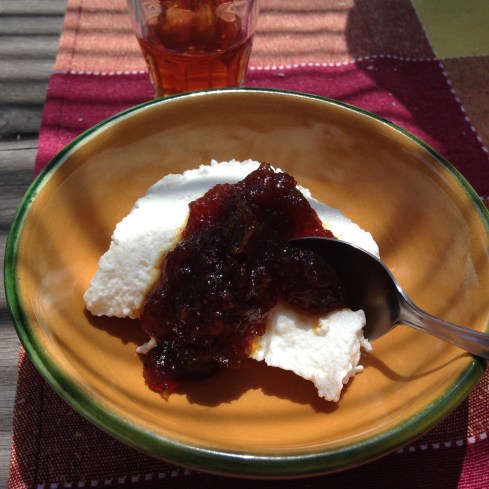
Finally, we are treated with the ricotta made in class, topped with fig jam. Delicious.

blogginginitaly.com

blogginginitaly.com

blogginginitaly.com

blogginginitaly.com

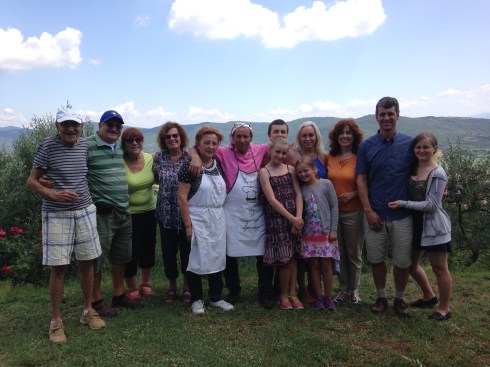
Quite full, and content with our work, I get the class to pose for a photo reminder of the great day!

blogginginitaly.com

blogginginitaly.com

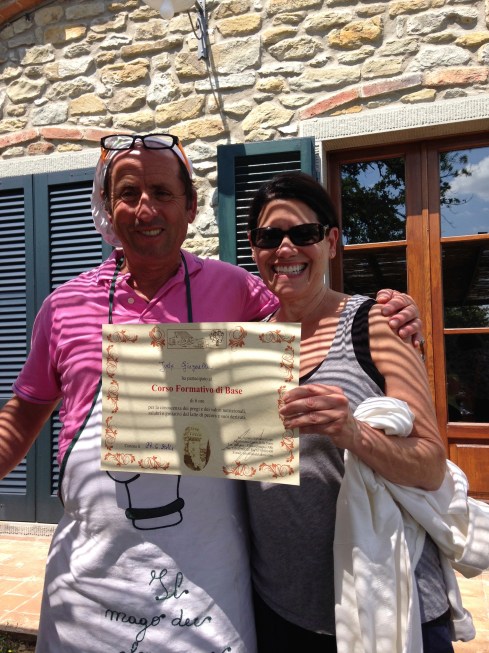
Our pecorino won’t be ready for about 10 weeks, but in the meantime, we each have a certificate to remind us of what we learned. Here’s a sample of Lapo’s Lessons:

1. Nothing can replace passion and dedication when it comes to quality, and patience is paramount.

2. Everything from the garden is better.

3. Cheese is like your body; if your body is too cold or hot, the cheese is too cold or hot, so move it.

4. Share what you make with others.

blogginginitaly.com

blogginginitaly.com

Finally, before leaving, I had to snap a picture of the setting where I not only learned to make cheese but also experienced the love and passion of carrying on traditions from generation to generation.

blogginginitaly.com

blogginginitaly.com

Grazie Lapo e Paola!

Ciao,

Judy


Making Pasta with Paola

27 Jun

Last night, we were at Casale della Torre again for dinner with our friends Larry and Carrol. As usual, it was such a treat and always a learning experience with Lapo and Paola in the kitchen.

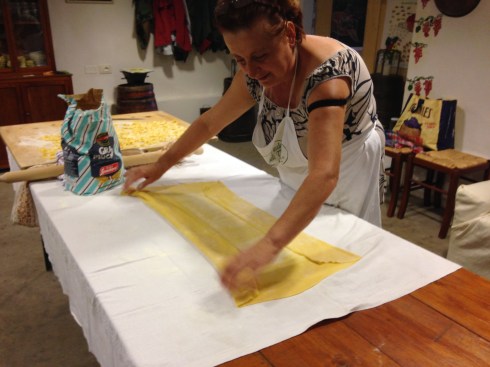
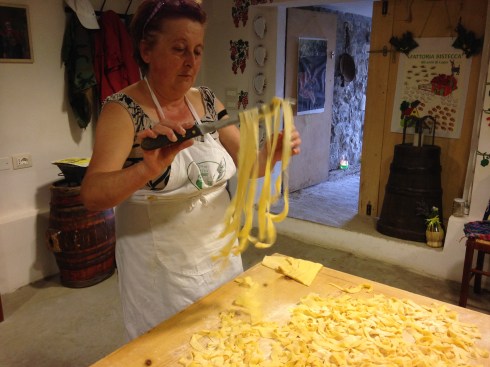
We arrived to find Paola making fresh pasta.

blogginginitaly.com

blogginginitaly.com

blogginginitaly.com

blogginginitaly.com

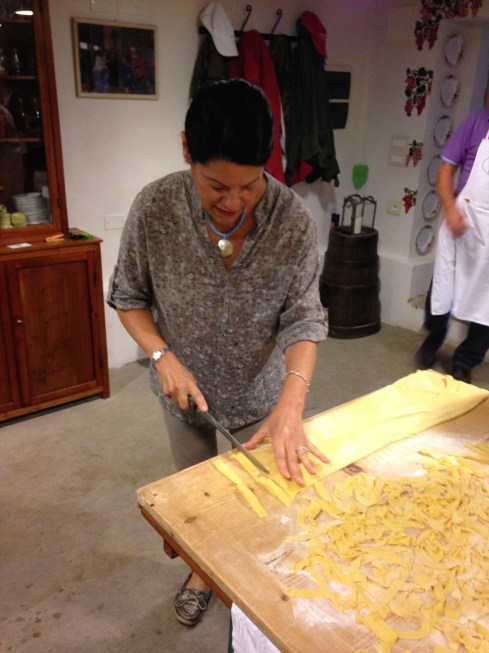
Naturally, I had to try this myself.

blogginginitaly.com

blogginginitaly.com

blogginginitaly.com

blogginginitaly.com

After a few tips, they said I passed. It was just to get me out of their way, I think.

IMG_2482

blogginginitaly.com

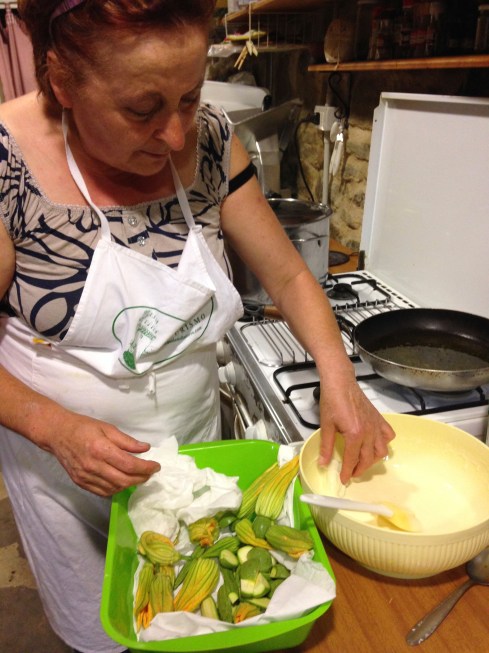
Next up, Paola’s fried veggies including zucchini flowers, zucchini, and onions, freshly picked from their garden.

blogginginitaly.com

IMG_2490

blogginginitaly.com

blogginginitaly.com

The men moved outside to enjoy the view and the Prosecco, and wait patiently for the appetizers to arrive. They were also in charge of grilling the sausage.

blogginginitaly.com

blogginginitaly.com

blogginginitaly.com

blogginginitaly.com

Meanwhile, Paola opened the treasure chest from the freezer…porcini mushrooms Lapo had found last fall, and had saved for Carrol and Larry’s arrival dinner. Such a treat for all of us.

Lapo's Porcini Find! - blogginginitaly.com

Lapo’s Porcini Find!

blogginginitaly.com

Frozen porcini sections – blogginginitaly.com

After appertivo on the veranda, we moved inside for dinner. Gustavo, a guest of Larry and Carrol’s, and the evening’s assistant chef, had requested Tripe. Yikes! But the men were all happy and said it was delicious. The ladies just looked on with eyebrows raised as the men enjoyed several servings.

blogginginitaly.com

blogginginitaly.com

Gustavo was very grateful!

blogginginitaly.com

blogginginitaly.com

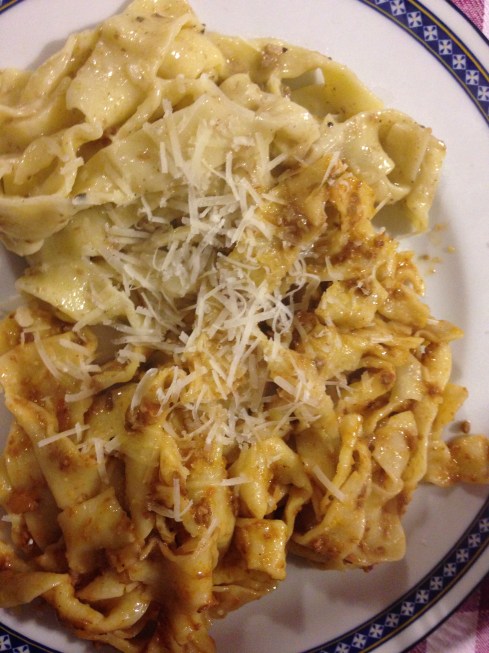
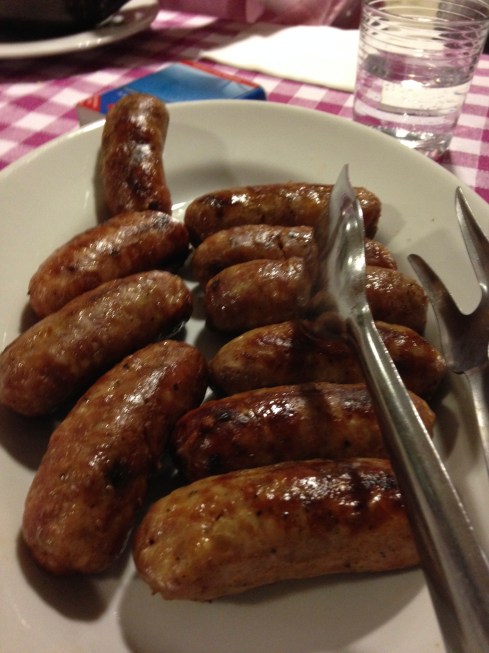
Next was two kinds of pasta – one with ragu of chianna beef, a Tuscan speciality, and the second with mushrooms. These were followed by a salad from the garden and the grilled sausage. Delicious.

IMG_2505

blogginginitaly.com

blogginginitaly.com

blogginginitaly.com

blogginginitaly.com

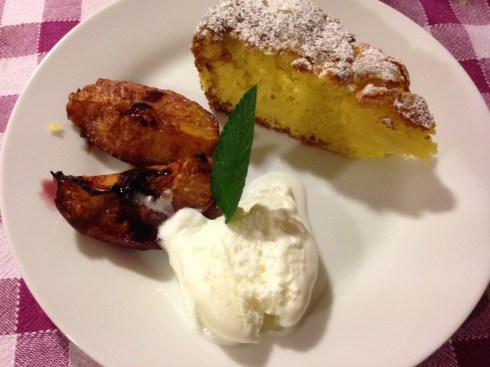
Finally, dessert – peaches marinated in Lapo’s red vino, vanilla gelato with mint sprig, and my hostess gift apple torta.

blogginginitaly.com

blogginginitaly.com

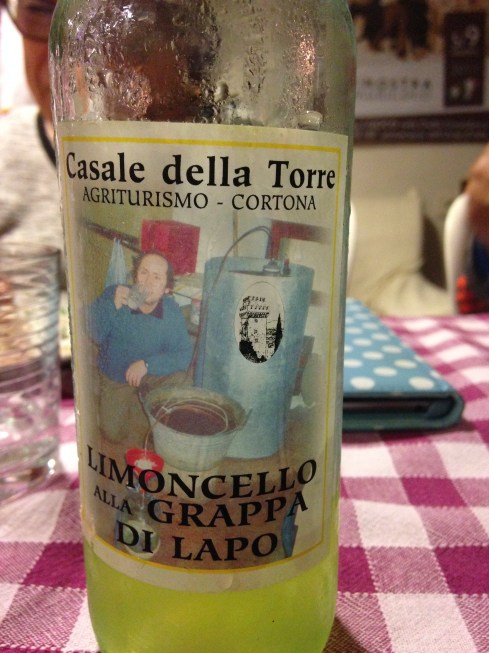
We quickly learned no evening is complete without a taste of Lapo’s homemade liquors.

blogginginitaly.com

blogginginitaly.com

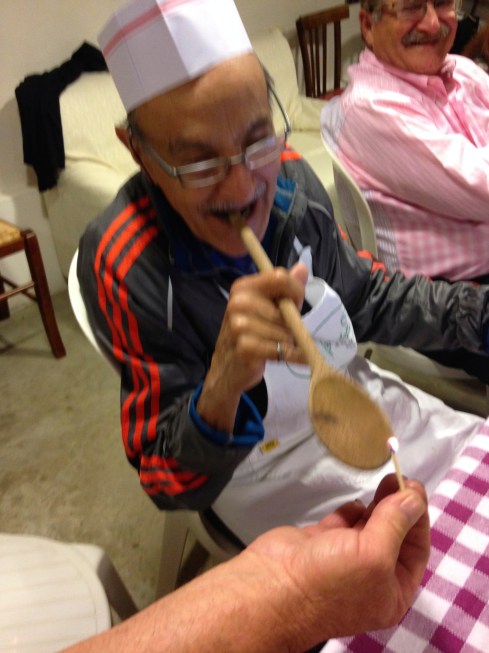
At the end of a very relaxing and fun evening, Lapo decided that Gustavo reminded him of Popeye. And why not – here is a man who, along with his brother, rode his bike from Mexico City to Toronto back in the 50s! Lacking a pipe, Lapo gave Gustavo a wooden spoon and actually lit it.

blogginginitaly.com

Before we left, Paola and Lapo invited us to make cheese with them the next day. Fresh pasta Thursday, cheese on Friday. My cup runneth over!

Ciao,

Judy