Archive | Italian History RSS feed for this section

Olive Harvest in Cortona

14 Oct

Olive harvesting for many in Italy is a family affair. Italian families love their gardens and harvest their olives, like their fruits and vegetables, for their own consumption. Their olives are usually harvested by hand, producing a better quality oil.

Ancient olive trees are among the heartiest of trees – they grow well in most soils and some have born fruit for centuries. The trees even retain their green leaves year round.

Although I have walked by them for years, yesterday I finally came face to face with the first trees I would pick.
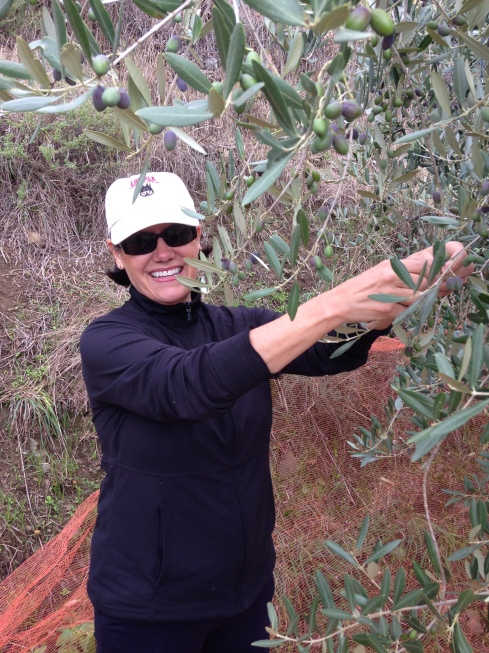
©Blogginginitaly.com

©Blogginginitaly.com

Our friends Massimo and Daniela, and their sons Niccolo and Edoardo, have about 14 trees that were ready for harvesting. With only a handful of pickers, this was a two-day project. Len picked both days,
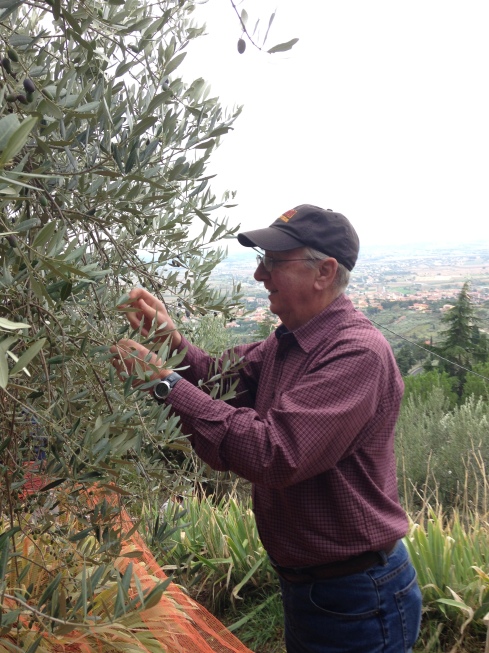
©Blogginginitaly.com

©Blogginginitaly.com

As did new friends Sandy and Rudy.
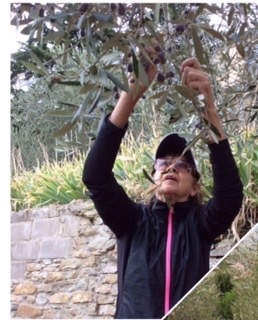
©Blogginginitaly.com

©Blogginginitaly.com

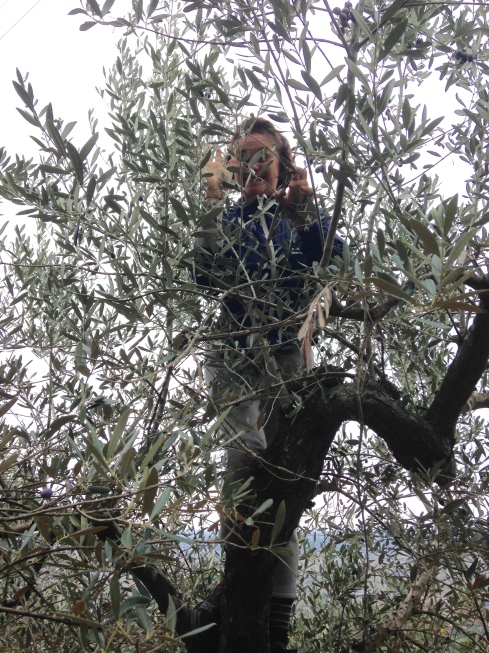
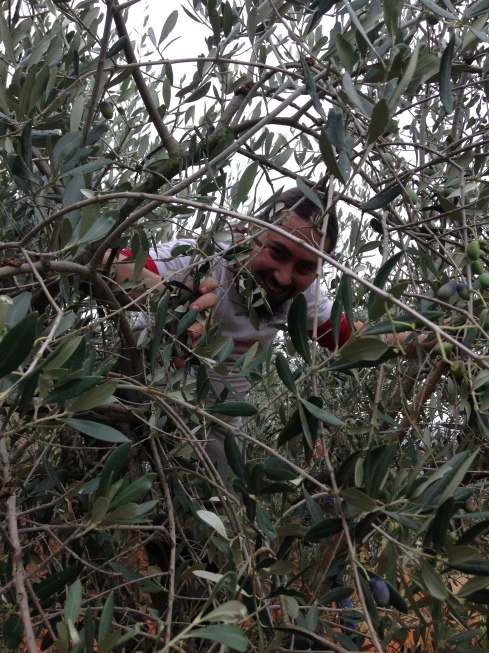
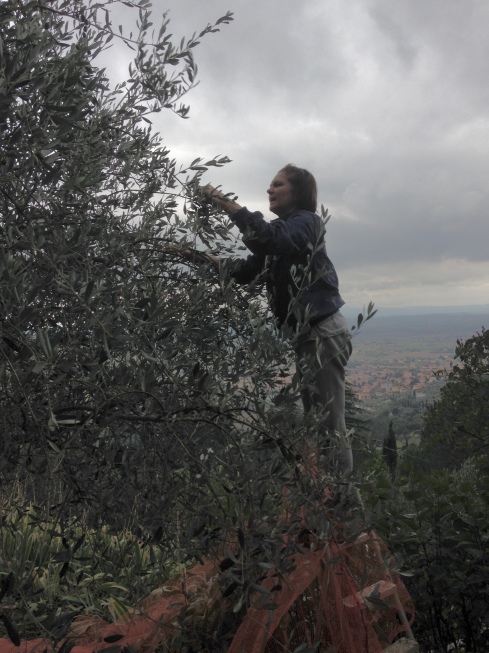
Picking olives is not difficult but it is time-consuming and at times back aching. Sometimes pickers are on ladders or up in the trees, carefully stripping the olives from upper branches,
©Blogginginitaly.com
©Blogginginitaly.com

©Blogginginitaly.com

©Blogginginitaly.com

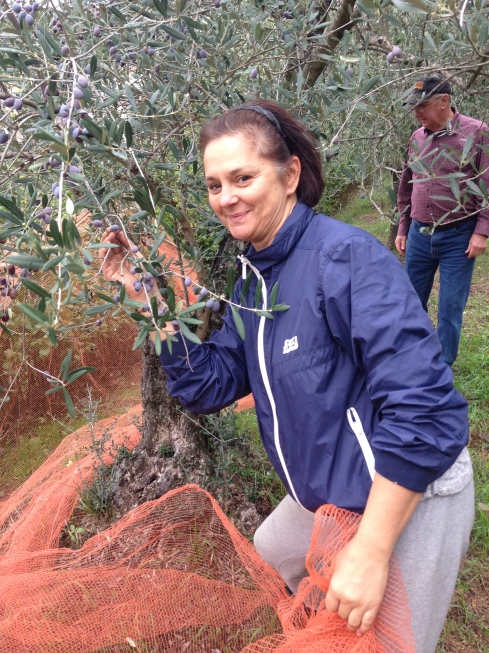
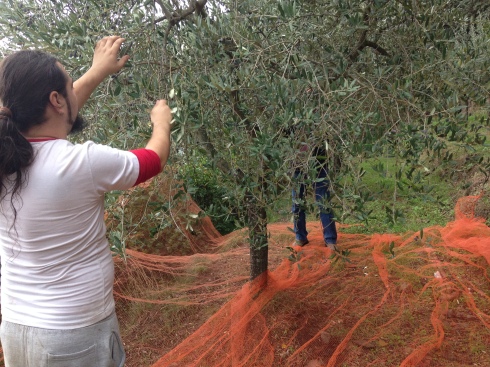
while other times they stand below, working branches at arms reach.
©Blogginginitaly.com
©Blogginginitaly.com

©Blogginginitaly.com

©Blogginginitaly.com

We placed long orange nets around each tree to collect the falling olives, being very careful not to step on them.
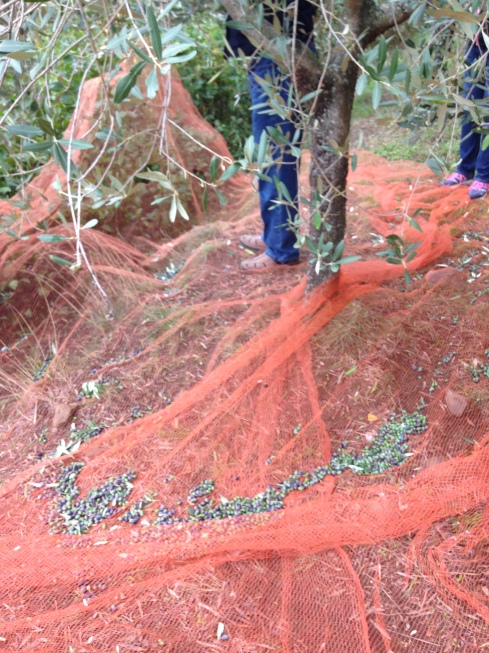
©Blogginginitaly.com

©Blogginginitaly.com

Sometimes, it seemed as though it was raining olives. A long plastic rake, called a pettina or manina, is used to reach tall parts or dense areas in the center of the tree. The tools are used to gently rake the olives off each branch, and as they fall to the net below, there is the sensation of raining olives. Here Rudy is demonstrating the technique.
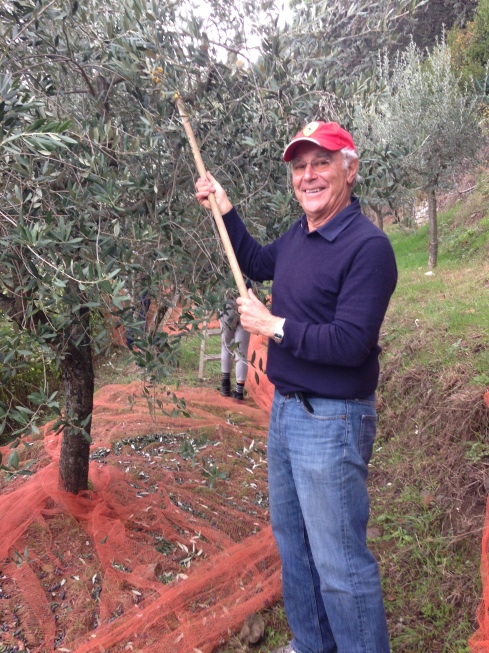
©Blogginginitaly.com

©Blogginginitaly.com

A few olives have a less direct path and may tap you on the head or shoulder on their way down, or even land in your shirt or pocket. I found a few after we got home.

When a tree was empty, the olives would be gently rolled up in the net and then placed in a bin.
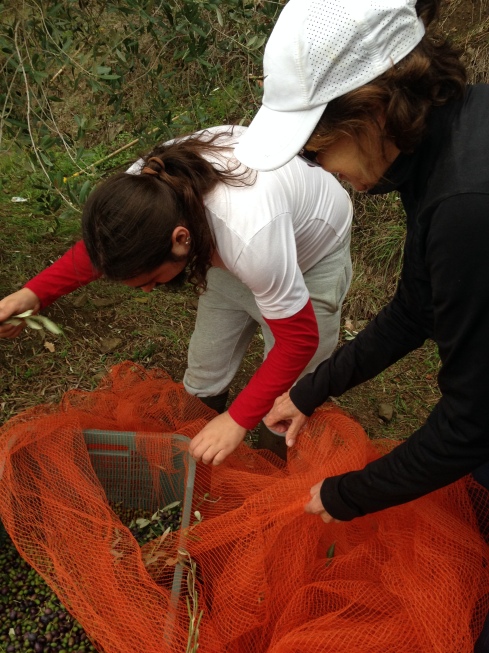
©Blogginginitaly.com

©Blogginginitaly.com

And off we’d go, moving the nets to the next tree. Usually 2-3 would work a tree together.
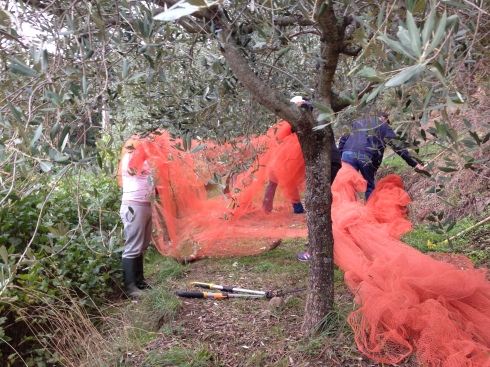
©Blogginginitaly.com

©Blogginginitaly.com

Weather is important because if it rains, the olives can rot before they are pressed. We were fortunate. Although the skies threatened, the rain held off and gave us the time we needed to finish picking.
©Blogginginitaly.com

©Blogginginitaly.com

Although some leaves naturally fall with the olives, seasoned olive pickers can pick olives with fewer leaves. We were all pretty careful, and tried to clean as we went along. I’m told a few leaves are fine as they impart a good taste.
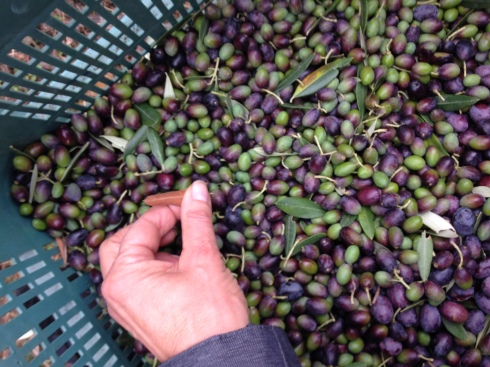
Although some leaves naturally fall with the olives, seasoned olive pickers can pick olives with fewer leaves. We were all pretty careful, and cleaned as we went along. I'm told a few leaves are fine as they impart a good taste. Here I am removing any stray leaves, and here is a penny tiny snail that was clinging to one of the leaves. Picked olives range in size and color; they can be green, purple, yellow or black, and they differ from tree to tree.
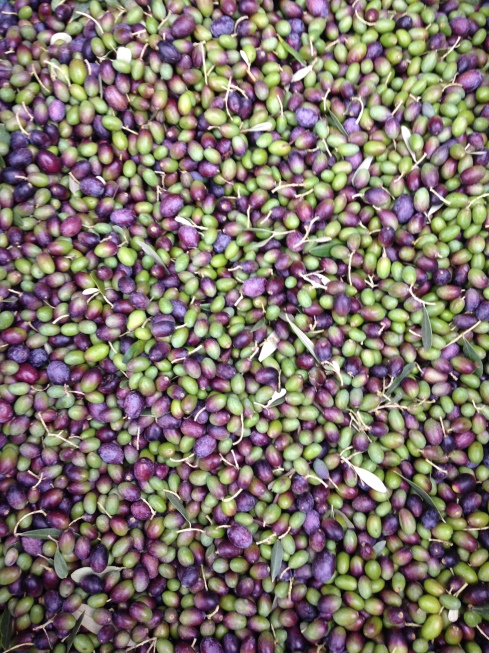
Picked olives range in size and color; they can be green, purple, yellow or black, and they differ from tree to tree.

©Blogginginitaly.com

©Blogginginitaly.com

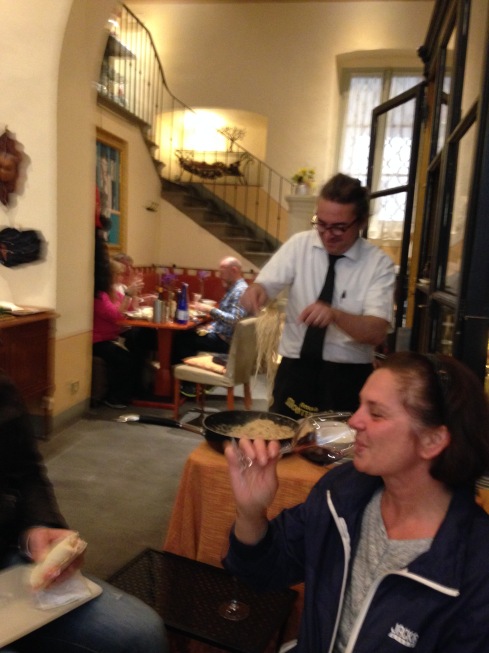
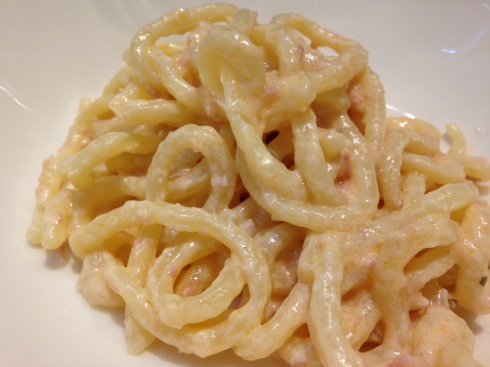
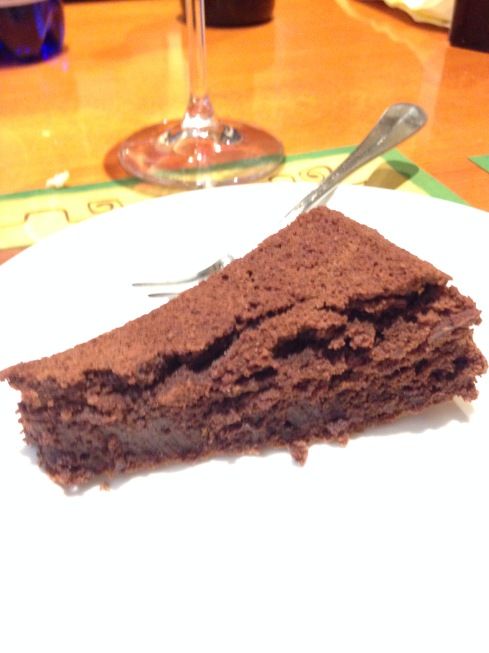
Naturally, no matter what they are doing, Italians always take time for pranzo, or lunch. I missed the incredible lunch served in the garden on Monday, but yesterday, Massimo served us a delicious lunch at Tuscher Caffe.
©Blogginginitaly.com
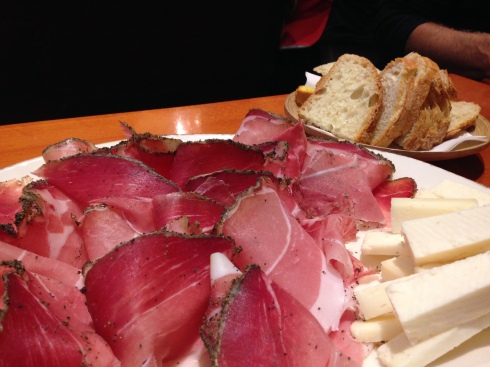
©Blogginginitaly.com
©Blogginginitaly.com

©Blogginginitaly.com

Pici al Fumo ©Blogginginitaly.com
Pici al Fumo ©Blogginginitaly.com

©Blogginginitaly.com

©Blogginginitaly.com

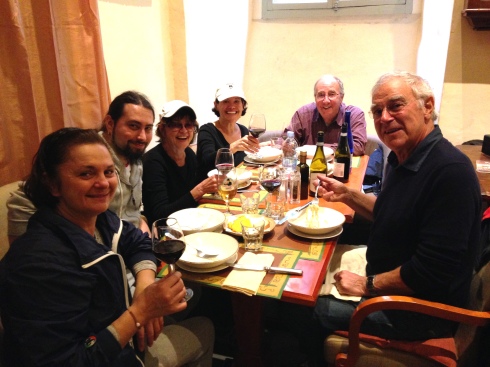
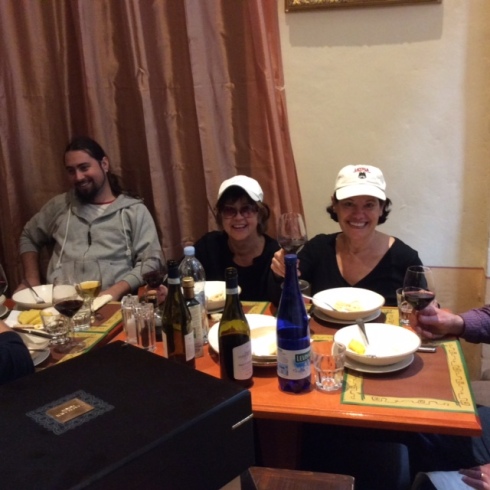
And here are some of the workers enjoying lunch:
©Blogginginitaly.com
©Blogginginitaly.com

©Blogginginitaly.com

©Blogginginitaly.com

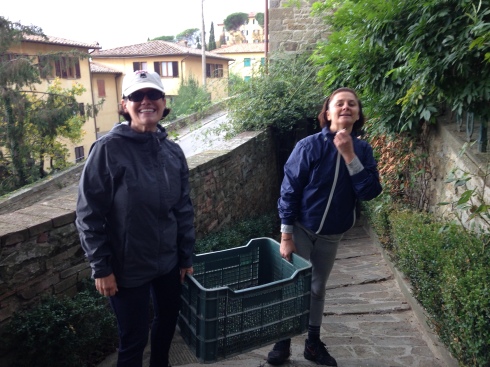
After lunch, Len and I returned with Daniela and Nicco for what we thought was one small last tree. However, there was still work to be done, as all the olives needed to be ready the next morning to take to the frantoia for pressing.

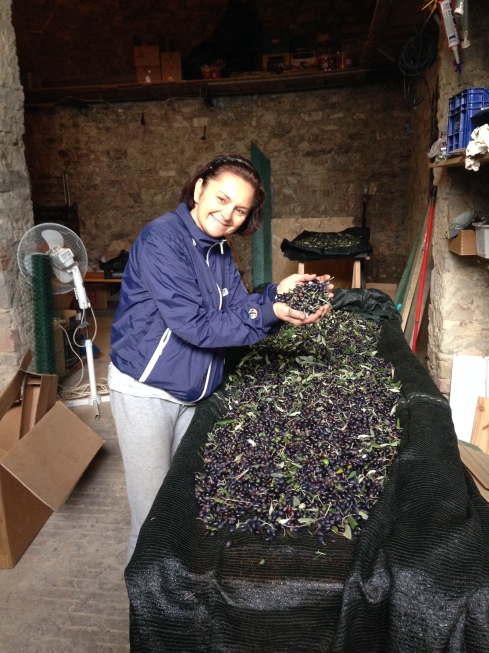
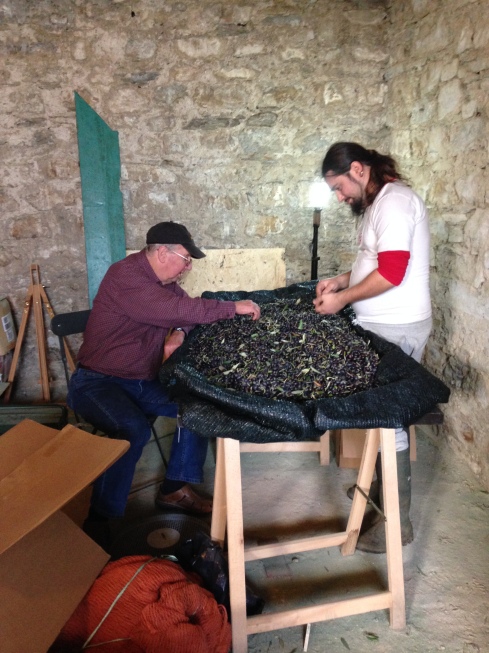
Working in the garage, we sorted and sorted and filled four large containers.
©Blogginginitaly.com
©Blogginginitaly.com
©Blogginginitaly.com
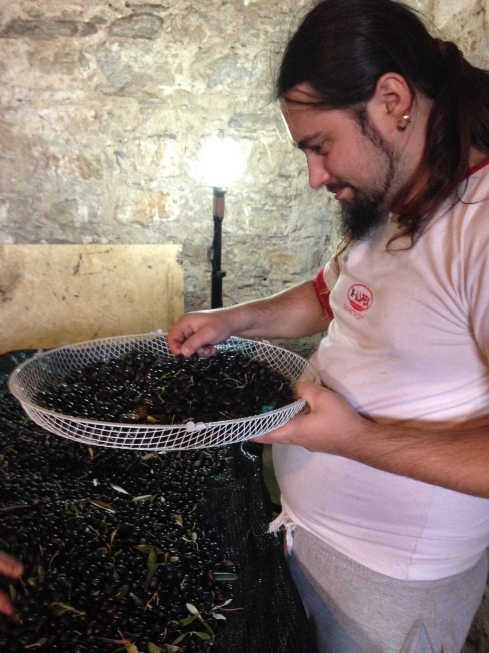
©Blogginginitaly.com

©Blogginginitaly.com

©Blogginginitaly.com

©Blogginginitaly.com

©Blogginginitaly.com

Until all the leaves were gone…
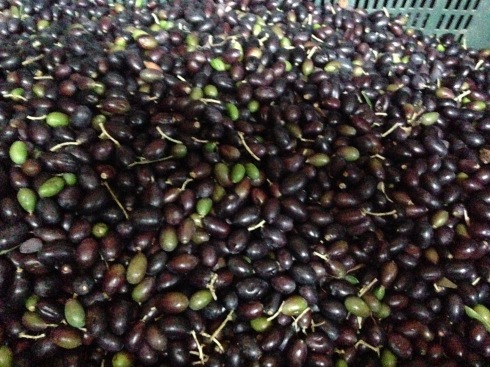
©Blogginginitaly.com

©Blogginginitaly.com

So this is what I’ve learned:

Harvesting is more than picking olives. It is a gathering of family and friends, new and old, working together, surrounded by nature’s beauty. It is a time filled with friendship, smiles, stories, and the joy of being in touch with nature. It is a tradition, passed on from generations, and thriving for future ones. And lucky for me, unlike grapes, bees don’t hang out around olives.

During lunch, and after the day was done, looking around at our tired and achy group, I noticed one more thing – we shared the kind of glow that comes from pitching in together for a job well done.

Tomorrow we go to the frantoio to watch our picked and sorted olives become olive oil. And then we get to taste it. Stay tuned for Part 2!
©Blogginginitaly.com

©Blogginginitaly.com

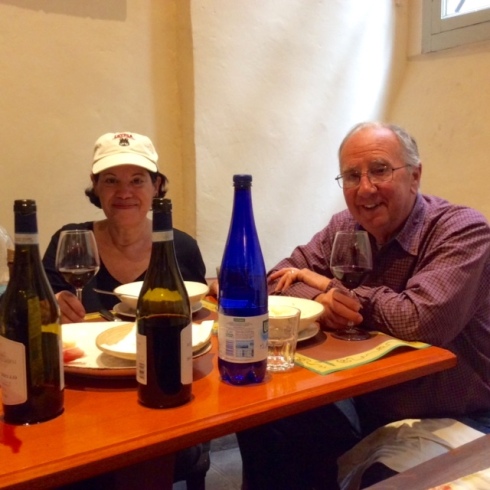
And many thanks to Daniela and Massimo for giving us this opportunity – such a great pleasure and learning experience. Count us in for next year!

Ciao,

Judy
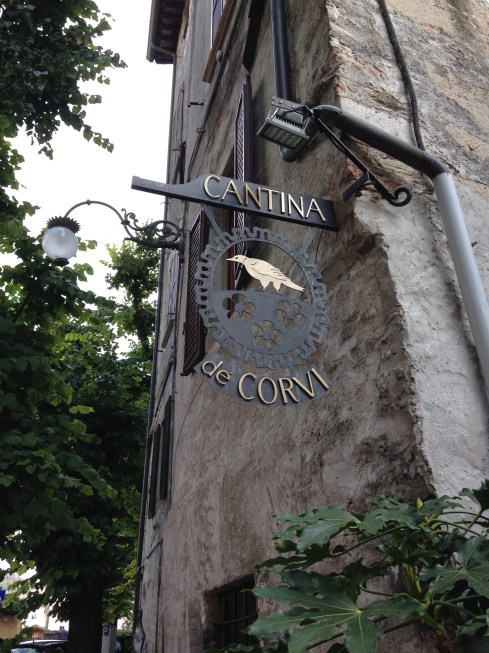
 

Cantina de’ Corvi, Spoleto

9 Oct

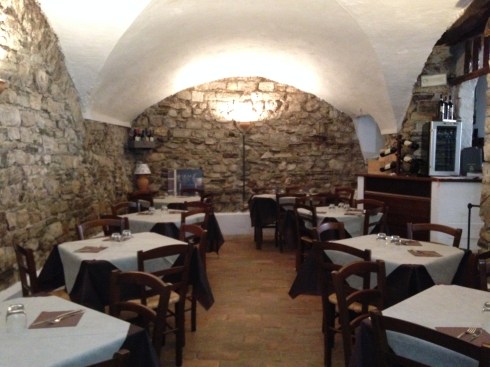
During our visit to Spoleto, our hotel clerk recommended the Cantina de’ Corvi, a wonderful place to eat.

©Blogginginitaly.com

©Blogginginitaly.com

We went for lunch and liked it so much, we returned for dinner. Can’t have too much of a good thing!

©Blogginginitaly.com

©Blogginginitaly.com

©Blogginginitaly.com

©Blogginginitaly.com

Meet Ciro and Marianna – the owners of this new restaurant.

©Blogginginitaly.com

©Blogginginitaly.com

Marianna is the chef, and quite a skilled one at that. Turns out they are from Naples, the native home of most of my ancestors. Marianna’s love of cooking recipes passed down from her grandmother, as well as Ciro’s appreciation of her home cooking, led them to open the restaurant in early 2015.

For lunch, we started with stuffed peppers and eggplant. Delicious.

©Blogginginitaly.com

©Blogginginitaly.com

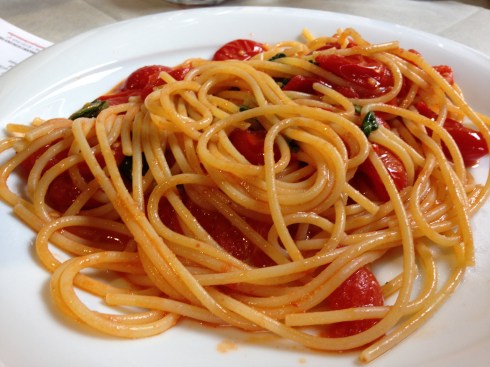
Then we each had pasta pomodoro. Why is it that fresh tomatoes at home never quite taste like these in Italy?

©Blogginginitaly.com

©Blogginginitaly.com

We kidded a lot with Ciro, he asking us to correct his English and we asking the same of him of our Italian. Ciro, ricordi: “Is there something else you would like?”

Their menu boasts of food from the land and sea, so in addition to pasta, they have quite a selection of beef and seafood.

Our conversation turned to baccala, that awful looking salted fish I see at the market.

Baccalà_delle_Isole_Faroe

Wiki

I made a face and Len told Ciro that as kids, they would all feign illness when his grandmother announced baccala was for dinner.

Ciro said he had felt the same, and for years, his wife asked him to try her baccala. When he finally did, they put it on the menu. Ciro convinced Len to try it for dinner – no obligation if he didn’t like it. I was still skeptical.

©Blogginginitaly.com

©Blogginginitaly.com

Well, as you might guess, it was delicious. Even I tasted it and agreed.

©Blogginginitaly.com

©Blogginginitaly.com

My dinner was spaghetti con vongole, one of my favorite dishes in Italy.

©Blogginginitaly.com

©Blogginginitaly.com

Both dishes, as is the case with great recipes from Napoli, include those incredible tomatoes.

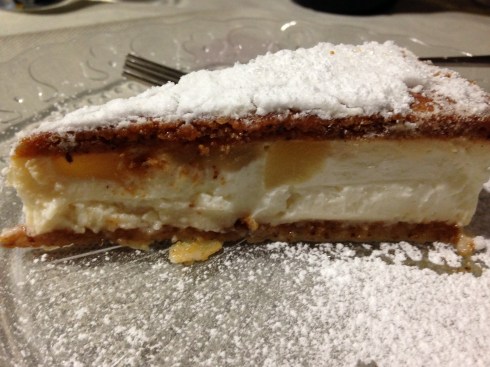
For dessert, we shared a slice of ricotta and pear cake – light and not too sweet.

©Blogginginitaly.com

©Blogginginitaly.com

We’ll definitely return to Spoleto, not only for its history and beauty, but also to spend more time with our new friends, Ciro and Marianna. If you go, please tell them Giuditta sent you. And by the way, I gave Don Matteo their card, so you might just bump into him as well!

IMG_8575

Ciao,

Judy


Spoleto and Don Matteo

7 Oct

On Tuesday, we headed to the walled medieval hill town of Spoleto in southern Umbria. We had decided to visit because of its ancient history and also because an Italian show we watch, Don Matteo, is being filmed there. The episodes, in Italian with English subtitles, help us learn Italian and are even more fun to watch when we are familiar with the shooting locations. The first eight seasons were shot in Gubbio, which we visited last year.

Spoleto’s first Roman settlements date to around 240 BC, and most of the historical sites are in the upper part of the town. Fortunately, the weather cooperated and we were able to walk miles through the town and enjoy some pretty spectacular views.

©Blogginginitaly.com

©Blogginginitaly.com

©Blogginginitaly.com

©Blogginginitaly.com

The upper part of the town is called the Centro Storico, or Old Town. Here you find the Piazza del Duomo, a sprawling piazza at the base of a beautiful stairway.

©Blogginginitaly.com

©Blogginginitaly.com

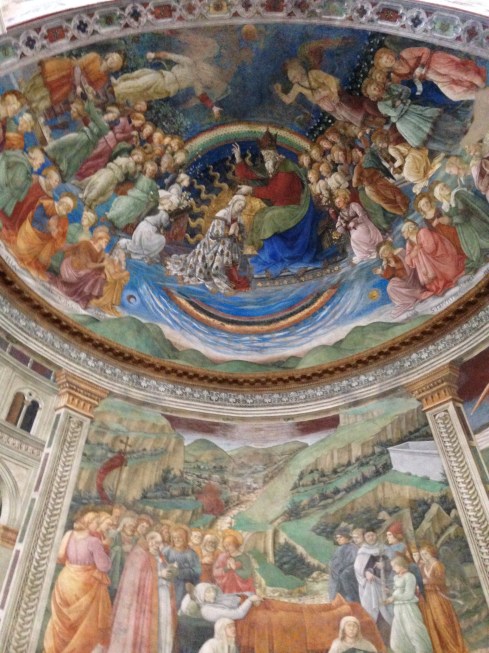
The original Duomo was built in the 12th century with a Romanesque facade, however, it was remodeled during the Renaissance and now has beautiful pink stone and colorful  mosaics.

©Blogginginitaly.com

©Blogginginitaly.com

The inside is equally impressive.

©Blogginginitaly.com

©Blogginginitaly.com

Sitting majestically above the town is the medieval Rocca Albornoziana fortress, built in the 14th century on the foundation of the Roman acropolis. Once a seat for local governors, in 1800 it was turned into a jail and used as such until the 20th century.  Today it houses a museum and also hosts summer performances.

800px-Rocca_Albornoz_and_Ponte_delle_Torri,_Spoleto

From this vantage point, there is an incredible view of the 750 foot Bridge of Towers, or Ponte delle Torri, a 13th century aqueduct that crosses a deep gorge,

©Blogginginitaly.com

©Blogginginitaly.com

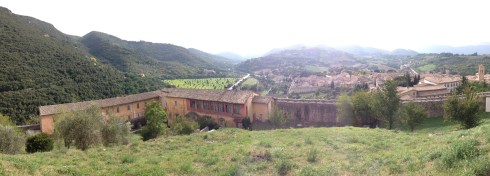
as well as this panoramic view of the valley below.

©Blogginginitaly.com

©Blogginginitaly.com

There are elevators and escalators that reach the various levels of town. Although we enjoyed the walk up, we were also happy to have SIX long escalators return us to the lower part of town.

©Blogginginitaly.com

©Blogginginitaly.com

Before dinner, we walked another area of the town and saw the ancient Teatro Romano.

©Blogginginitaly.com

©Blogginginitaly.com

As we strolled, the setting sun was splashing the sky with its color palette.

©Blogginginitaly.com

©Blogginginitaly.com

The scene so perfect, we felt as if we were on a movie set.

©Blogginginitaly.com

©Blogginginitaly.com

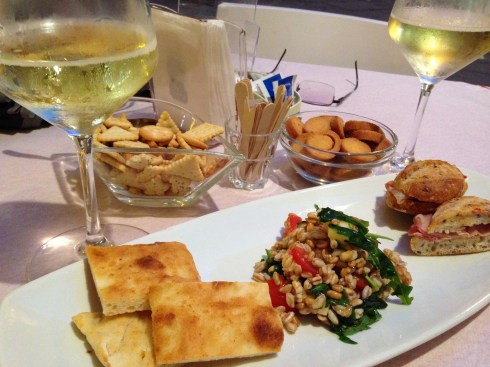
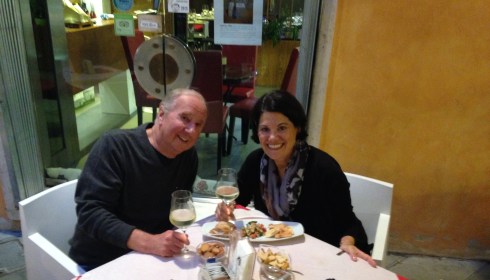
It was definitely time for appertivo…

©Blogginginitaly.com

©Blogginginitaly.com

©Blogginginitaly.com

©Blogginginitaly.com

with the most spectacular view…(photo is untouched)!

©Blogginginitaly.com

©Blogginginitaly.com

Even the doves were happy.

©Blogginginitaly.com

©Blogginginitaly.com

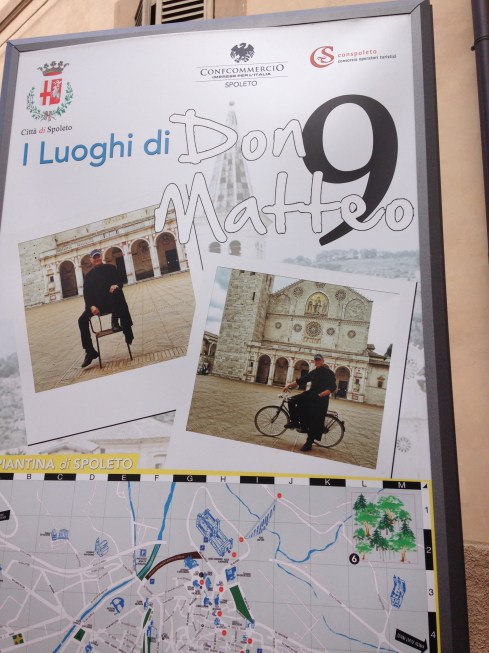
And now for our surprise encounter. I mentioned that Don Matteo is being filmed in Spoleto, and we found this billboard.

©Blogginginitaly.com

©Blogginginitaly.com

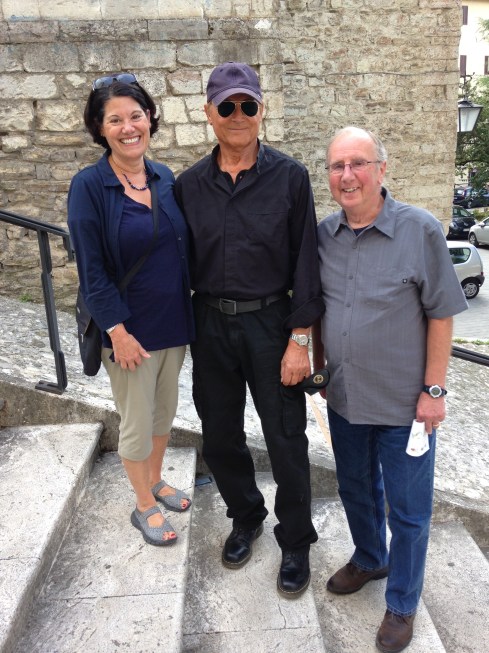
While walking up the stairs to the Duomo, we both sighted a familiar person dressed in his usual black attire and baseball cap. It was, to our amazement,  Terrence Hill, or as we know him, Don Matteo. Really! A pretty incredible coincidence since he was one of the reasons we had come to Spoleto.

©Blogginginitaly.com

©Blogginginitaly.com

Thanks, Don Matteo, for spending a few minutes with us and making our visit to Spoleto one we will always remember! Spoleto – a check off our bucket list with an unexpected and very happy memory!

Ciao,

Judy


La Compagnia Arcieri della Civetta

5 Oct

The Archidado Joust, which occurs the second Sunday of June in Cortona, traces its origins back to the Middle Ages. It was created in 1397 to celebrate the wedding the Lord of Cortona to a noble woman from Siena. For several weeks in June, town’s people are dressed in medieval style and banners are hung representing the various quarters of the town. Competition is fierce for the crossbow event.

Blogginginitaly.com

Blogginginitaly.com

But how does one learn to use a crossbow? Like other sports, it requires years and years of practice and training, often passed down from parent to child. To assist in this learning, The Compagnia Arcieri della Civetta (Bowmen of Owl Association) was established in July 2010.

©Blogginginitaly.com

©Blogginginitaly.com

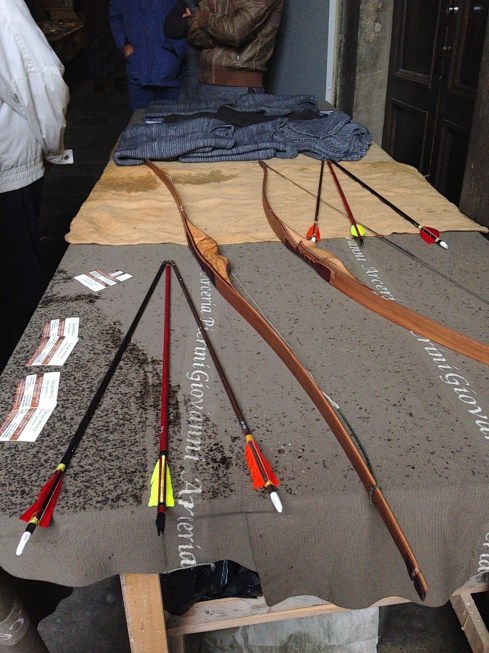
Its purpose is “to practice and spread archery by using historical bows and learning everything about this discipline, from knowing different timbers, knowing how to use hand crafted bows made by skilled archers, how to make arrows, and how to shoot them both towards fixed or moving targets.”

©Blogginginitaly.com

©Blogginginitaly.com

The Association participates in tournaments in many towns all over Italy, and for the second year, in Cortona.

©Blogginginitaly.com

©Blogginginitaly.com

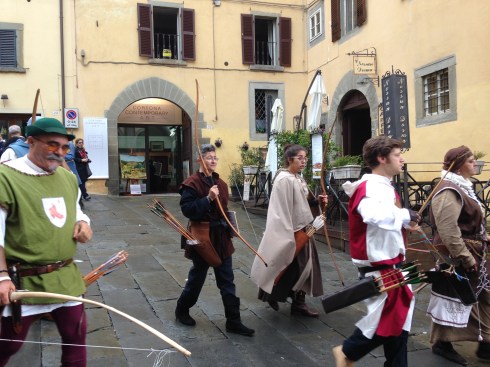
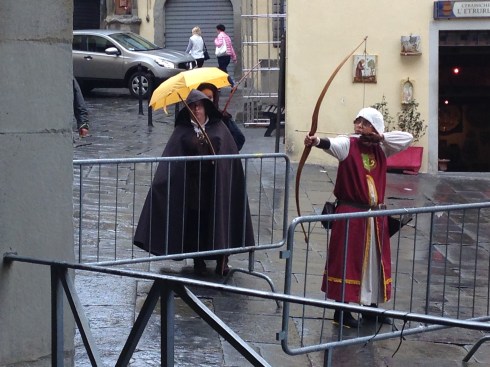
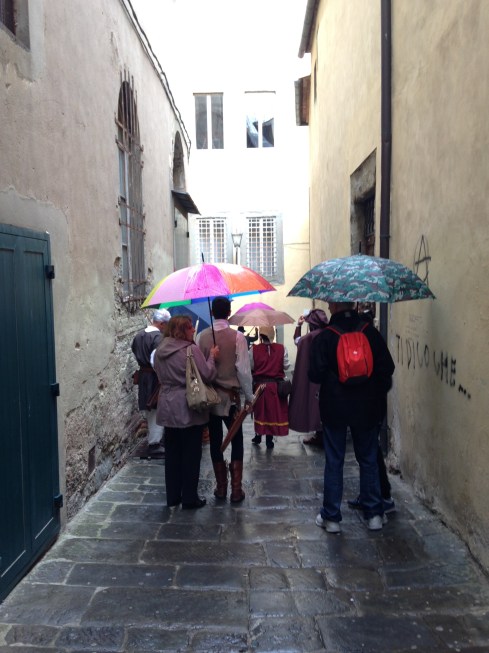
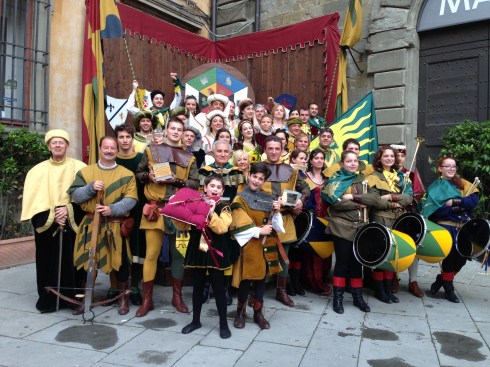
Although the weather didn’t participate, the costumed participants put on quite a show.

©Blogginginitaly.com

©Blogginginitaly.com

©Blogginginitaly.com

©Blogginginitaly.com

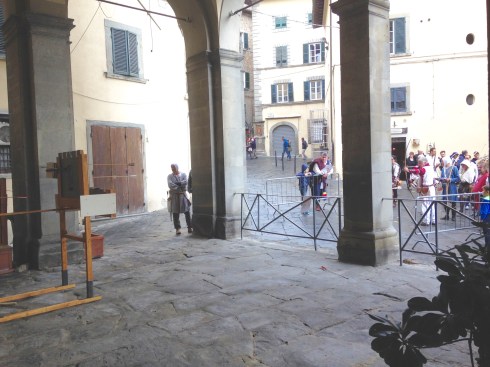
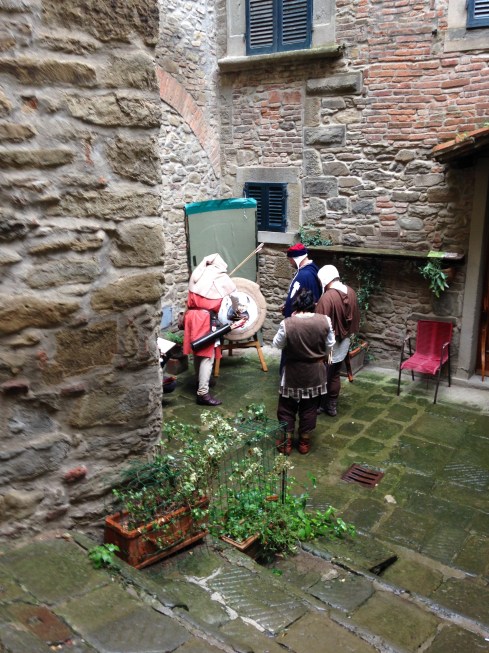
The Bowmen move in assigned groups and have specific times to attempt each target. Creative and challenging objects are placed around the town, some with moving targets such as below. Here, a string is pulled and the large black disc swings as a pendulum.

©Blogginginitaly.com

©Blogginginitaly.com

©Blogginginitaly.com

©Blogginginitaly.com

Others are stationary, but no less difficult, as in needing to shoot though two openings to hit the target from quite a distance away.

©Blogginginitaly.com

©Blogginginitaly.com

©Blogginginitaly.com

©Blogginginitaly.com

©Blogginginitaly.com

©Blogginginitaly.com

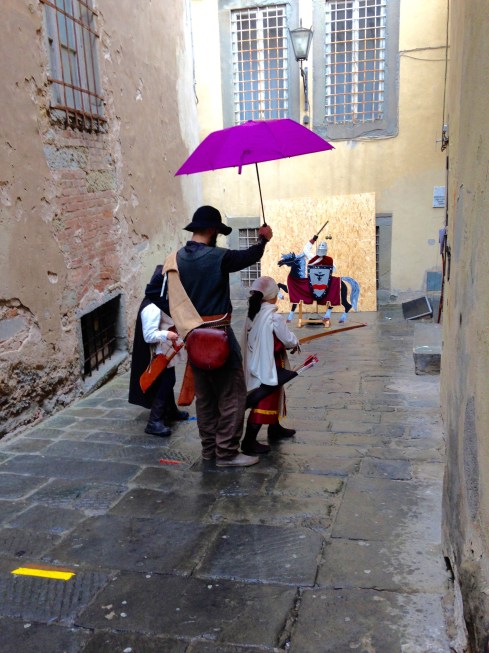
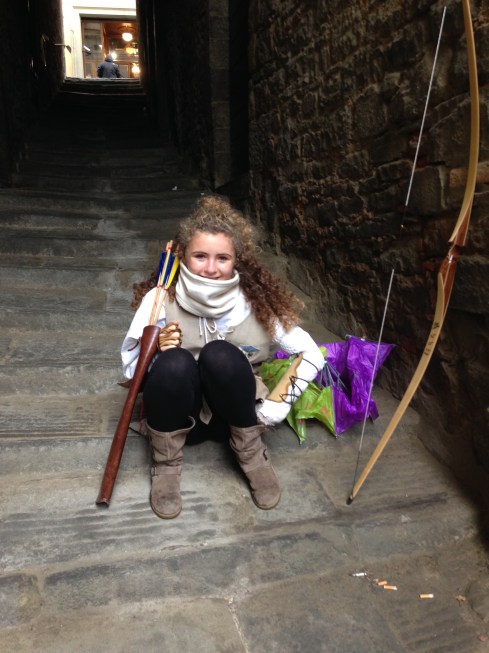
Some targets are placed at the end of tiny viccoli or streets; here a father is shielding his young bowmen from the rain…

©Blogginginitaly.com

©Blogginginitaly.com

as others cheered them on.

©Blogginginitaly.com

©Blogginginitaly.com

Participants carefully checked their status and timing at each station.

©Blogginginitaly.com

©Blogginginitaly.com

After shooting, bowmen would examine their results and retrieve their arrows.

©Blogginginitaly.com

©Blogginginitaly.com

as some of the junior members just tried to stay dry and warm.

©Blogginginitaly.com

©Blogginginitaly.com

Later in the afternoon, the participants gathered and the winners were announced. A new event in an ancient city, reminding us of medieval times gone by.

Ciao,

Judy
Sunflower: Girasole

1 Oct

Driving through Tuscany in the summer, a common site is a field of sunflowers. If I didn’t know better, I’d almost think they were shy, as it seems they are always facing away when I want to take a picture. An understanding of the name, however,  helps one understand – gira sole literally means turns toward the sun, and that is exactly what they do.

©Blogginginitaly.com

©Blogginginitaly.com

©Blogginginitaly.com

©Blogginginitaly.com

But what happens to them in the fall? As you might imagine, they look quite different.

©Blogginginitaly.com

©Blogginginitaly.com

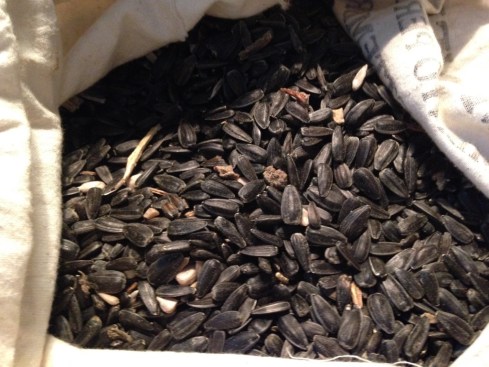
Once they reach this state, sunflowers are cultivated for their edible seeds, which are an important source of oil for cooking. Timing is important as the seeds need to be harvested before they begin to dry and loosen, and before the squirrels and birds decide to do the harvesting for you.

©Blogginginitaly.com

©Blogginginitaly.com

According to Fun Flower Facts, by Connor Lowry, here are some ways the sunflower can be used besides being a wonderful ornamental flower:

  1. As you know, sunflower seeds are edible. They can be eaten raw, cooked, roasted or dried. They are a popular, nutritious snack containing a good source of protein, vitamins A, B, and E, calcium, nitrogen and iron.
  2. Traditionally, North American Indians ground the seeds to make flour for cakes and breads.
  3. The petals are also edible; they can be cooked and eaten like artichokes.
  4. Humans aren’t the only ones that find sunflowers tasty. The seed heads are also a source of food for birds and animals. Sunflower seeds are a major ingredient in commercial birdseed.
  5. Sunflower leaves are used as feed for livestock.
  6. Sunflower oil is a popular vegetable oil known for its light colour, mild flavour, low levels of saturated fats and ability to withstand high cooking temperatures.
  7. The oil can also be added to soap, lubricants and candles.
  8. Sunflower oil can help relieve skin conditions, hemorrhoids and ulcers.
  9. Sunflower roots can remove radiation from soils and water. They were used to clean up the Chernobyl disaster.
  10. The root of the plant is also used in traditional herbal medicine to treat snake bites and spider bites. The leaves can be made into tea to relieve fevers, lung ailments and diarrhea.
  11. The flowers can be used to make an all natural dye.
  12. The stalks are used to make paper and clothes.

So, now you know what happens to those lovely flowers that always seem to make us smile.

Ciao,

Judy
San Galgano

28 Sep

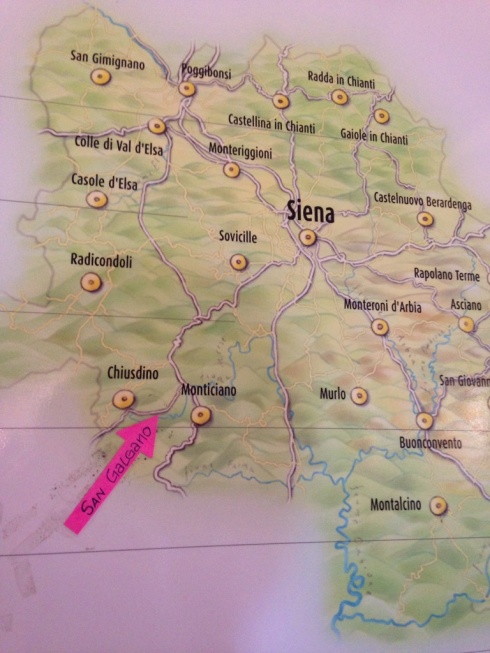
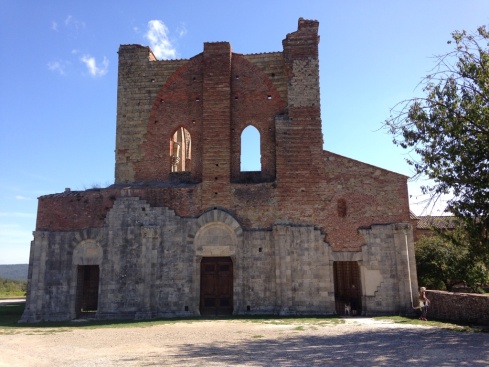
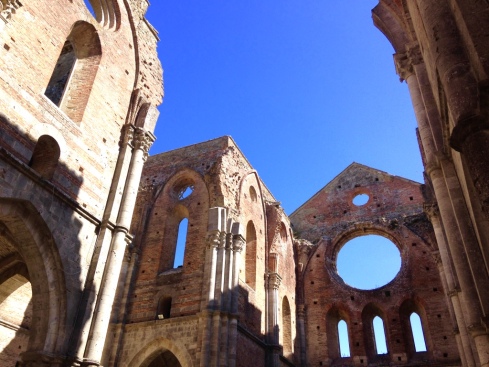
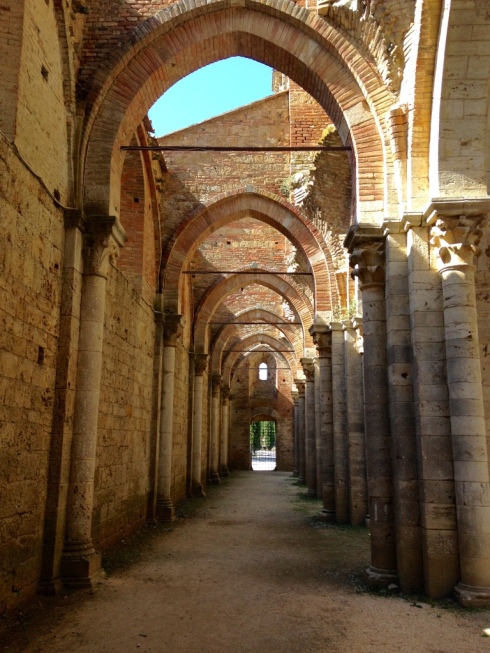
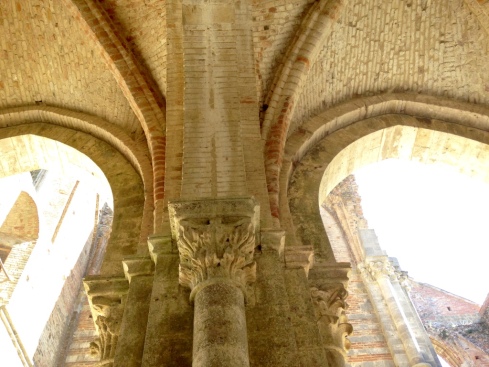
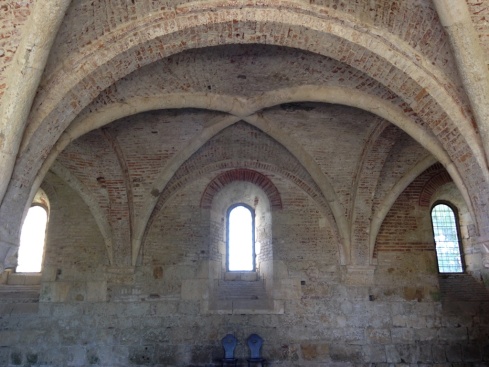
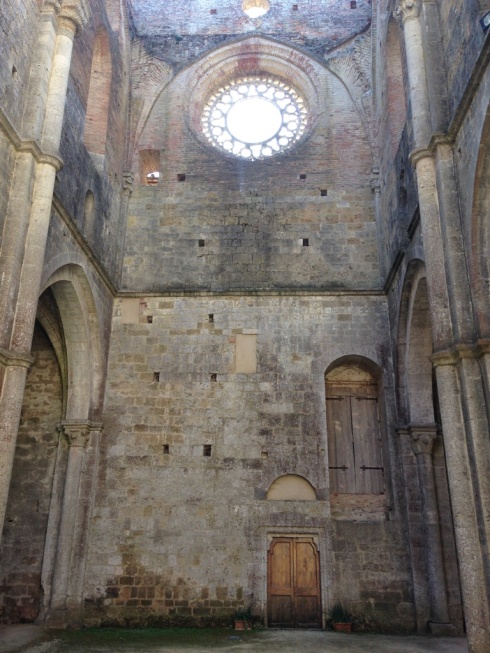
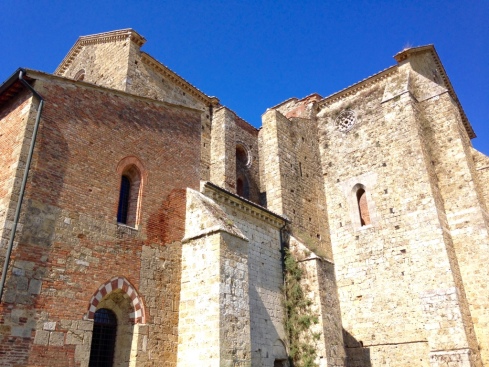
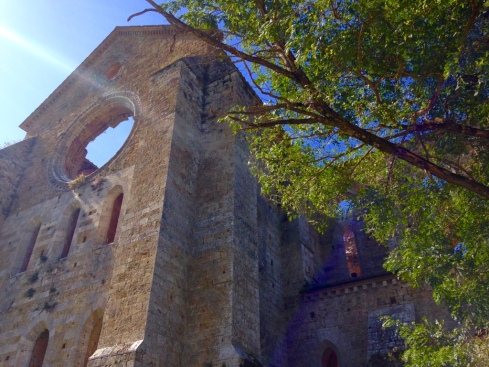
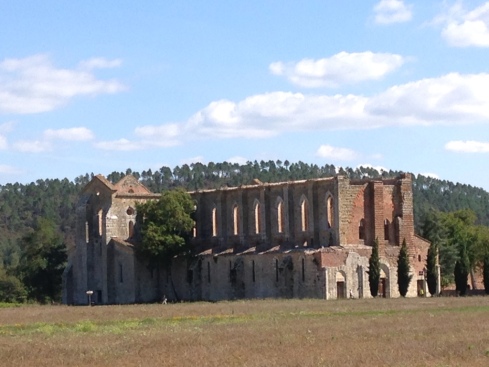
Between 1218 and 1288, the Cistercian  monks built the first gothic church in Tuscany. Its location was selected because Cistercian monks built their monasteries close to rivers, here the Merse, where they could cultivate the plains, marshlands and woods.

©Blogginginitaly.com

©Blogginginitaly.com

©Blogginginitaly.com

©Blogginginitaly.com

©Blogginginitaly.com

©Blogginginitaly.com

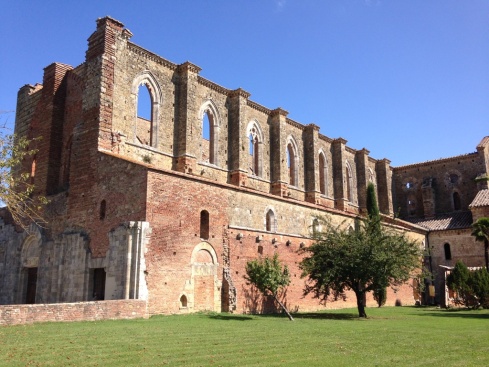
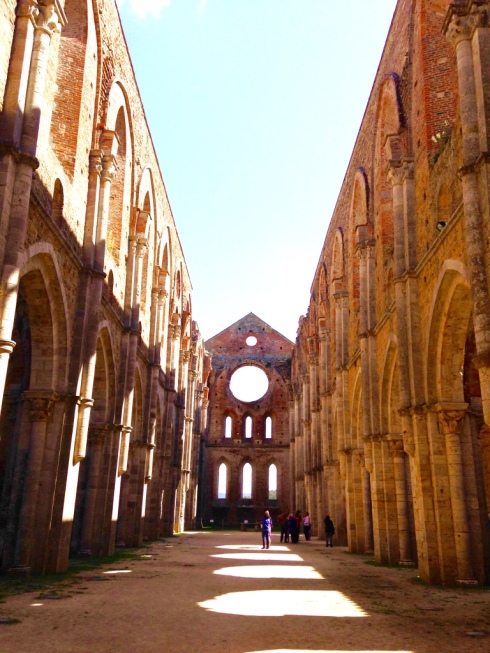
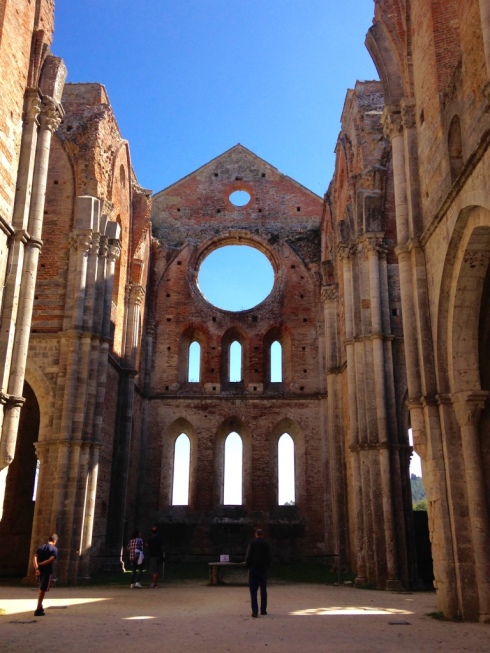
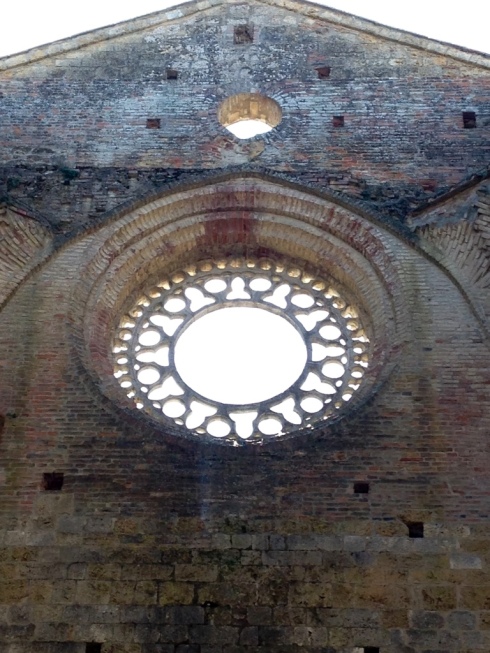
Several tragedies struck the area, including the famine of 1329, the plague of 1348, and finally mercenaries at the end of the 15th century, causing the monks to relocate to Siena. Then in 1786, lightning struck the bell tower, which collapsed onto the roof of the Abbey, causing the roof to collapse.

©Blogginginitaly.com

©Blogginginitaly.com

In 1789, the Abbey was deconsecrated, but the remains are still quite a site.

©Blogginginitaly.com

©Blogginginitaly.com

©Blogginginitaly.com

©Blogginginitaly.com

©Blogginginitaly.com

©Blogginginitaly.com

©Blogginginitaly.com

©Blogginginitaly.com

©Blogginginitaly.com

©Blogginginitaly.com

©Blogginginitaly.com

©Blogginginitaly.com

©Blogginginitaly.com

©Blogginginitaly.com

©Blogginginitaly.com

©Blogginginitaly.com

©Blogginginitaly.com

©Blogginginitaly.com

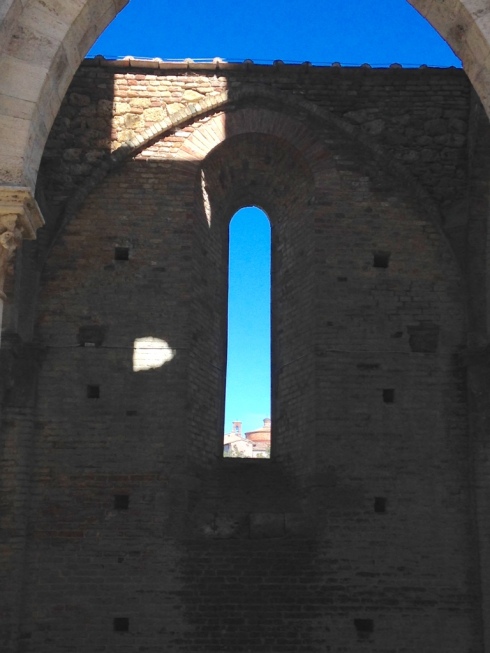
If you look closely through the Abbey window below, you will see a bit of The Hermitage of San Galgano, up the hill from the Abbey, and a place steeped in legend.

©Blogginginitaly.com

©Blogginginitaly.com

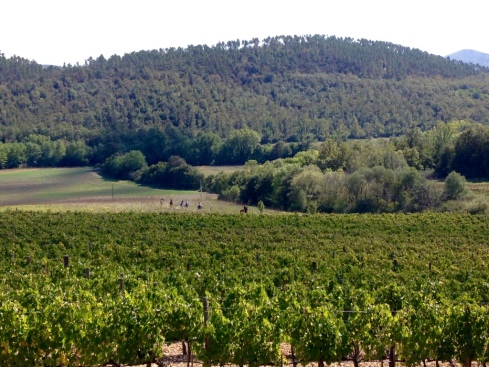
On our hike uphill, we passed a vineyard where grapes continue to be harvested, and saw locals on horseback riding through the fields.

©Blogginginitaly.com

©Blogginginitaly.com

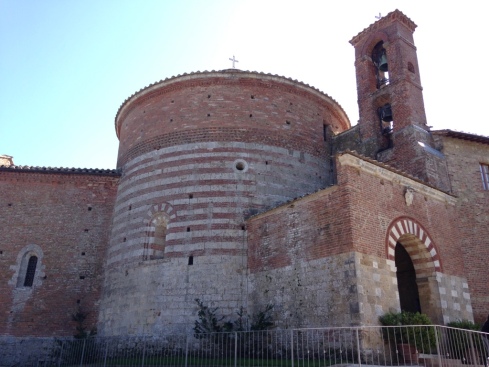
Galgano Guidotti was born in 1148, and the events of his life have been enriched by legends, some of which we see in Camelot. Galgano, like Francis of Assisi, was born into a life of means but was tormented by a lack of direction for own life, even though he had earned the title of Knight.

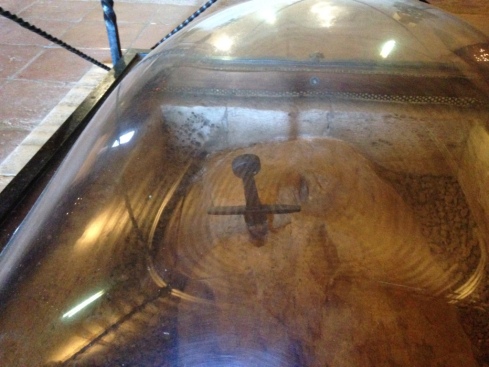
According to legend, at the insistence of St. Michael the Archangel, Galgano became a hermit. To demonstrate his commitment to his faith and to peace, he plunged his sword into a rock that emerged in his hut. This was Galgano’s sign of his renunciation of war and the symbol of the cross was a symbol of his faith.

©Blogginginitaly.com

©Blogginginitaly.com

Galgano died in 1181, and in 1182, construction began on the Hermitage Rotunda as a mausoleum to shelter his tomb, as well as the rock and sword. He was canonized in 1185 by Pope Lucius III, only a few years after his death.

Over the years, there were several additions and modifications to the structure, as well as periods of demise. It is thought that the original architect may have drawn his inspiration from other circular structures in Rome such as Castel Sant’Angelo and the Pantheon.

©Blogginginitaly.com

©Blogginginitaly.com

Whether the details are accurate history or legend, it is incredible to see what remains, including the vibrant colors.

©Blogginginitaly.com

©Blogginginitaly.com

Ciao,

Judy


From Vine to Wine

14 Sep

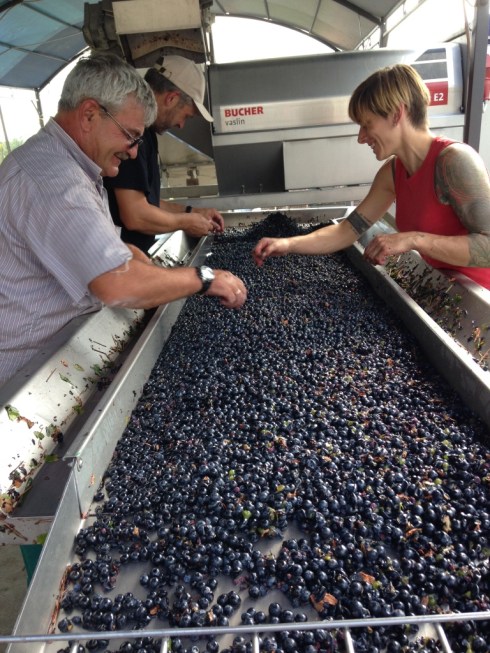
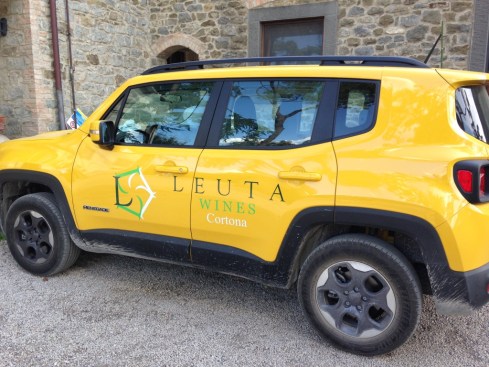
When in Italy, it’s hard not to get caught up in the production of wine. Grapes seem to grow everywhere with diverse types of soil, climate and winemaker contributions. Saturday afternoon, we headed to Leuta in Cortona, not only to sample wine but also to visit nature at its best.

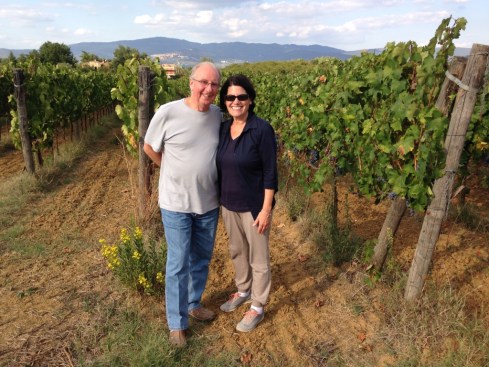
Our friend Carlo was our guide as we headed to the beautiful Leuta vineyards. I’ll let the photos tell the story of the beautiful day we had.

Leuta vineyard with Cortona in background:

©Blogginginitaly.com

©Blogginginitaly.comLeuta vines up close:

Leuta vines up close:

©Blogginginitaly.com

©Blogginginitaly.com

Carlo and Len:

©Blogginginitaly.com

©Blogginginitaly.com

©Blogginginitaly.com

©Blogginginitaly.com

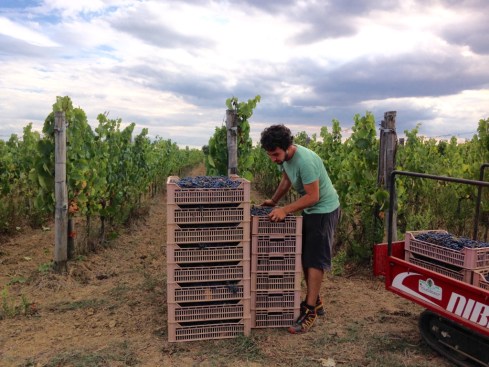
Leuta worker:

©Blogginginitaly.com

©Blogginginitaly.com

Next career?

©Blogginginitaly.com

Len’s new job! ©Blogginginitaly.com

Yours truly ready with Epi pen and Benadryl, but the bees were much more interested in the grapes…

©Blogginginitaly.com

©Blogginginitaly.com

Other beautiful sights:

©Blogginginitaly.com

©Blogginginitaly.com

A close up of same building with a fig tree growing within…

A fig tree growing within©Blogginginitaly.com

©Blogginginitaly.com

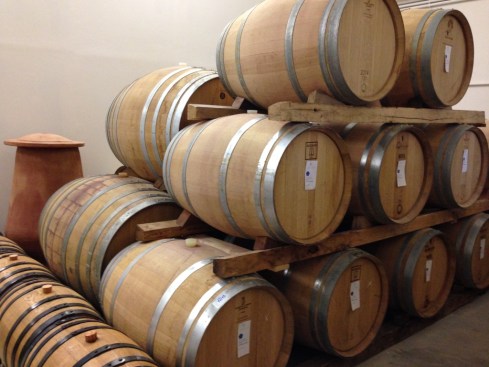
Afterward, we caught up with Denis, the passionate owner of Leuta, as he was giving a tour of the wine making process…

©Blogginginitaly.com

©Blogginginitaly.com

©Blogginginitaly.com

©Blogginginitaly.com

©Blogginginitaly.com

©Blogginginitaly.com

©Blogginginitaly.com

©Blogginginitaly.com

©Blogginginitaly.com

©Blogginginitaly.com

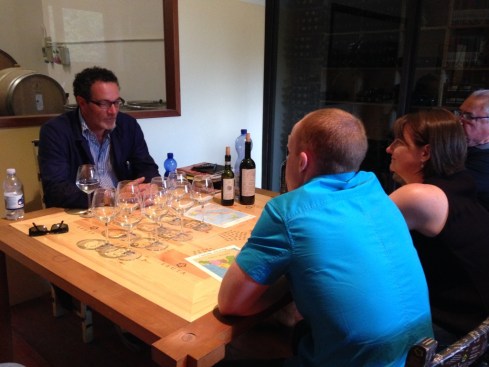
We were fortunate enough to sample several of Leuta’s excellent wines and once again hear  the story of Denis’ love of winemaking, a passion that grew from working with his grandfather.

©Blogginginitaly.com

©Blogginginitaly.com

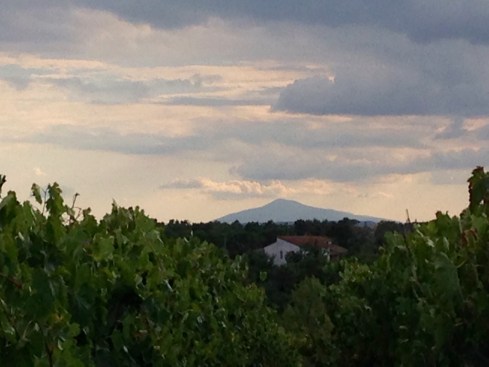
On the way home, we saw this, the inactive Amiata Volcano .

Amiata Volcano (dormant) ©Blogginginitaly.com

Amiata Volcano  ©Blogginginitaly.com

Thanks, Carlo, and Denis, for a wonderful day!

thumb_IMG_7865_1024

For more on Leuta, visit Leuta.

Ciao,

Judy


Man on a Mission

8 Sep

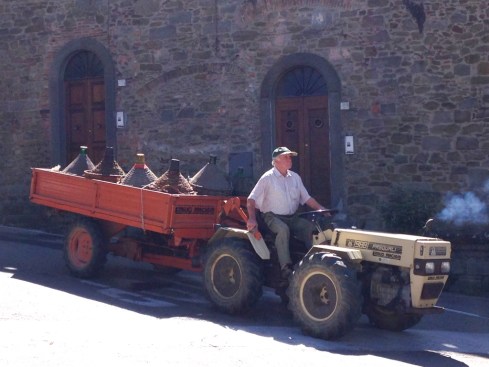
Although I am not certain, I’d guess this man brings local wines to Cortona bars and eateries, and this is what we drink when we order vino di casa, or house wine. In Cortona, such wine would usually be Sangiovese, the “mother” grape of Tuscany. Even the engine is working hard!

©Blogginginitaly.com

©Blogginginitaly.com

©Blogginginitaly.com

©Blogginginitaly.com

©Blogginginitaly.com

©Blogginginitaly.com

Grazie, signore, we certainly enjoy the fruits of your labor.

Ciao,

Judy
 

Sharing Cortona

6 Sep

My Chicago Italian teacher, Giovanna, a Tuscan native, and her dear friends Clarissa and Sergio, who live about two hours away in Tuscany, have been with us for two beautiful days. We have walked, talked, climbed, dined, and been welcomed by our wonderful local friends who call this incredible town home.

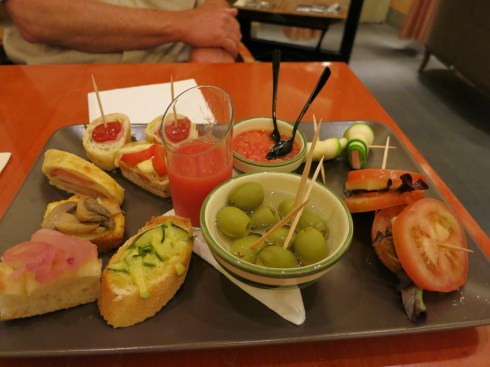
Among other things, we visited two of our favorite eateries, Caffe Tuscher for appertivo and Prosecco –

Tuscher Caffe©Blogginginitaly.com

Tuscher Caffe©Blogginginitaly.com

and AD Braceria for dinner…

©Blogginginitaly.com

©Blogginginitaly.com

©Blogginginitaly.com

©Blogginginitaly.com

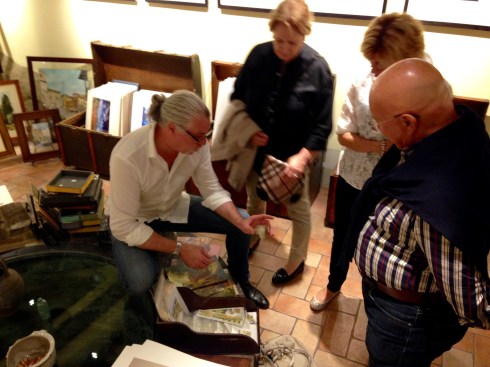
as well as our favorite gallery, Il Pozzo.

Il pozzo ©Blogginginitaly.com

Il Pozzo ©Blogginginitaly.com

At each, not only were our visitors surprised by the creativity and quality of the food and art, they were also charmed by our friends, the proprietors, who willingly share their knowledge of the history of the ancient buildings that house their establishments.

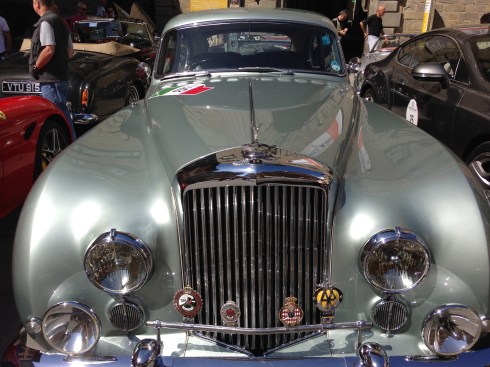
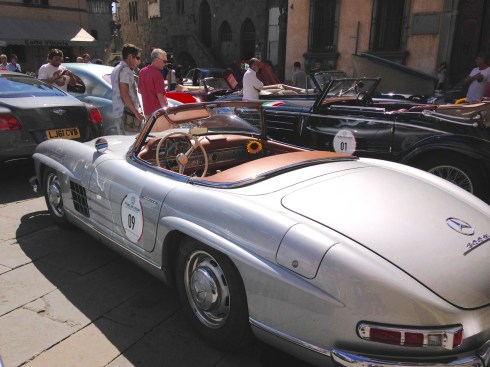
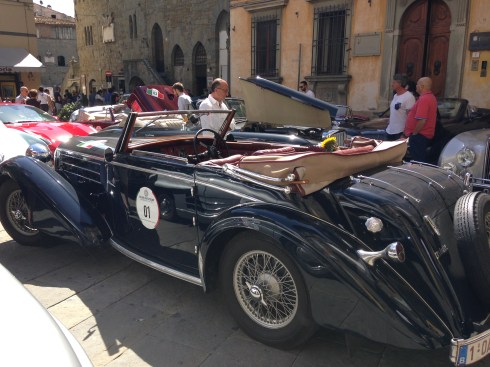
One of the things I often tell people is that Cortona has a never-ending supply of surprises, and today did not disappoint. After emerging from the Cortonantiquaria, an important antique show that has been coming here for 55 years, we followed a drum beat to the central piazzas. Piazza Signorelli was filled with luxury autos…

©Blogginginitaly.com

©Blogginginitaly.com

©Blogginginitaly.com

©Blogginginitaly.com

©Blogginginitaly.com

©Blogginginitaly.com

©Blogginginitaly.com

©Blogginginitaly.com

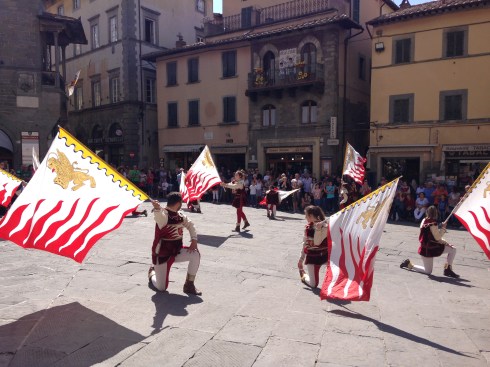
and in Piazza Repubblica, the flag bearers were performing to the beat of the drums.

©Blogginginitaly.com

©Blogginginitaly.com

In addition, the weather was perfect – bright blue skies filled with sunshine and gentle breezes. Our friends proclaimed, “If we had ordered a perfect day, it would have been today!”

We ended the day at Le Celle, where St. Francis of Assisi spent part of his monastic life.

©Blogginginitaly.com

©Blogginginitaly.com

©Blogginginitaly.com

©Blogginginitaly.com

At Le Celle, we noticed these caper bushes growing on the stone walls. Amazing nature.

©Blogginginitaly.com

©Blogginginitaly.com

While we are having many visitors this fall, and look forward to sharing Cortona with them, it was particularly gratifying to see native Tuscans fall in love with Cortona. It is truly a special place – its ancient beauty, its warm people, and its fascinating history and culture. It is not a town that shuts down at sunset, nor a town that has an overabundance of tour groups. It is, as my friend Paula said, a town that works. Bravo Cortona.

Finally, I am proud to report that Giovanna and her friends were impressed with my Italian. When here, I am in language training 24/7, but I would never have progressed without Giovanna as my cara professoressa.

Grazie Giovanna, for coming to Cortona and for introducing us to your dear friends and now ours as well. Auguri!

AD Bracceria©Blogginginitaly.com

AD Bracceria©Blogginginitaly.com

Ciao,

Judy

For more on Le Celle, including photos and a short video I made a few years ago, please click here: https://blogginginitaly.com/2013/06/12/franciscan-hermitage-of-le-celle-cortona/


Familiarity

3 Sep

We awoke this morning to the sites, sounds and smells of Cortona – and fell into our familiar rituals. Morning cappuccino, an uphill 2.5 mile hike to Torreone, the “take your pick” downhill roads leading back to town, lunch at Caffe Tuscher, an afternoon nap, appertivo with friends, and a light dinner.

I’m reminded of a Peter Allen/ Carole Bayer Sager song, Everything Old is New Again:

Don’t throw the past away
You might need it some rainy day
Dreams can come true again
When everything old is new again

Exactly when we fell in love with Cortona is unclear – perhaps our very first day in June, 2011. We had long planned and dreamt about spending significant time in Italy, and for us, this continues to be the dream come true.

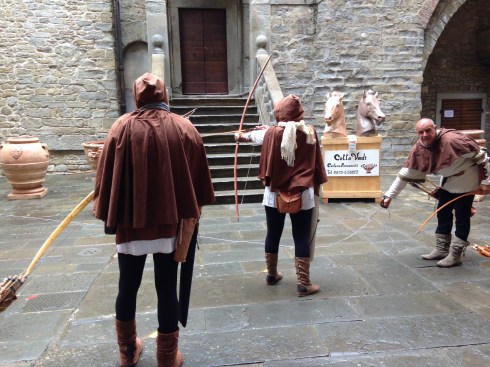
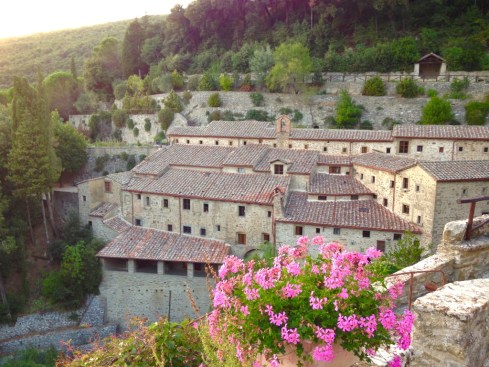
Seeing Cortona in the fall already brings a newness. Fewer people, many fewer children and strollers, and a final let up of the heat wave that surrounds Italy in the summer. The olives are ripening on the trees, the zucchini blossoms are gone, and the sun flowers are getting ready for harvest. But the incredible views
©Blogginginitaly.com

©Blogginginitaly.com

and the enticing smells coming from kitchens remain the same. Somethings just never get old.

This evening, as is customary on Thursday nights, a band played in Piazza Signorelli.

©Blogginginitaly.com

©Blogginginitaly.com

We joined the others and dined al fresco with friends. A perfect ending to a perfect day.

Dreams can come true again
When everything old is new again.

Ciao,

Judy