Archive | Italian Food RSS feed for this section

Planting an Orto

22 Apr

Recently, we visited a friend’s house in the country, a short 15 minute drive from Cortona. Although there were pretty flowers in pots and along the walkways, Len inquired about the vegetable garden. Doesn’t every home in the country have one?  “I’ve never had the time,” replied our friend, somewhat sadly, as she showed us the area where one would be planted. We also got a short Italian lesson..  a flower garden is giardino; a vegetable garden is orto.

Len and I looked at each other, smiled, and quickly asked if we could plant one together. Her eyes and smile said certo!

This week, the weather was nice enough to begin the work.

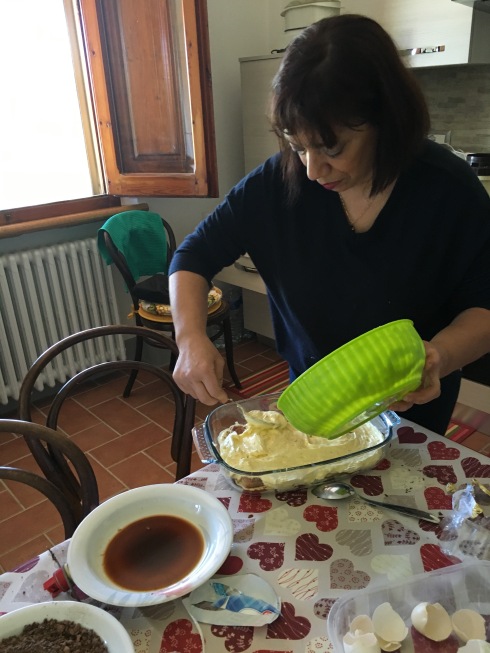
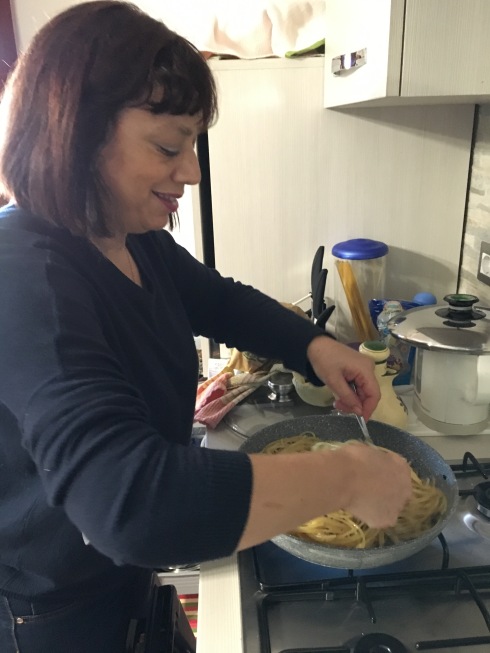
When we arrived, Fernanda was busy in the kitchen preparing lunch. Whether olive picking or planting an orto, a proper Italian lunch is always part of the day. She was making tiramisu from fresh eggs from her mother’s chickens.

©Blogginginitaly.com

©Blogginginitaly.com

And this was our day:

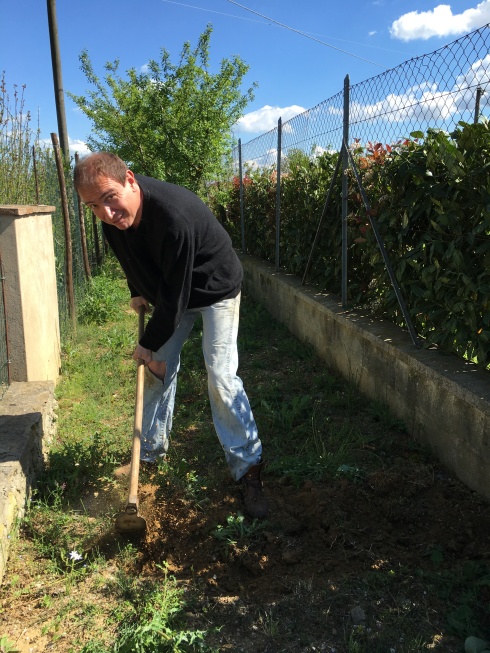
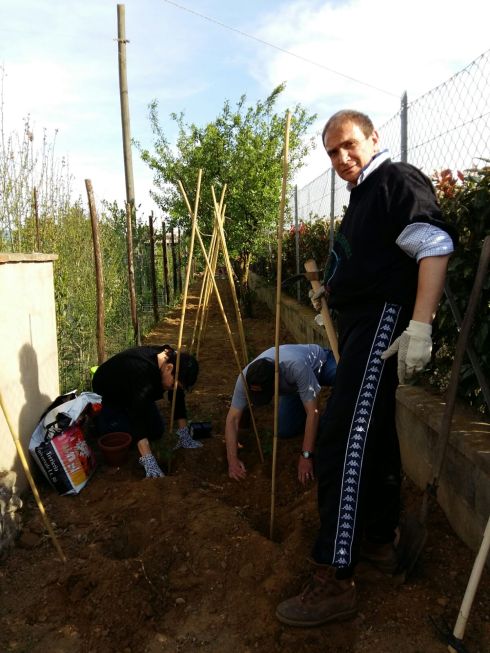
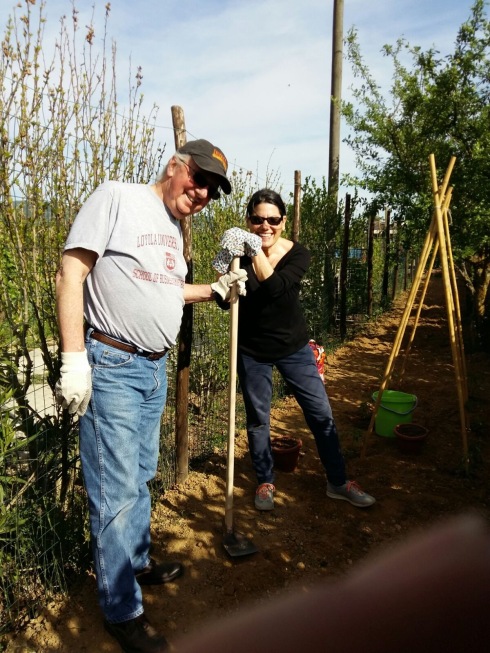
Outside, the area was being prepared by Carlo with help from Len.

©Blogginginitaly.com

©Blogginginitaly.com

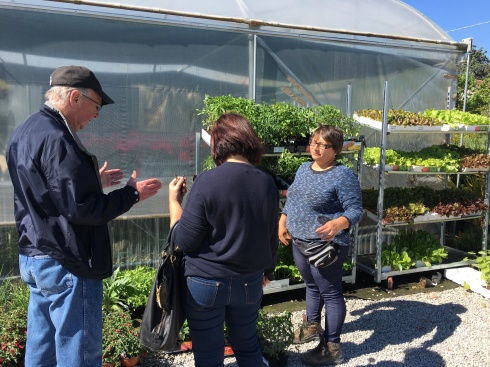
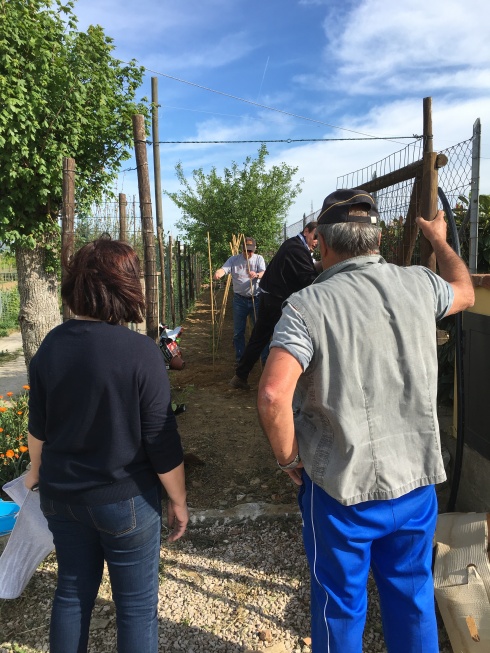
Then a trip to the nursery to pick the vegetables. The master planners were at work, selecting  the tomatoes, zucchini, onions and peppers, as well as dirt, tools, supports, etc.

©Blogginginitaly.com

©Blogginginitaly.com

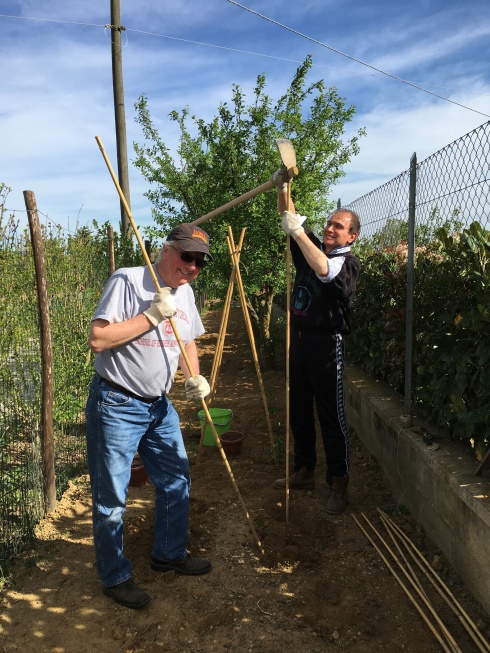
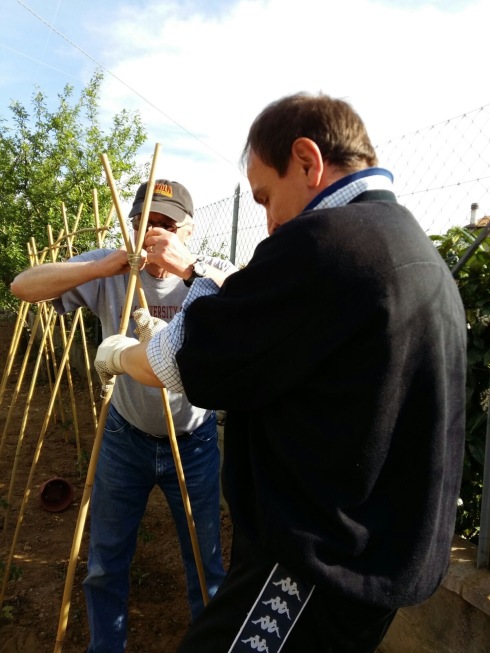
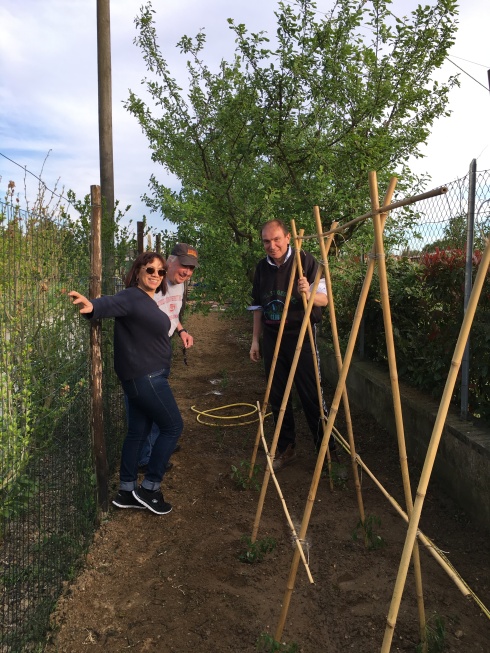
Next it was time to build the cross trellises for the tomatoes, a rather elaborate and tedious process.

©Blogginginitaly.com

©Blogginginitaly.com

©Blogginginitaly.com

©Blogginginitaly.com

After many hours, time for a well-deserved break and lunch.

Alio e olio con peperoncino

olio e alio con peperoncino ©Blogginginitaly.com

©Blogginginitaly.com

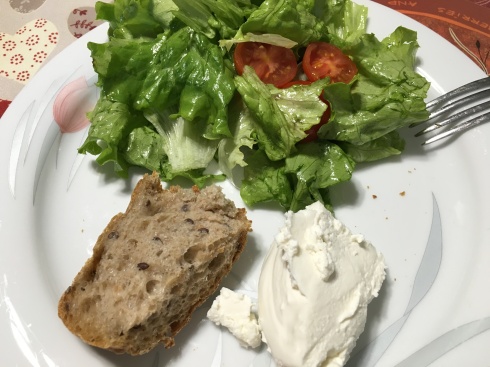
Salad, fresh ricotta and dark bread

©Blogginginitaly.com

©Blogginginitaly.com

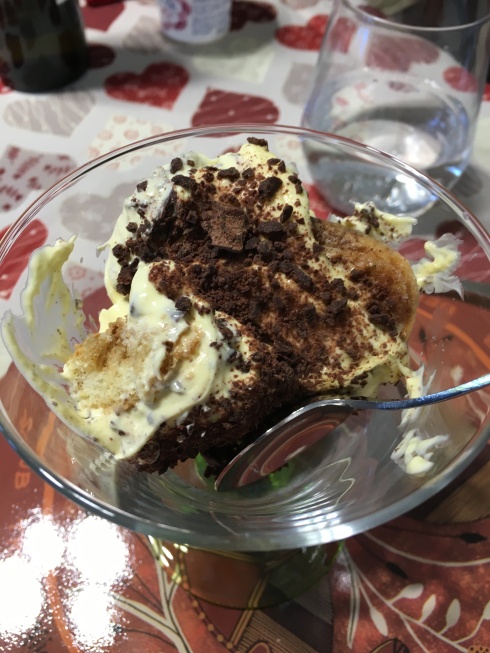
Tiramisu

©Blogginginitaly.com

©Blogginginitaly.com

Then back to work to plant the vegetables.

©Blogginginitaly.com

©Blogginginitaly.com

And advice from the neighbor to add more canes horizontally to support the tomatoes as they grow.

©Blogginginitaly.com

©Blogginginitaly.com

©Blogginginitaly.com

©Blogginginitaly.com

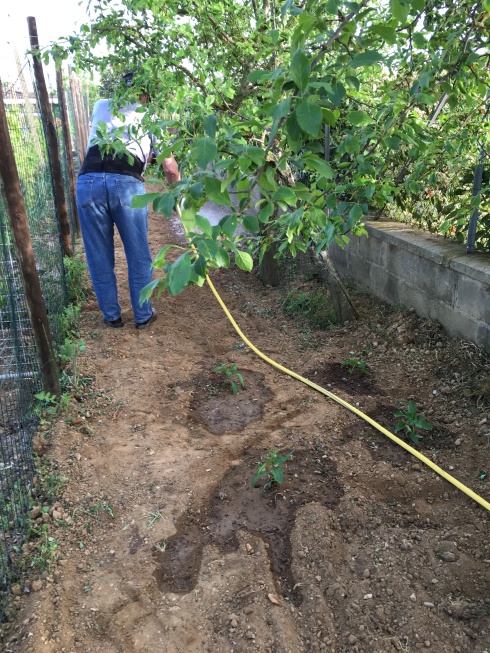
Finally, add water.

©Blogginginitaly.com

©Blogginginitaly.com

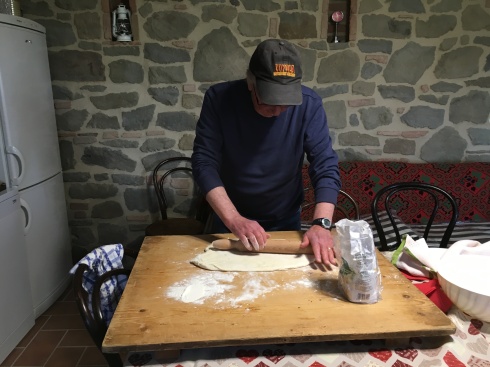
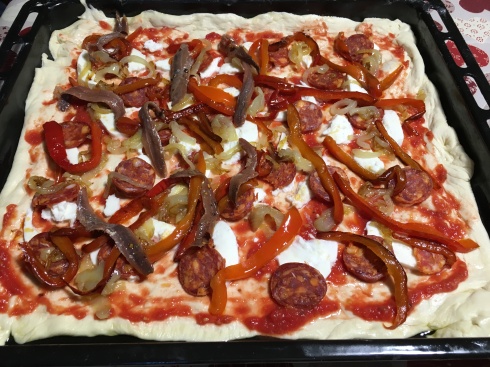
After a long day, it was time for dinner. Len had made pizza dough the night before, so he took over in the kitchen…

©Blogginginitaly.com

©Blogginginitaly.com

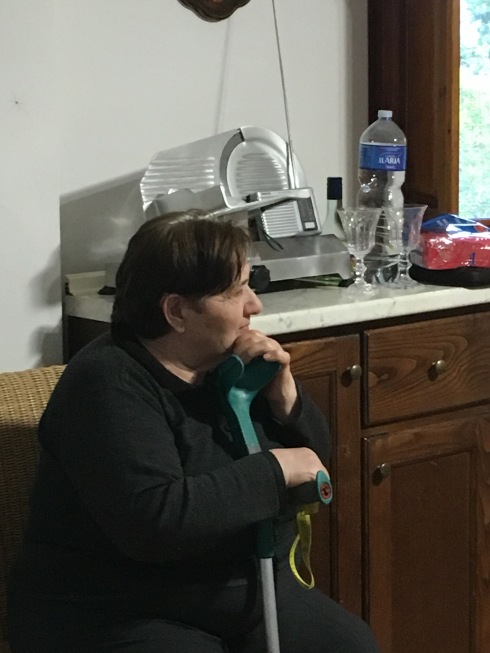
under the very watchful eye of Mama Anna. What was she thinking???

©Blogginginitaly.com

©Blogginginitaly.com

©Blogginginitaly.com

©Blogginginitaly.com

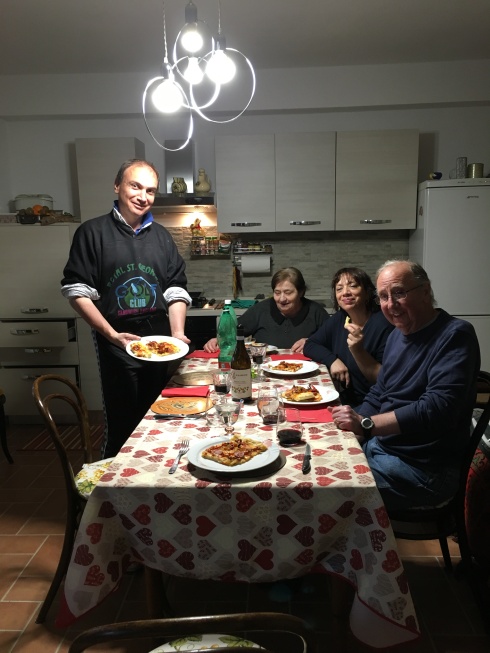
Achy, but feeling happy, we sat for dinner and laughed and talked about our accomplishments.

©Blogginginitaly.com

©Blogginginitaly.com

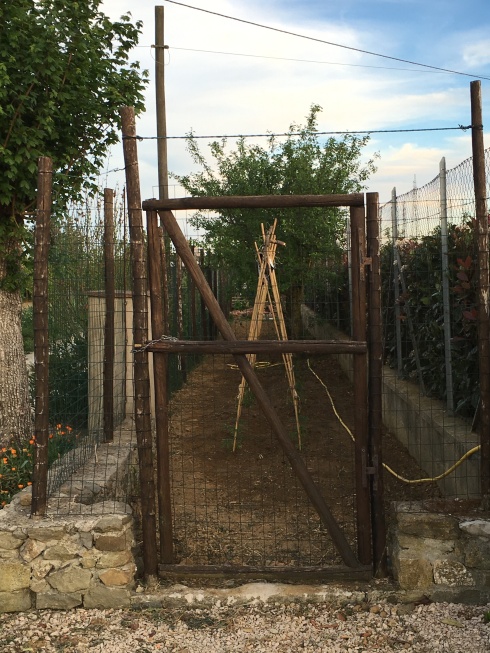
After dinner, we went outside to view our work.

©Blogginginitaly.com

©Blogginginitaly.com

©Blogginginitaly.com

©Blogginginitaly.com

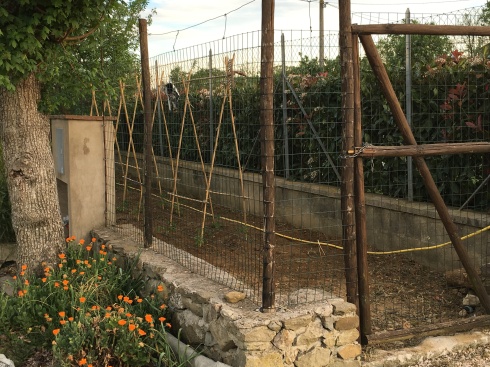
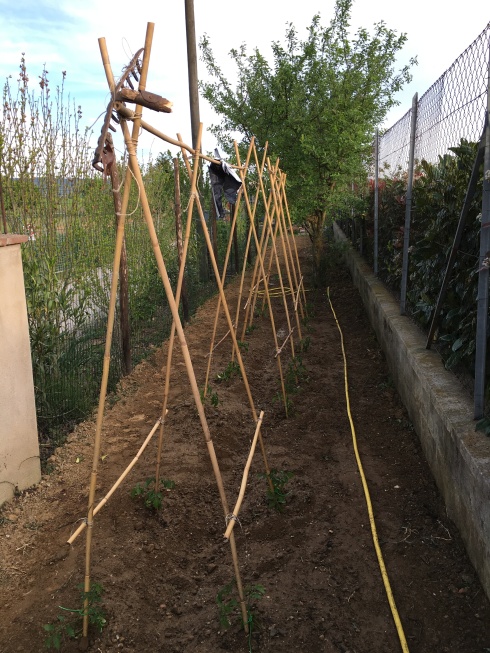
Such perfect rows of tomatoes, with the other veggies planted behind.

©Blogginginitaly.com

©Blogginginitaly.com

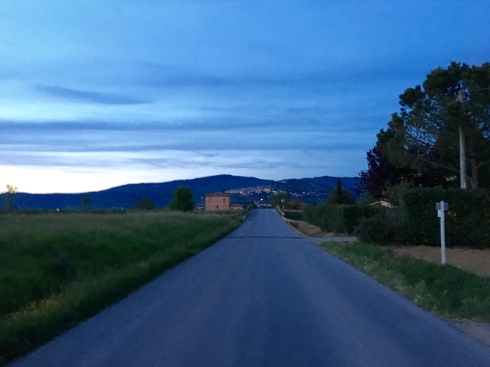
A blue haze crept in as the sun was setting over the valley, and the lights of Cortona were beginning to twinkle in the distance.

©Blogginginitaly.com

©Blogginginitaly.com

And a fun footnote to the day. The neighbor, who besides offering assistance and advice, had two things to say. First, he was delighted that after all these years, an orto had finally been planted. And second, he was most amazed that it was two Americans that got it to happen. A toast to those damn Yanks!

©Blogginginitaly.com

©Blogginginitaly.com

Ciao,
Judy


The Mighty Chianina

14 Apr

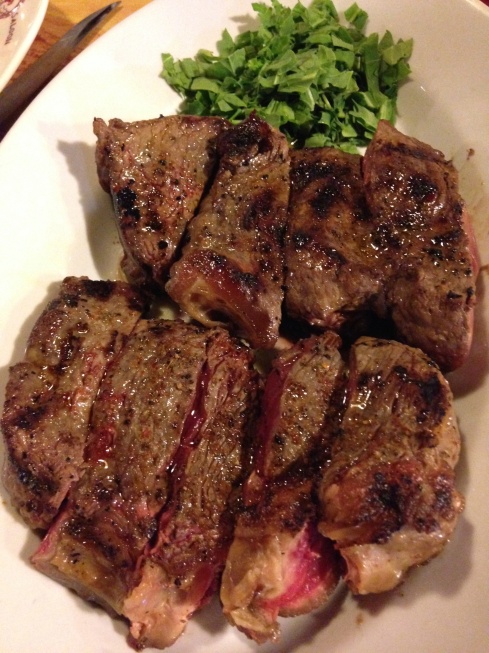
If you’ve been to Italy, and Tuscany in particular, you’ve no doubt heard of bistecca fiorentina. I remember the first time we ordered one. It was over 15 years ago and we were having dinner in Firenze. Not being much of a carnivore, I was a bit surprised when it arrived at the table –  huge and very, very rare. I was about to ask to have it returned to the kitchen for a bit more grilling when Len and Benita said they’d be happy to eat it as is. And they did. They both said the steak was tender and flavorful. I took their word for it.

©Blogginginitaly.com

©Blogginginitaly.com

Since that time, I have learned more about the steak and its origins. Chianina is one of the oldest and largest breeds of cattle, originating in the Valdichiana, hence its name. The cattle have been raised in the area for over 2200 years and were primarily used as oxen due to their size and strength. Being the tallest and heaviest breed of cattle, a mature bull can weigh over 3000 pounds and can grow to nearly 6 feet tall.

After WWII, machinery replaced these oxen in the fields, and chianina numbers began to dwindle until several breeders worked to bring back the breed. At the end of 2010, there were 47,236 head registered in Italy, of which more than 90% were in Tuscany, Umbria and Lazio.

For me, there are two other interesting things about them besides their size:
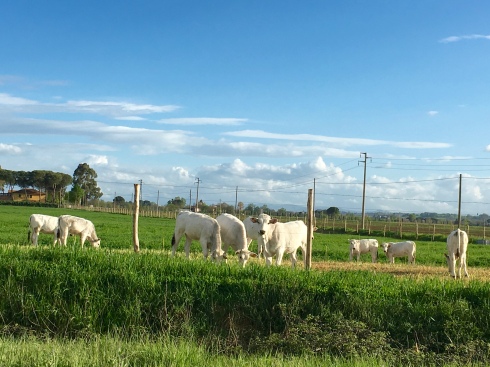
One, they are porcelain white;
Two, you never, ever see them.

Each year, we spend hours driving through the hills of Tuscany. We see the sights that paintings, no matter how good, can never quite duplicate. The hills are filled with farms, vineyards, and acres and acres of growing fruit trees, grains, vegetables, etc. But never, ever, a chianina. Not one.

Until now. Yesterday, I came face to face with some young chianina.

©Blogginginitaly.com

©Blogginginitaly.com

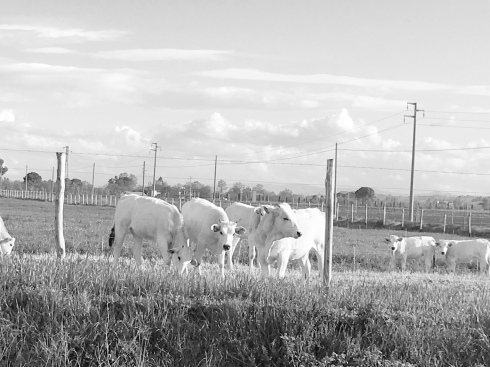
In color or black and white, they are quite unique.

©Blogginginitaly.com

©Blogginginitaly.com

Now for sure I don’t think I’ll ever eat a bistecca fiorentina!

©Blogginginitaly.com

©Blogginginitaly.com

Ciao,
Judy


Trapani, Sicilia

30 Mar

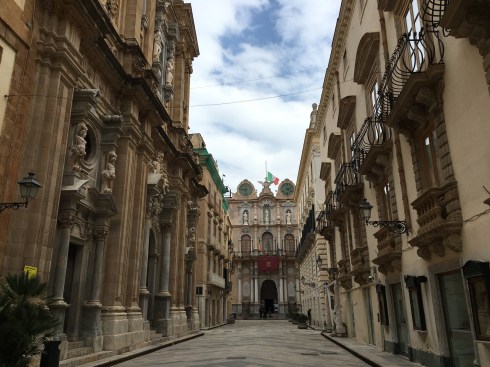
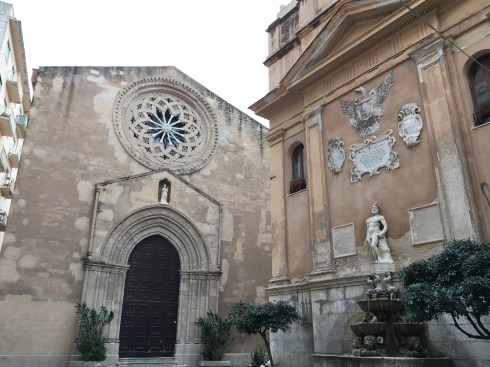
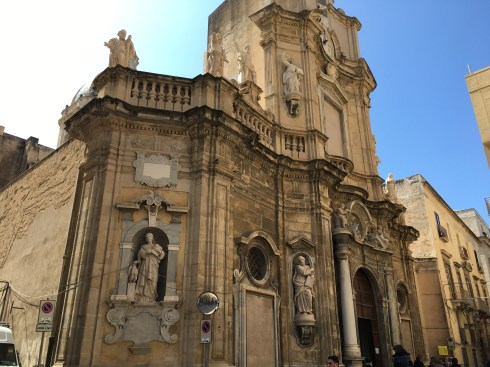
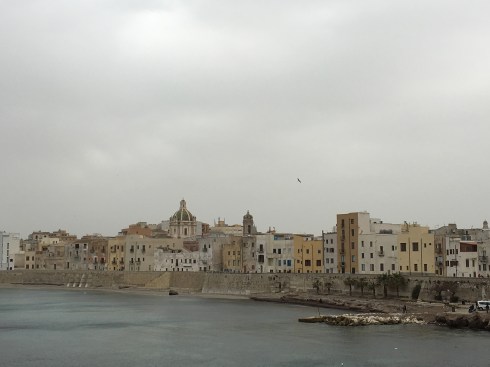
For me, Trapani is a tale of two cities. The centro storico, or historic center, is lovely, filled with beautiful buildings, interesting architecture, and wide, clean marble/granite streets.

©Blogginginitaly.com

©Blogginginitaly.com

©Blogginginitaly.com

©Blogginginitaly.com

©Blogginginitaly.com

©Blogginginitaly.com

At this time of year, it resembles more of a movie set than a city, as it is often quite empty,

©Blogginginitaly.com

©Blogginginitaly.com

and appears to be bustling with people only when the directors are ready to shoot, (in reality, when the locals are taking their evening walk).

©Blogginginitaly.com

©Blogginginitaly.com

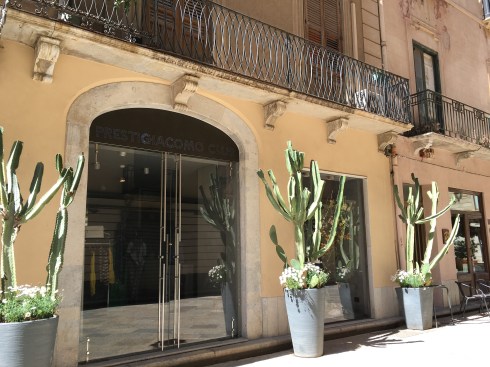
Tourism is a big part of the economy, especially in the summer and early fall. The historic center is filled with many bars, restaurants, designer shops and lovely window displays.

©Blogginginitaly.com

©Blogginginitaly.com

It is also a cruise ship destination. Really???

©Blogginginitaly.com

©Blogginginitaly.com

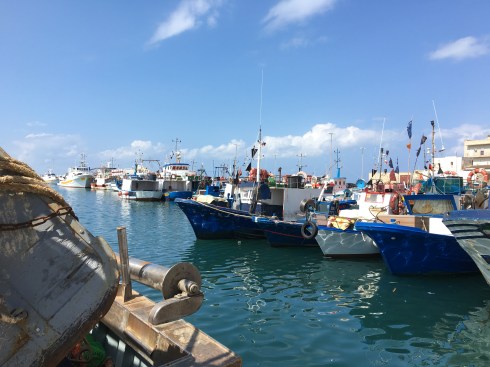
Because of its location, Trapani is an important ferry port to the Egadi Islands, so the port is large and active.

©Blogginginitaly.com

©Blogginginitaly.com

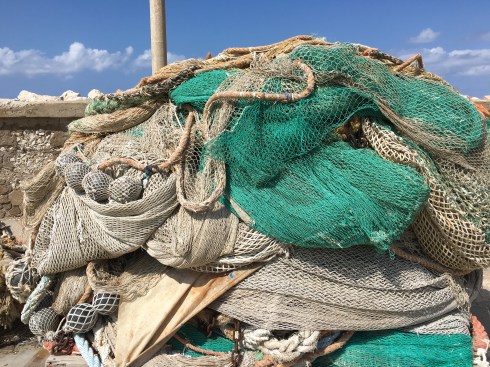
The “other” Trapani in my tale of two cities, however, is a fishing city, as much of Trapani’s economy still depends on the sea. For me, this was actually the lovelier part – seeing man depend on nature, as he has done for generations.

©Blogginginitaly.com

©Blogginginitaly.com

©Blogginginitaly.com

©Blogginginitaly.com

There are the sole proprietor old pescatore as well as large commercial vessels, and I loved watching them all go about their daily work. Out at 4am, if the seas are calm (ok, I took their world for this part), and back between 7-8 am to unload.

©Blogginginitaly.com

©Blogginginitaly.com

©Blogginginitaly.com

©Blogginginitaly.com

©Blogginginitaly.com

©Blogginginitaly.com

While fishing and canning are the main local industries, salt is also an important export, along with marble and Marsala wine. They also produce several delicious types of green olives.

©Blogginginitaly.com

©Blogginginitaly.com

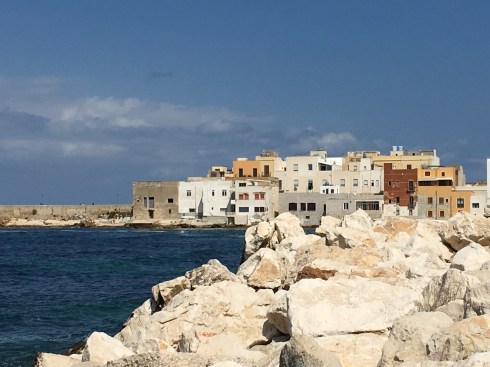
Because of the crescent-shaped coastline, one is never far from one of Trapani’s colorful water views, nice in any weather,

©Blogginginitaly.com

©Blogginginitaly.com

but especially nice in the sunshine.

©Blogginginitaly.com

©Blogginginitaly.com

©Blogginginitaly.com

©Blogginginitaly.com

From Trapani, enjoying a bit of water view, vino, and sunshine ourselves.

©Blogginginitaly.com

©Blogginginitaly.com

Ciao,
Judy

Seeing a Man’s Soul

23 Mar

No matter what saying speaks to you,

  • A picture is worth a thousand words
  • Dress for Success
  • Picture Perfect
  • A man’s work defines him

this picture seems to say it all.

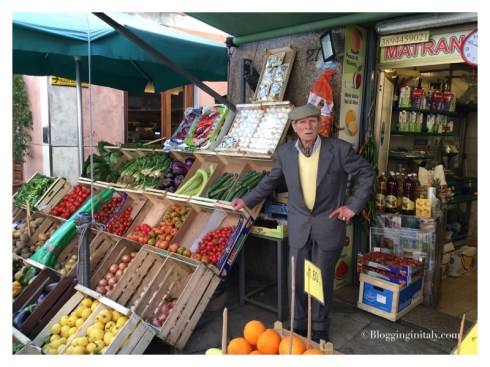
Meet Signore Matranga. He has been the proud proprietor of this Monreale fruit and vegetable market for 51 years. We bought delicious fresh strawberries from him.

blogginginitaly.com

blogginginitaly.com

But later I wondered, what was it about him that drew me in so?

According to Ted Grant, father of Canadian Photojournalism:

“When you photograph people in color, you photograph their clothes. But when you photograph people in black and white, you photograph their souls!”

Thank you, Mr. Grant, I’m quite sure that is what I saw when I met Signore Matranga and what I want to long remember about our brief encounter.

blogginginitaly.com

blogginginitaly.com

Click on the picture to enlarge.

Ciao,
Judy

Ciambra Ristorante Monreale

21 Mar

Meet Michela and Marco, owners, and Gino, master chef of Ciambra, a two-month old seafood restaurant in the oldest part of Monreale.

©Blogginginitaly.com

©Blogginginitaly.com

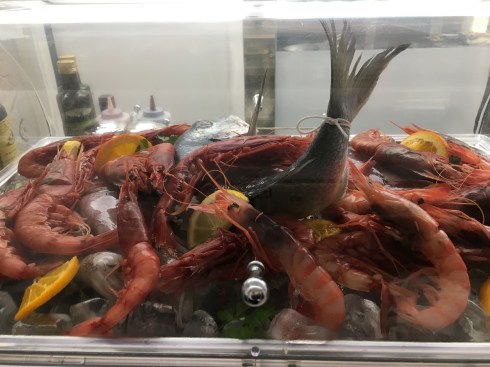
Coming to Sicily, we had expected that finding fresh seafood would be easy. But not so true for Monreale, which is on a hill overlooking Palermo and not adjacent to the sea. And then as luck would have it, we learned of a recently opened restaurant and met its owners. We had two nights left and ate at Ciambra both nights. Besides, for seafood lovers, their sign says it all.

©Blogginginitaly.com

©Blogginginitaly.com

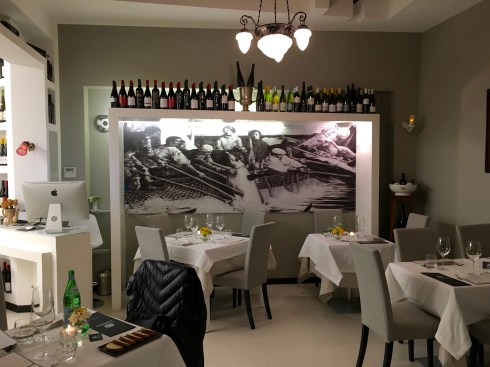
The decor of the restaurant is lovely with great attention to detail including the flowers, table settings, artwork, etc.

©Blogginginitaly.com

©Blogginginitaly.com

But it’s the food that brings one back to Ciambra, and for good reason. Len said this might be some of the best seafood we have ever eaten. I agree.

©Blogginginitaly.com

©Blogginginitaly.com

After we were seated, we were presented with fresh sardines, mixed with scallions and red peppercorns, on grilled toast. At home, I won’t touch a sardine, but I happily ate these.

©Blogginginitaly.com

©Blogginginitaly.com

We asked Marco to select a bottle of wine for us from their large selection.

©Blogginginitaly.com

©Blogginginitaly.com

For our appetizer, we ordered the seafood caponata consisting of fresh swordfish, eggplant, celery, tomatoes, onions and olives. Wonderfully seasoned.

©Blogginginitaly.com

©Blogginginitaly.com

Then for Primo, we had linguine con vongole, one of the best we have ever eaten!

©Blogginginitaly.com

©Blogginginitaly.com

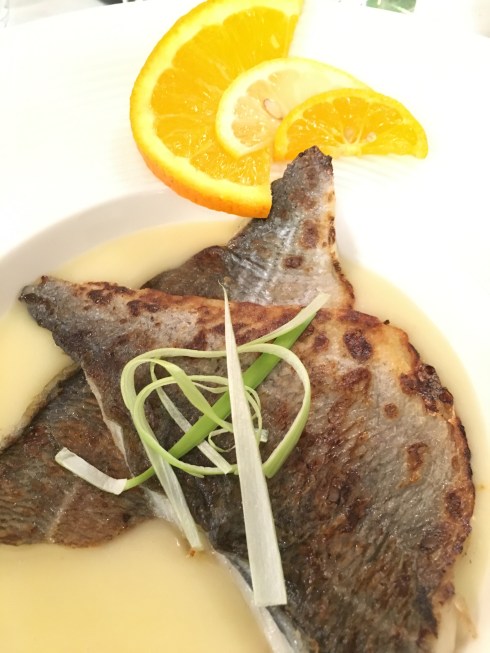
For secondo, we chose sea bass on a bed of pureed potatoes and a vegetable torte. Delectable.

blogginginitaly.com

blogginginitaly.com

blogginginitaly.com

blogginginitaly.com

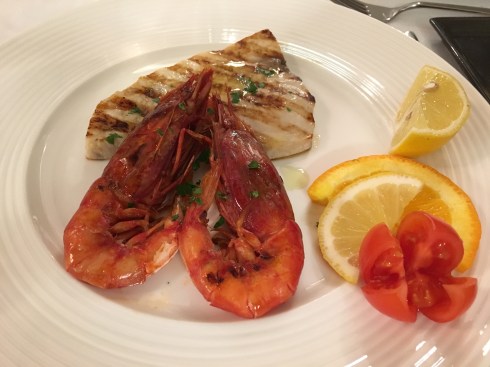
Too full for dessert, we made a reservation for the following evening, when we repeated the linguine con vongole and then chose grilled swordfish and red gamberetti for dinner. Perfect.

blogginginitaly.com

blogginginitaly.com

Although they were not on the menu, we asked for roasted potatoes.  If only my Dad could have tasted these! Amazing, and I have a feeling Chef Gino made them up just for us.

blogginginitaly.com

blogginginitaly.com

Since it was our last night, we also shared a tiramisu for dessert. Luscious.

blogginginitaly.com

blogginginitaly.com

What an unexpected find in a small town overlooking Palermo, but we are so very happy we did.

Our compliments to Chef Gino, and our very best wishes to Michela and Marco for a hundred years of success in both your restaurant and your soon to be married life together!

I nostri complimenti allo Chef Gino, ed i nostri migliori auguri a Michela e Marco per un centinaio di anni di successo sia il vostro ristorante e la vostra vita presto per sposarsi insieme!

And finally, given that we ate the linguine con vongole twice, I think I’ll leave you with another picture…if only I could share the taste and aroma! Heavenly.

blogginginitaly.com

blogginginitaly.com

Ciao,
Judy and Len

Mission Accomplished! Missione Compiuta!

12 Mar

For years in my Italian class, I was always somewhat envious of classmates who had familial connections in Italy. Being second generation, I realized that my ancestors had emigrated years ago, so I understood. Yet, were there relatives I did not know?

As we planned our trip to Napoli, my curiosity went into high gear. After several phone calls, emails and internet searches, the pieces of my puzzle began to take shape. And then yesterday, the final pieces of the puzzle were put into place.

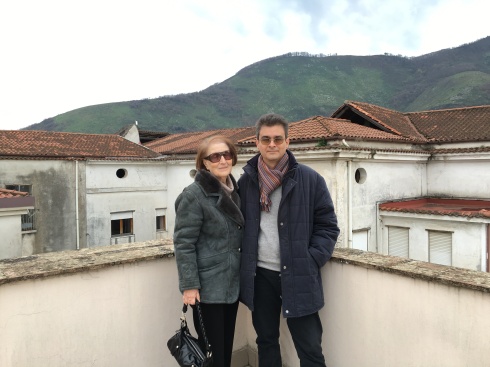
Meet Bianca and her son, Danilo, distant cousins on my maternal grandmother’s side.
©Blogginginitaly.com

©Blogginginitaly.com

Although it was a bit of a challenge understanding all the connections and generations, with fast conversations mostly in Italian, Bianca’s great-grandmother Fiorita is my great, great grandmother.

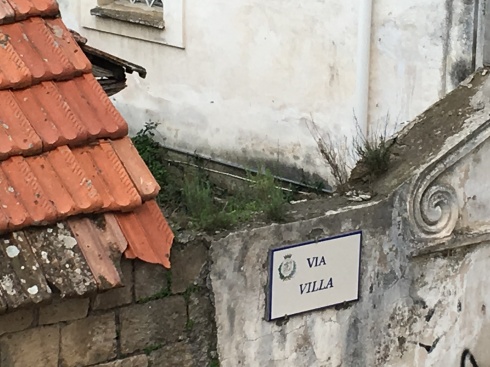
They were born in a tiny area of Castel San Giorgio called Santa Maria a Favore, way too small to be called a village. It seems to have only three streets, one being Via Villa, the street of their home. In the photo above, Bianca and Danilo stand on the rooftop terrace overlooking part of the expansive villa.

©Blogginginitaly.com

©Blogginginitaly.com

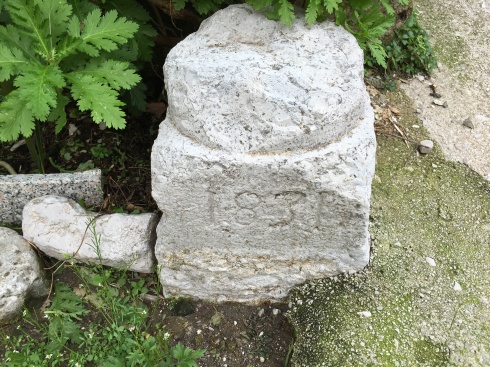
The villa was built around 1835, we think by Gaetano Auria, a distant uncle and attorney.
©Blogginginitaly.com

©Blogginginitaly.com

Gaetano’s wife, Fiorita Liguori, seems to have come from a noble family. They had no children, so they eventually left parts of the villa to a nephew, Pasquale, and a niece, Fiorita, Bianca’s and my ancestors. The villa, therefore, was the home where Bianca’s mother, Carolina (Anna) and my grandmother, Serafina, who were first cousins, lived as children with their parents and  siblings.

Pictured below are my maternal grandparents, Salvatore and Serafina, years after they met and married in Chicago. His family came from Nola, a part of metro Naples, but back to the villa.

Salvatore and Serafina, my grandparents ©Blogginginitaly.com

Salvatore and Serafina, my grandparents ©Blogginginitaly.com

This is part of the front of the main building when you enter the complex.

©Blogginginitaly.com

©Blogginginitaly.com

Over the years, (and my order is suspect here), some emigrated to America, the villa was rented to a hospital which repurposed it, the hospital moved out, some relatives returned from America and moved in, and at some point, the earthquakes occurred, causing severe damage to the structure.

At various times, the original villa as well as the apartments were divided. Some years ago, Bianca began to restore a part of the villa, including rooms where my grandmother lived until age 16, when she, her parents and siblings, emigrated. If I understand correctly, Bianca’s family lived in the area over the arch which used to connect inside to the area on the left. The left area is where my grandmother and her family lived and the area which has been restored. It is easy to see the damaging effects of time and nature and at the same time, see the beauty and grandeur that once existed. No wonder my grandmother always loved being surrounded by beautiful things.

©Blogginginitaly.com

©Blogginginitaly.com

©Blogginginitaly.com

©Blogginginitaly.com

I had only ever hoped to see the outside of the villa, so it was a great surprise that we were able to enter and see a bit of the restored rooms inside of Via Villa 49.

Street door©Blogginginitaly.com

Street door©Blogginginitaly.com

©Blogginginitaly.com
©Blogginginitaly.com

©Blogginginitaly.com

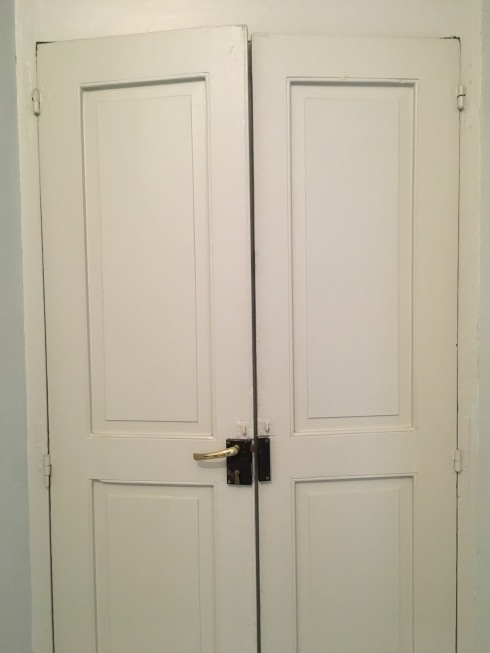
original doors©Blogginginitaly.com

©Blogginginitaly.com

original portico©Blogginginitaly.com

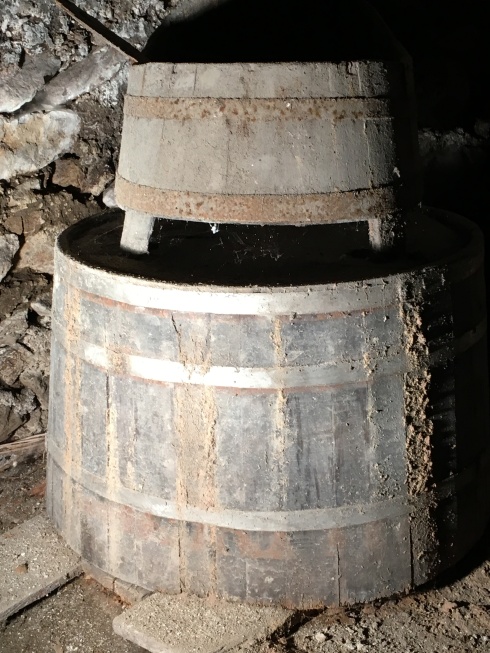
There’s even a wine cellar under this part of the building, and apparently a much larger one under the main house.
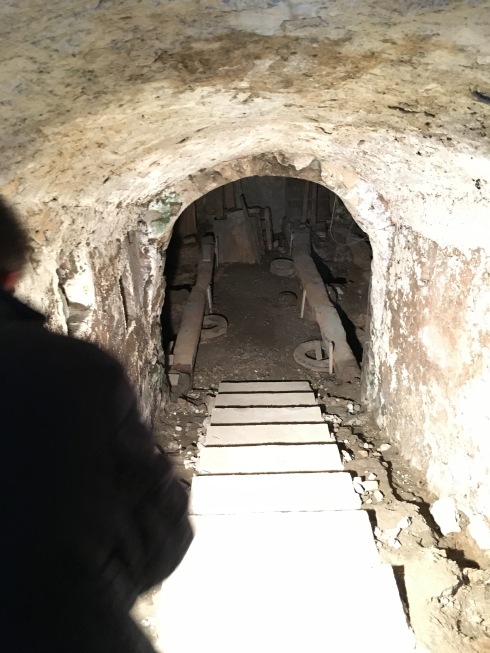
wine cellar©Blogginginitaly.com

wine cellar©Blogginginitaly.com

wine cellar©Blogginginitaly.com

wine cellar©Blogginginitaly.com

How I’d love to tap these barrels!
wine cellar©Blogginginitaly.com

wine cellar©Blogginginitaly.com

A Day of Italian Hospitality

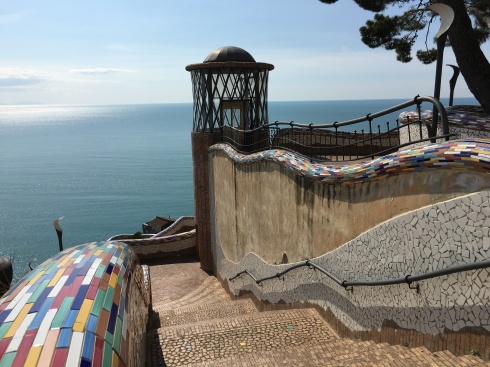
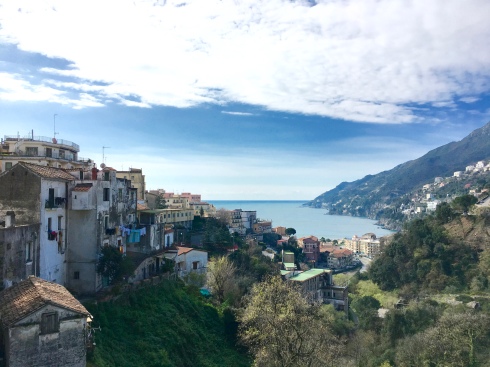
Danilo and Bianca picked us up in Napoli at 9:30. Our first stop was Vietri sul Mare, home of ceramics and incredible views on the Gulf of Salerno.
©Blogginginitaly.com

©Blogginginitaly.com
©Blogginginitaly.com

©Blogginginitaly.com

©Blogginginitaly.com

©Blogginginitaly.com

Next stop, the beautiful city of Salerno, perhaps too often bypassed because of the popularity of Positano. This is the region of my grandmother’s home and the beginning of the Amalfi drive. We walked along the lungo mare, through the beautiful old city, and finally up to the Duomo.

©Blogginginitaly.com

©Blogginginitaly.com

©Blogginginitaly.com

©Blogginginitaly.com

Then on to see my grandmother’s villa before the rain began.
©Blogginginitaly.com

©Blogginginitaly.com

This is a view down quiet Via Villa from one of the villa’s balconies.

View from villa window down Via Villa©Blogginginitaly.com

©Blogginginitaly.com

The next photo is a panoramic view, a bit confusing but it does show the size of the property and all of the structures. Try to picture it as a closed rectangle. The open archway on the left is actually the center entrance archway and is quite large. The building with car on the right actually wraps around to meet the building with arch on the left. Ok, forget it.
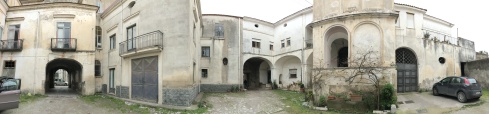
©Blogginginitaly.com

©Blogginginitaly.com

On to Bianca’s beautiful home in San Giorgio for an incredible five-course meal, all lovingly homemade, and served with conversation, smiles, and more deciphering of the family tree.

©Blogginginitaly.com

©Blogginginitaly.com

©Blogginginitaly.com

©Blogginginitaly.com

©Blogginginitaly.com

©Blogginginitaly.com

Even artichokes roasted in the fire.

©Blogginginitaly.com

©Blogginginitaly.com

©Blogginginitaly.com

©Blogginginitaly.com

At the house, we met Bianca’s husband, Giovanni, his sister, and Danilo’s wife, Anna Paola, who made the delicious chocolate torte. Bianca and her husband are retired teachers and Danilo and his wife both have PhDs, his as a physicist and hers in bioethics. “He works on the volcano,” his uncle Renato told me before coming, so we kidded Danilo about being able to flip the switch for tourists. In reality, he actually does monitor the seismic activity among other things, so he’s definitely a good person to know when in Napoli!

I explained to my new-found relatives that each trip we take to Italy gives us a few extra special experiences, soprattutto, above all others. Spending the day with them was certainly one of these!

Around 7 PM, Danilo and Bianca returned us to our hotel in Napoli, a nearly 2 hour drive back in crazy bumper to bumper traffic, which Danilo makes twice daily for work.

Bianca and Danilo, I am so grateful we had the opportunity to meet you, to try to untangle the family tree, to see my grandmother’s house, and benefit from your incredibly warm hospitality. We will always remember the day we spent with you and your family.

Bianca e Danilo, io sono così grato abbiamo avuto l’opportunità di incontrare voi, per cercare di districare l’albero genealogico, per vedere la casa di mia nonna, e trarre vantaggio dalla tua incredibilmente calorosa ospitalità. Ricorderemo sempre il giorno abbiamo trascorso con voi e la vostra famiglia.

Grazie mille… speriamo che ci vediamo di nuovo qualche volta!

©Blogginginitaly.com

©Blogginginitaly.com

When I get home, I will attempt to reconstruct the family tree from my scribbled notes and assemble my siblings, aunt, and any interested nieces, nephews and cousins, to share more photos and stories. For now, I remain incredibly happy to be able to share this amazing experience. Definitely Missione Compiuta!
Ciao,
Judy


Colorful, Grand Napoli

10 Mar

When we arrived last night, there were already two calls waiting for us at our hotel. Neapolitan hospitality.

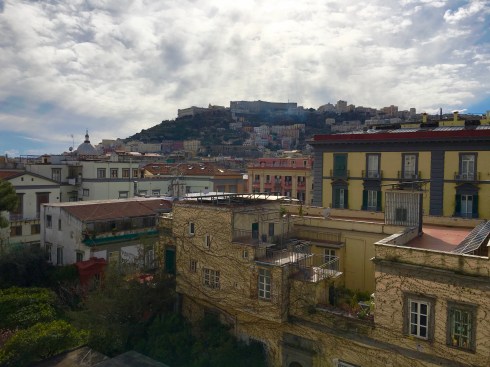
Giovanni, the proprietor of Giovanni’s Hostel where Benita stayed two years ago, invited us for dinner. Being too tired, we opted to wait until today to meet him. Before we left our hotel, these were the morning’s colorful views from our balcony.

©Blogginginitaly.com

©Blogginginitaly.com

©Blogginginitaly.com

©Blogginginitaly.com

©Blogginginitaly.com

©Blogginginitaly.com

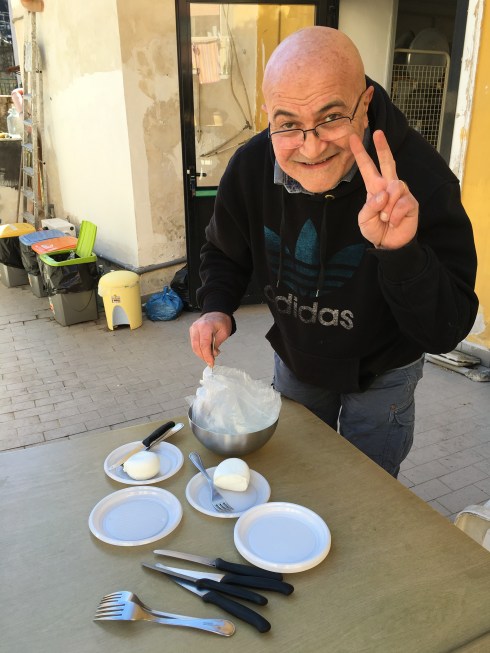
It’s clear in the moments after we met Giovanni why he’s rated the #1 hostel in Napoli. His love and knowledge of this historic city, as well as his devotion to his guests, was evident immediately. “No one should leave Napoli without savoring fresh mozzarella,” he said, and so we joined him and two of his departing guests on his large deck for deliciously fresh, just made mozzarella.

©Blogginginitaly.com

©Blogginginitaly.com

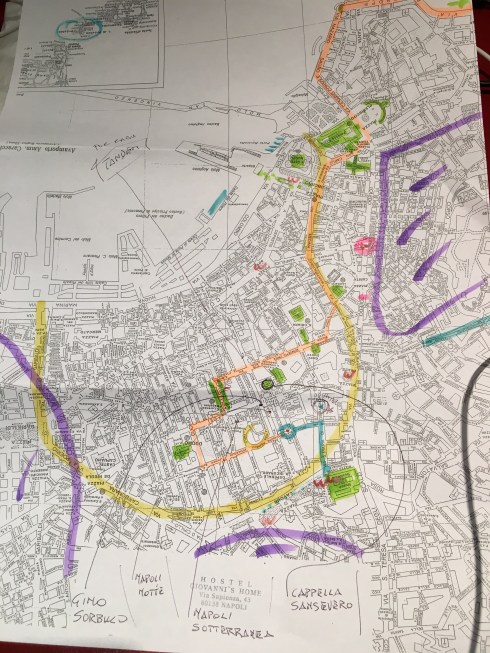
Just after those guests left, Tomas from Argentina arrived. Since Giovanni was going to give his “desk tour” of Napoli to Tomas, he invited us to join. As we might have guessed, it was incredible in interest and detail. He walked us through many of the “must do” sights and activities,  pulling various books, maps, charts, etc. from desk drawers and shelves. Here’s a copy of the color coded map we left with.

©Blogginginitaly.com

©Blogginginitaly.com

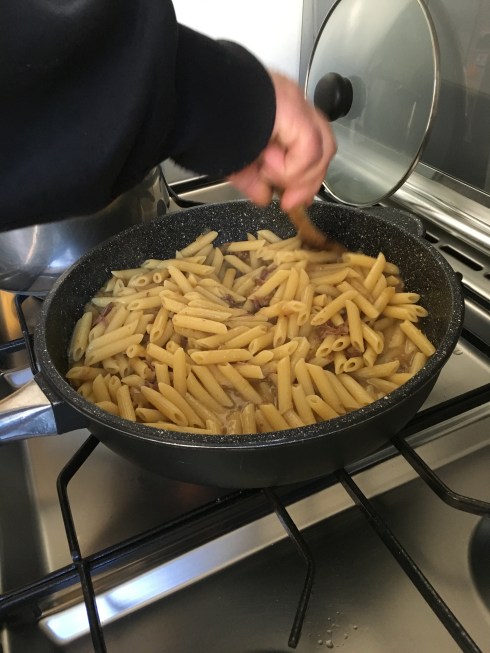
After our tour planning, Giovanni decided it was time for lunch, so he pulled some of his homemade Genovese sauce from the freezer, (slow cooked onions and beef), and made pasta Genovese for us. Smiles all around!

©Blogginginitaly.com

©Blogginginitaly.com

During lunch, we talked a lot about Napoli and the fact that so many only know it as a train station they use to pass through to other parts of southern Italy. Unfortunate indeed, as there is truly so much art, history and culture here. Giovanni showed this CNN clip he recently found, and I pass it along to you. It really gives a wonderful view of Napoli, a city well worth a visit.

As for my other call at the hotel, you’ll have to wait a day or two to learn about it. In the meantime, suffice it to say that we are delighted we are finally experiencing Napoli, its history, culture, food, treasures and people.

Grazie mille, Giovanni, for your friendship, food and hospitality!

©Blogginginitaly.com

©Blogginginitaly.com

Ciao,

Judy and Leonardo

The Moka Man

17 Feb

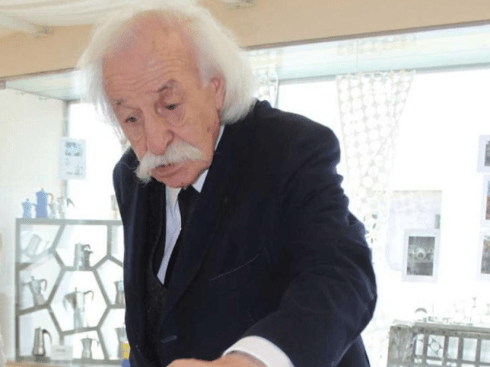
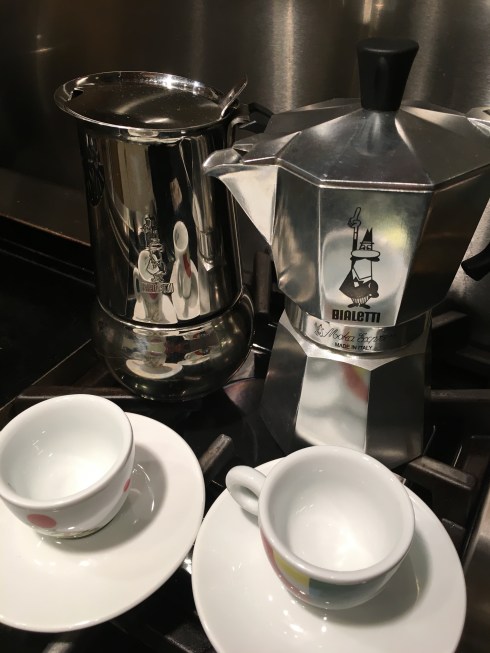
Who says you can’t take it with you? Not the family of Renato Bialetti, the man responsible for turning the octagonal Italian espresso maker, La Moka, into a global phenomenon.

© 2015 L'Italo-Americano. All rights reserved.

© 2015 L’Italo-Americano. All rights reserved.

Renato Bialetti passed away last week at the age of 93. According to local Italian papers, it was his three children, Alessandra, Antonello and Alfonso, who decided on a most fitting resting place for their father’s ashes – a large Moka.

La caffettiera con le ceneri di Renato Bialetti (foto Danilo Donadio) La Stampa

La caffettiera con le ceneri di Renato Bialetti (foto Danilo Donadio) La Stampa

Renato’s father, Alfonso, completed his design for the Moka Express in 1933. Over the next six years, 70,000 Moka units were produced and marketed in the weekly Piedmont markets. But when son Renato started running the family business in 1946, he was determined to make the Moka world-famous.

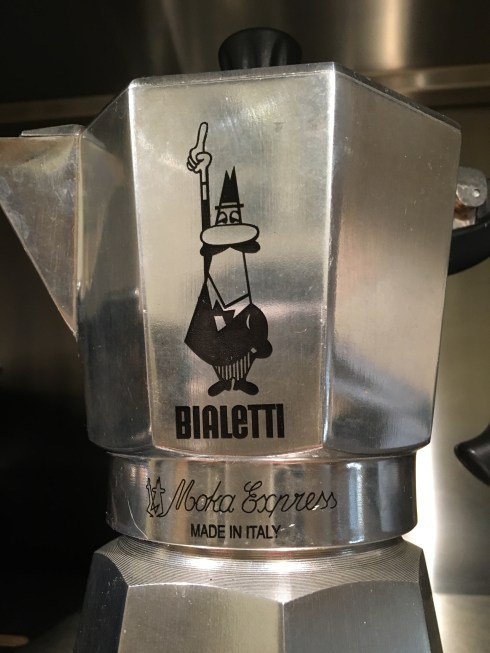
His huge marketing campaign, coupled with the addition of a new mascot, proved invaluable.  Renato added Bialetti’s now well-recognized trademark, the Moka mascot, which was based on a humorous cartoon doodle of father Alfonso. The “omino coi baffi”, the little man with mustache ordering an espresso, became the recognized symbol of the Bialetti Moka worldwide.

©Blogginginitaly.com

©Blogginginitaly.com

Why was the Moka such a success? Among other reasons, it enabled all people, not just the wealthy, to brew high-quality, great tasting coffee at home, replacing the need for expensive or primitive coffee makers, or the need to go out for good coffee.

Today, it is estimated that over 330 million units of varying shapes and sizes have been purchased. Count us among the millions!

©Blogginginitaly.com

©Blogginginitaly.com

RIP Renato, and may you long savor that wonderful espresso aroma.

Ciao,
Judy


Buon San Valentino!

14 Feb

For Valentine’s Day, I decided to go all out on family gifts this year.

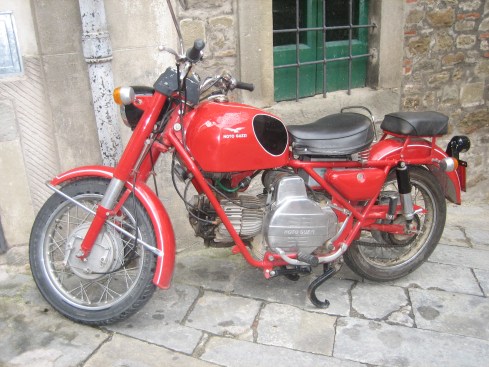
For Len, the car of his dreams:

©Blogginginitaly.com

©Blogginginitaly.com

For Benita, an easy way to zip around the city:

©Blogginginitaly.com

©Blogginginitaly.com

And for me, because I’m kind of a free uber driver, two options:

©Blogginginitaly.com

©Blogginginitaly.com

©Blogginginitaly.com

©Blogginginitaly.com

So Len and Benita, make room for the new additions. Oh, sorry, I meant room on your walls for the new framed photos, not room in the garage!

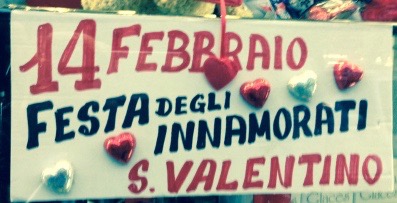
Wishing everyone a very Happy St. Valentine’s Day, Buon San Valentino,

and hoping it’s a little bit sweet

©Blogginginitaly.com

©Blogginginitaly.com

a little bit spicy

©Blogginginitaly.com

©Blogginginitaly.com

and filled with whatever makes you smile!

©Blogginginitaly.com

©Blogginginitaly.com

Ciao,
Judy

Christmas Traditions and Pizzelle

17 Dec

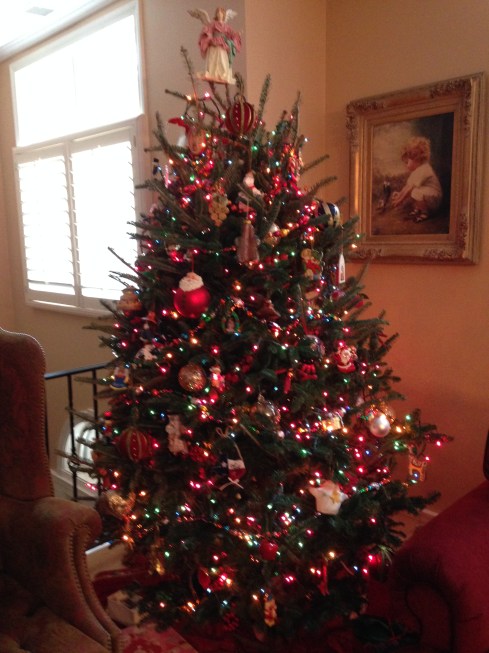
Italian families love their traditions, and our is no different. Each Friday after Thanksgiving, we buy our REAL tree, then spend the rest of the weekend decorating it and the house.

©Blogginginitaly.com

©Blogginginitaly.com

©Blogginginitaly.com

©Blogginginitaly.com

Then, a few weeks before Christmas, Benita and I do some baking. One of our favorite things is making pizzelle, a traditional Italian waffle cookie.

Pizzelle were first made in the south-central area of Abruzzo in the 8th century.  Two small towns each claim to have originated the treat, Salle, in the Province of Pescara, and Cocullo, in the Province of L’Aquila.

Although they can be made with various flavors, we happen to love them loaded with anise.

©Blogginginitaly.com

©Blogginginitaly.com

©Blogginginitaly.com

©Blogginginitaly.com

©Blogginginitaly.com

©Blogginginitaly.com

While the pizzelle are delicious, the best part for me is our tradition of making them together. As for Len, he’s our tester, making sure we have just the right amount of anise.

Click Christmas Pizzelle for Benita’s post as well as the recipe.


©Blogginginitaly.com

©Blogginginitaly.com

Ciao,

Judy

Christmas Pizzelle