My Ancestors’ Home

5 Dec

Built on the main street of Pietrabbondante, about 150 years ago, (now with the recognition plaque), is the house where Grandpa Alex was born is 1895. 

©blogginginitaly.com

As with many Italian families, there were likely a few generations living together in the house for a time. What we do know for certain is that Alex was born in this house and emigrated to the US in 1899. 

Looking at the house, the main entry is to the left and cellar entrance, where animals were usually kept, to the right. But my great-grandmother was a seamstress and fitted her customers in this area instead.  Today, piles of wood are neatly stacked awaiting to create warm winter fires.

©blogginginitaly.com

Rinella proudly showed me a piece of the rock used to build the house. 

©blogginginitaly.com

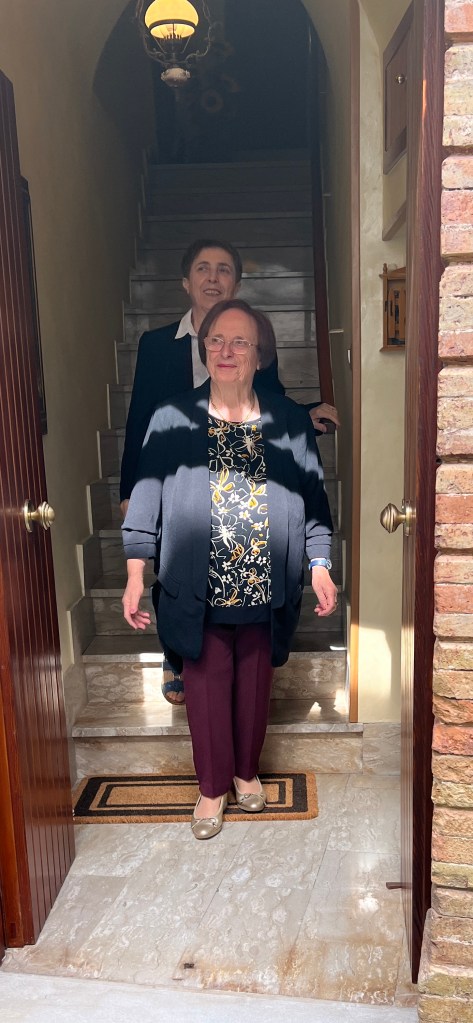
The front door opens to a staircase leading to the first floor or the living space. One can’t help but be struck by the creative use of glass bricks built into the staircase above to allow light to penetrate through.

©blogginginitaly.com

At the landing, a door opens to the multi purpose kitchen/living/breakfast room, with plenty of light from two large windows,
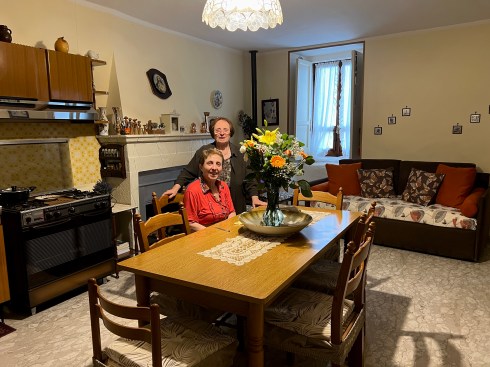
©blogginginitaly.com

and warmth from the fireplace.
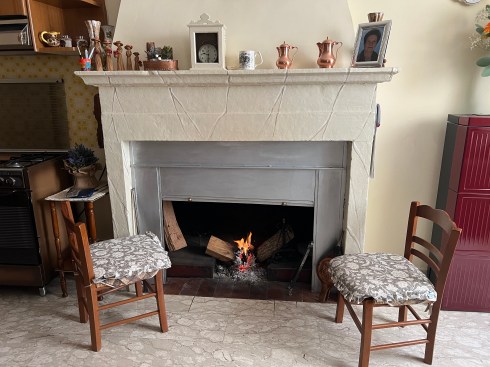
©blogginginitaly.com

Beyond this is a dining room, bathroom and secondary kitchen.

©blogginginitaly.com

Another door leads to the upper part of the staircase with the glass bricks.

©blogginginitaly.com

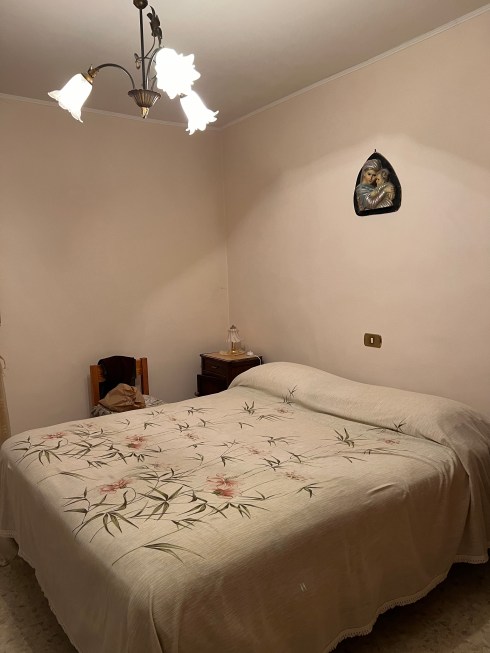
On the second floor, a long hallway leads to two bedrooms… the primary, which we quickly passed on our right, (much more to come on this!), 
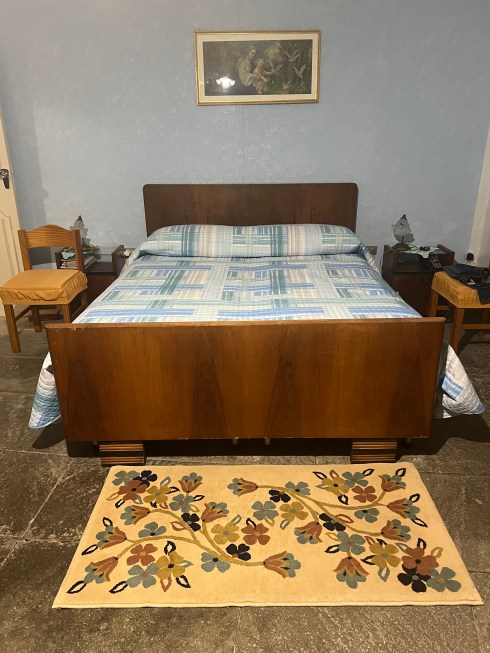
©blogginginitaly.com

a smaller bedroom and a bathroom.
©blogginginitaly.com

There is even a secondary entrance which faces a higher level street behind the house.

©blogginginitaly.com

This long hallway houses the Singer sewing machine, still functioning, originally used by my great-grandmother!

©blogginginitaly.com

Incredibly, I learned on this trip that the house remains nearly unchanged, including almost all furnishings, books, etc., from the time my ancestors sold the house to the grandparents of the current family. 

At the top of the next staircase leading to the third floor sits this wonderful trunk, which, I am told,  belonged to my relatives and survived at least six voyages between Italy and America.

©blogginginitaly.com

This hallway leads to another bedroom,

©blogginginitaly.com

and a step up entrance to the attic.

©blogginginitaly.com

There were so many interesting stories and things to see and learn about here, but among my favorites were hiding spaces used during the war and various sized vessels used for crushing grapes. I asked Rinella to sit next to the large one to show its size.

©blogginginitaly.com

After exploring the cellar, it was time to return to the primary bedroom one floor below. And this time, all I could say was WOW!

©blogginginitaly.com

The huge room has two large doors which open to a balcony on the main street, proving fresh air and great lighting.

©blogginginitaly.com

The balcony has initials in the iron railing, one being  an I, (Iacapraro) and the other unclear as it has been damaged. This, coupled with handed down stories and the age of the house, suggests that the house may have been built by my 2nd great grandfather. 

©blogginginitaly.com

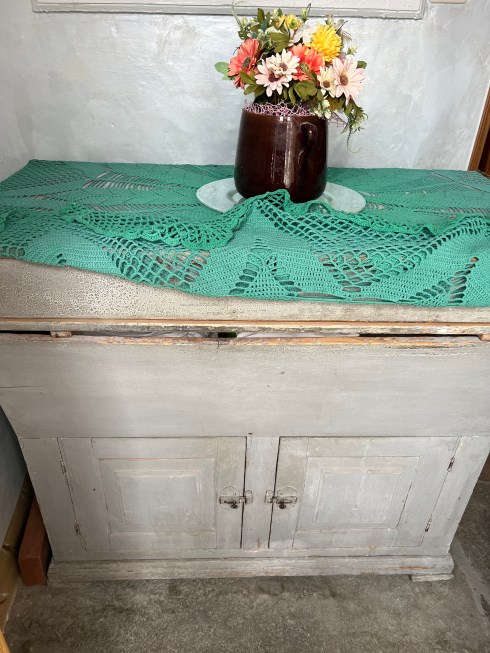
In front of the door on the right is an alcove where the old bread cabinet now sits. Prior to relocating it here, the space was where my grandfather Alex probably slept as a child!

On August 20, 1938, Alex wrote this to his wife:  
“Honey, I got the real kick of the whole trip today when I reached my hometown and saw the house and the actual room of my birth.”
©blogginginitaly.com

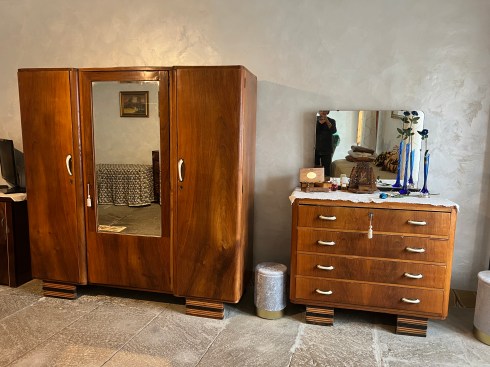
The furniture, radio, books…all belonged to the Iapcapraros!
©blogginginitaly.com

And so, incredibly, here is where Len and I slept…not only in my ancestors’ bedroom, but surrounded by their belongings!

©blogginginitaly.com

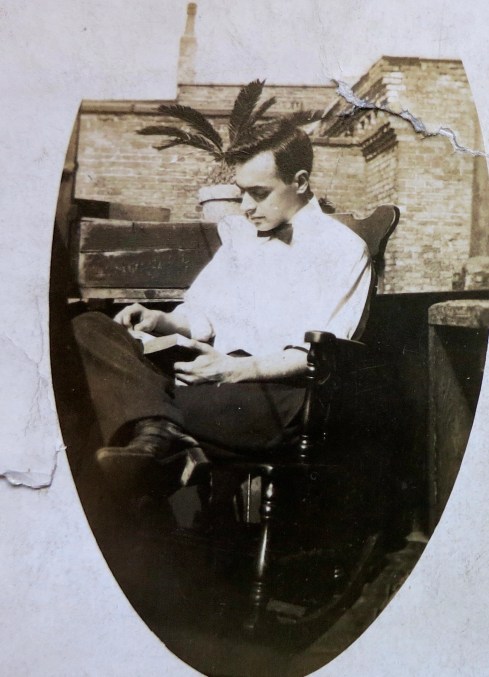
And then I found out something wonderful. Alex left here at age four and returned to this home at age 43, by then a successful American architect. When seeing this, the room of his birth, he asked the owners if he could leave his mark on this room. They were delighted. And his mark? He designed the ceiling. Before departing, I am told he took necessary measurements and then worked with architects in Rome to have it installed. 

The night before the ceremony, I don’t think I slept a moment. All I could do was study this massive ceiling and reflect on so many things…

the long journey that brought me here…

©blogginginitaly.com

Alex, my paternal grandfather, and how humbled, proud and grateful he would be…
©blogginginitaly.com

and the next family who was raised here, who passed on the stories, and took loving care of this house.

©blogginginitaly.com

In completing the final chapter of this amazing story, I am  grateful to all those who helped make this happen, and also to those of you who read along and took this journey with me over these many years. Your comments and messages have been so appreciated and I always try to respond to each one. 

How to end this final Pietrabbondante chapter? It came to me in a message from Rinella on the day we were returning to Chicago. This is the incredible lady who opened her home and gave her bedroom to two complete strangers for three days and nights.

©blogginginitaly.com

Dear Judy, here you are about to start the return journey home and when everything is ok, we will all be satisfied. We have enjoyed together to the fullest this incredible experience of our ancestors. I am sure that your journey never ends, but it repeats itself in the quietest corners of your mind. Be careful with your suitcases! because this time you are bringing home an extra and much bigger suitcase: it is your heart full of emotions, memories and new dreams and projects. We will remember, Judy, your smile and your kindness; we will remember the style and elegance of Leonard’s soul.

HAVE A GOOD TRIP JUDY AND LEONARDO. We wish you all the BEST!

Thank you, Rinella, no longer strangers, and now,
forever family…

Ciao (through my grateful tears…),
Judy 
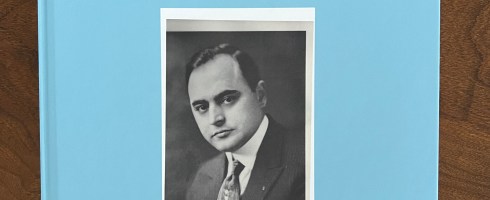


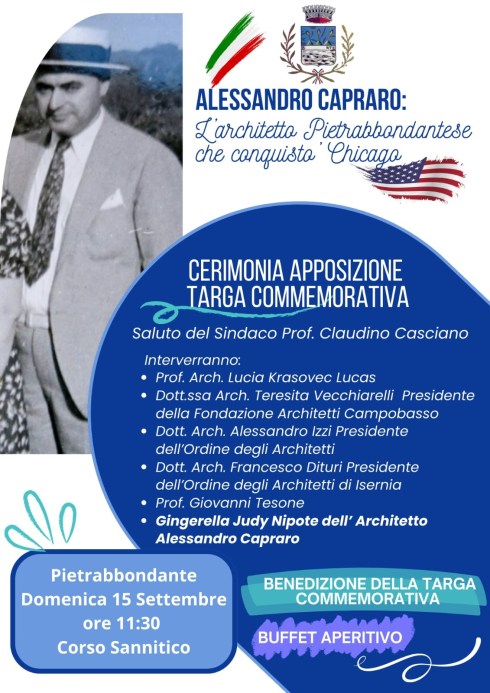
Alexander Capraro – Recognition Ceremony

4 Nov

125 years ago, in 1899, my great grandparents, Emerenziana Vitullo, a seamstress, and Vincenzo Iacapraro, a cobbler, said goodbye to their Pietrabbondante home to begin their long and challenging journey to Chicago. They would travel with their two small children, my grandfather Alexander, aged four, and his two-year-old sister, Fortunata. We will never know what led to this decision, but we do know the impact this decision had on the life of their eldest son, Alexander. 

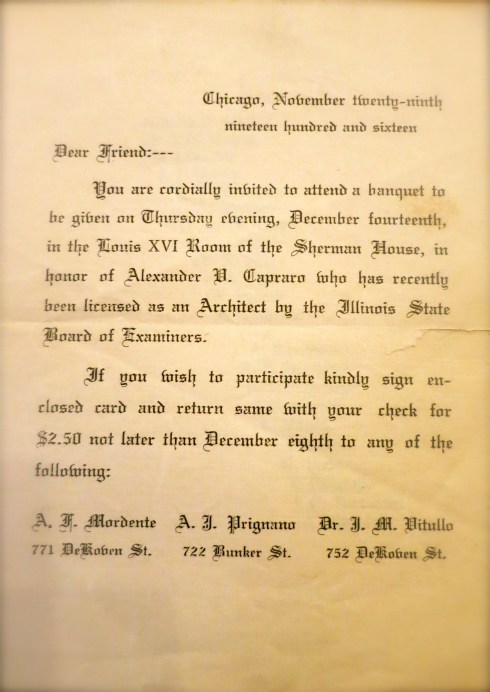
Alex Capraro, as he became known in Chicago, was a determined student who quickly learned to speak, read and write perfect English. At the young age of 21, he passed the architectural exam and became the first licensed Italian-American architect in the state of Illinois. And so began his incredible career.

©blogginginitaly.com

©blogginginitaly.com

On Sunday, September 14, 2024, Len and I were honored to be guests of the Pietrabbondante community as they recognized the achievements of Alexander Capraro, American architect, native son of Pietrabbondante.

After breakfast in my ancestor’s home, Rinella, the lady of the house, guided me to the primary bedroom balcony to see the preparations happening below. 

©blogginginitaly.com

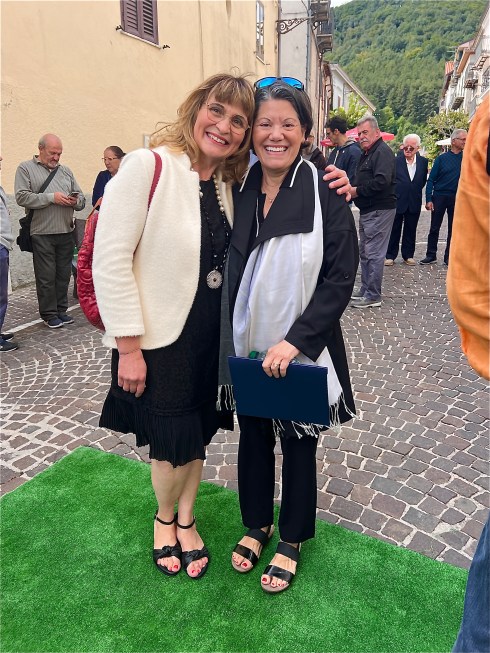
A bit later, Rinella and her sister, Rosaria, emerged from the house –  as proud as can be. 

©blogginginitaly.com

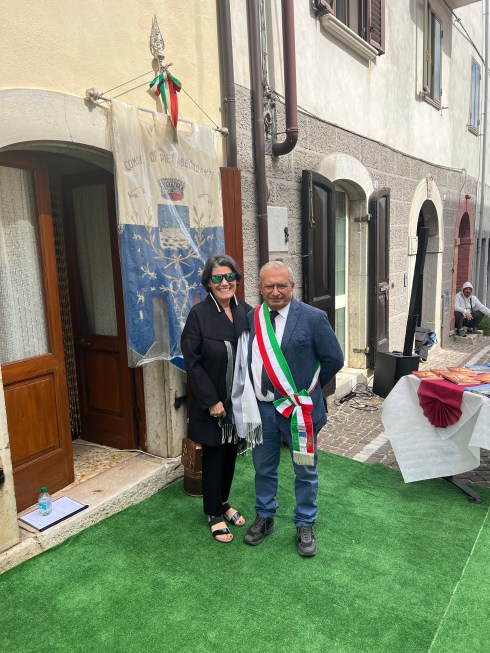
I followed, and was quickly introduced to the mayor of Pietrabbondante, Prof. Claudino Casciano.

©blogginginitaly.com

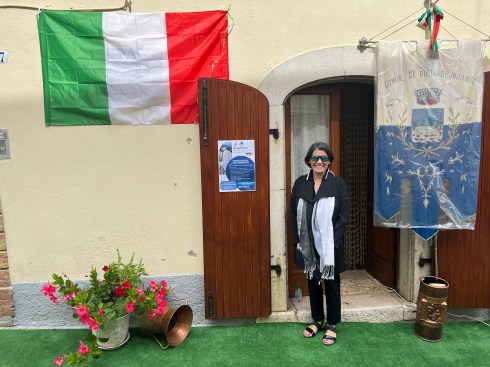
The local banner was proudly displayed and posters announced the location, time, and speakers.

©blogginginitaly.com

The event was to be followed by an aperitivo buffet, to which all were invited.

In addition to the mayor, the speakers included heads of various architectural foundations and associations; professors/researchers of architecture; and yours truly. 

©blogginginitaly.com

As mentioned before, there are about 200 full time residents, and it seemed that most of them had joined the celebration.

©blogginginitaly.com

The event was called to order by Mariella, the very efficient person responsible for organizing the gathering.

©blogginginitaly.com

She thanked those present and then the Italian national anthem was played and proudly sung by all. Most unexpectedly for me, however, was that it was followed by the Star-Spangled Banner. Truly, I felt as if I had won an Olympic gold medal! My emotions and tears were proof.

©blogginginitaly.com

The impressive group of speakers highlighted some of Alex’s significant commissions:

Main Navy Buildings in Washington DC, 1918:

The Italian Pavilion, 1933, Century of Progress, International Exhibition; 

©blogginginitaly.com

©blogginginitaly.com

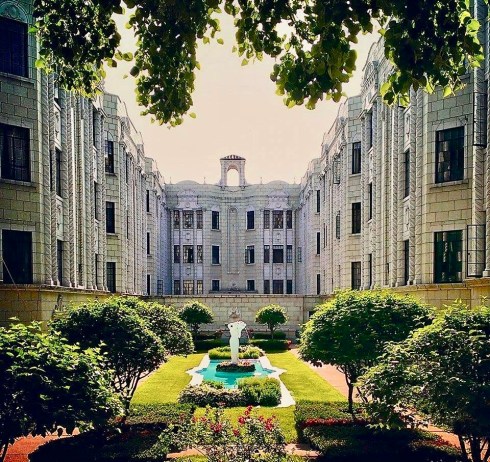
Casa Bonita, opened 1920’s, annually featured in Open House Chicago.

©blogginginitaly.com  Aunt Marion, Alex’s daughter by M. Mattucci

©blogginginitaly.com

©blogginginitaly.com   indoor pool

©blogginginitaly.com detail by M. Mattucci

Then it was my turn to speak (in Italian, of course!) I knew others would highlight Alex’s accomplishments; what I wanted to do was share a bit of his personal life.

When Alex met the love of his life, my grandmother Modesta Rose, (Maude), her mother said he was too skinny to date! But she did date and marry him in 1920, and they shared an incredible life together for 36 years. 

©blogginginitaly.com

They had two sons, one daughter, and eventually 10 grandchildren. ©blogginginitaly.com (Grandpa is left of grands; author is center child)

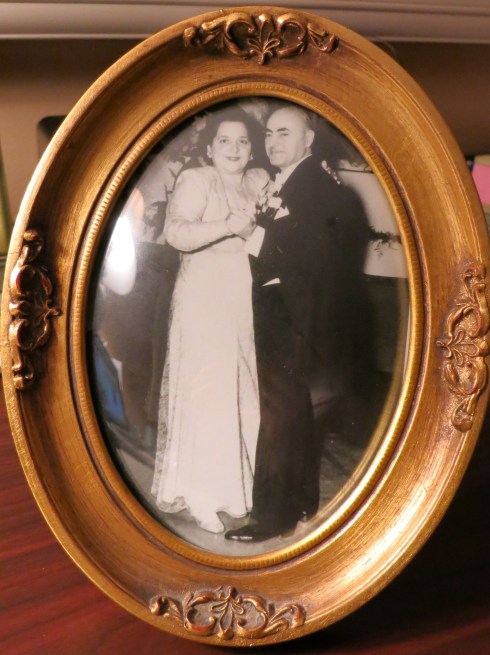
My grandparents were full of life; they loved each other and their family deeply. And how they loved to dance!

©blogginginitaly.com

Their lives were busy – whether working, traveling by car with their children, entertaining, or being involved in the community. Most of all, however, they loved when family gathered around their large dining room table for delicious dinners prepared by Maude. Although I was only five when Alex left us, I vividly remember sitting at that big table and seeing his warm smile. 

On August 20, 1938, Alexander Capraro reached the very spot where we were gathered in Pietrabbondante. He was 43. It would be his first and only visit since he emigrated at age four. That night, he wrote the following to Maude:

Honey, I got the real kick of the whole trip today when I reached my hometown and saw the house and the actual room of my birth. Today I met several aunts, cousins, and many relatives. They cried with joy and they never stopped feasting their eyes on the boy from America. In a few minutes, word spread that I was there and the whole town seemed to come around to see the native son from America.

There was more to my speech, but I ended with the following:

Alexander Capraro was a wonderful man, full of love, life and talent. But he was also a humble man, never loud, never bragging, always sharing his talents through his work, and sharing his time and advice when asked. If he were here today, he would be so appreciative and humbled by this incredible recognition and outpouring of affection. 

And then it was time for the unveiling:

©blogginginitaly.com

The blessing:

©blogginginitaly.com

And the reading of the plaque (below in English):

IN THIS HOUSE WAS BORN 
ALESSANDRO V. CAPRARO
BORN IACAPRARO
HIS ARCHITECTURE ENCHANTED CHICAGO

PIETRABBONDANTE   7 JANUARY 1895
CHICAGO   1 NOVEMBER 1956
MUNICIPALITY of PIETRABBONDANTE 9/15/2024

©blogginginitaly.com

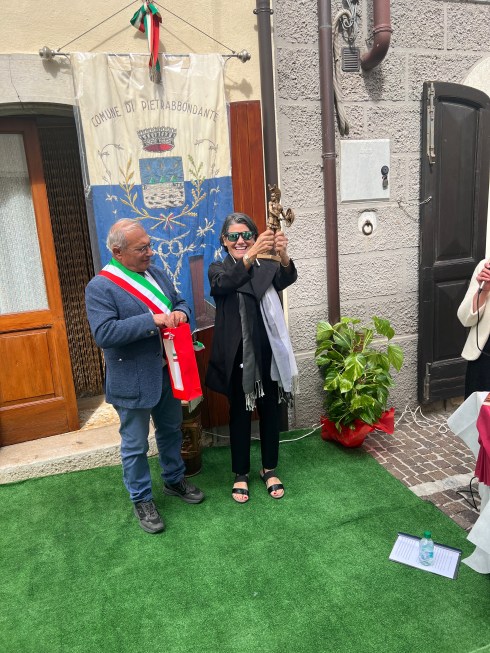
Afterwards, I received a statue from the mayor symbolizing the town’s ancient history:

©blogginginitaly.com

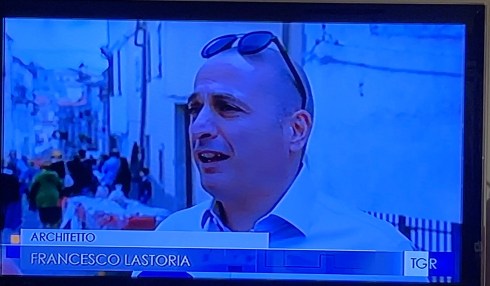
RAI news was there to document the event, 

©blogginginitaly.com

which we later watched on the evening news! They included my interview, and more importantly, the interviews of two people whose research brought this story to life, Architect Francesco Lastoria 

©blogginginitaly.com

and Prof. Arch Lucia Krasovec-Lucas.

With the ceremony over, it was time for celebration, and celebrate we did. The buffet, which no one would touch until Len and I started, was incredible and very generous.

©blogginginitaly.com

And finally it was their turn to join.

©blogginginitaly.com

Of course, the ceremonial Prosecco needed to be popped, and I was asked to do the honors.

©blogginginitaly.com

©blogginginitaly.com

People waited patiently to introduce themselves and shake our hands. To me, it was their personal acknowledgement of the native boy who had left home and pursued his dreams, yet he would always belong to this place. 

I began to understand how my grandfather felt…the whole town seemed to come around to see the native son {now granddaughter} from America.

We too now belong to the Pietrabbondante family. 

This has truly been an overwhelming experience for me –  research that has taken years with an ending I could never have imagined.  

I am forever grateful to so many including: 

-The entire community and administration of Pietrabbondante
-The speakers who shared their time and perspectives
-The family who has cherished/cared for my ancestors’ house and embraced us as family
-Aunt Marion, who kept my grandfather’s papers and entrusted them to me
-Lucia, for her past and ongoing research
-Francesco who discovered my posts about Alex 10 years ago and was determined to have him recognized
-Len, for taking this journey with me
-Alex, my grandfather, for his courage, determination, and love of life, as well as for being an incredible role model of a life well- lived.

To Alex, thank you!

©blogginginitaly.com

Ciao,
Judy


Pietrabbondante: My Extended Family

3 Oct

In 2014,  Len and I visited Pietrabbondante, the birthplace of my paternal ancestors. Although we didn’t meet any relatives or locals, we thought we had found my grandfather’s birth home and were satisfied to add another check to our “Visit Ancestral Hometowns” list. 

In late 2017, however, I received a very unexpected message (in Italian but translated here):

I am Francesco, an Architect from Pietrabbondante, and it is an honor for me to have been born in the same town as the illustrious Alessandro Capraro. I am researching all his works and it is my intention to have a street named after him in the town that gave him his birthplace. If you have any news, please respond to me. 

And so I did, and that response led to the beginning of a new and wonderful friendship. For much of the next year, Francesco and I talked, exchanged information, and finally met in Cortona in the fall of 2018.

Meet Francesco, the dedicated architect who never gave up on his goal to recognize the works of a fellow native architect, and the reason we were in Pietrabbondante last month to recognize Alessandro Capraro, my grandfather.

Bravo, ben fatto, Francesco, e grazie mille!

©blogginginitaly.com

While the next post will be filled with pictures and stories from the ceremony, I first wanted to introduce you to some wonderful people, my new extended family of Pietrabbondante.

Because of Francesco’s research, we were able to meet the people who were raised in and still own/occupy my ancestors’ home. Not only did their grandfather purchase the home from my great-grandfather, they have kept the home virtually intact, furniture and all. 

©blogginginitaly.com (From left, Roberto, Rinella, Judy, Len, Rosaria and Francesco)

Rinella is now the lady of the house and her sister and brother came from northern Italy to be with us. And here’s a truly incredible gift – Rinella insisted that Len and I stay in the primary bedroom, the bedroom that had been occupied by my great grandparents and the birth bedroom of my grandfather in 1895! 

The house is so interesting it warrants a post of its own, which will be the fifth in this series. For now, a bit more on the people.

As part of Francesco’s effort to bring more attention to the works of Alexander Capraro in the U.S., Francesco and Dr. Lucia Krasovec-Lucas, architect, sponsored a conference about him in Pietrabondante last year. I was zoomed into the conference and “met” Lucia for the first time. What I only recently learned was that she had done post doctoral work in Chicago 20 years ago. At that time, she discovered Alexander Capraro, architect from Pietrabbondante, and his architectural contributions to sites including the The Main Navy Building and the Munitions Building in Washington D.C.; Casa Bonita, still included as a historical site in the annual Open House Chicago; and The Italian Pavilion for the Century of Progress World’s Fair in Chicago in 1933-34.

©blogginginitaly.com (Dr. Lucia, 4th from right, next to Francesco)

Some years later, she published a book about her research, including drawings for the Italian Pavilion by Rome architects as well as my grandfather. She and Francesco are continuing their research even today, and of course, I will support them anyway I can. 

In 1938, Alexander Capraro visited Pietrabbondante, the only time he would since he left at age four. In a letter home to his wife Maude, he wrote:

“Today I met several aunts, cousins and relatives. They cried with joy and they never stopped feasting their eyes on the boy from America… In a few minutes, word spread that I was there and the whole town seemed to come around to see the native son from America.”

86 years later, returning to Pietrabbondante as the granddaughter of Alexander Capraro, I had some of the very same feelings as they warmly embraced me as part of the Pietrabbondante family.  

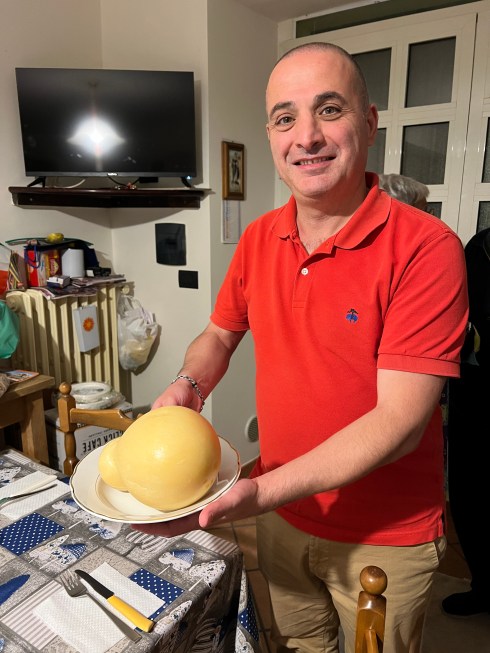
The first night in town, Francesco and his sister, Maria Concetta, plus cousins, of course, welcomed us for dinner at their family home. But before dinner, we were introduced to Caciocavallo, a wonderful local cheese.

©blogginginitaly.com

©blogginginitaly.com

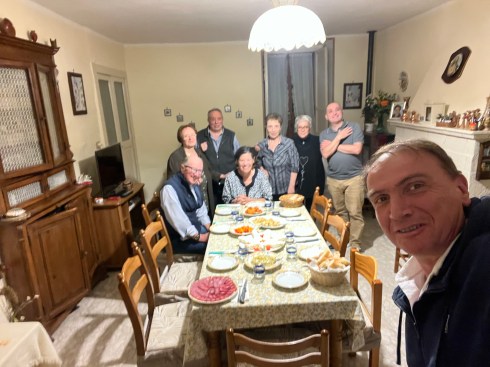
The last night, even after a huge buffet at the ceremony, Rinella and Rosaria insisted we needed just a simple dinner… 

©blogginginitaly.com

©blogginginitaly.com

As for my extended Pietrabbondante family, we’re not actually sure how we might be related, but if we go back far enough, there’s most likely a connection, either via bloodline or marriage. Vitullo and Di Salvo are common Pietrabbondante names that are in my family tree dating back to 1772, (thanks to Janet, Lyniece, and many others) and these names are in Francesco and Rinella’s ancestry as well. 

So many people spend endless hours tracing their ancestry. How very fortunate I have been to actually walk in the shoes of mine.

My heartfelt thanks for the tireless efforts and friendship of Francesco and Lucia, and the warmth, generosity and hospitality of Rinella, Rosaria and Roberto. I remain forever grateful to each of you. 

Next up, the reason for our return…the recognition and celebration of Alexander Capraro, American architect, born in Pietrabbondante in 1895.

Ciao,
Judy

Santuario Italico di Pietrabbondante

23 Sep

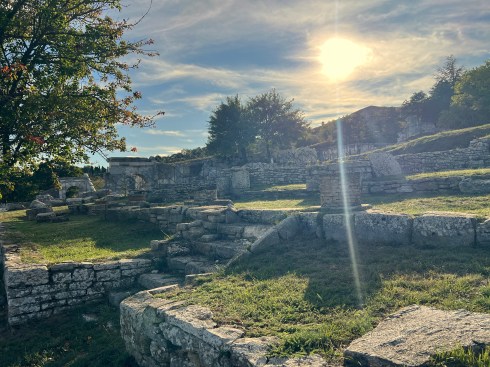
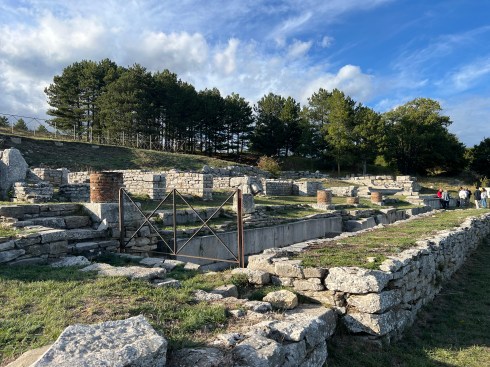
Pietrabbondante’s earliest known inhabitants were the Samnites, who arrived in Pietrabbondante in the 6th century BC. Many historians believe that it was the home of the assemblies of the Samnite federal government and the site is viewed as a Samnite sanctuary.

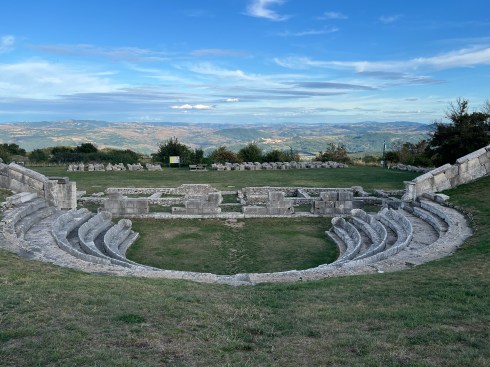
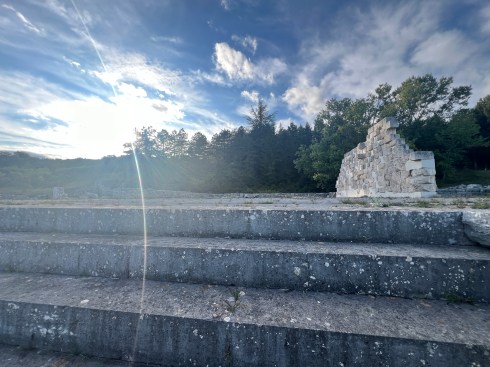
On the slope of Monte Saraceno, the Samnites built a complex of worship consisting of a theater, a temple and two arcaded buildings on both sides. Work began in the late 2nd century BC and was completed in 95 AD. The building, as articulated, was intended both for worship and for institutional activities.

©blogginginitaly.com

©blogginginitaly.com

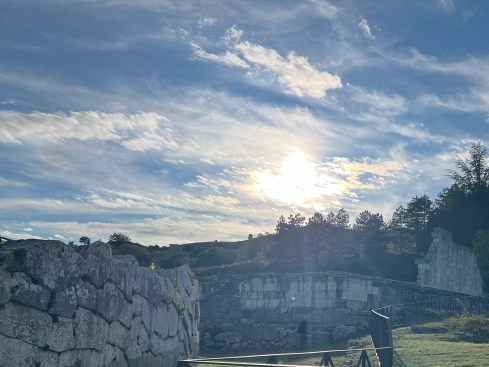
The theater-temple complex is located on the outskirts of Pietrabbondante and sits on the site of a 3rd century BC temple portico which was destroyed by Hannibal in 217 BC. To build it, the Samnites situated two terraces along the side of the mountain, but at different levels on a single axis. The theater consists of two elements: the auditorium and the building stage, which are linked together by two stone arches. 

©blogginginitaly.com

The auditorium is capable of holding up to 2,500 spectators. Each of the seats was created from a single stone block with the dorsal elegantly thrown backwards (i.e., ergonomically designed!); with signs at both ends of each row reserving them for judges, priests, and so on. On both sides of the orchestra, retaining walls of the embankment ended with supports sculpted in the form of a man,  made from a kind of volcanic ash. 

©blogginginitaly.com

In addition, the auditorium had and still has excellent acoustics. Our guide needed only to stand on a specific center location, then speak in a normal voice to be easily heard by all! 

©blogginginitaly.com

I tried it;  you can actually hear your own voice quietly in your ears and all seated around you can hear as well. 

©blogginginitaly.com

The entire embankment is supported by large semicircular and polygonal blocks processed by cutting without regular contours.

©blogginginitaly.com

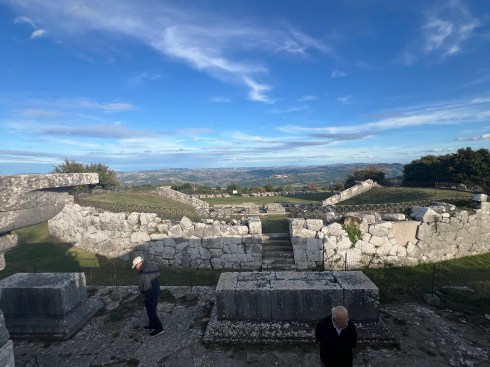
The temple, measuring 72 by 115 feet, lies behind the amphitheater. Today, the only structures remaining are the base and the eight columns that rose in front, and were paved with fine mosaics dedicated to different deities.  The roof was built with trusses, stringers, plates and tiles, each weighing 115 pounds. 

©blogginginitaly.com

©blogginginitaly.com

©blogginginitaly.com


The Samnites had an economy focused upon livestock and agriculture. Samnite agriculture was highly advanced for its time, and they practiced transhumance, the practice of moving livestock from one grazing area to another depending on the season.  Aside from relying on agriculture, the Samnites exported goods such as ceramics, bronze, iron, olives, wool, pottery, and terracottas. Their trade network extended across Campania, Latium, Apulia and Magna Graecia, the Greek inhabited areas in south Italy. It has been written that some were envious of their abilities.

The focus of this post is the archaeological site. Historically, however, what is known is that Samnites and Romans were enemies and engaged in many wars. Roman historians believed that Samnite society was highly militaristic. They feared Samnite cavalry and infantry, and nicknamed them Belliger Samnis, which translates to “Warrior Samnites”.[5][84] It is unclear if this portrayal is accurate and some consider it propaganda. Most Roman historical accounts of the Samnites were written after the Samnite civilization disappeared as of a result of their assimilation by the Romans. What we do know is that similar to the Etruscans, the Samnites were highly sophisticated in areas such as engineering, agriculture, architecture, arts, science, commerce and more.

And now we understand why the Samnite warrior stands atop the Pietrabbondante War Memorial.

©blogginginitaly.com

Many thanks to Lino for organizing this excursion, sharing his knowledge, and giving us the opportunity to walk this incredible archaeological site. Not only did we walk these ancient lands, we also gained wonderful  insights into the Samnites’ skills, innovation, determination and resilience. 

Bravo Lino! 

©blogginginitaly.com (Lino lower left)

Pleae note, the text in this post is mostly from Wikipedia, and  underlined words link to additional info, if interested. All photos are blogginginitaly.com.

Ciao, 
Judy


An Amazing New Ending to an Incredible Journey: Pietrabbondante, The Town

21 Sep

On October 21, 2013, I began a “journey” with my paternal grandfather, Alexander Capraro, via letters he wrote home to my grandmother, Modesta Rose (Maude). He was returning to Europe in 1938 for the first time since he left for America at age four with his parents and younger sister. 

©blogginginitaly.com

My final post of that series, written on July 3, 2014, was about Len and my reaching his birth town, Pietrabbondante, and finding his birth home… or so I thought! 

For those seeking information about your ancestors, my advice is to never give up. As you will see, in this and several posts to follow, TEN YEARS LATER, my new incredible “ending” has become an extended awareness of our family history as well as the beginning of wonderful new familial connections. 

Len and I returned to Pietrabbondante September 14-16, 2024, for an incredible recognition of my grandfather. But first, some expanded information I learned about the town and its history.

When my grandfather visited in 1938, he described Pietrabbondante in his letter home:

“The town has about 4000 people, electric light, and a secondary railroad. It is well named for the mountain peaks of stone and rocks… The scenery is beautiful beyond imagination.”

©blogginginitaly.com


©blogginginitaly.com

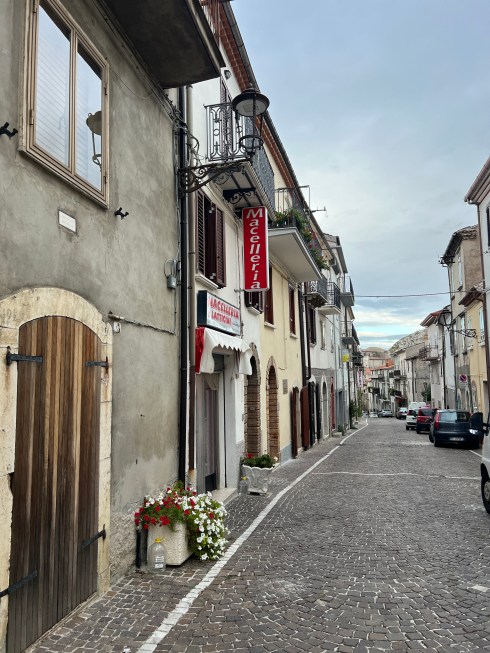
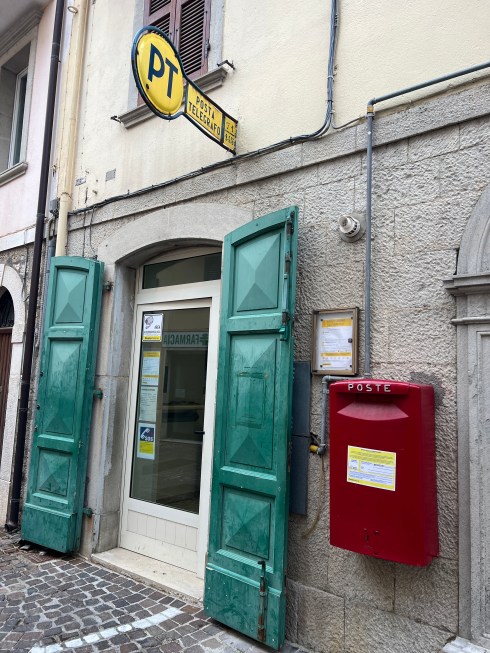
Today, the full time population is less than 200, but expands greatly during holidays and summer months. As with large and small towns throughout Italy, the annual cultural and religious festivals and celebrations are always on the calendar. There are no longer schools or restaurants in town, but among the places I noticed on my walk were two bars, two groceries, two butcher shops, a tabacchi, a post office, a pharmacy, a barber, a beauty salon, the church, and the municipal building.  Some of these are pictured below. 

©blogginginitaly.com


©blogginginitaly.com


©blogginginitaly.com


©blogginginitaly.com


©blogginginitaly.com


©blogginginitaly.com    Church of Santa Maria Assunta


©blogginginitaly.com     Pietrabbondante Municipio

Pietrabbondante is located in the province of Isernia, (Molise region), a two hour train ride from Rome. Interestingly, when my grandfather was born in 1895, the town was part of the Abruzzo region. (Seems like redistricting happens everywhere!)

Looking closely at the monument above, you’ll see a statue depicting an ancient Samnite soldier. This statue is a tribute to the fallen soldiers from Pietrabbondante in WWI. The funds for the statue were raised by an immigrant committee in America in 1919, and in 1920, the local city council used the funds to construct the monument.

But why a Samnite soldier, and who were the Samnites? More about the ancient history of Pietrabbondante in the next post.

For now, I’ll leave you with a short lesson in Italian:
Pietrabbondante = pietra [stone] + abbondante [abundance].
As my grandfather said, it is well named indeed!

Ciao, 
Judy 

Continue reading

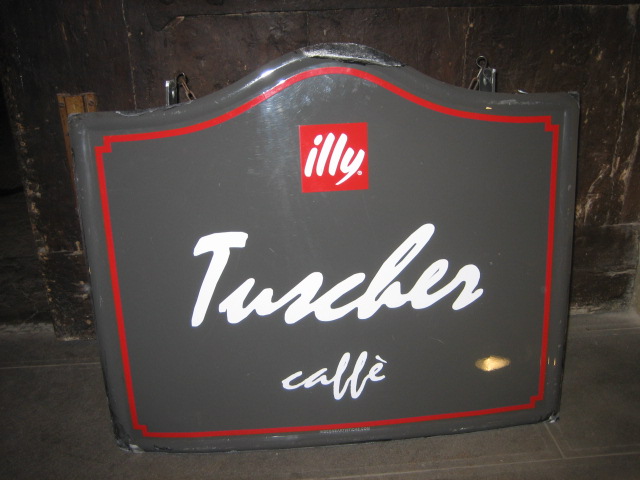
My Tribute to Tuscher Caffe

31 Dec

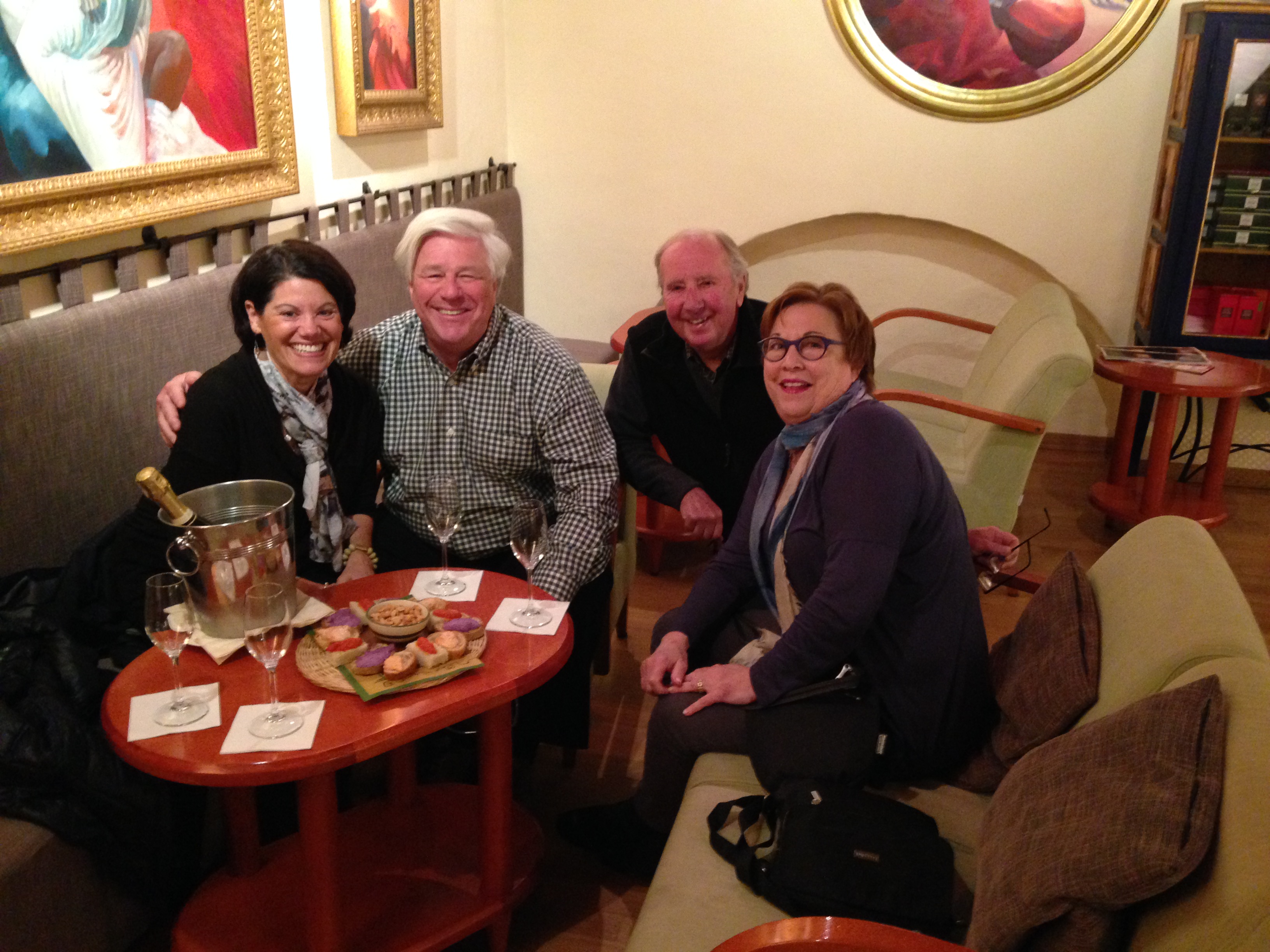
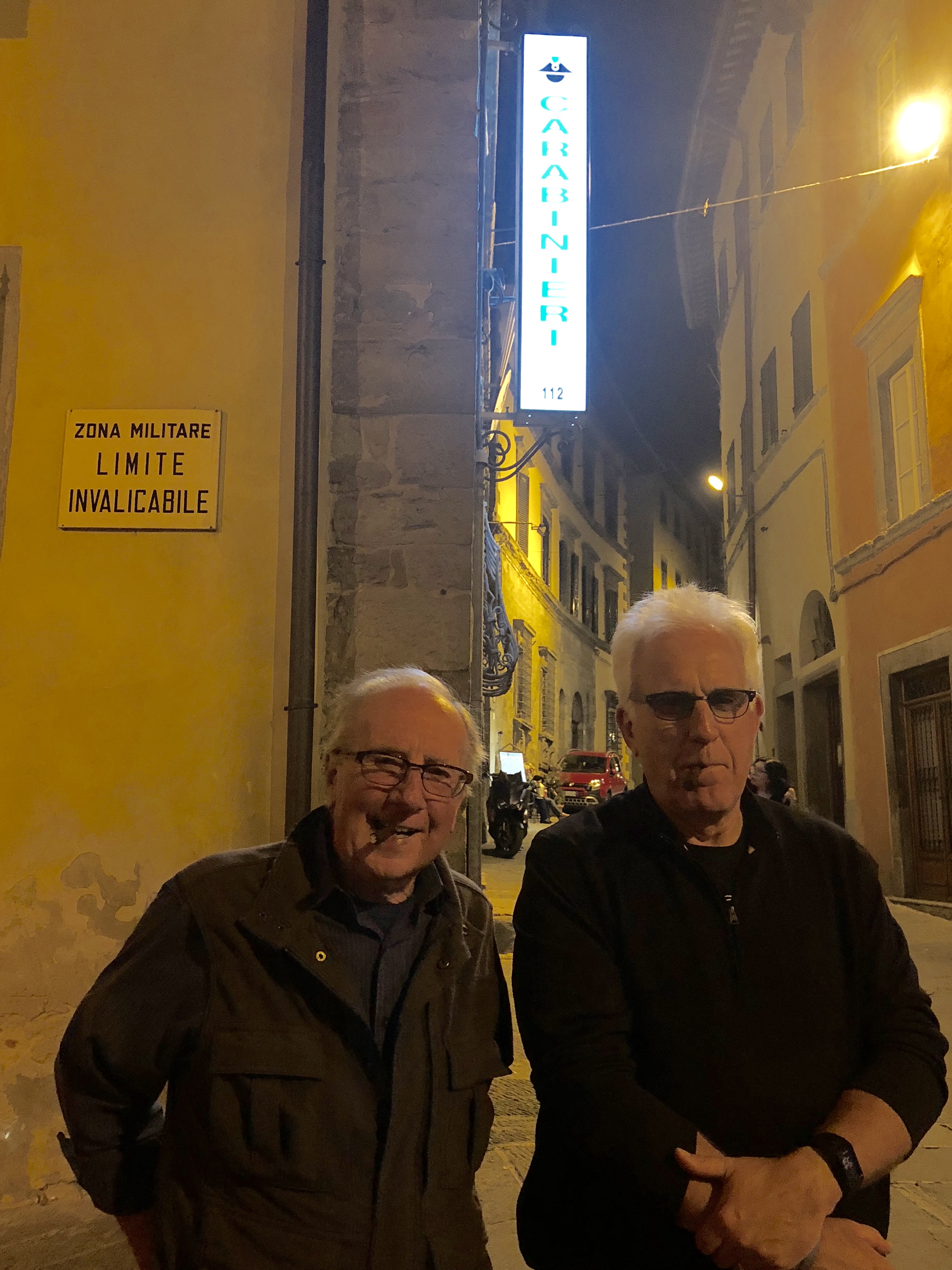
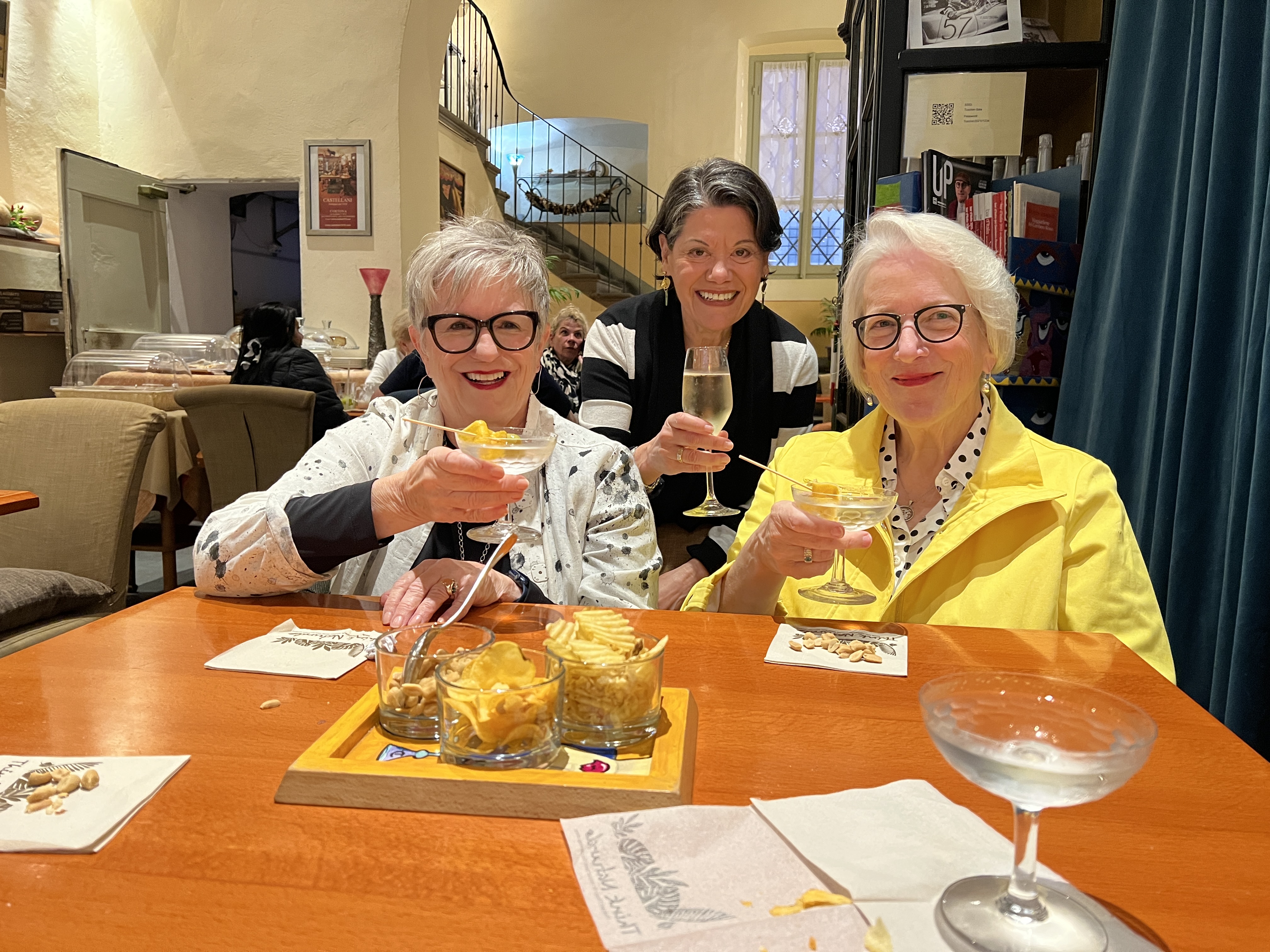
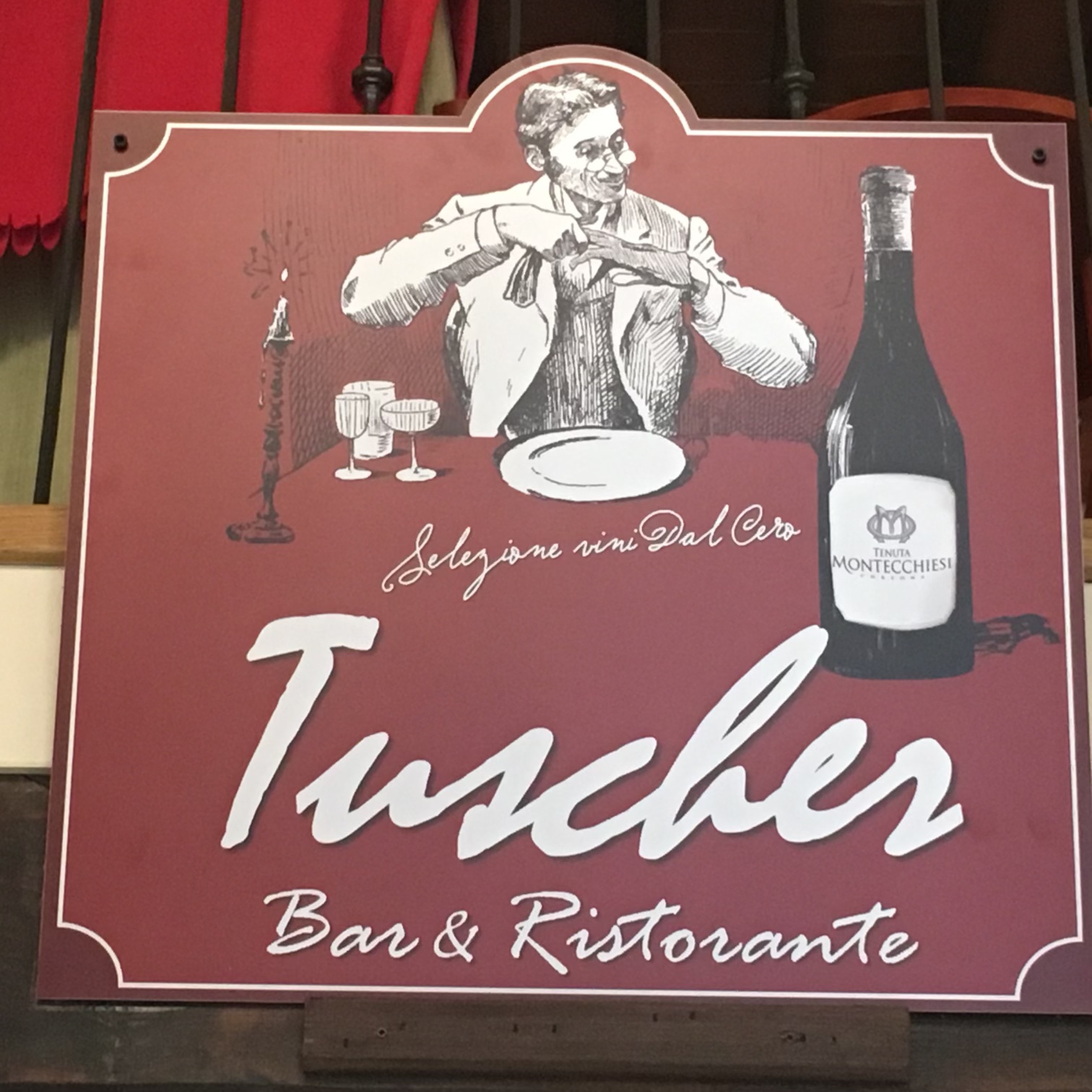
As 2023 comes to an end, so we must say arrivederci to Tuscher Caffe, Cortona. For so many of us, it leaves a vacancy, not only in the middle of Via Nazionale, but also as our “go-to” gathering place. Like the song from Cheers, “Sometimes you want to go where everybody knows your name, and they’re always glad you came…” And that’s how it always was at Tuscher, plus of course, a hug or kiss and a warm smile.
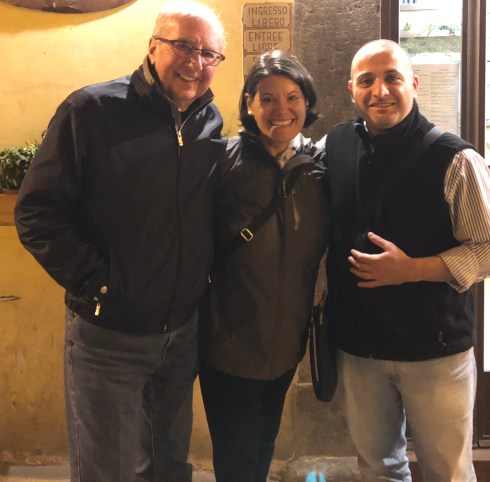
For Len and me, Tuscher was many things besides a great bar and caffe. Tuscher was the place we’d have breakfast or lunch, drinks before dinner, meet friends or make new ones, and bring any visiting guests, except on Monday.

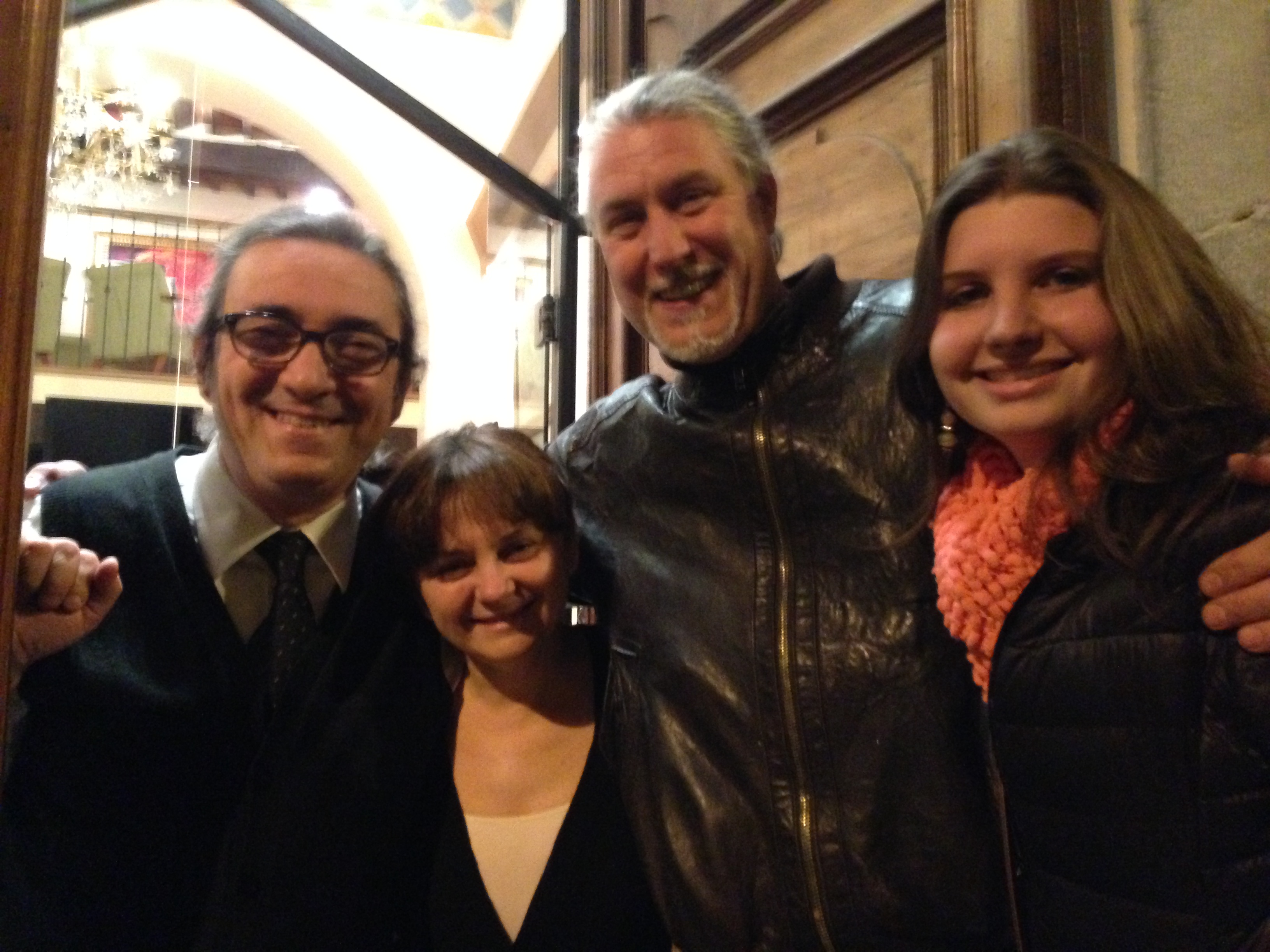
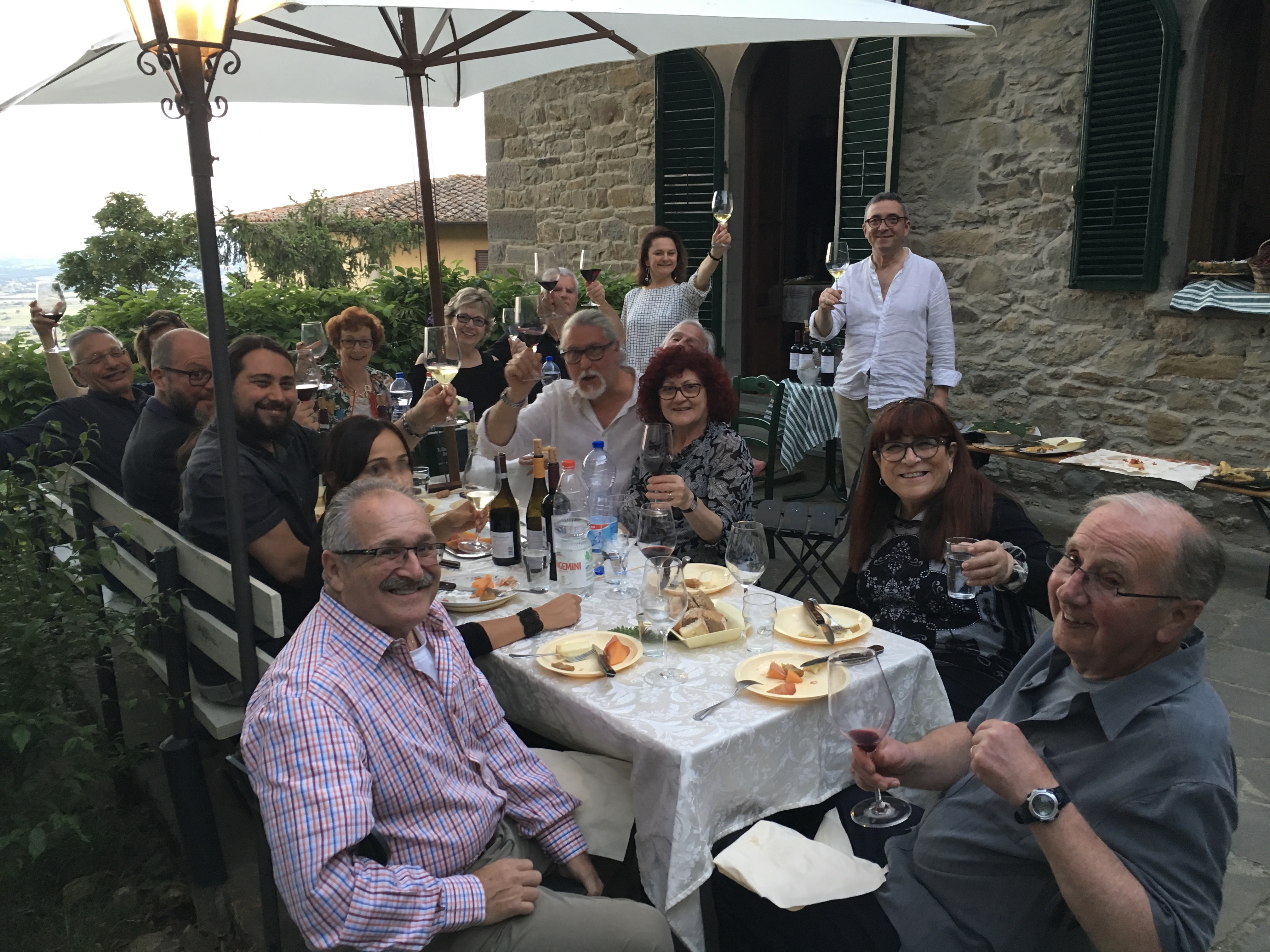
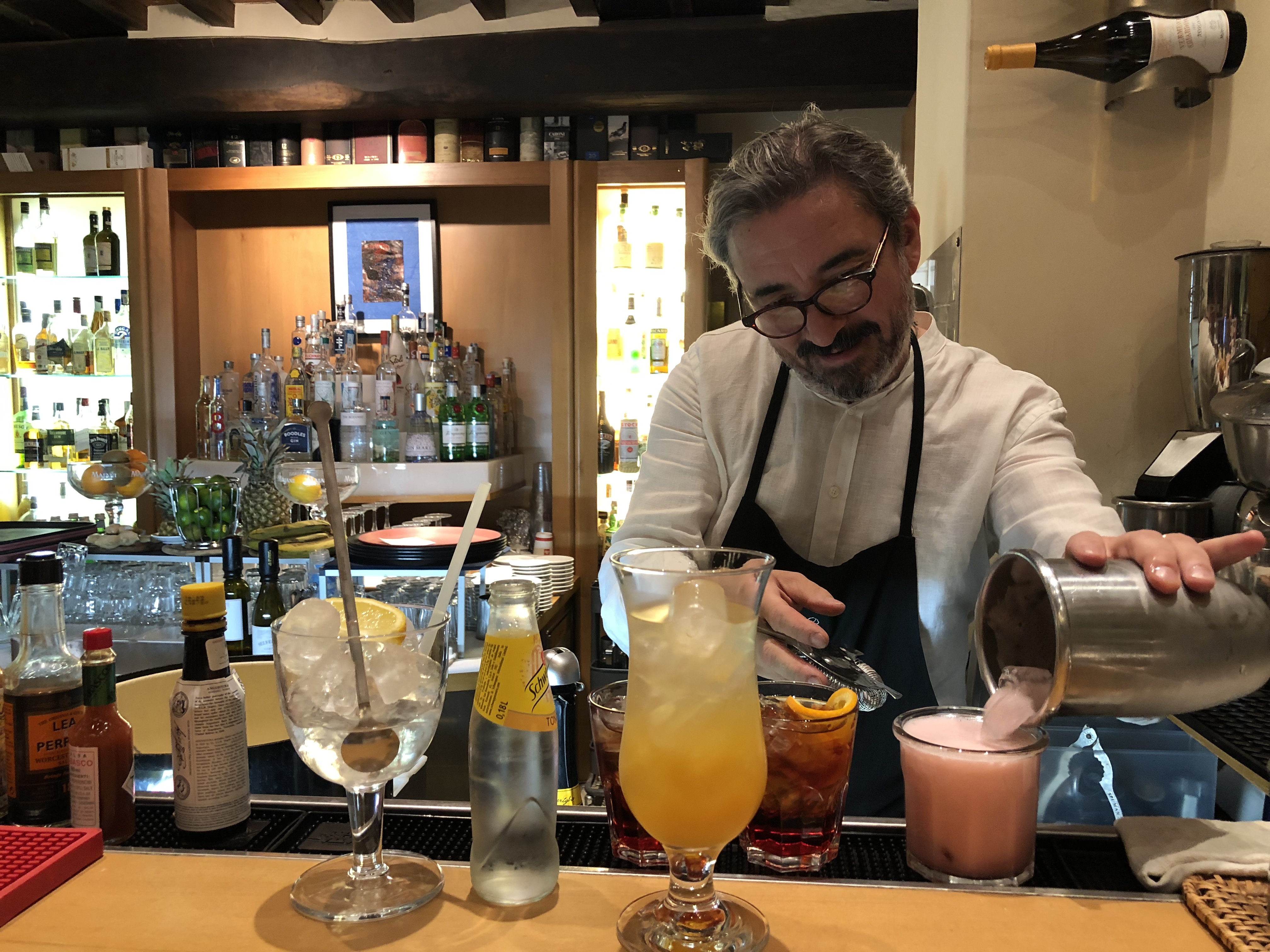
Tuscher was a family business, (with roots in Foiano) and its heart and soul were Daniela and Massimo. Although they will be sorely missed, we know they will be successful in whatever they choose to pursue. So rather that focus on “how sad”, I hope you find this tribute to be a walk down memory lane of some of the best times and heartiest laughs so many of us shared together. 

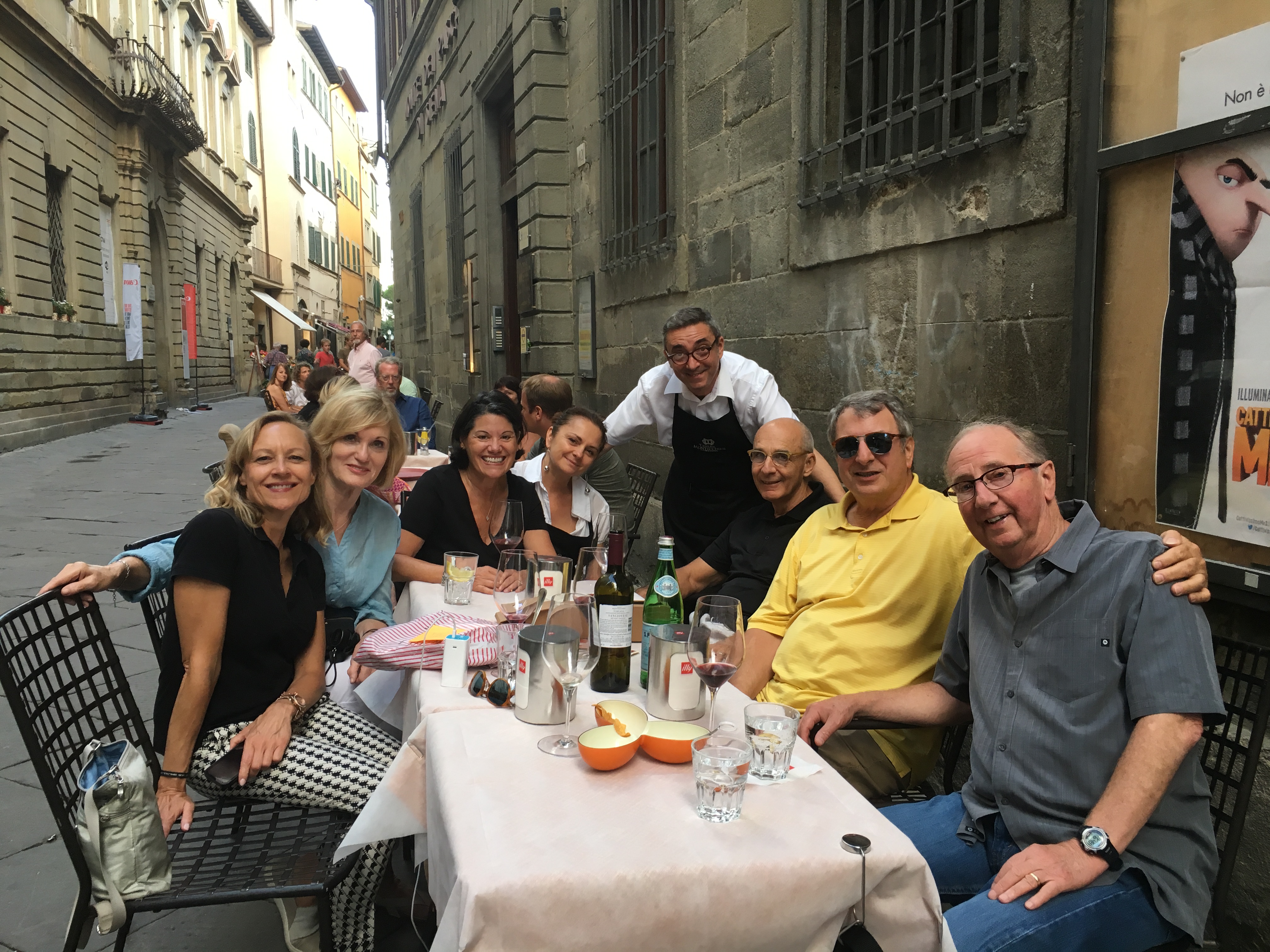
It was actually our daughter Benita who introduced us to Tuscher after checking it out with a friend.

And to paraphrase Bogie (Casablanca), I must say it was truly the beginning of a beautiful friendship. 

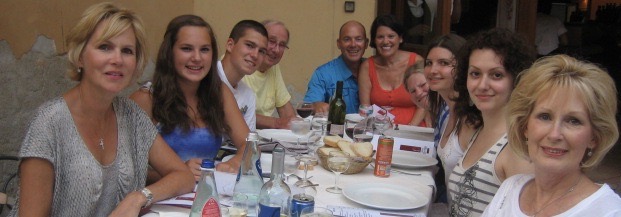
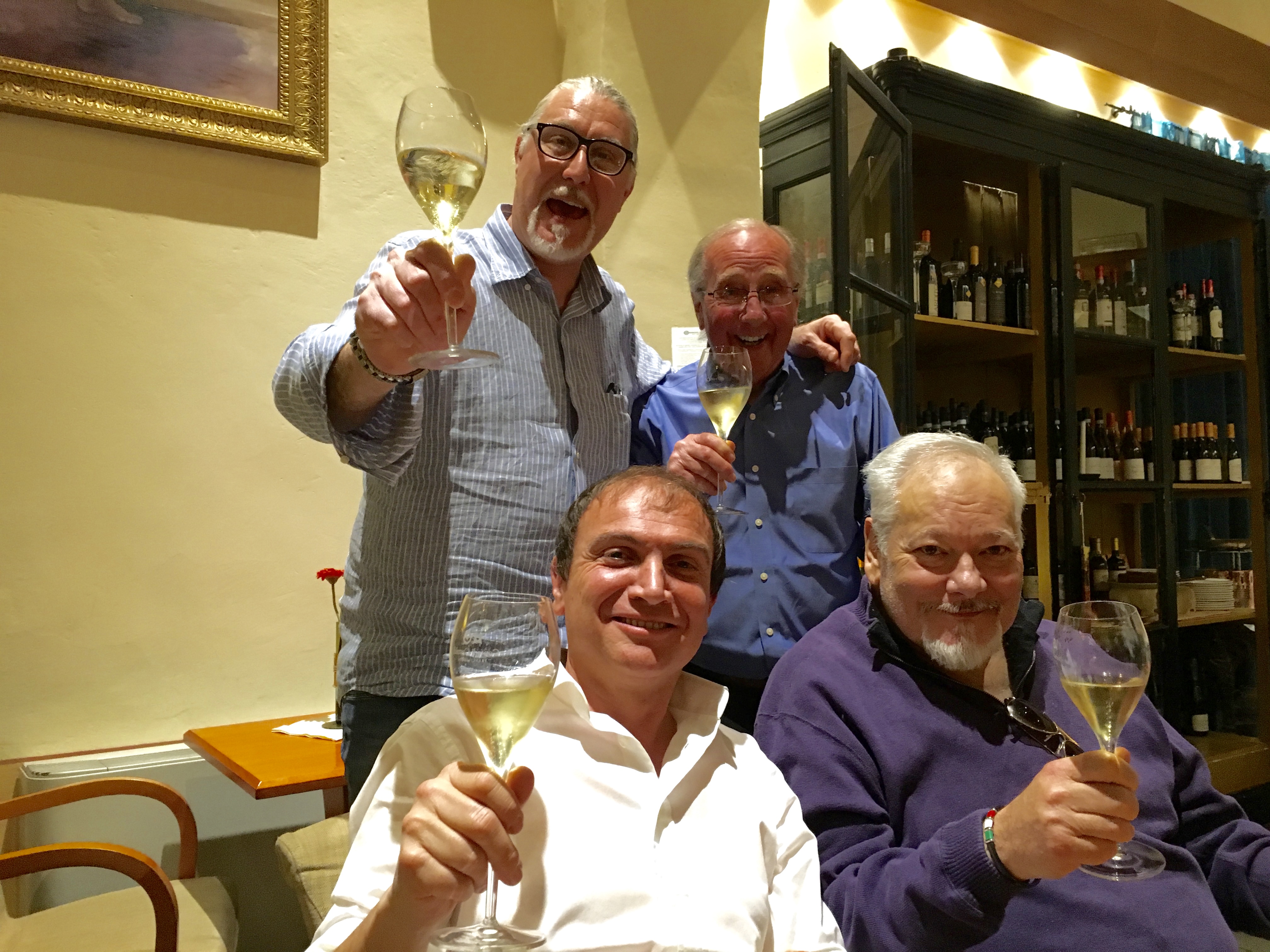
Lots of relatives came to visit… 

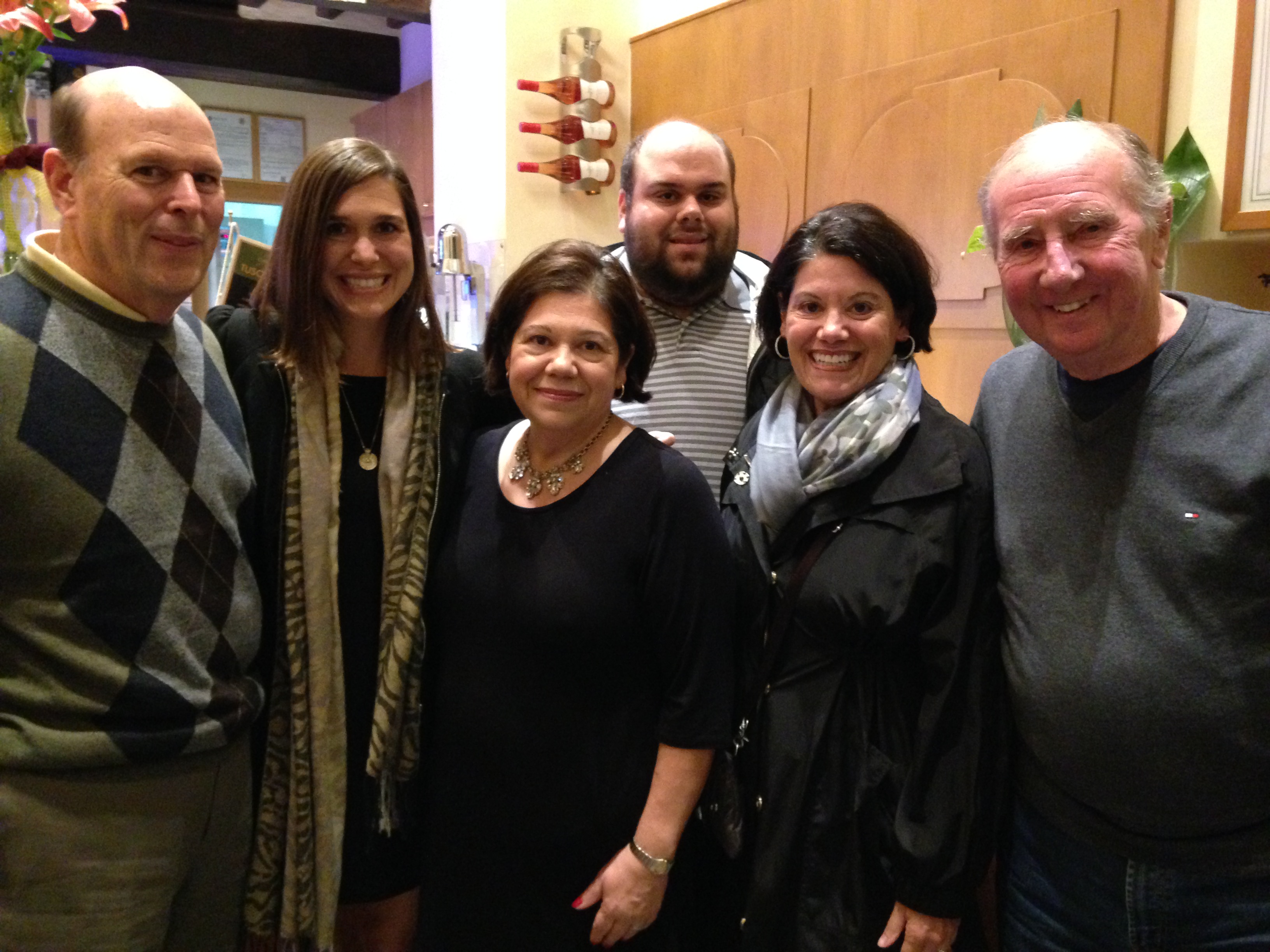
and so many friends too.

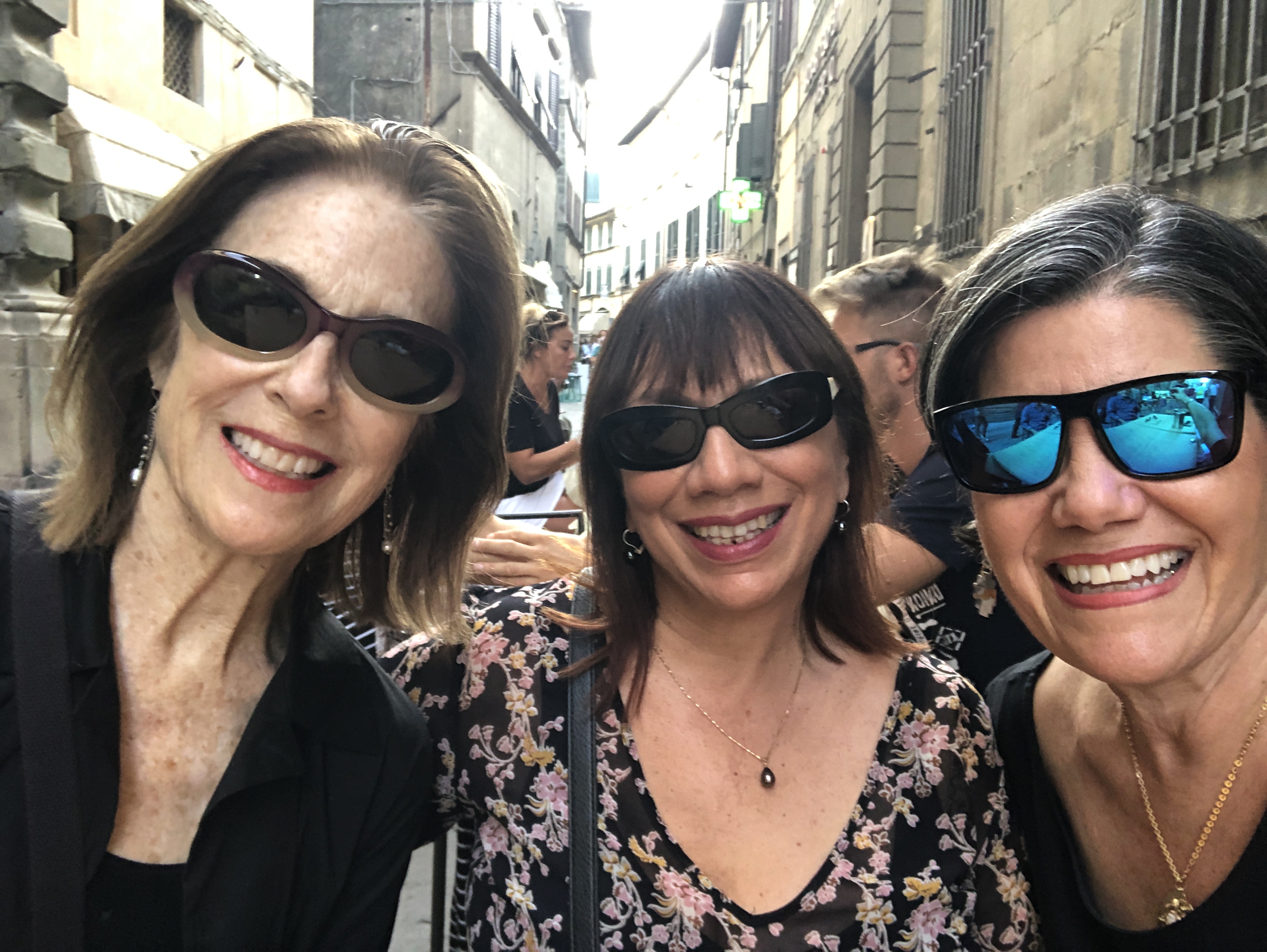
And then, there are all those we met, because at Tuscher, no one was ever a stranger.

Sometimes the festivities were off campus, come rain or shine!

Dinners,

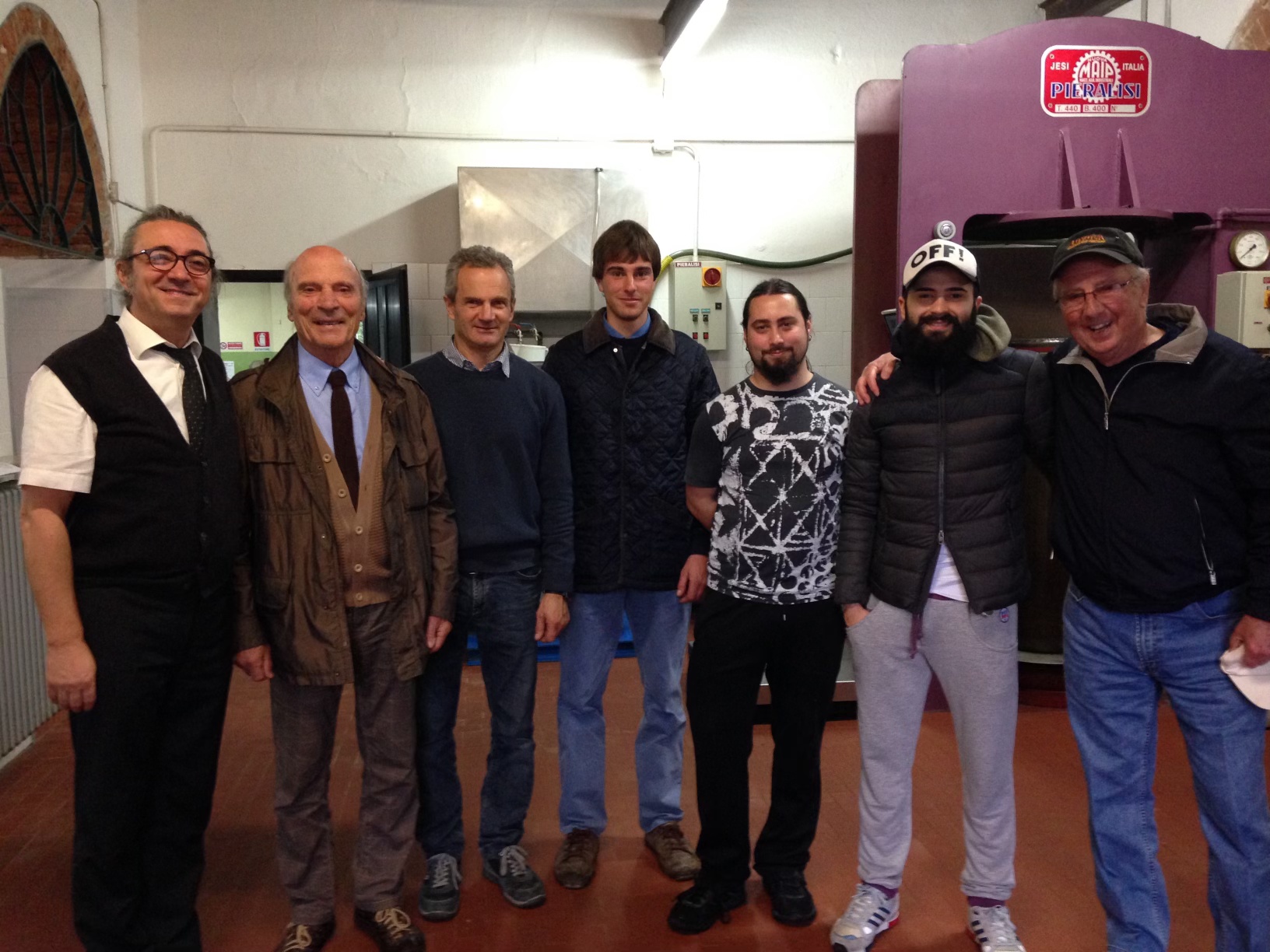
olive picking,

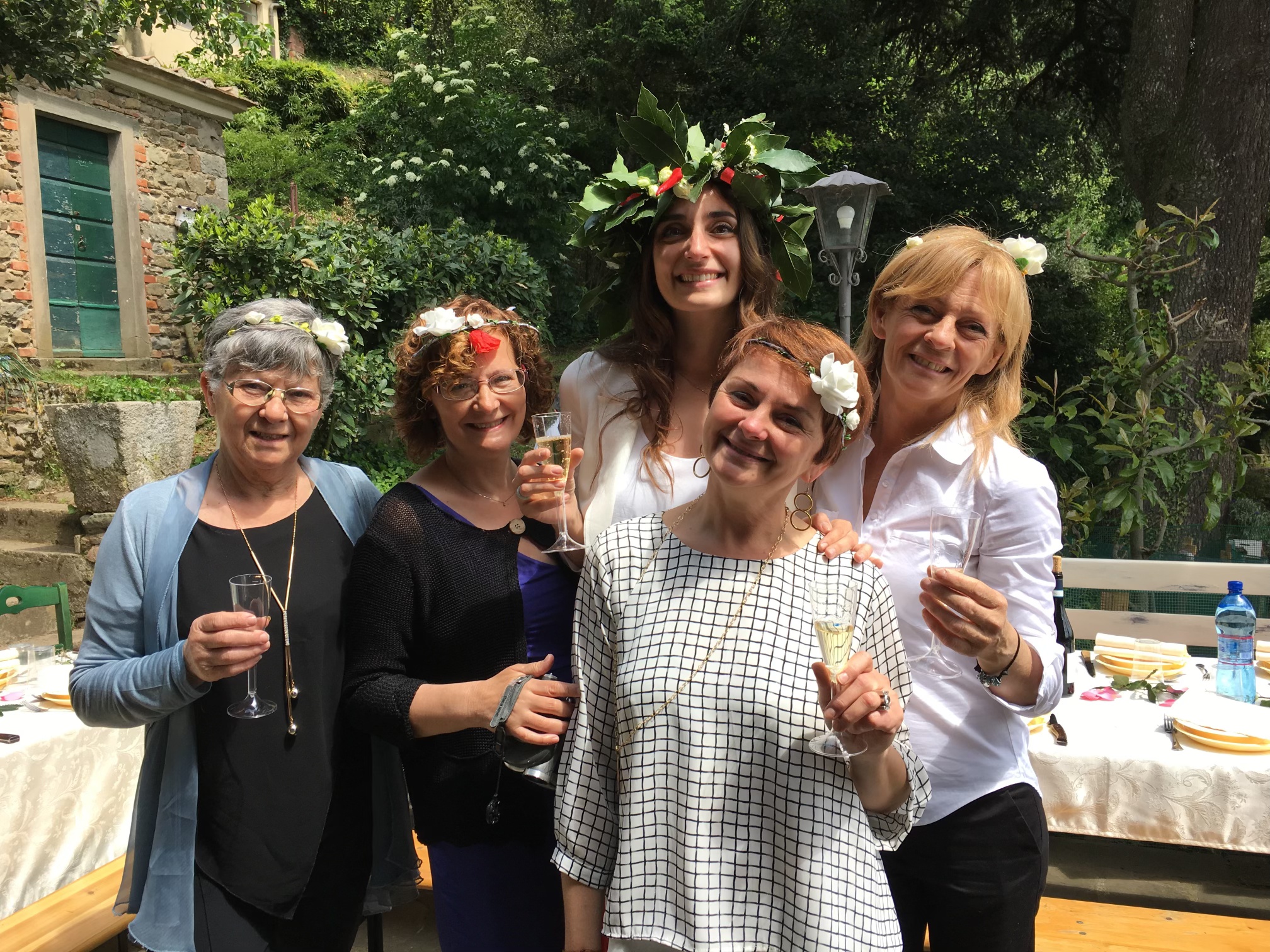
and  big celebrations too.

There were so many parties…

birthdays,

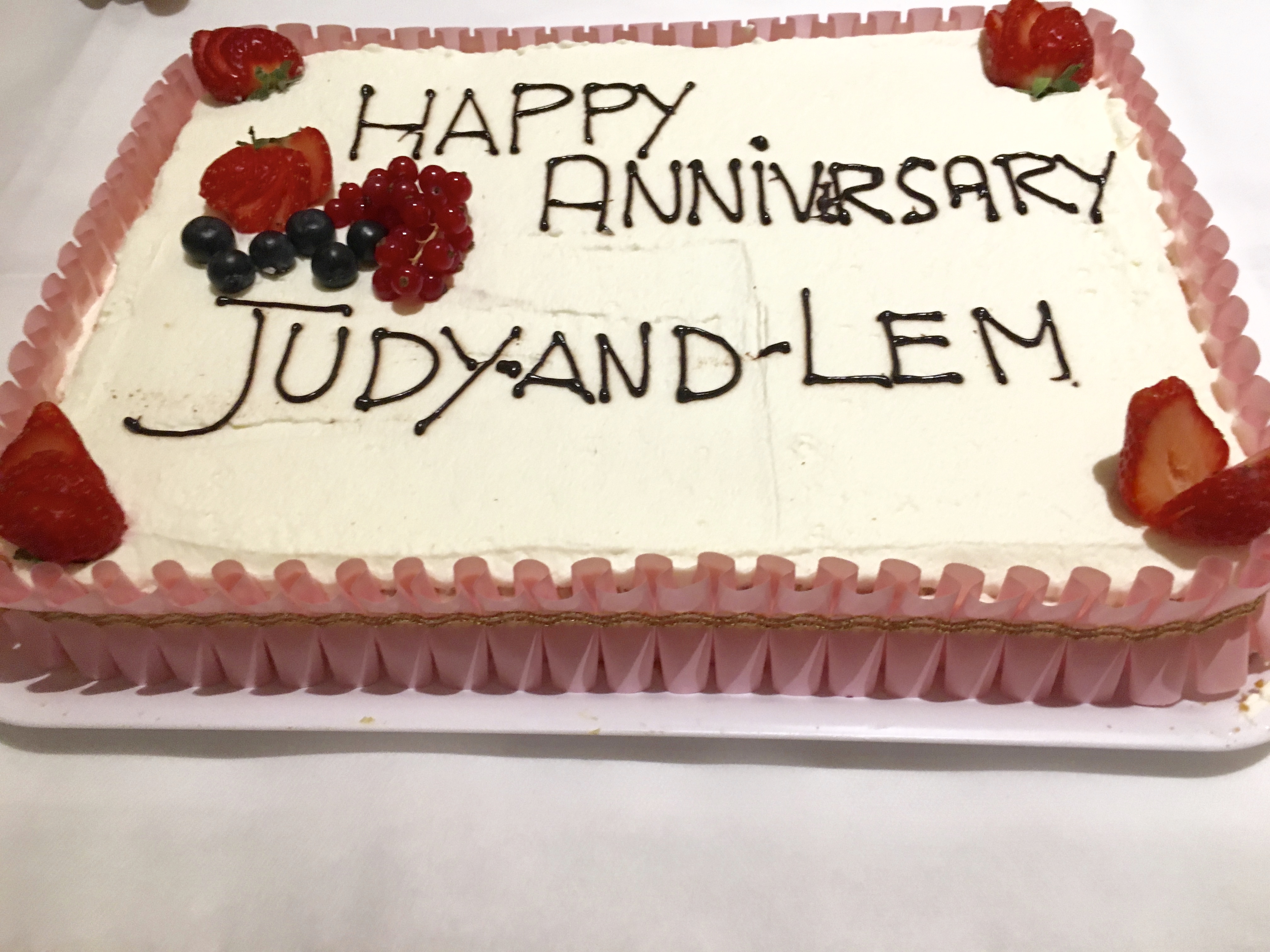
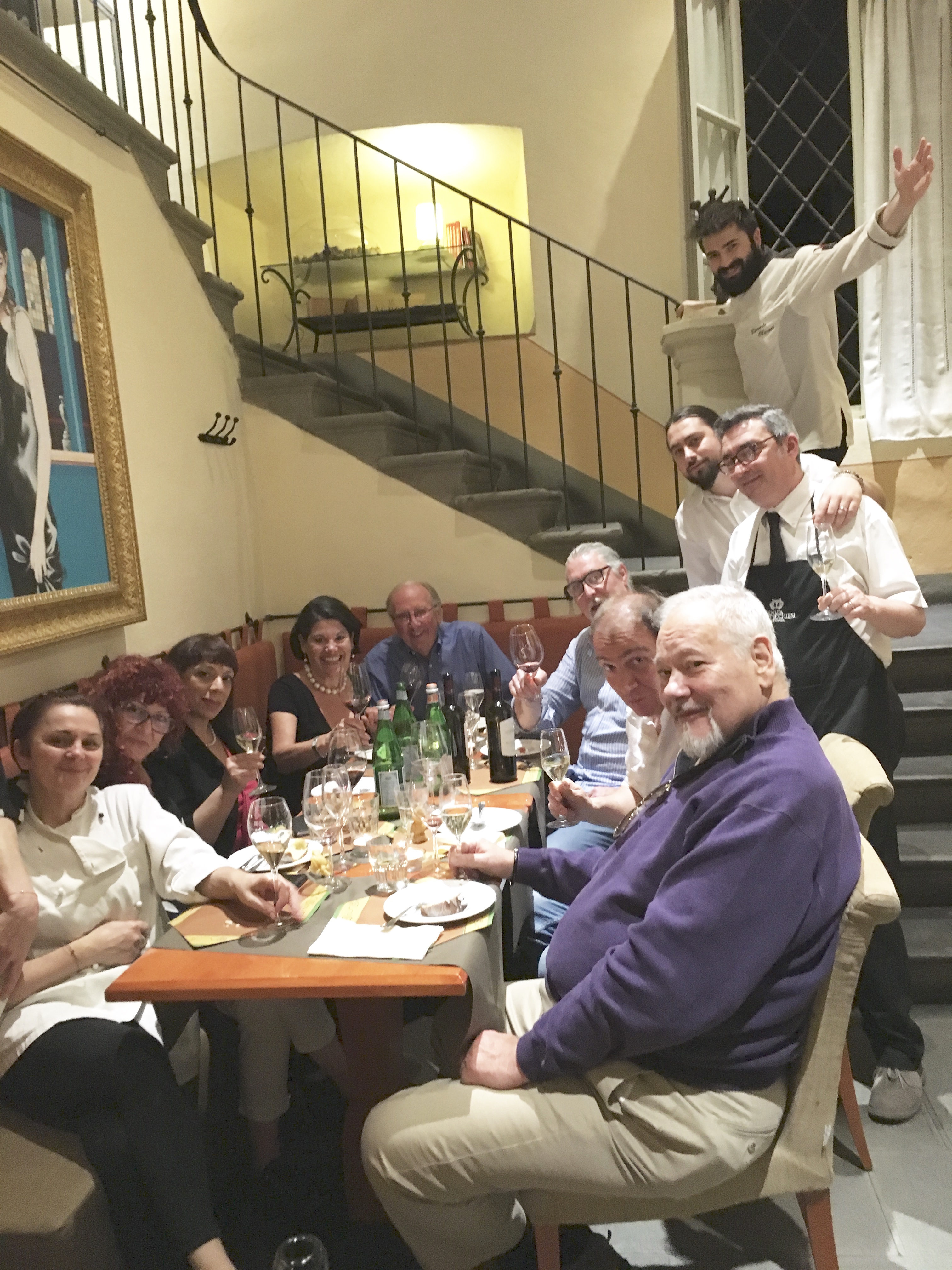
anniversaries,

and more birthdays.

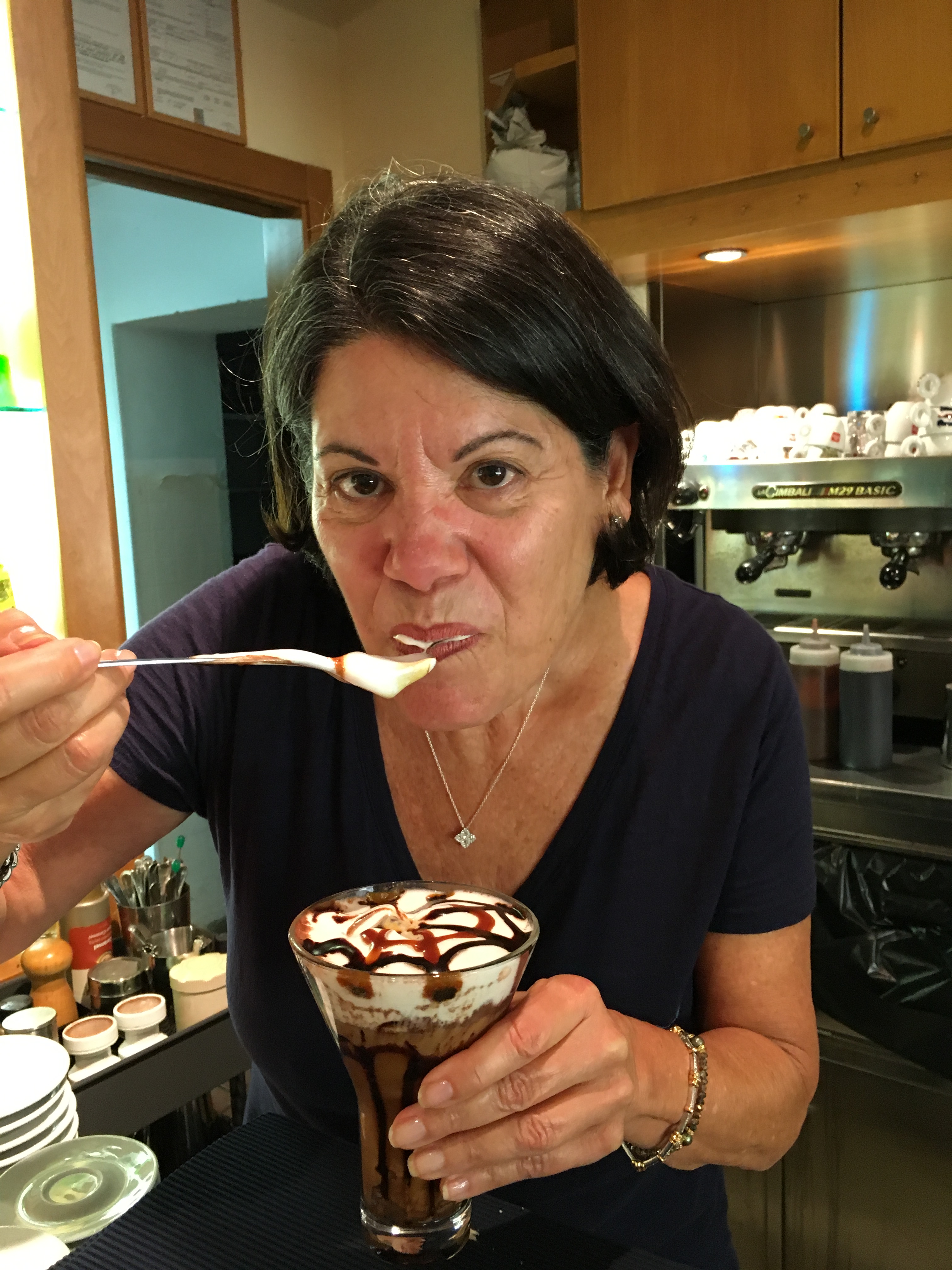
But we really never needed a reason to go to Tuscher… good times were always on the menu!

And so to the Olivieri family, Niccolo, Edoardo, and especially Dani and Massimo, thank you for your love and friendship and for giving us this very special and unique gathering place. While Tuscher may be gone, the memories we and so many have made with you will last a lifetime.

We wish each of you great success, wherever the road may take you.  

Happy New Year to all!

May your 2024 be filled with peace,

good health

and unexpected  adventures. 

Ciao and abbracci!
Judy


Please feel free to share a memory in the comment section. (Apologies if I didn’t have your picture!)


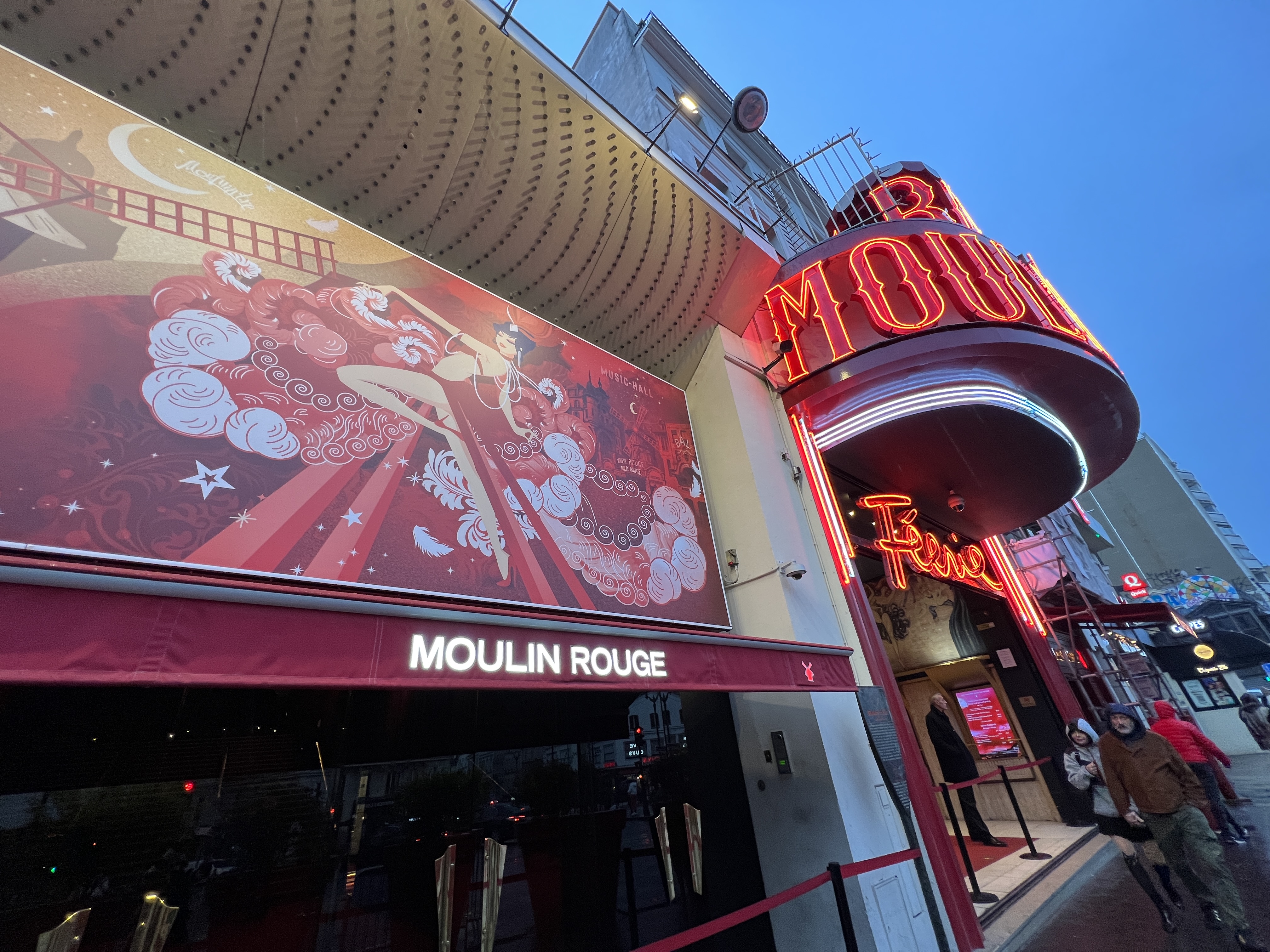
Moulin Rouge Paris!

5 May

On April 6, Len and I arrived in Paris. We had been there before, but this time I was particularly inspired to follow “footsteps” of my maternal grandparents, Salvatore and Serafina. They had travelled through Italy from south to north then took a “fast” train to Paris.

Similar to my paternal grandfather, Alexander, my maternal grandfather, Salvatore, also wrote wonderfully detailed and interesting letters of their journeys, addressed to my mother and her siblings, and some fortunately passed on to me.

They arrived in Paris from Italy by train. It was August, 1952, he in his 60’s, she in her 50’s. Their love of life, sense of adventure, and openness  to new experiences continues to amaze and inspire me in my travels and writing. And this is what led me to the Moulin Rouge.

“Took  in the high  spots by day, then joined an excursion tour to see Paree by night. Boy oh Boy! what we saw of Paree after sundown was simply torrid. Mother let out a yell when one of the dancers in the second cabaret discarded her last vestige that had everybody there turning around and laughing. The fourth and last of the cabarets visited on the excursion tour, the Tabarini, was of such magnificence and class that even though someone might  construe the  show as indecent, I can honestly call it artistic.”

Salvatore Ferrara letter

With this in mind, we opted for the dinner and show. Dinner guests arrive at 7 p.m. for the 9 p.m. show. A dress code is enforced.

©blogginginitaly.com

©blogginginitaly.com

©blogginginitaly.com

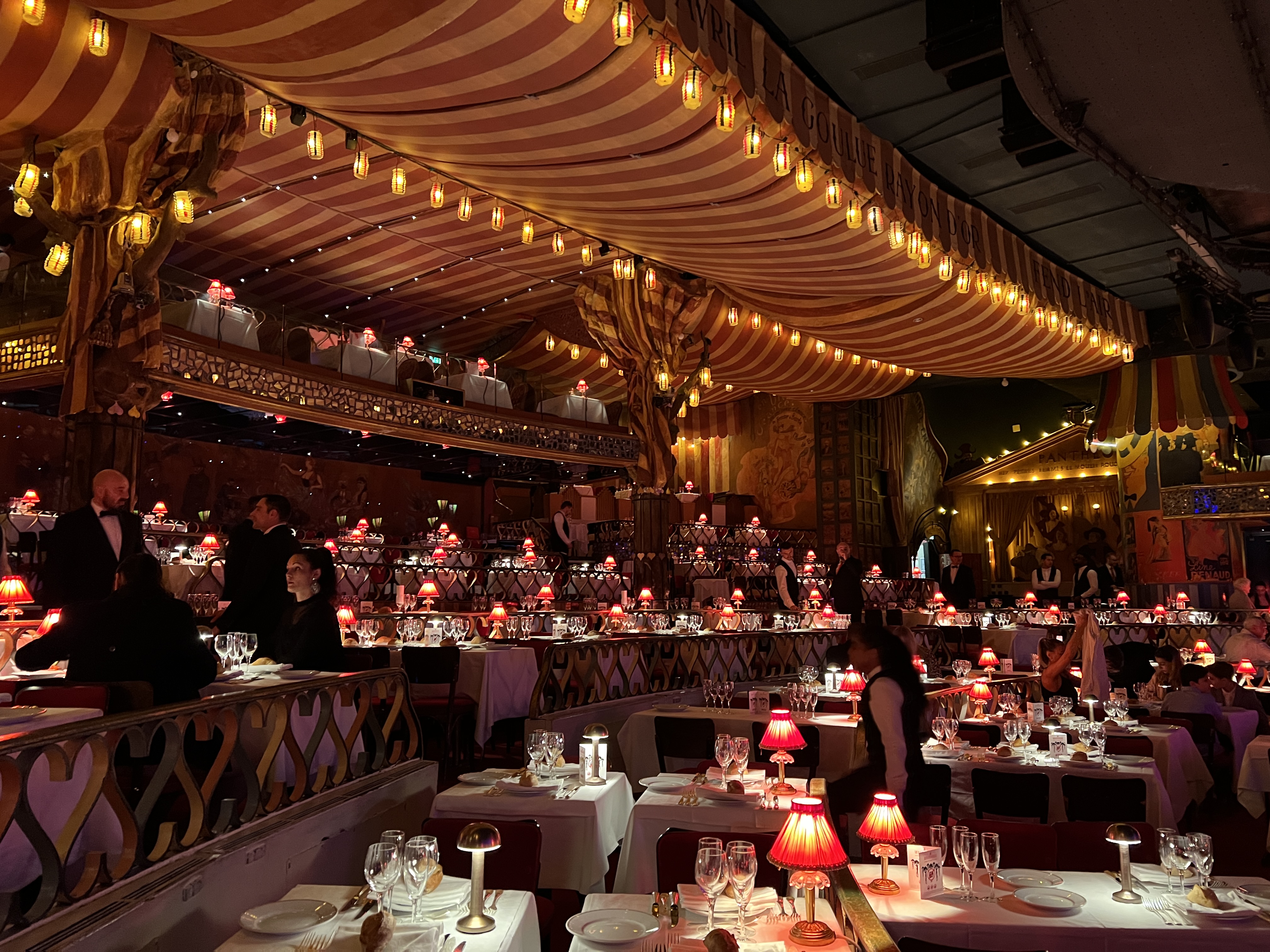
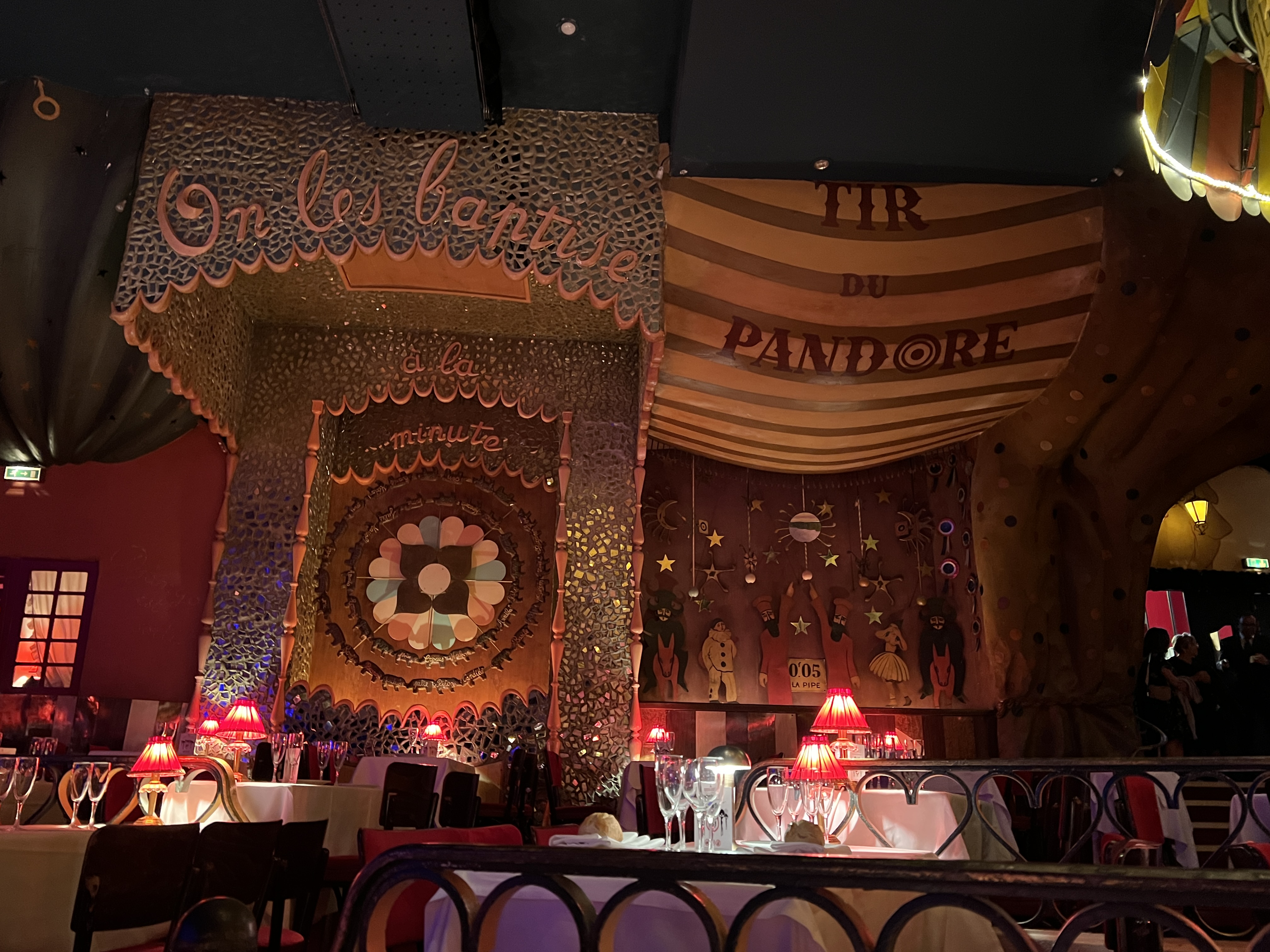
There are two French gourmet meal choices to select from in advance, each three courses with wine or champaign. The dinner is served with incredible precision, yet we never felt rushed even though hundreds were being seated and served. The room was incredible, with so much to see in every direction.

©blogginginitaly.com

©blogginginitaly.com

©blogginginitaly.com

©blogginginitaly.com

An orchestra and two singers accompany the diners and during this time, photos are still permitted.

©blogginginitaly.com

Some interesting facts:

  • Moulin Rouge, meaning Red Mill, was founded in 1889 as an extraordinary cabaret by Joseph Oller and Charles Zidler.  Its nickname was, “Le Premier Palais des Femmes” (The First Palace of Women.)
  • Toulouse-Lautrec immortalized its dancers in his posters.
  • 10 years after a disastrous fire destroyed the theatre in 1915, it was rebuilt.
  • The theatre seats 850 guests per performance.
  • The current show is called Feerie, runs nightly at 9 and 11 PM every day.
  • The team consists of 400 people, 100 artists, 18 dressers and 60 dancers. Female dancers are a minimum of 5.9”, male 6’1”.
  • Dancers must be trained in classical dance and attend weekly classes.
  • Three casting sessions are held annually where 600 dancers complete  for as few as two vacancies.
  • Each show requires 1000 outfits, crafted in workshops that have been used for years.
  • Each dancer makes 10-15 costume changes per show in roughly 90 seconds and returns to the stage.
  • Approximately 800 pairs of shoes in various  sizes are required.
  • The Moulin Rouge is still considered one of Paris’ best known tourist attractions.

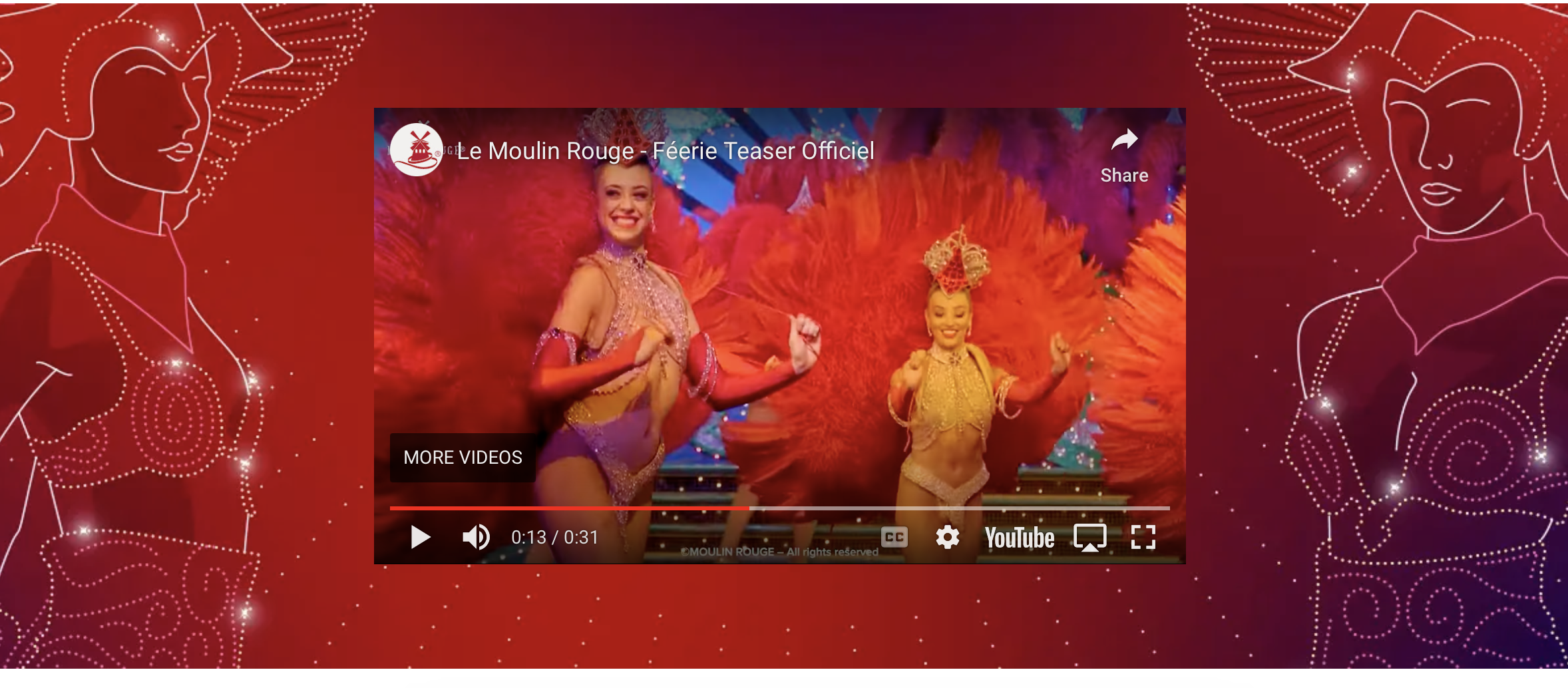
At precisely 9 p.m., ALL LIGHTS OUT and the performance begins. Here’s a short link if curious:https://youtu.be/xw9__-2CSXc

©Moulin Rouge Website

Was it worth it?  We certainly thought so. The multi-level artistic facility, hundreds of small red glowing table lamps, the sheer spectacle of talented dancers, ornate intricate costuming, incredible precision on and off stage, and best of all, imagining my grandparents there so many years ago, all made for a once in a lifetime most memorable experience.

Ciao,
Judy


Happy New Year/Buon Anno 2022!

1 Jan

Just in case you didn’t get your 2021 New Year’s Eve invitation to Lenny’s Bar for extended aperitivo, (on second thought, I was the only one invited as I’m the cook!), here’s a brief summary…

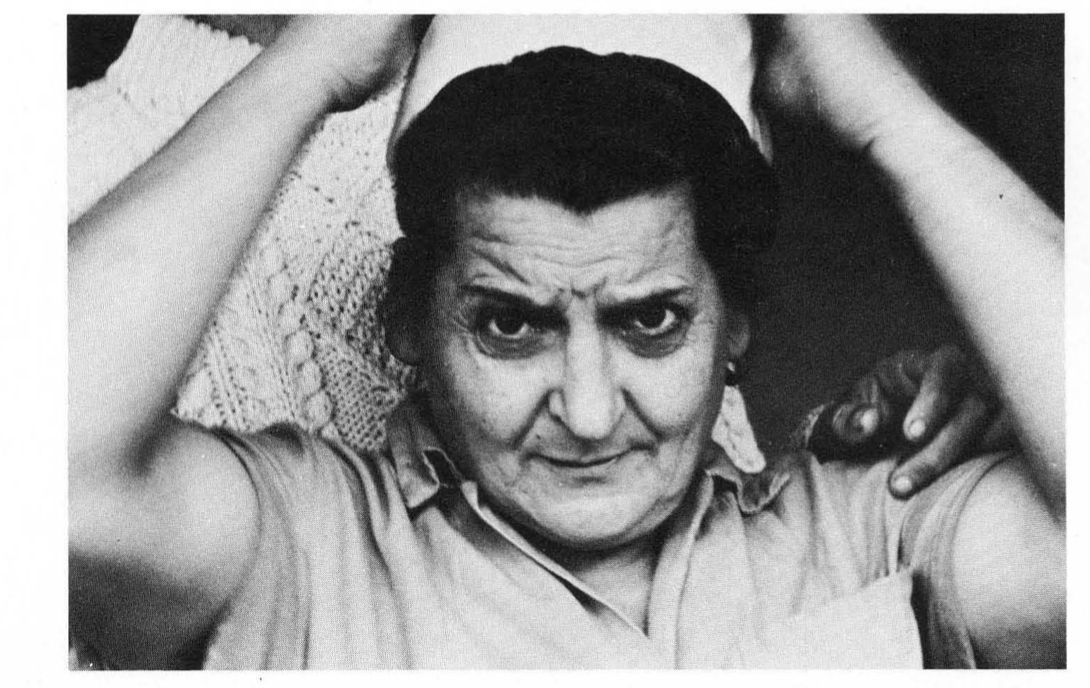
Guests: Yours truly!

©blogginginitaly.com

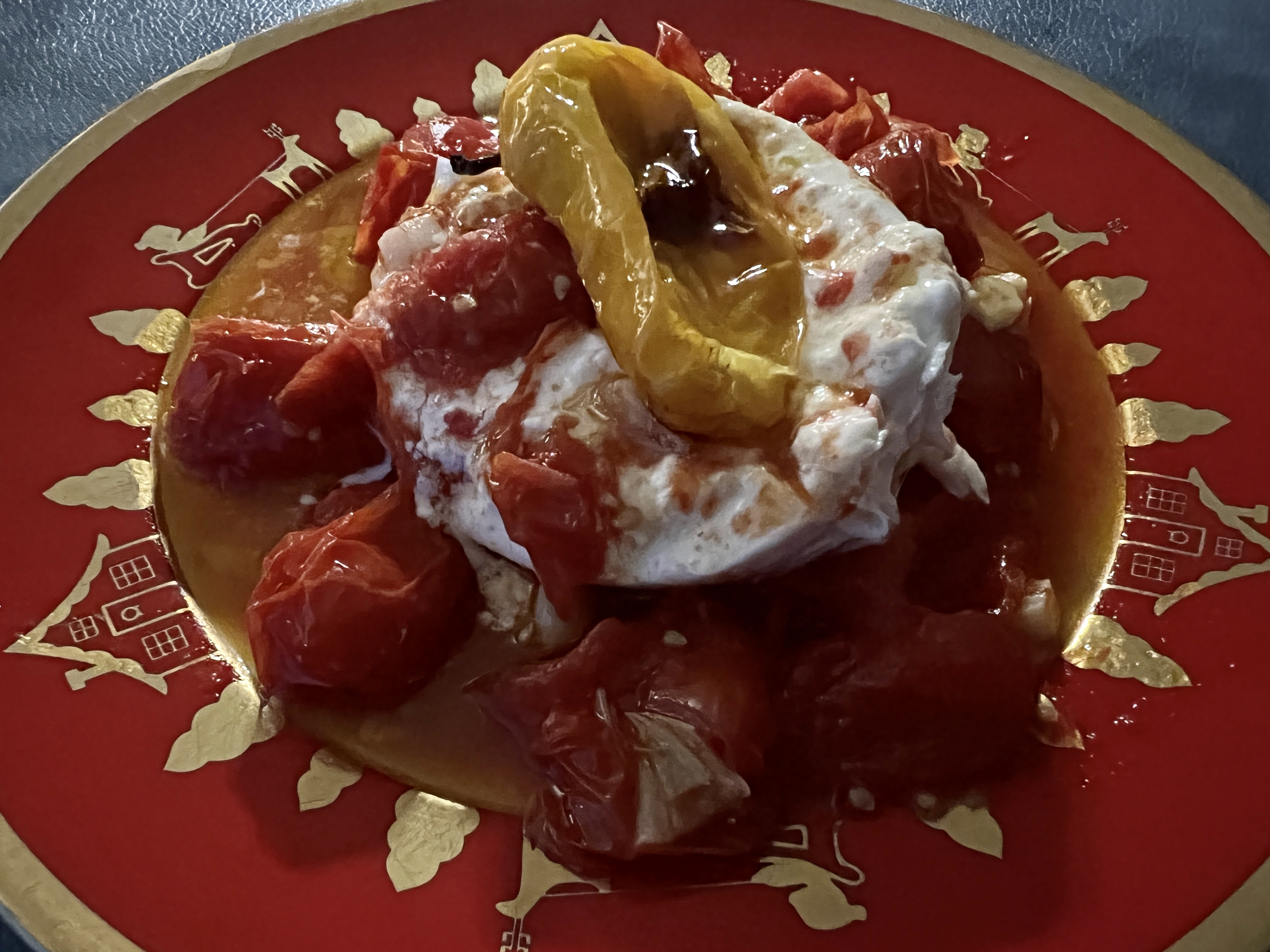
First Plate: Burrata with roasted grape tomatoes and Italian Olive Oil

©blogginginitaly.com

Second Plate: Steamed artichokes with maple champaign mustard sauce

©blogginginitaly.com

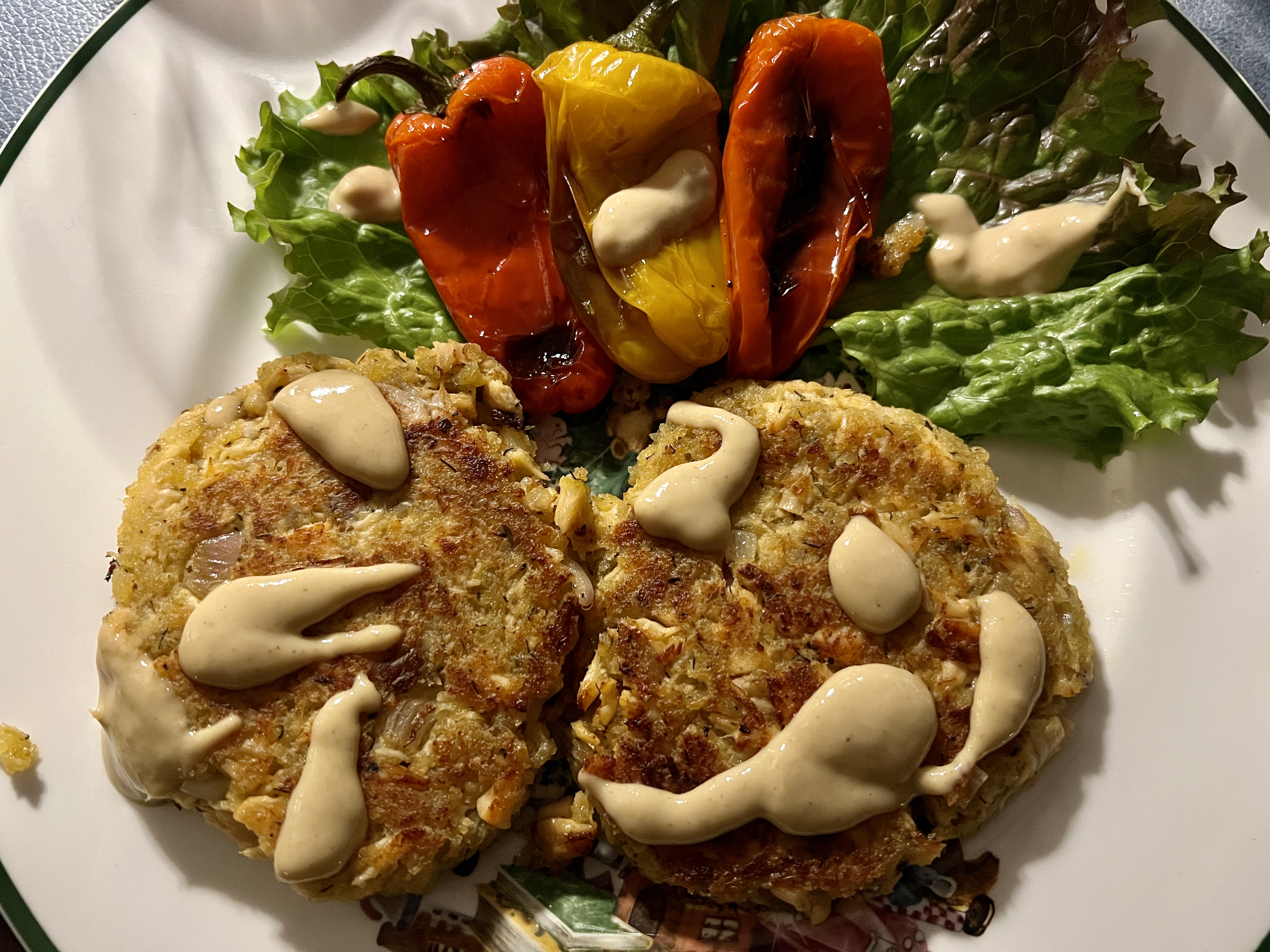
Third Plate: Hand made salmon patties with roasted mini peppers

©blogginginitaly.com

After dinner digestivo/dessert: Grasshopper on Ice

Entertainment: “Visited” with several family members and friends throughout the night, listened to our favorite playlist, and at the stroke of midnight, heard the familiar booming as we watched Chicago’s fireworks through the fog!

And that’s a wrap, except to wish each of you and yours
most happy, healthy and safe 2022!

Ciao,
Judy

HAPPY 50th CAMPERS!

28 Aug

50 years ago yesterday, over 200 very curious and most adventurous students from across the U.S. landed in Rome for the beginning of a year like no other – destination:

Loyola’s Rome Center was started in 1962. At that time, it was the largest American study program offered by a U.S. university in Europe enrolling Loyola students as well as students from 75 other U.S. colleges and universities, of which I was one.

While it is hard to imagine we arrived 50 years ago, it is so easy to remember the most incredible year of our lives. Quickly becoming a family of “campers”,  we learned, laughed, loved and lived together. Oh how we lived!

Most of us arrived at age 20, having never been to a foreign country, nor away from home for more than a semester. There was no internet, no wifi, no cell phones, no pc’s, etc. But we adapted quickly. What we did have was one public payphone in the hall, mail slots, a beautiful campus, an attentive staff, engaged professors, and most of all, each other.

Yes, we actually did attend class with some very excellent professors, but so very much of what we remember from that year comes from outside the classroom, as they said it would.

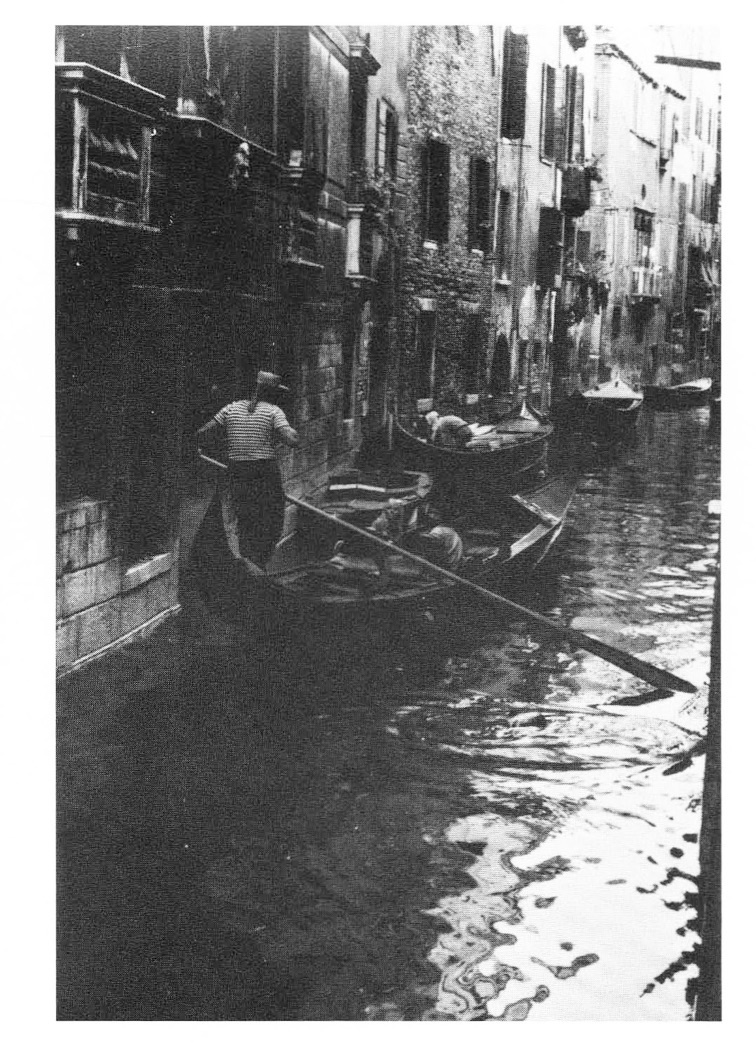
We quickly learned how to get around in Italy…

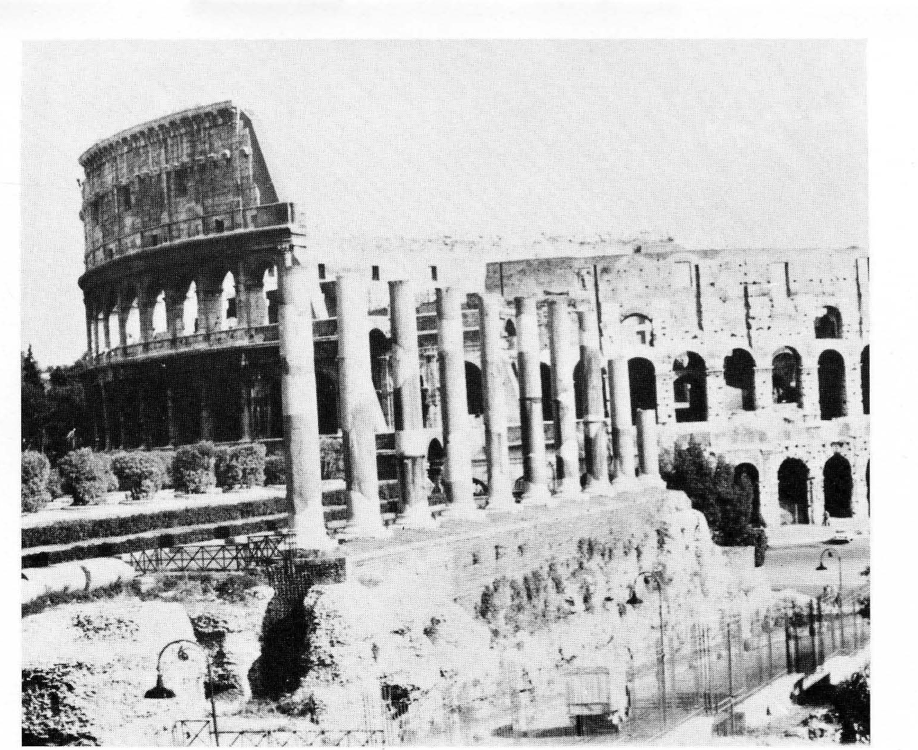
and explore some of her greatest treasures.

We learned to navigate by train, and expect nothing to happen as scheduled.

On holidays, we even had extra time to explore far away destinations.


We learned of the unspeakable horrors of war…

and saw monuments dedicated to victory.

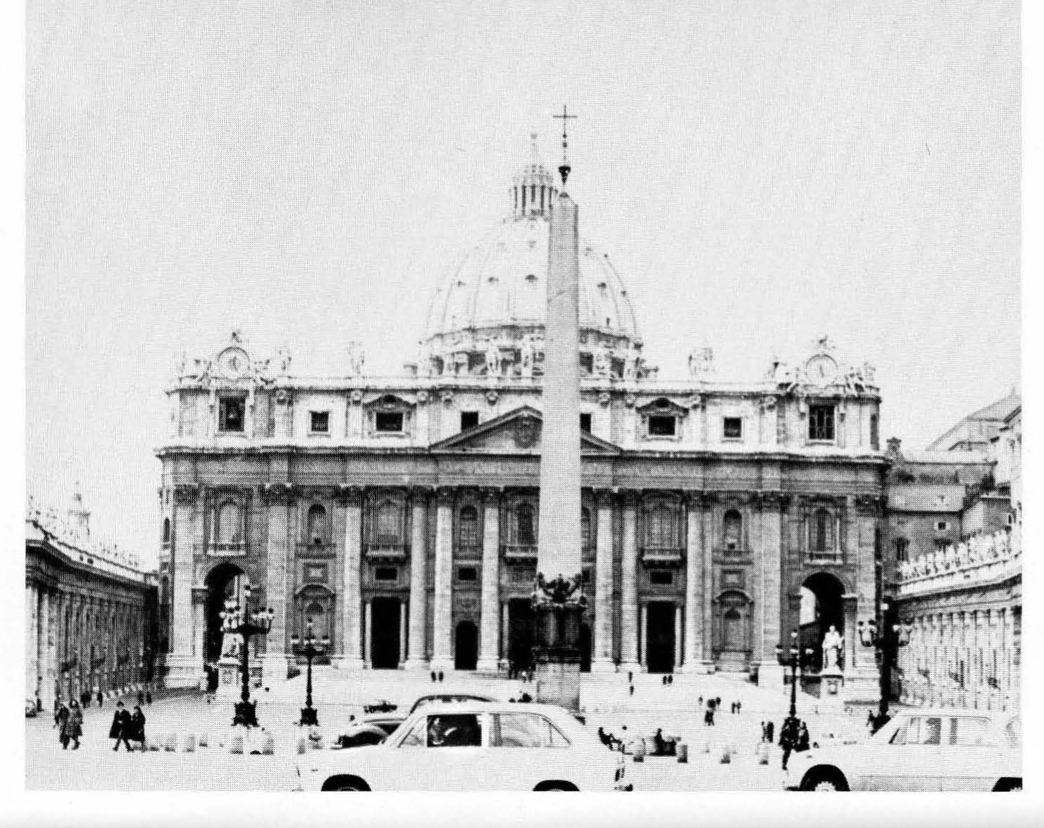
We rushed to the Vatican on 5/22/72 in the hope that the Pieta had not suffered grave damage at the hand of a madman. 

When not studying or traveling, we also trained well and competed!

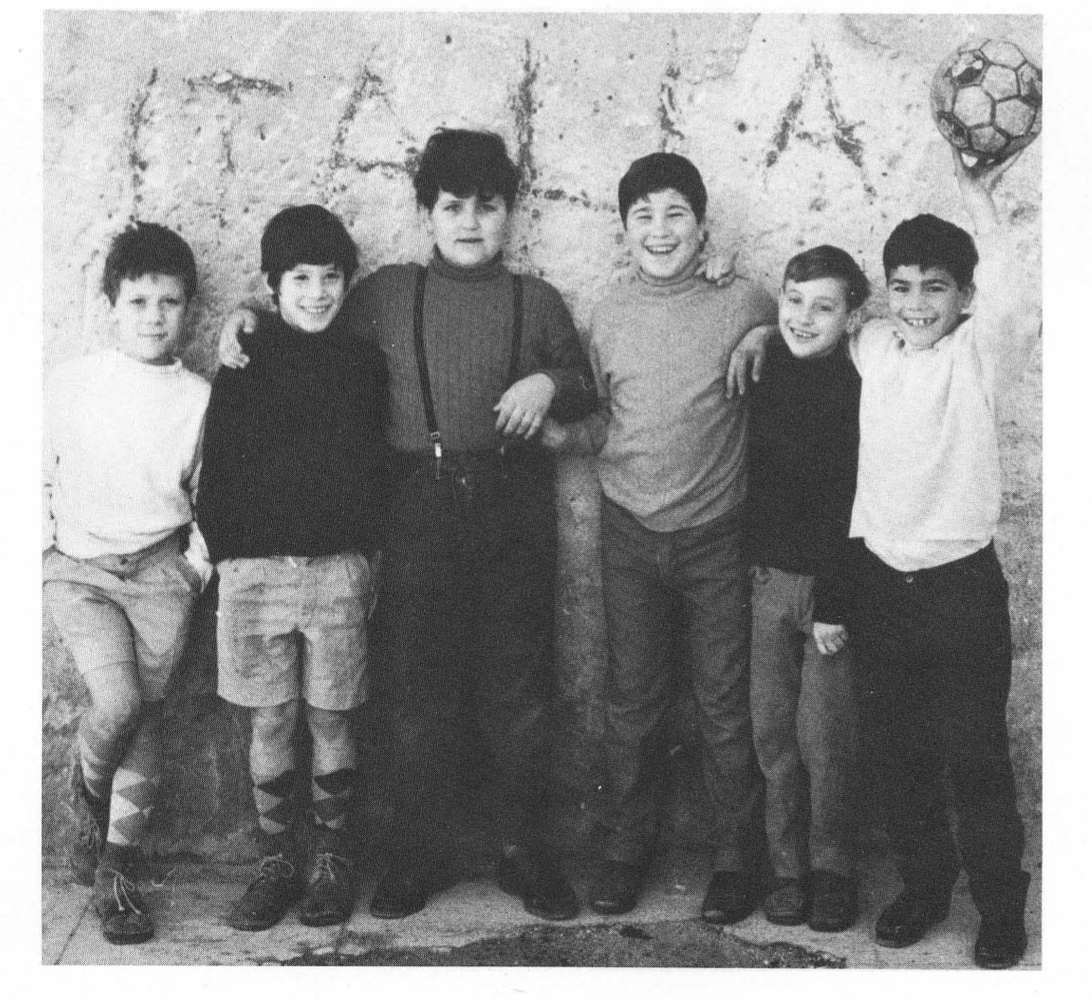
We learned that every kid in Italy plays soccer,


and that some of then best “food” can be bought at the market.

At Christmastime, we sponsored a party for children from a local orphanage, doing much more for us than they could imagine.

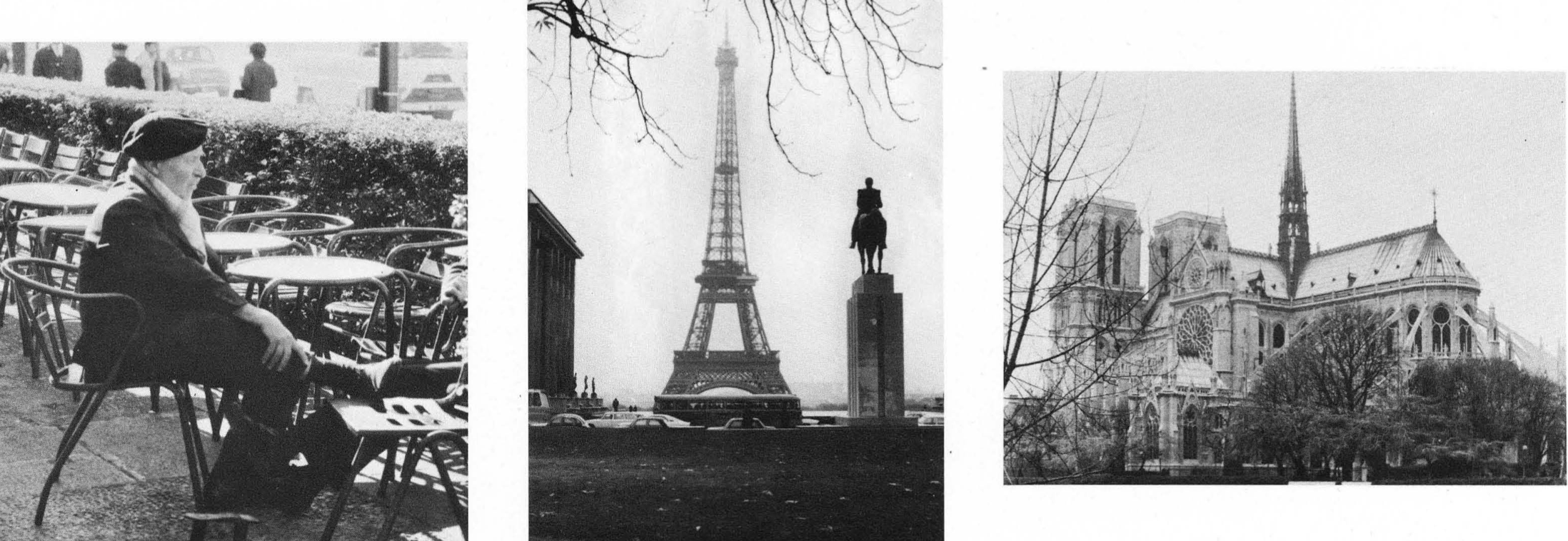
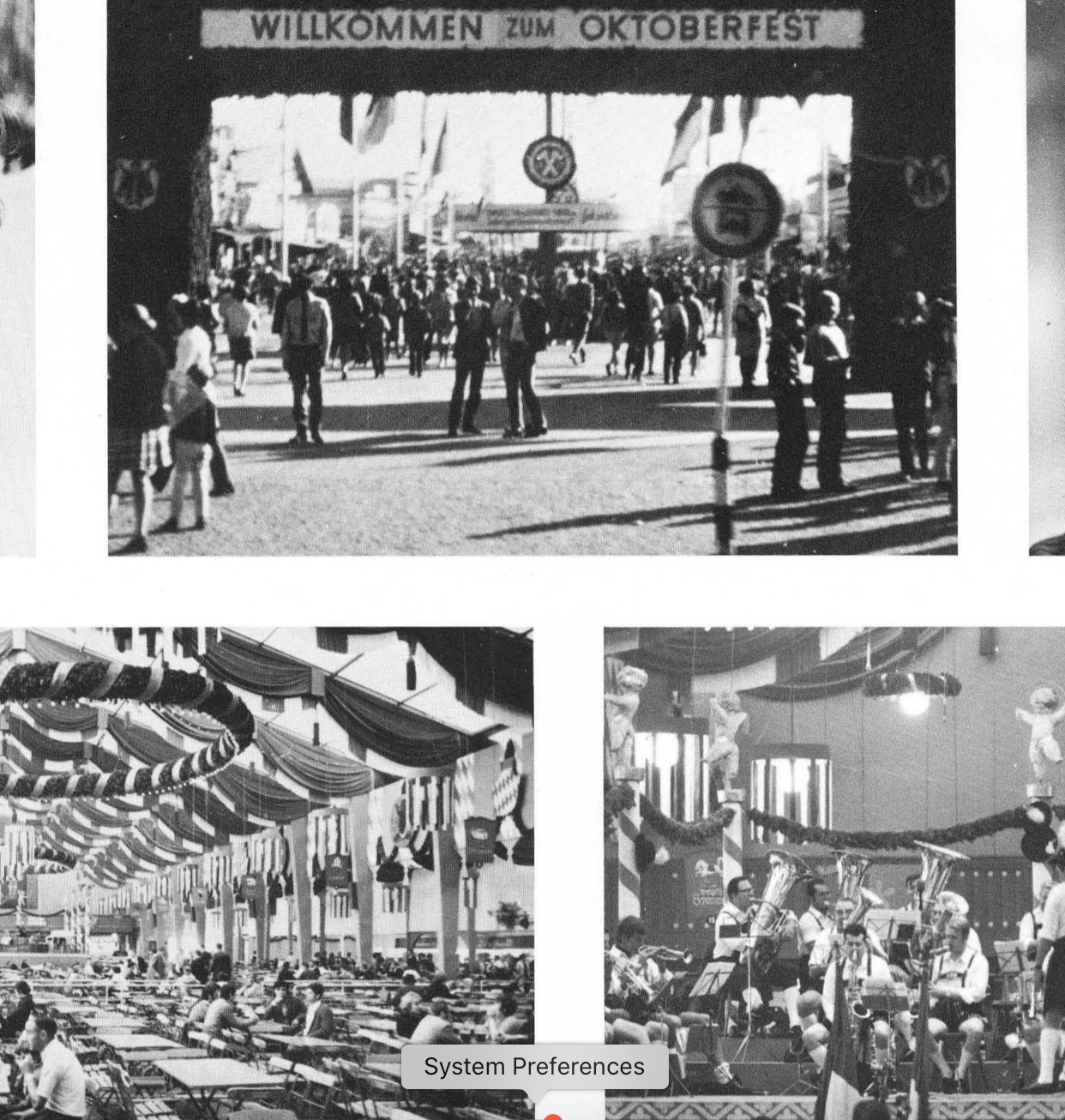
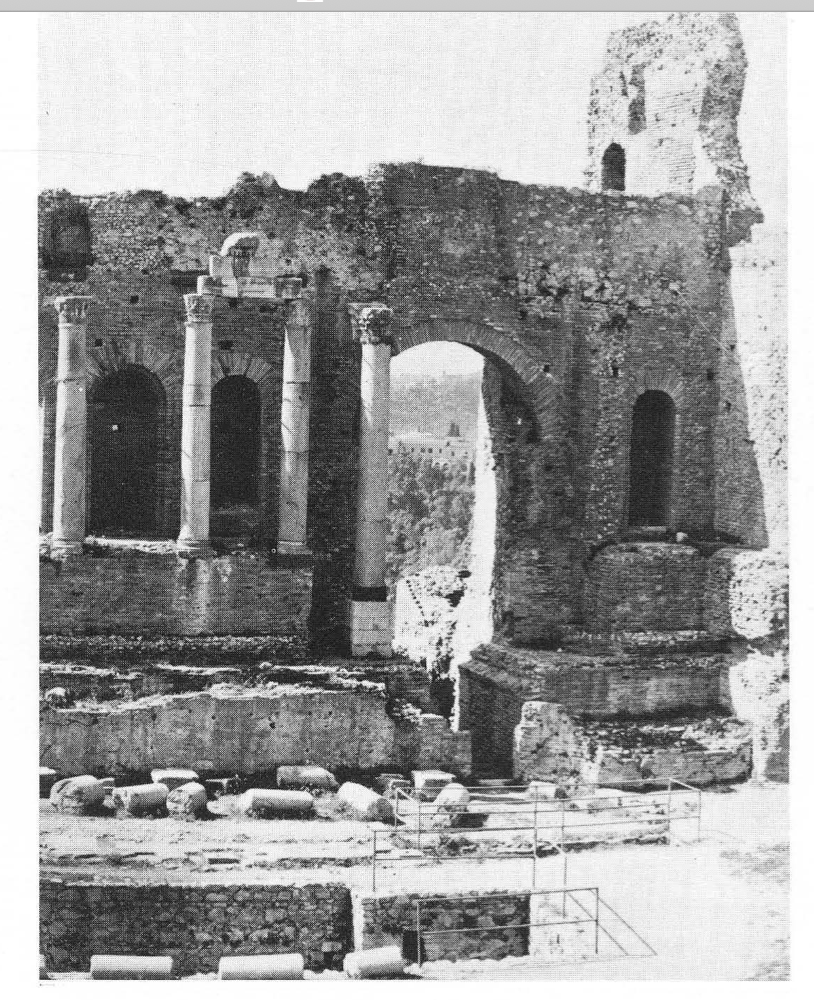
At the end of our year together, we published a wonderful yearbook and I was delighted to be one of the photographers. All of the above photos are from that book, so kudos to the following people:


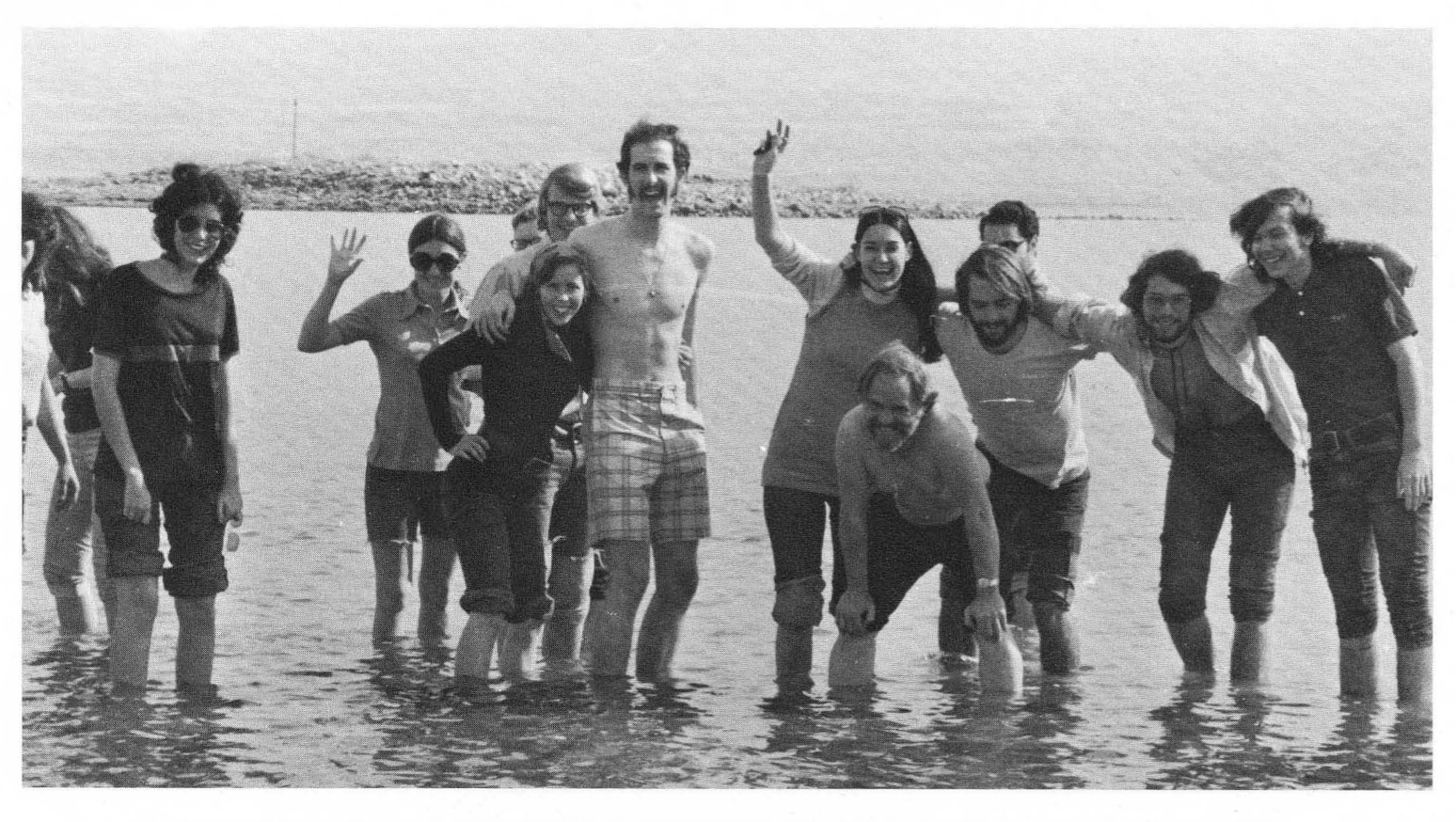
Finally, 10 years ago, Loyola Rome celebrated its 50th anniversary in Chicago and all classes were invited to attend. It was our group’s 40th anniversary, and as you can see, friendships are still going strong.

To the family of “71-72 campers”,  indeed we did learn, laugh, love and live together. Oh how we lived! 

Judy

Happy Birthday Len!

11 Aug

Len’s Birthday Journal:

We started the day with a cappuccino in Cortona, then headed to the small town of Magione in the Perugia region for a most enjoyable lunch. Being that it is nearly 100° and crowded in Cortona, we decided to take the lovely drive to Ristorante Da Massimo, situated above Lake Trasimeno. The roads weren’t crowded, the views along the winding roads were lovely, and the food – well, Massimo certainly has made an art of preparing fresh seafood.

Great Food!
We shared two antipasti di mare, some hot and some cold, and seemingly never ending. Unfortunately, I’m a bit out of practice at remembering to photograph the gastronomical delights, but among them were salmon, octopus, seafood salad, shrimp salad, mussels, clams, scallops, and these mini sea snails. 

©blogginginitaly.com

We were first introduced to this wonderful restaurant by dear friends Susan and Ray, and they were definitely on our minds. In fact, that first time, Susan and I ordered the same orata (white fish), but I ordered mine grilled and she ordered with potatoes. I never forgot!

©blogginginitaly.com

Given that we still had a dinner ahead, we opted to share one piece of cheesecake with fresh berries and freshly whipped cream. 

©blogginginitaly.com

©blogginginitaly.com

Great Friends!
After an afternoon nap, (it’s what one does, of course!), we met friends at Tuscher for some masked hugs and a Prosecco toast to Len.

©blogginginitaly.com

©blogginginitaly.com

©blogginginitaly.com

Great Views! We departed around 8 for dinner at Ristorante Tonino and were welcomed by a gentle breeze and incredible views.

©blogginginitaly.com

Food was good too…

©blogginginitaly.com

©blogginginitaly.com

©blogginginitaly.com

As we ate, the sky changed colors and the sun and slender crescent moon put on a splendid show.

©blogginginitaly.com

©blogginginitaly.com

©blogginginitaly.com

On the way home, we bumped into Ivan and Massimo, a fun ending for a pretty perfect birthday!

©blogginginitaly.com

Tanti Auguri, Leonardo, per un buon compleanno! Ti amo!

Judy