Through His Words: Day Seventeen

27 Apr

Reflections From and About My Grandfather
Alexander Capraro, Architect


Day Seventeen
Hotel St. Gotthard-Terminus, Lucerne

Switzerland
Monday August 1st, 1938

Darling Maude,

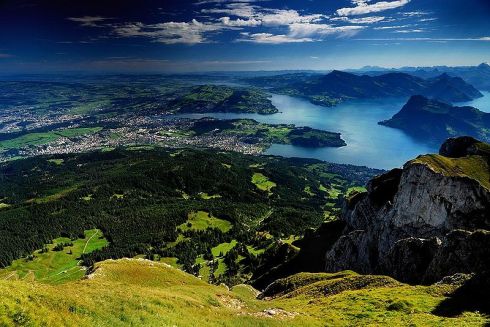
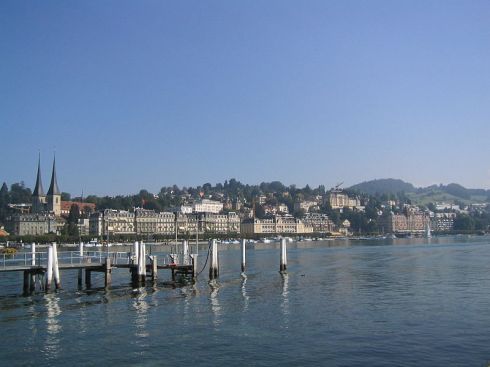
Arrived in Lucerne this noon from Interlaken, the ride being entirely thru the mountains. Today is the national holiday for the Swiss and the trains are loaded with people. It is a pretty little town with fine hotels overlooking Lake Lucerne and typical of Swiss cities, it has its flowers, fine lawns, etc.

Wikimedia Commons

View of Lucerne and Lake Lucerne – Wikimedia Commons

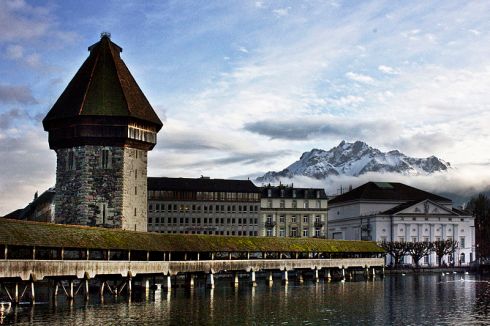
Today, Lucerne is the most populous city in north-central Switzerland. One of the city’s famous landmarks is the Chapel Bridge, the Kapellbrücke, a wooden bridge first erected in the 14th century.

Wikimedia Commons

Wikimedia Commons

A parade was held here and later fireworks on the lake. The lake is dotted with all sorts of little boats, each strung with lighted lanterns, people in them singing and yodeling to the accompaniment of accordions. Very pleasant sight.

Wikimedia Commons

Wikimedia Commons

There are girls and fellows in native costumes in the streets singing and having a good time. Quite a few English people here on visit. I have talked with them for the last two days at Interlaken and on the trains so that I am unconsciously adopting their accent. By the time I get home, I may have a foreign accent of some kind myself.

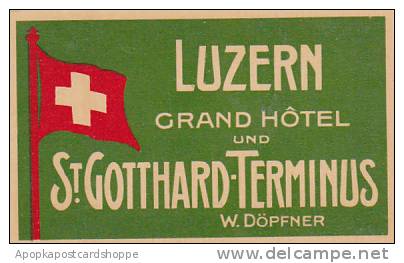
Alex was staying at another grand hotel, the Hotel St. Gotthard-Terminus in Lucerne. Below is a postcard from the hotel  as well as a luggage tag.

240_001

I am taking a steamer to a little town called Fluellen in the morning and from there will proceed to Como in Italy. I believe I shall be very happy to get in a country where I can speak the language and will not have to use sign language any longer. From there I will go to Milan, then Venice, Florence, Pisa, Montecatini, Siena and Rome. 

There is not much I can say tonight. Writing every day leaves only a little to say, except that I can repeat over and over again that I wish you were with me – it would make the trip a thousand percent pleasanter. Maybe a few years from now this may happen, OK  dear?

While that dream would never happen, Maude would always have Alex’s incredible stories, letters and photos to experience Europe and its treasures.

Give Marion a big hug and kiss for me and raise hell with Vinny and Billy for not eating what they should.

Regards to Pa and Ruth,

Kiss_________________ss________________________ss

Devotedly yours,
Al

Ciao,

Judy


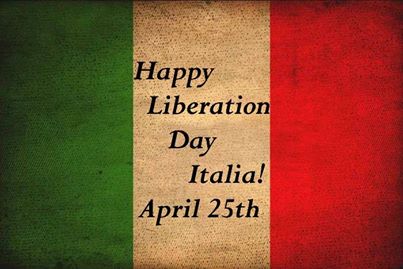
Festa della Liberazione: Liberation Day in Italy

25 Apr

If you happen to be in Italy today, you are likely to get caught up in one of the country’s most celebrated holidays, Liberation Day. This celebration marks the 1945 anniversary when Allied troops liberated Turin and Milan from Fascist and Nazi troops. Throughout the country, concerts and parades will commemorate the day and honor those who fought for freedom. 

italymagazine.com

italymagazine.com

Auguri, Italia!

Ciao,

Judy


Ham on the Grill

21 Apr

Since Sunday was our first beautiful day basking in summer sunshine,
we decided to try something different.

Ecco!  BBQ Ham L’Orange!

blogginginitaly.com

blogginginitaly.com

Delicious!

Ciao,

Judy

Buona Pasqua

19 Apr

Wishing you blessings this Easter Season.

blogginginitaly.com

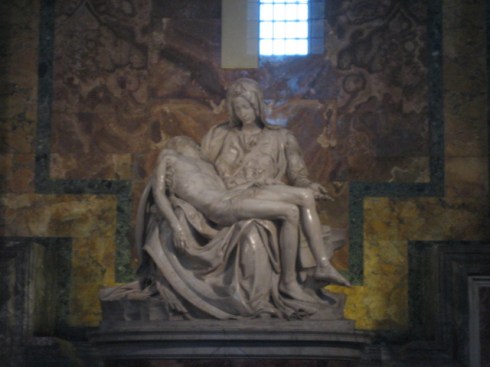
The Pietà (1498–1499) by Michelangelo, photo blogginginitaly.com


Ciao,

Judy

Through His Words: Day Sixteen

16 Apr

Reflections From and About My Grandfather
Alexander Capraro, Architect


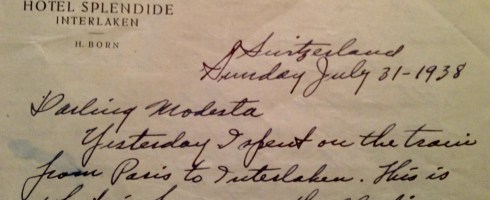
Day Sixteen ( no letter written on Saturday)
Hotel Splendide, Interlaken

Switzerland
Sunday
July 31st, 1938

Darling Modesta,

Yesterday I spent on the train from Paris to Interlaken. This is what is known as the Alsatian country and the scenery is just grand. I had intended to take the afternoon train to Lucerne, but on advice of many people, I stayed all day to go to the top of the Jungfrau mountain peak. It is one of the highest and most majestic snowcapped mountains in the Swiss Alps, and I certainly am glad that I did.

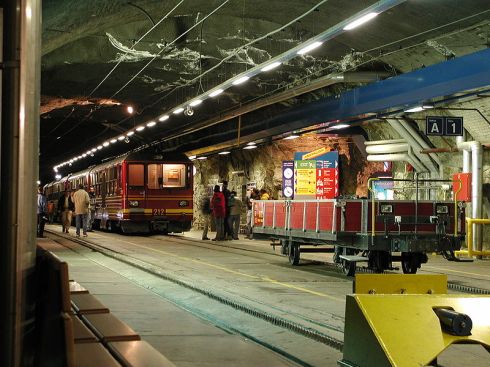
The trip to the peak is something I shall always remember. I left this morning at 6:30 AM on a train which winds around the most beautiful countryside with little villages nestled in the valleys of the Alps. It keeps going up and up and finally we change to another train which goes up a steeper incline, and along the way, more picturesque mountain villages, all as clean as a whistle.

Salamanamanjaro at en.wikipedia

Salamanamanjaro at en.wikipedia

At each stop, we pick up mountain climbers who are dressed as you would see them in the movies. We changed trains again, and this time it is a special train to take steeper inclines. 
Wikimedia Commons

Wikimedia Commons

The scenery gets more interesting as we go up, up, up, through gorges, past waterfalls and tunnels carved out of the mountains, and finally we are at the top, over 12,000 feet. This is the closest to heaven I have ever been, imagine nearly 2.5 miles up.

I never realized that it was my grandfather who first uttered this thought, not Deborah Kerr as Terry McKay in An Affair to Remember: “Oh, it’s nobody’s fault but my own! I was looking up… it was the nearest thing to heaven!”

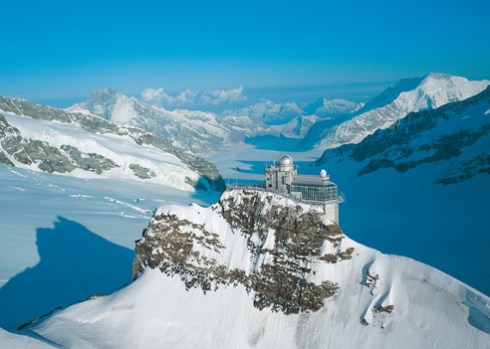
At this point is a small building which is shown on the postal card I sent earlier today.

Postcard sent by Alex to his daughter, Marion.

Postcard sent by Alex to his daughter, Marion.


IMG_1810

Then there is a glacier, the largest in Europe. You can see for miles; it is awe inspiring.

Jungfraujoch and the Aletsch Glacier (Photo credit: Ed Coyle)

Jungfraujoch and the Aletsch Glacier (Photo credit: Ed Coyle)

The air is so rare you get sort of a dizzy feeling but soon you get used to it. You look down on numerous little villages in the fertile valleys below, the houses of which look like little specs. There is something about it all that gets in your blood – it is vast and magnificent. Never before have I seen such a site. The temperature is 19°, snow and ice around you, beautiful green trees, and varied colored patches of mountain flowers below.

Wikimedia Commons

Wikimedia Commons

A thousand feet below, mountain climbers can be seen on the start of a trek across the glacier and up the mountainsides, parties of three or more, each held to the other by rope for safety. I wouldn’t do it if they paid me, but it is real sport to them. It takes about two days to go up and come back again. We stay at the top about two hours, have lunch, and visit what they call the Ice Palace.

pizzodisevo

pizzodisevo

This is actually a large hall carved out of the ice. The walls, roof, floor and colors inside are all one mass of ice and they actually skate in it. It is one of the wonders of the world.

Actually, it’s not really one of the wonders, but apparently pretty wonderful to see. According to examiner.com,

“Two local mountain guides started to create this masterpiece with saws and chisels in 1934. They turned it into a grandiose hall hewed into the side a glacier. The size of the Ice Palace now is over nine thousand square feet.”

I walked along the  glacier and snowcaps and took some pictures that should be a knockout. We started down again, and again we had to take three separate trains. Coming down by a different route, you pass Swiss chalets, beautiful little hotels, and every now and then, a group of Swiss yodelers, and I am telling you, it is real atmosphere.
© Interlaken Tourismus

New Observation building, Sphinx rock, inaugurated summer 1996 © Interlaken Tourismus

It being the weekend, the trains are quite crowded and a real holiday spirit is in the air. There are quite a few people from the British Isles here, and I have spoken more English today than all the other days since I have been out. The natives, however, speak French or German, mostly German.

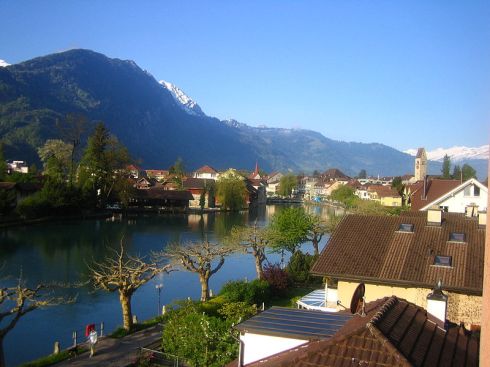
Interlaken is a beautiful little town in the valley at the foot of the mountains. It is a resort town,  full of hotels, always with beautiful gardens, and tables outside on verandas, with flowers everywhere.
en.wikipedia.org

en.wikipedia.org

Tomorrow morning I leave for Lucerne, which is only three hours from here, and Tuesday I go to Como and then to Milan, where I shall anxiously look for your letters.  Other than aching and tired feet, I feel fine, and so far cannot complain much. There are many others from the States I meet on the trains traveling as I am, and this helps to break the monotony of being all alone. However, I don’t seem to mind it much because I have always something to do and travelers are generally pretty sociable, especially if they are Americans and find out that I am one too. 

Well, I don’t know what to ask because I have been writing all this time without hearing from you. I pray everyone at home is feeling fine and that you are missing me as much as I am you, because, believe me my dear, I really am. Loads of love to you and the children.

As ever yours, Al

Ciao,

Judy

Through His Words: Day Fourteen

11 Apr

Reflections From and About My Grandfather
Alexander Capraro, Architect

Day Fourteen
Hotel Regina, Paris

Friday
July 30th, 1938

Dear Toots,

Well, I made the grade today and dragged myself to Notre Dame Cathedral, situated on the banks of the Seine River, with a large front courtyard, and hundreds of old and imposing statues in stone on the entrance and the facade.

commons.wikimedia.org

commons.wikimedia.org (Christopher Kramer)

The exterior is immense, treasures of the church given it by and for the French kings and Napoleon Bonaparte.

One section is set-aside for the keeping of countless treasures in gold, precious gems, etc., which are encrusted on crowns, crucifixes, scepters, vestments, etc. There is one chalice about 2’6″ high, the sun bursts of which are entirely made up of diamonds, each bigger then Doc Vitullo’s pop bottle. On a wall in one of the rooms, there are figures of 228 past popes, each done in cameos with the exact likeness of their faces. These cameos are mounted on a gold frame and pinned on a black velvet background. So much for that. 

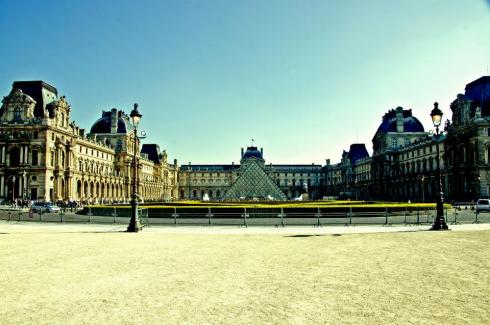
Next was the Louvre and Tuileries, immense buildings with beautiful formal gardens. The Louvre is about two blocks in width and about as long as Jackson to Washington Boulevard (just a little hut!)

Louvre: romeisalwaysagoodidea.wordpress.com

Louvre: romeisalwaysagoodidea.wordpress.com

Then on to the Place de Concorde, a large Piazza with beautiful fountains, marble and bronze statuary, and again formal gardens, and then to the Champs Elysees. This is the finest stretch of boulevard in the world, about 2 miles long, lined with double rows of great big old trees, great wide sidewalks, and the smartest shops, restaurants, and cafés on the first story of each building.
Wikimedia Commons

Wikimedia Commons

 All of the buildings are six stories in height with balconies and mansard roofs, all stone. Nearly all the main buildings in Paris are about the same height, but naturally vary in design.

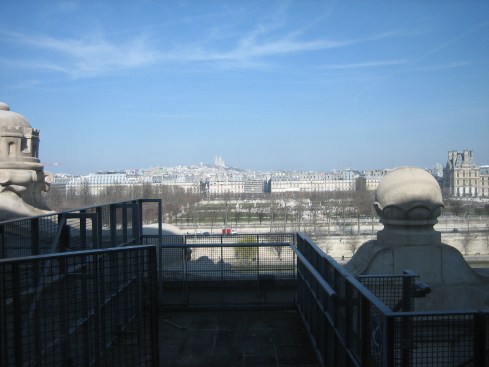
A picture I took from the Louvre of Paris shows the symmetrical heights in Paris.

A picture I took of Paris from inside the Louvre shows the symmetrical heights he described.

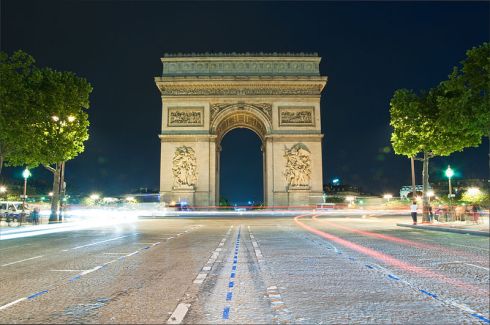
 All the streets are at an angle, the main ones coming to a point at the Arc de Triomphe. This is one place I can’t get to learn, even with the study of the map. Every few blocks there are circles like you saw in Washington, only larger and each one is properly landscaped with fountains and statues. There is no imitation about anything here as far as the buildings are concerned–marble, mahogany, walnut, bronze wrought iron fences and balconies, are all the real thing. The Arc de Triomphe, you may have seen in pictures, is on a high spot and from the top can be seen all of Paris on a bright sunny day. I hope my pictures come out so you can see, at least in pictures, what I am trying so inadequately to describe in words. 

Benjamin Stäudinger

Arc at Night: Benjamin Stäudinger

This is the real international city of the world. Peoples from every known country seem to be here. There is no particular class or racial distinction. It is not uncommon to see a Negro or Sengalese, as they call them here, walking the street with a white French wife and a couple of children. There is no ban against them in theaters, restaurants or cafés. 

I also went to the street market section today. It is clean and well kept and run by all native Frenchmen. Everything is shown outside on neat carts or bulkheads, but they all yell out their wares the same way. Even the butchers have their meat and chops and fish outside, sliced and ready to be sold. Horsemeat is a common thing here, and out of curiosity, I had a steak from the fillet of horse tonight for dinner. If I didn’t know it was horse me, I would never have known the difference. 

Well, tomorrow I shall make an inside tour of the Louvre and then pack up and get ready to go. Next stop is Interlaken and Lucerne, Switzerland, but I will never forget this city of cities. If for no other reason, it was worth making this trip just to see Paris. 

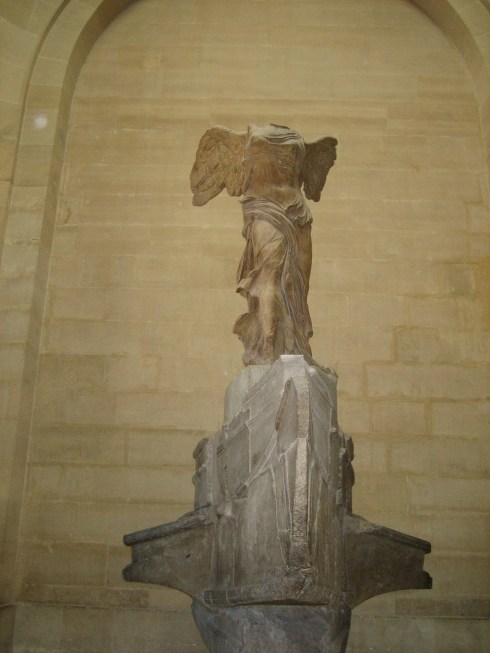
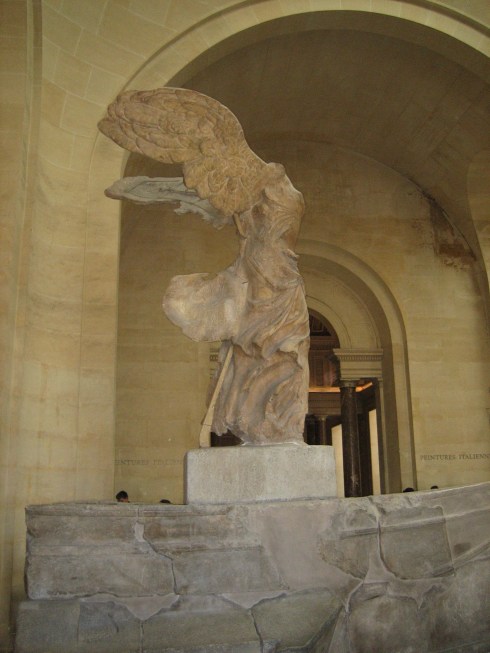
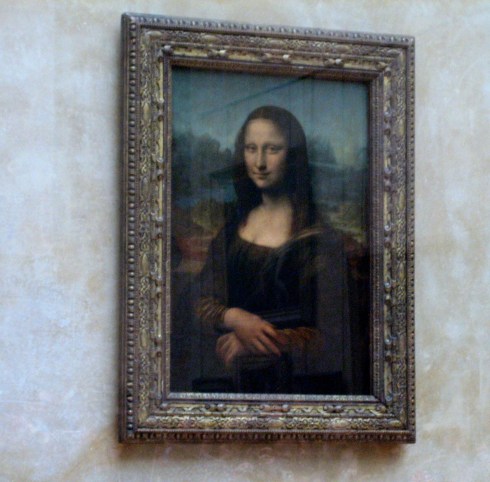
Here are two incredible pieces of art Alex would have seen at the Louvre (from our 2009 family trip to Paris).

IMG_0274

Winged Victory (in entrance To Louvre) blogginginitaly.com
IMG_0275

Winged Victory (in entrance To Louvre) blogginginitaly.com
IMG_0276

da Vinci’s Mona Lisa

By the way, you ought to be getting my letters starting tomorrow or the next day and I soon hope to get yours. I was dreaming about you last night, and that helped keep me from getting too lonesome. Hope I’ll dream of you every night. Feeling okay, so don’t worry. 

Loads of love, Al

Such a romantic!
Ciao,

Judy


Through His Words: Day Thirteen

8 Apr

Reflections From and About My Grandfather
Alexander Capraro, Architect

Day Thirteen
Hotel Regina, Paris

Thursday
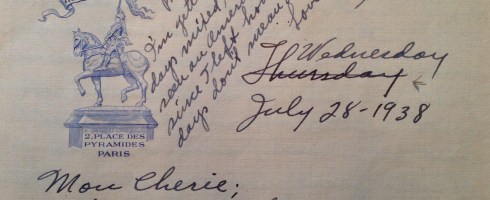
July 28th, 1938

Mon Cherie,

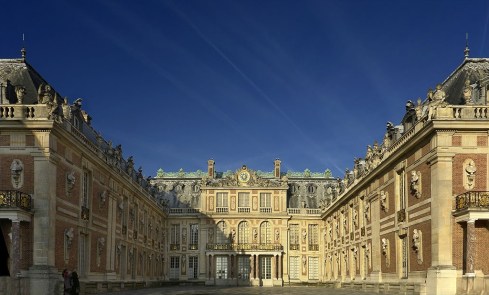
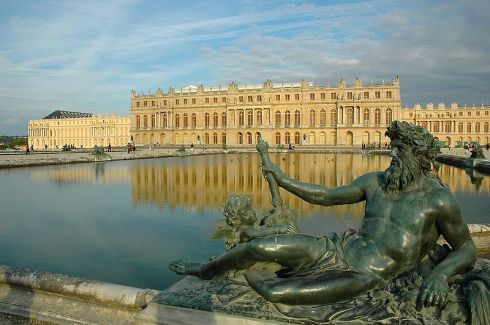
Today was the day for my visit to Versailles, about 20 miles outside of Paris. “What a place!” Probably the most beautiful place and grounds in the world. Chock-full of history, arts, and treasures beyond description. Home of Louis XIV, XV, XVIII and last but not least, Napoleon and Marie Antoinette, Madam Pompadour, and others I can’t name just now.

Versailles_Palace

commons.wikimedia.org

The palace is a large separate building from the one Napoleon used, which is called the Trianon. Then there is the Petite Trianon for Marie Antoinette, and various buildings for stables and royal guests. There is the actual furniture, gold and marble tables, rare bronzes and porcelains, and the carriage that was used for Napoleon’s coronation as Emperor.

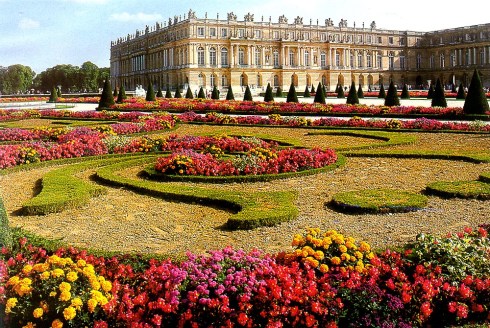
The gardens are too beautiful to describe in a letter. I went around with a horse and buggy and it took two hours to ride around the grounds.

 fr:Utilisateur:Urban

fr:Utilisateur:Urban

en.wikipedia.org

800px-Versailles_chateau

en.wikipedia.org

There are countless rooms in the king’s palace, each richly furnished to a king’s taste. (Below photos courtesy of Benita.)

romeisalwaysagoodidea.wordpress.com

Royal Chamber: romeisalwaysagoodidea.wordpress.com

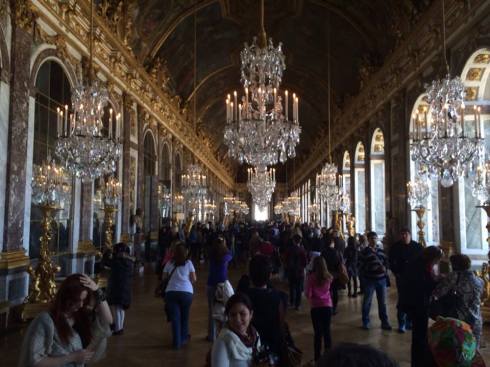
The ceilings are all covered with paintings, most of which were done by the same artist who painted the pictures in the Vatican. You conclude the trip by feeling dizzy and tired, such splendor I have never seen before.

romeisalwaysagoodidea.wordpress.com

Hall of Mirrors: romeisalwaysagoodidea.wordpress.com

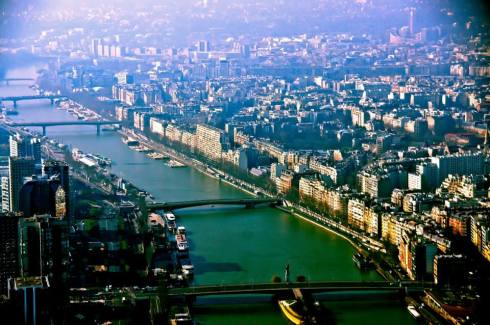
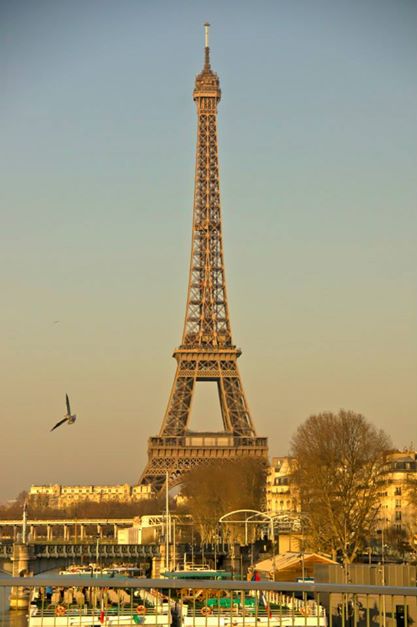
On the return trip to Paris, we took a bus until we reached the Seine, (the river that runs through Paris), and then took a boat which plys the river to the city…a beautiful ride because it allows one to see the many fine buildings on each side, including the Eiffel Tower.

The Seine: romeisalwaysagoodidea.wordpress.com

The Seine: romeisalwaysagoodidea.wordpress.com

EiffelTower: romeisalwaysagoodidea.wordpress.com

Eiffel Tower:
romeisalwaysagoodidea.wordpress.com

The day was clear and fair and enabled me to take some good pictures both at Versailles and along the river Seine. There are still many decorations that were put up for King George of England on his visit here and I shot a few views of them.

Just two weeks earlier, on July 14, King George VI of England and his wife Queen Elizabeth had made a royal visit to Paris. You may remember the story of his brother’s abdication in the movie, The King’s Speech.

The House of Windsor

The Royal Household © Copyright 2008/09

I had dinner tonight at an Italian restaurant in the Montmartre district and after dinner, spent the rest of the evening walking around this territory which is part of Paris where all the honkytonks, nightclubs and sidewalk cafés etc. are.

Montmartre, dominated by the Sacré-Cœur  (pixinn.net)

Here is real Parisian atmosphere, notorious dives, apache dance cafés with names you read about or see in the movies. Every door is a café of some kind or another, all with little tables out in front filled with people, musicians playing, radios barking, girls singing and dancing, some with clothes on and others with not so much, barkers in front of every place inviting you and telling you their place is the best or worst, which ever you may be looking for. It is Paris, the only city in the world which has such a district where anything and everything goes and nobody cares or gives a damn. I’ll tell you more about it when I get home.

Théophile Steinlen's famous advertisement for the tour of Le Chat Noir cabaret

Théophile Steinlen’s famous advertisement for the tour of Le Chat Noir cabaret

Tomorrow my schedule calls for Notre Dame, the Louvre, Champs Elysees, Place de Concorde, the Opera, and Church of the Madeleine. If my feet hold out, I hope to cover them all.

I’ll say good night now dear until tomorrow.

With Love, AL 

X X X X X X X X X X X X X


Ciao,

Judy


An Italian Hero Worth Knowing

31 Mar

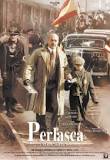
This past weekend, while searching online for Italian movies with subtitles, I came across Perlasca, a 2002 Italian drama. The movie tells the true story of a real-life hero, Giorgio Perlasca, who posed as a Spanish ambassador and tricked Nazi officials in order to save the lives of at least five thousand Jews during the Holocaust.

Perlasca

Perlasca

For me, Italian films are a way to immerse myself in the Italian language and culture when not in Italy. Many historic films, such as this one, have dark sides, but also much to celebrate, such as this unsung hero.

After watching the movie, I did some research on the man, wondering how much was true. Per his obituary, I found that the man and the movie were one and the same, making the movie even more interesting and validating the second part of the movie title: the courage of a just man. Even when Perlasca returned to Italy from Budapest, he told no one of his actions. His heroism only came to light in 1989, when a group of his survivors’ relatives tracked him to Padua to thank him.


Photo_of_Giorgio_Perlasca

http://www.euroastra.hu/node/2346 Published by: Johannes; June 6 2007 – 06:13

Perlasca is available on Netflix and other sites. Note that the subtitles were too low on the screen for the first minute while Perlasca is writing a letter to his wife in Italy, but the issue is soon resolved.

Below is Giorgio Perlasca’s obituary, by Dalbert Hallenstein, published 19 August 1992, www.independent.co.uk.

GIORGIO PERLASCA was one of Europe’s great unsung heroes. An Italian former Fascist and livestock agent who fought for Franco during the Spanish Civil War, Perlasca – posing as the Spanish charge d’affaires in Nazi-occupied Budapest in 1944-45 – saved at least 5,500 Jews from the gas chambers, constantly risking his life in doing so. Evidence is now emerging that he may have played a leading role in saving a further 60,000 people from a massacre planned by the Hungarian Nazis in the Budapest ghetto just before the Russians took over the city.
Tall, with penetrating blue eyes and closely cropped white hair, Perlasca still exuded in old age the charm and authority which allowed him to bully and cajole Budapest’s Nazi establishment into helping him save ‘his’ Jews while posing as a completely bogus Spanish representative.
His story only became known in 1989 when he was tracked down in Padua by a group of Hungarian women related to people whom he had saved. Since then he has been honoured by Israel as one of the Righteous of the Nations, a rare honour given to those few non- Jews who risked everything to save Hitler’s victims from the gas ovens. He also received the highest honours from Hungary, Sweden and Spain, whose king recently awarded him the Order of Isabella the Catholic.
Perlasca was born in the northern Italian town of Como in 1910 but was brought up and lived most of his life in and around Padua. He came from a family of civil servants, judges and army officers. He fell under the spell of Mussolini while still at school and volunteered to fight in Mussolini’s Abyssinian war of conquest and later, as a Fascist volunteer, in the Spanish Civil War.
But by 1938 Perlasca was disillusioned with Mussolini. He detested Italy’s alignment with Nazi Germany and abhorred the Italian race laws of 1936 against the Jews. Many of his friends, both in Padua and in the Italian army were, in fact, Jews.
At the outbreak of the Second World War Perlasca managed to avoid military service by working in a strategic job as a livestock agent supplying meat to the Italian armed services. In 1940 he was sent in this capacity to Zagreb and Belgrade, from where he travelled widely in Eastern Europe. Here he observed dreadful massacres of Jews, Serbs and other minorities.
In 1942 he was sent to work in Budapest, which he described as ‘hedonistic and full of life, where nothing was lacking and the restaurants and theatres were full of seemingly carefree people, many of them Jews. Perlasca, in great demand because of his Italian charm, threw himself into this life with shameless gusto.
But the good life in Budapest ended with the fall of Mussolini in July 1943. Perlasca was immediately interned as an enemy alien in a camp near the Austrian border from which he escaped (back to Budapest) on 13 October 1943, just three days before a Nazi- backed puppet government overthrew the right-wing leader Admiral Horthy, who had managed to keep at least some distance from his ally Hitler.
Knowing that he had the right to Spanish protection, as a former pro-Franco soldier, he went to the Spanish embassy where, within a day, he was given Spanish citizenship, and a new Christian name – Jorge. Outside the embassy he had noticed thousands of people milling around. He was told that they were Jews pleading for the so-called ‘letters of protection’ which Spain, together with other neutral governments, including Portugal, Switzerland, Sweden and the Vatican, was issuing to protect Jews from deportation to the Auschwitz gas chambers. The Spanish embassy officials said they were so understaffed that they could not cope with the problem.
Perlasca volunteered for the job and was accepted. He set to work, making essential contacts in various key Nazi ministries and bribing, blackmailing and charming officials and police into helping him, or at least turning a blind eye to his pro-Jewish activities.
In November 1944, with the Russians approaching Budapest, the last remaining Spanish diplomat fled the capital, leaving the embassy officially closed down. But the diplomat had forgotten to take the embassy seal with him and Perlasca set to work stamping documents which proved not only that the Spanish Embassy was still open and functioning, but that he was the last remaining charge d’affaires.
Perlasca also used the seal to issue thousands more letters of protection to Hungarian Jews whom he housed in eight rented apartment houses which he made sure flew the Spanish flag and therefore, Perlasca argued, enjoyed diplomatic protection. The bluff worked, although he had to patrol the houses night and day to make sure that roving bands of Hungarian Nazis did not break in and murder or kidnap the protected people.
This happened only once, when 300 people under Spanish protection were carted off to the Budapest goods yards for deportation to Auschwitz. And it was here, in the presence of the heroic Swedish diplomat Raoul Wallenberg, that Perlasca’s life was saved by Adolf Eichmann during a violent row with an SS officer over two young Jewish children whom Perlasca insisted on taking away in the Spanish diplomatic car.
[Perlasca later recounting the story:]
‘A young SS major pulled out his pistol, pointing it at me. Wallenberg, who was standing nearby, shouted that he could not treat a Spanish diplomatic representative like this. Then, at a certain moment, an SS lieutenant- colonel arrived and asked what was happening. He listened, then ordered the major coldly to do nothing more because, ‘Sooner or later’, he said, ‘we’ll get the children anyway.’ They went away and it was then that Wallenberg told me that the SS colonel was the notorious Adolf Eichmann.’ 

When the news is so filled with the stories of villains, it’s wonderful to come across a true hero, especially an unsung one.

Ciao,

Judy

Through His Words: Day Twelve

25 Mar

Reflections From and About My Grandfather
Alexander Capraro, Architect

Day Twelve
Hotel Regina

Paris, France
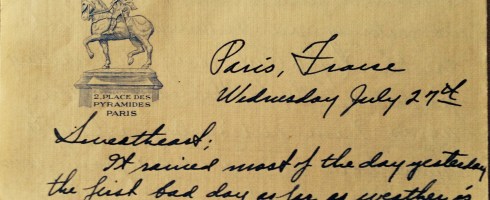
Wednesday July 27th, 1938

Sweetheart,

It rained most of the day yesterday, the first bad day of weather. I tried to get in touch with my friends here, but found they are away for 10 days. That is a tough break because of the fact it is so difficult to get around not knowing the language. However, my friend has two brothers and one of them volunteered to take me around as he speaks Italian and French. I speak Italian to him, and he interprets it to the French here.

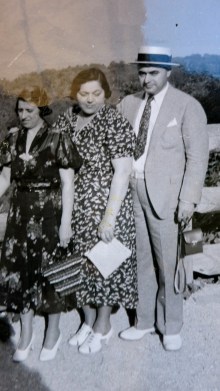
On account of the rain, I did a little window shopping and limited sightseeing. I had to buy a felt hat, as no one here seems to wear straws; they wear either felts, berets, or go bareheaded; and also, there are very few white shoes. 

IMG_0004

Photo of Alex years later, still with his straw hat and white shoes.

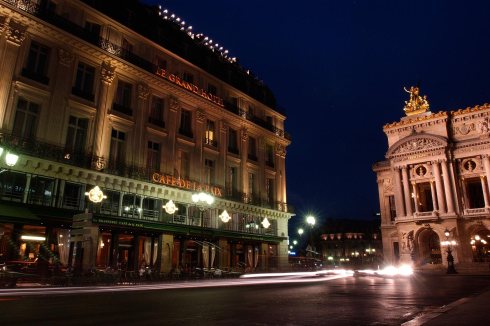
Tonight we had dinner at the Café DeLa Paix, a well-known place in Paris.

From the Cafe’s website: Ever since their inauguration on May 5th, 1862, the Hotel de la Paix (now Le Grand Hotel) and Café de la Paix are genuine institutions enjoying worldwide fame. Café de la Paix is a restaurant bar exuding Second Empire elegance and proudly displaying its listed frescoes and sumptuous gilding.

from website

from website

880-so-uneinstitution-photolieuhistorique3-fr2.jpg

880-so-uneinstitution-photolieuhistorique3-fr2.jpg

Later, we went to the famous Follies Bergère. The show started at 8:45 and lasted until midnight.

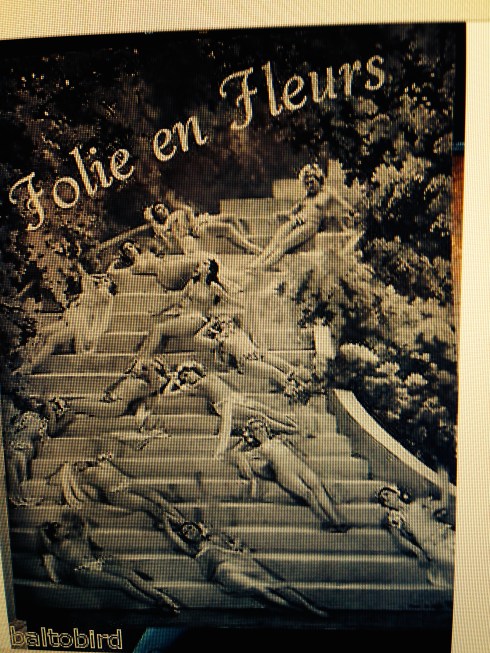
That was all Alex wrote about the famous burlesque theatre. I wondered, however, what the show would have been like in 1938, and found this listing on eBay:

FOLIES BERGERE 36 PAGE SOUVENIR PROGRAM W TOPLESS PHOTOS 

THIS IS AN EXCEPTIONALLY LOVELY ORIGINAL FOLIES BERGERE 1938 FOLIE EN FLEURS PARIS FRANCE SOUVENIR PROGRAM. MANY TOPLESS PHOTOS. 36 PAGES. SILVER COVERS WITH DIE-CUT FRONT AND GOLD GLASSINE COVER.

IMG_1740

IMG_1741

Whoa! No wonder he didn’t write anything!

As it had stopped raining after the show, I walked back to the hotel about 1.5 miles, and then to bed and slumberland. One good thing has happened here– I sleep soundly all night and it is of great help because I need the rest for the energy required for the next day. 

Today looks fairly nice and I plan to go to Versailles, the place where the peace treaty of the world war was signed. This is an all day trip and I won’t get back until this evening.

Alex was referring to the Treaty of Peace, signed 28 June 1919, at the end of WWI:

393px-Treaty_of_Versailles,_English_version

I’ve been fortunate enough to visit Versailles twice, never realizing that Alex had been there before me. And just this month, his great-granddaughter (our daughter Benita) visited the immense and incredible Palace of Versailles, just 15 miles from Paris.

Aerial view of the Palace of Versailles

Aerial view of the Palace of Versailles (Wiki)

Tonight we plan to go to the Montparnasse, the artists’ quarter in Paris. 

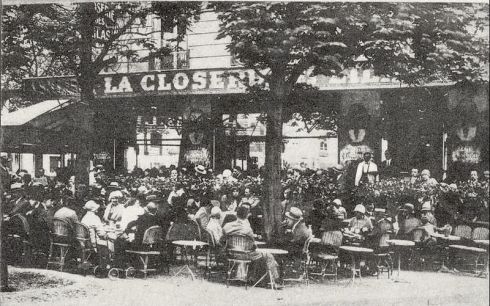
Cafés rented tables to poor artists for hours at a stretch. Several, including La Closerie des Lilas, remain in business today.

Cafés rented tables to poor artists for hours at a stretch. Several, including La Closerie des Lilas, remain in business today. (Wiki)

I haven’t seen much so far, but the city promises to show me more than I had expected to see, so I may stay here a day longer and take it out of some other town… “Pietrabbondante” or “Ricigliano” etc.???

This, of course, was in jest as Alex was referring to the southern Italian towns where his and Maude’s ancestors were from. If nothing else was accomplished on this trip, Alex had promised Maude that he’d get to those two towns.

I wonder how everything is going at home. I am anxiously waiting to hear from you and get some news. Your letters will be so welcome on this trip.

Well, darling, I’ll write you again after my visit to Versailles. So goodbye for the moment and millions of hugs and kisses to you and ours.

Lovingly, Al


Ciao,

Judy


Strong Italian Women

18 Mar

I come from a long line of strong Italian women. They may have differed in size, shape, personality, temperament, and accomplishment, but they shared some important characteristics:  independence and fortitude.

Fortunately, this is not unique to my family. Miranda, my Italian teacher’s mother, was another such lady. Although I never met her, I had the pleasure of speaking to her on the phone a year ago in Italy. Like so many of her generation, she didn’t need a college education to demonstrate her skills.

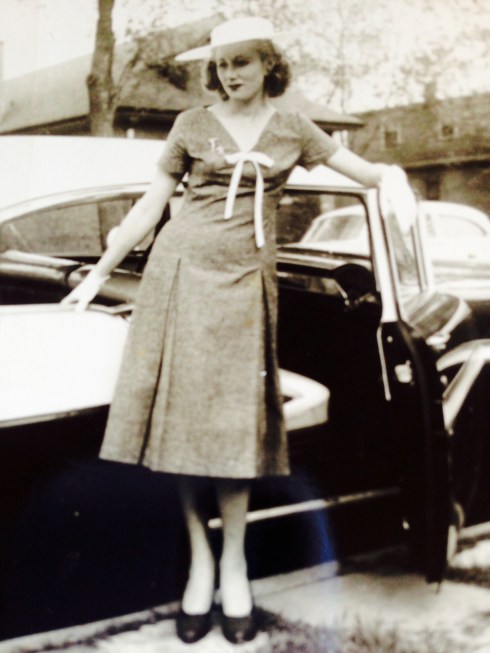
When Miranda moved to Chicago with her husband, she wanted to work.  She knew she had a knack for design as she made all of her own clothes, so she headed downtown to Marshall Fields.  When they asked for her resume, she instead asked them for some fabric. Watching her work her magic, they hired Miranda on the spot.

IMG_1734

Miranda Brigiotti in her own design in Chicago, late 50’s.

After some years in America, she returned to her native Italy, still independent and feisty. Many years later, at the age of 88, she became what is believed to be the oldest Italian to get her driver’s license. When asked why, at 88, she responded, “Because it’s necessary to be independent!” And later, when proudly showing her license and asked again why now,  she replied, “Because I’m still young!”

Sadly, Miranda passed away in January, 10 days before her 91 birthday, but she remains a great role model for us all! You don’t need to understand Italian to enjoy this wonderful YouTube of Miranda, posted by her niece, as the interviewer describes “the red-haired elegant woman dressed in black who finally got her driver’s license at the age of 88!”

Brava, Miranda… Complimenti!

Ciao,

Judy